
No two days […] are ever the same. There is always something fresh to admire. – Tom Weir
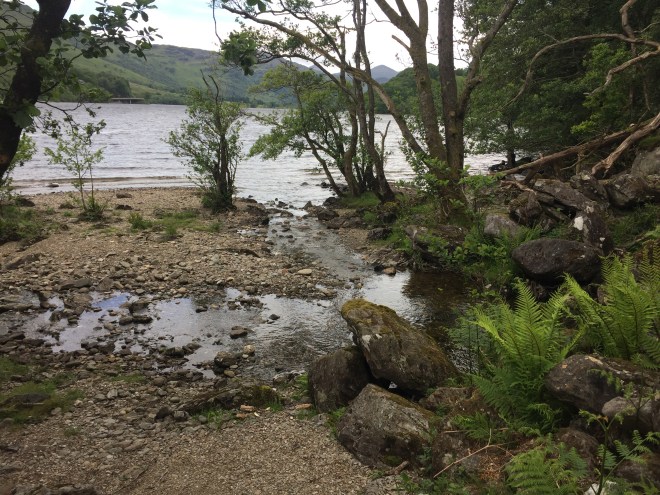
Continue reading Loch Lomond Part the Second: rocks, roots and water
No two days […] are ever the same. There is always something fresh to admire. – Tom Weir
Continue reading Loch Lomond Part the Second: rocks, roots and water
By yon bonnie banks and by yon bonnie braes
Where the sun shines bright on Loch Lomond
Where we two have passed so many blithesome days
On the bonnie, bonnie banks of Loch Lomond.
– Frank Ticheli (1841)

…the nature of architecture proceeding as it does from the human mind will express something about the designer and his or her culture. The architecture itself becomes an expression of the larger opinions of a cultural or social group which may then be impressed upon others. By virtue of observation of an architectural work, an individual may come to understand something about the original builder and his or her culture. – from Wikipedia entry on Architectural Propaganda

Continue reading Engineering Icons of the 2nd and 21st Centuries on the John Muir Trail
But, if the canals are left to the mercies of economists and scientific planners, before many years are past the last of them will become a weedy stagnant ditch, and the bright boats will rot at the wharves, to live on only in old men’s memories. – L T C Rolt, Narrowboat
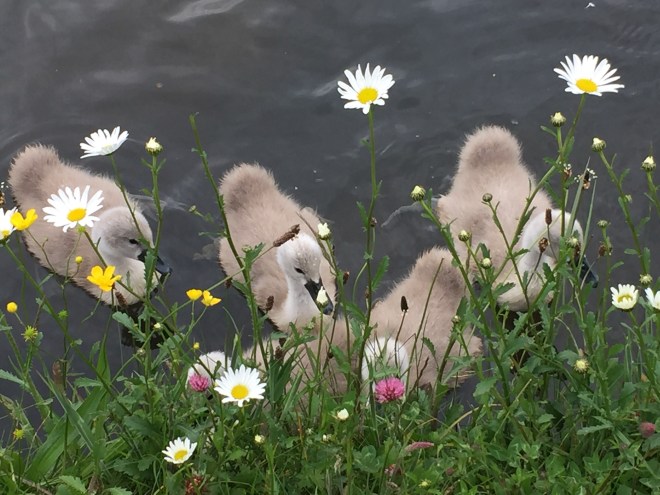
The road goes ever on and on… Bilbo Baggins, in Tolkien’s The Hobbit
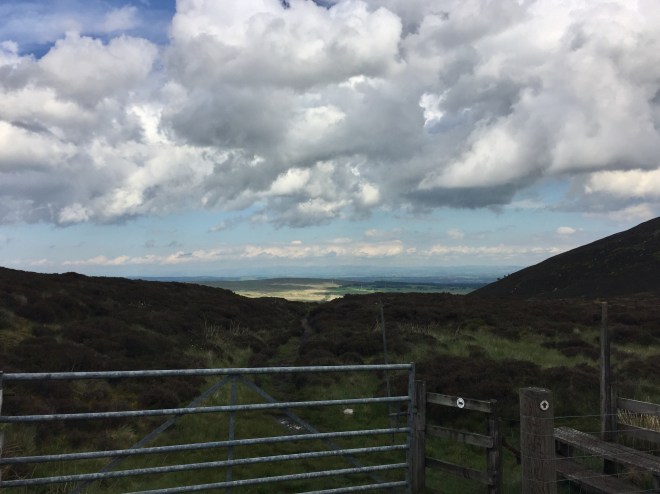
In the days of droving – from the 16th to the mid 19th century – this track was the main drove between the trysts (fairs) at Falkirk and Crieff, and the main meat market in London.
Once clan warfare was settled, the Highlands and Islands became famed for the small hardy black Kyloe cattle which they bred. As autumn approached, without hay for winter feed, the cattle had to be sold, but the Scottish market was limited. By 1816 there were still no butchers shops in Edinburgh. Glasgow, Aberdeen and Dundee all had populations of under 12,000, whereas over 1 million people – a fifth of the entire population of England – lived in London, providing an ever-increasing demand for meat. […] Drovers from Wales and Devon had already claimed grazing nearest to London on which to fatten the cattle before the final drive to Smithfield market. Having started much later, the drivers from Scotland had to settle for grazing further afield. The black Scottish cattle were therefore fattened on the lush banks of the Norfolk Broads.
At the peak of the droving trade some 100,000 cattle were walked south from Scotland each year. At least equal numbers of sheep were also driven along this route to meet demand for wool and mutton. But by 1900, the droving trade had all but disappeared. Tolls levied on turnpike roads, enclosure of land, the agricultural revolution, development of railways and movement of cattle by steamship all played their part in its demise. Interpretation panel, Old Drove Road
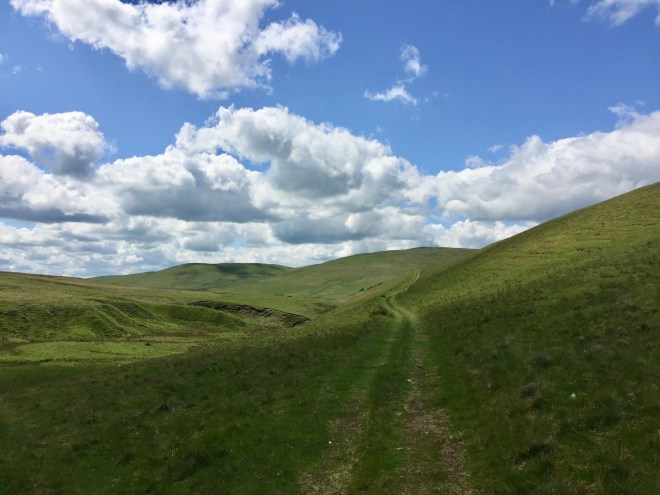
Ah, what ails thee, Knight-at-Arms? – John Keats, ‘La Belle Dame Sans Merci’

Thanne longen folk to goon on pilgrimages, / And palmeres for to seken straunge strondes, / To ferne halwes… – Geoffrey Chaucer, the ‘General Prologue’ to The Canterbury Tales
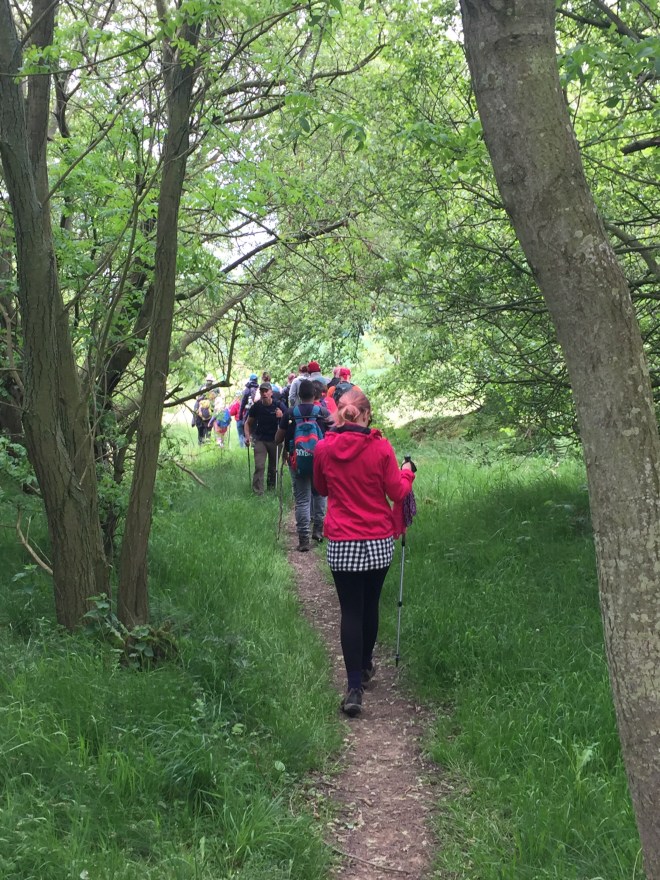

 Walking The Landscape