
May the road rise to meet you
Celtic blessing
My four-day break meant that I had lost all chance of meeting up with any of the pilgrims I had so far met. I had wondered who the new group of people I would meet would be, and the question was answered when I arrived at the Gîte yesterday afternoon to find Achim, a pastor from Germany, already installed and putting the finishing touches to his blog. He, like 85-year-old Burt from Holland and his Anglo-Dutch daughter Jacqueline who arrived later just after it had started to rain, had a short day today, walking to Ornans, just 11 kilometres along my 28 km route to the excitingly-named Mouthier Haute-Pierre.
It’s amazing how the pilgrim accommodation varies. This one was extraordinarily well equipped with drinks and food, providing a decent breakfast for the princely all-in sum of €25. We had all ordered a €10 supper from the local restaurant which was delivered by the chef promptly at 7 o’clock in big thermal boxes which we excitedly opened as though it were Christmas arrived early.

After my wonderful five nights of blessed sleep, I once again had a truncated and disrupted night, with jet planes on night exercises screaming overhead until 11 o’clock, then waking at 4:30 to carry on trying to finish the blog. It would be good if I could speed up the process somewhat, and have a few more hours of sleep in the morning!
Achim and I set off together into the moisture-laden air, stopping almost immediately for a close encounter through the glass of a porch with some of the woodland animals that so far, to my great relief, I have not met in person (although I did see two stoats fighting in the road into Mamirolle yesterday, and then whisking into the undergrowth when they noticed me, which I forgot to mention). Most of the specimens were quite mangey and moth-eaten, the production perhaps of a long-ago amateur hunting career.

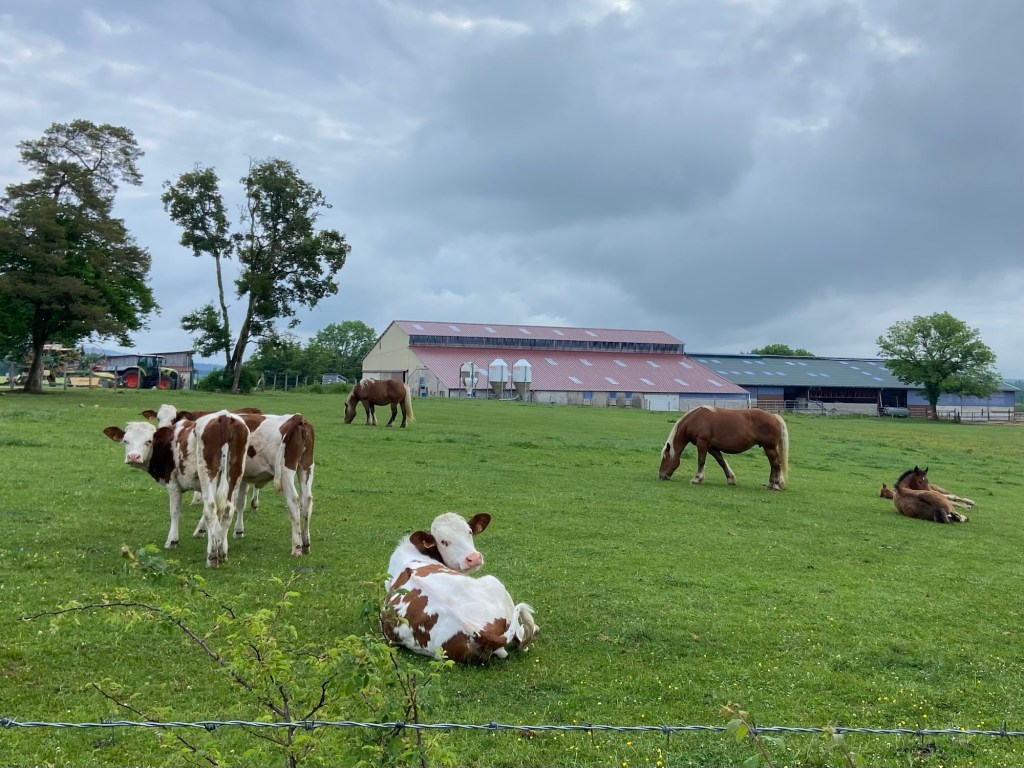
We left the village behind us and walked out into pastureland, where a skittish foal with a knee support bandage watched us warily whilst its mother patently ignored us, where farm cats crouched amongst the grasses intent on a morning rodent snack, and herds of the local brown and white cows shared fields with horses and their foals,
I was thoroughly enjoying the company, but at the first hill Achim said he thought I was going too fast for him, and so we hugged and wished each other happy walking, and parted ways, with a blessing from Achim on my journey in return for mine on his.
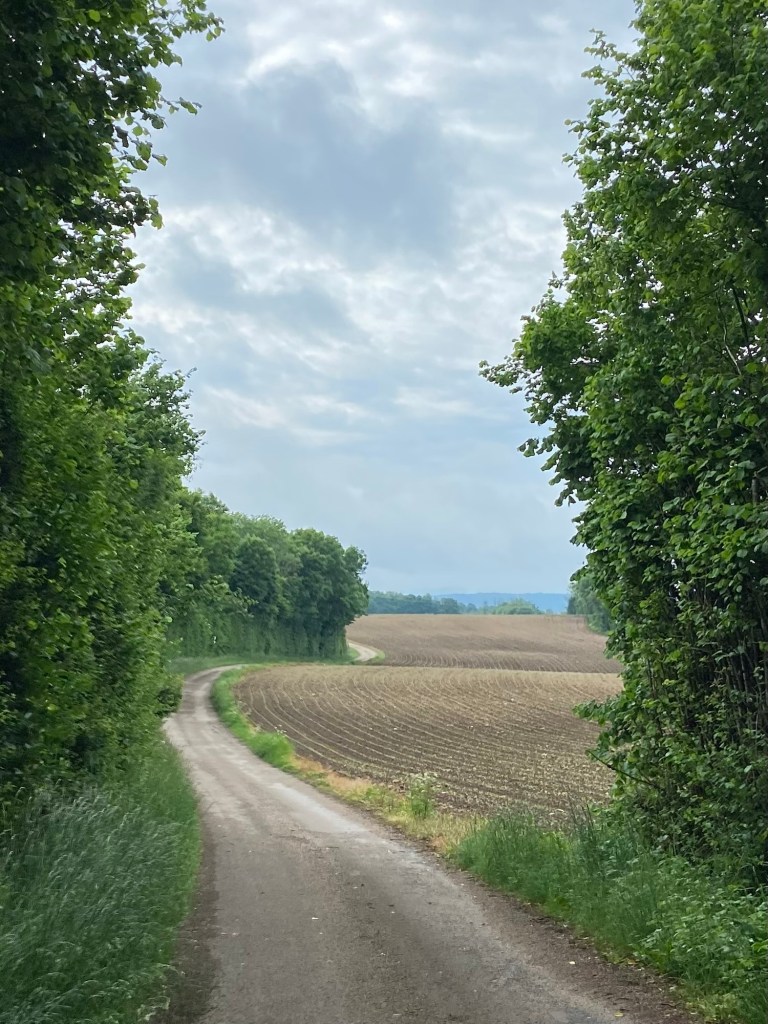
It felt good to stretch out limbs and joints slightly stiffened up from yesterday. The road did a switchback through a dripping pinewood, and I needed to watch my feet if I was not to risk another fall on the soapy, chalky soil and slippery limestone rocks underfoot.
There was a long steep flight of steps down,

and the map notation of a tunnel to come suddenly made sense when I joined the switchback path, a beautifully engineered cycleway along the sides of precipitously steep limestone gorges.
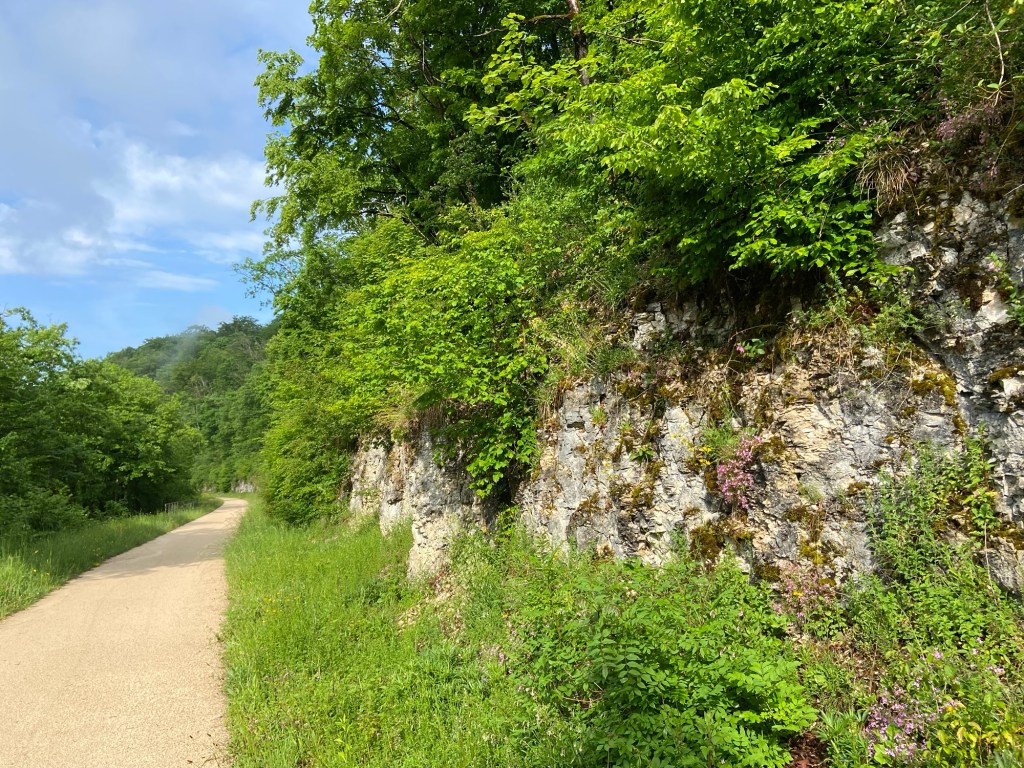
Rocky bluffs towered upwards to my right,
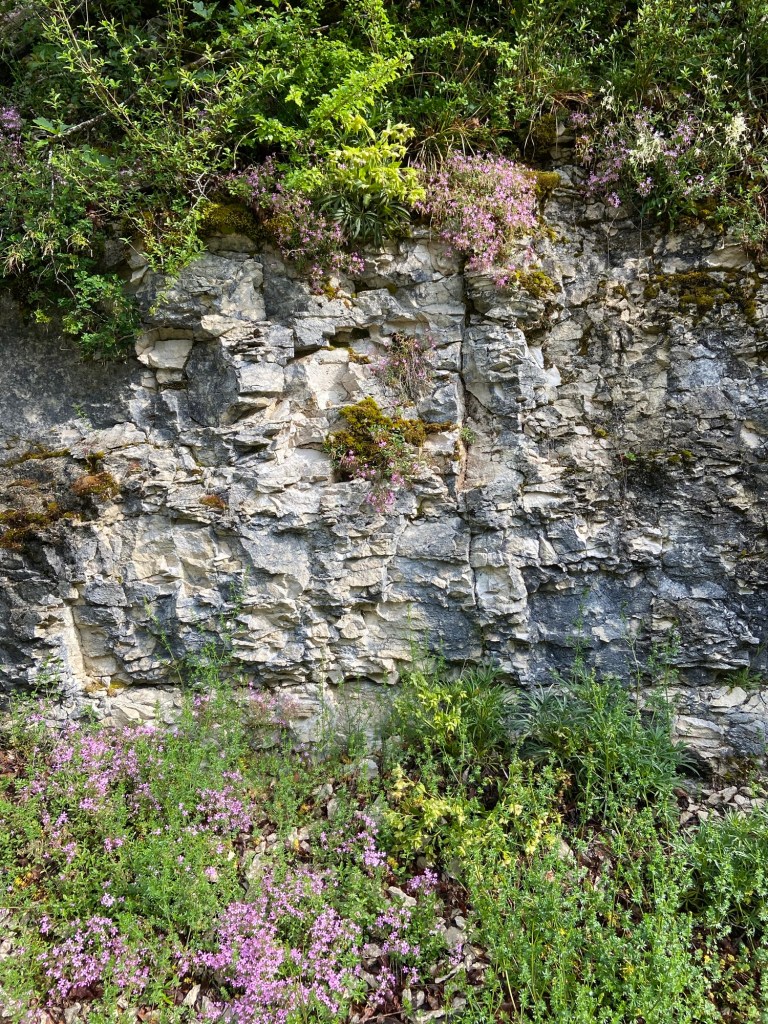
and cliffs fell steeply away to my left, thickly wooded drops down to the rivers Plaisir Fontaine and La Brême far below which had carved out a system of gorges over the millennia.

This was an old steam railway line which had once connected the communities of Bonnevaux-le-Prieuré and Plaisir Fontaine with Ornans.
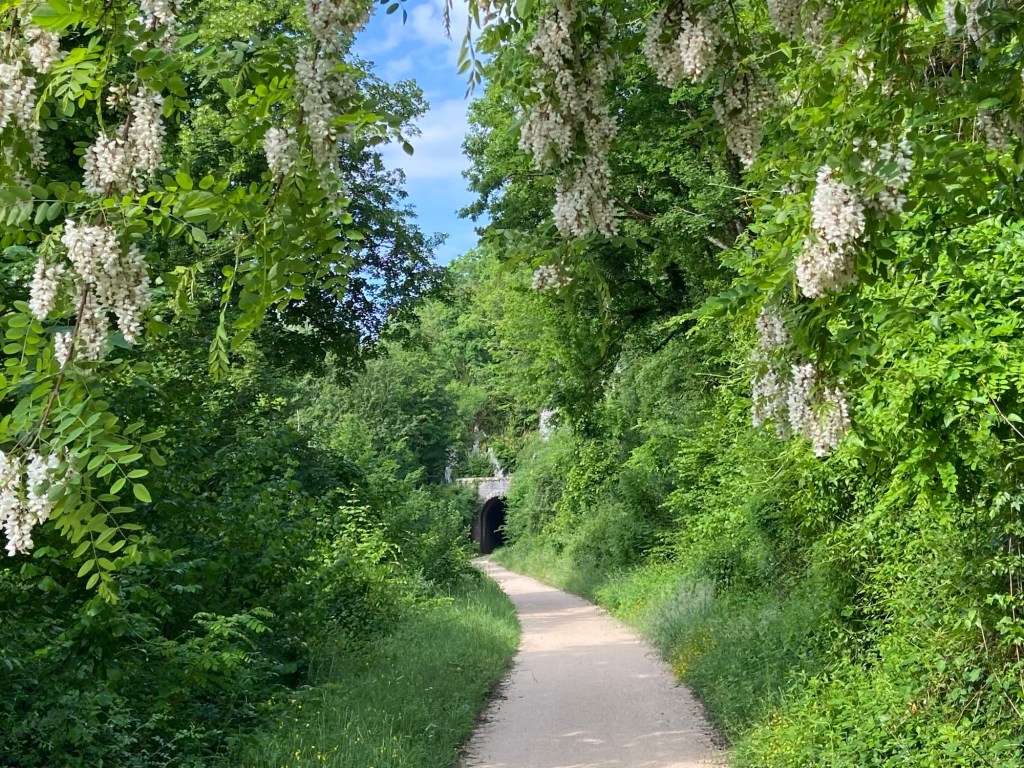
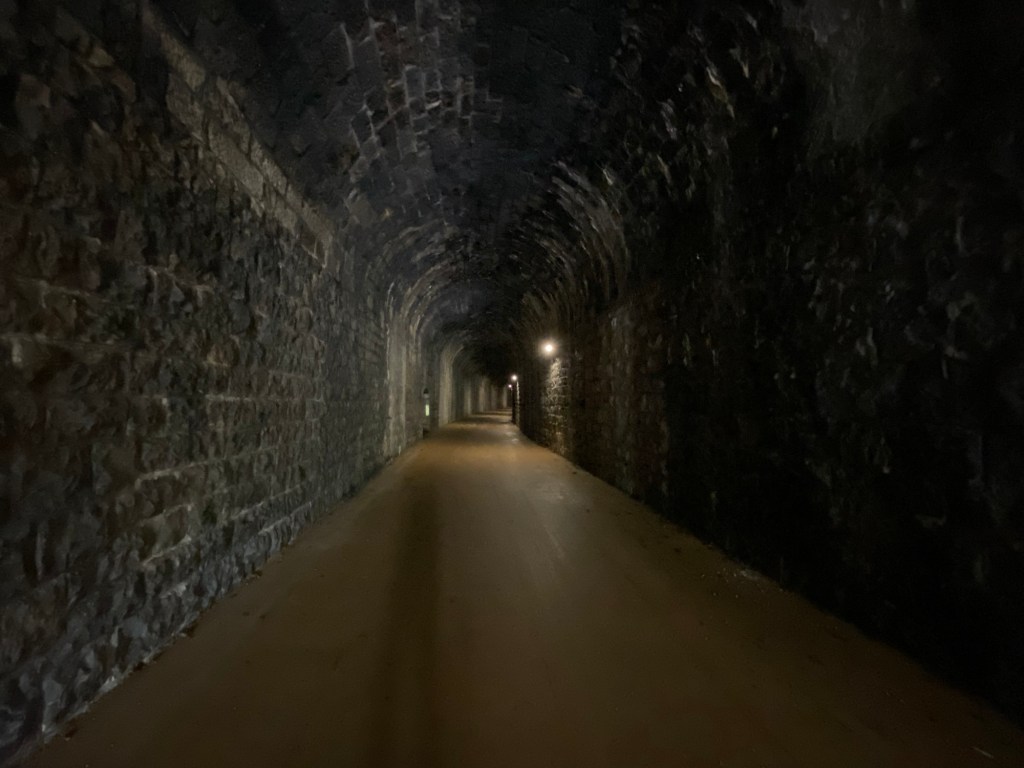
The 19th century tunnel of cut stone was lit by solar powered motion sensitive electric light, enabling walkers or cyclists to negotiate the passage through the rocky outcrop without problems. But it was still quite spooky.
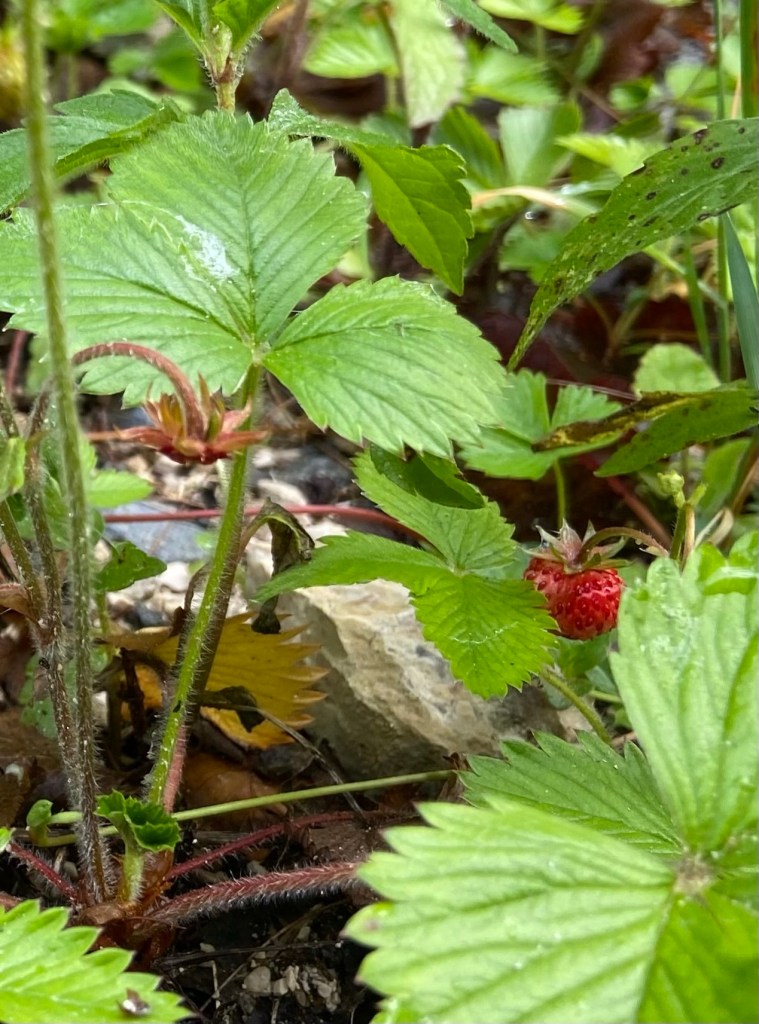
Unexpectedly, and not at all according to the forecast (led by which I had packed my suncream firmly in the bottom of my bag), I was walking in full, hot sun. Below me the gorge was a well of birdsong, and the warm verges were a riot of birdsfoot trefoil, clovers, thick patches of broomrape, pyramid orchids, and to my great satisfaction, alpine strawberries in their natural habitat. I ate one, just because.
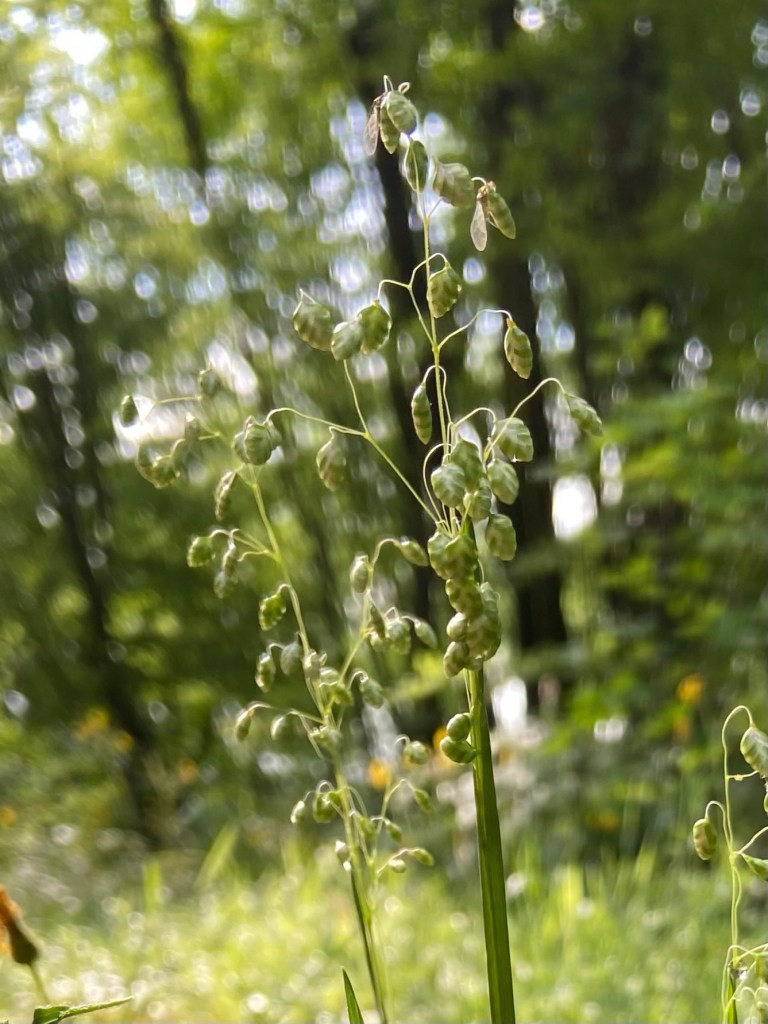
The first bloody cranesbills were coming into flower, and also lesser quaking grass, one of my favourite of the flowering grasses.
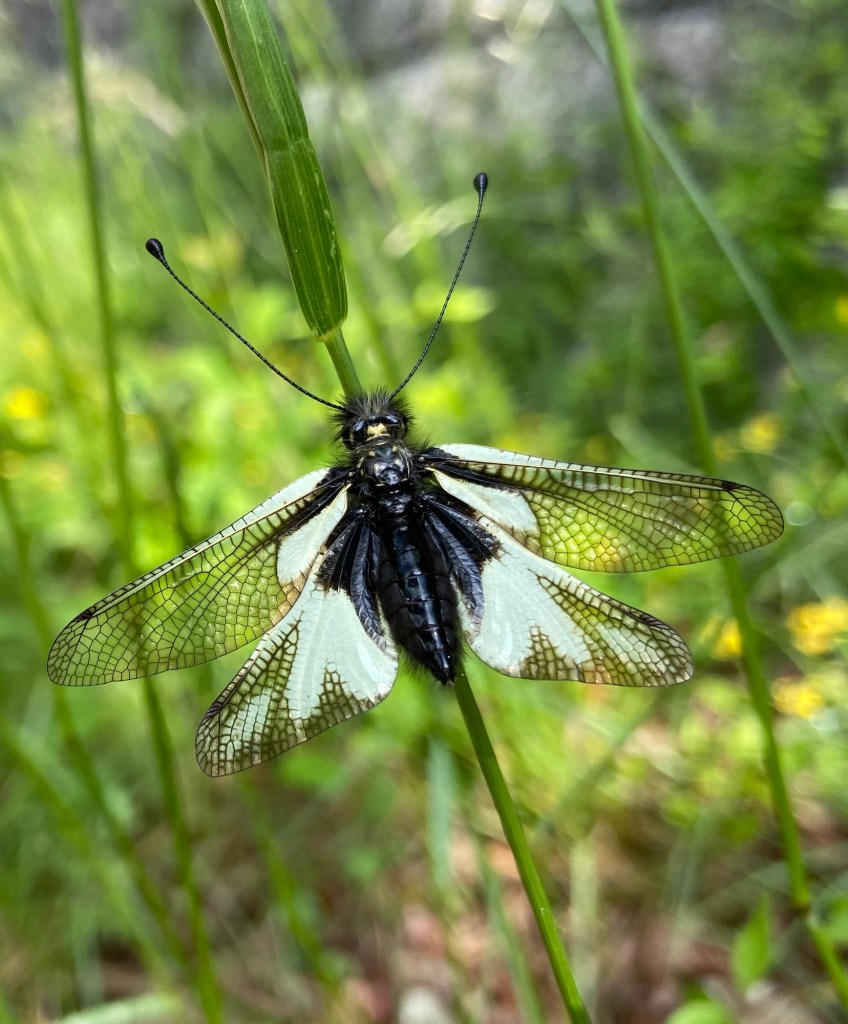
Clinging onto one of these grasses was an extraordinary creature: a kind of owlfly, a Libelloides coccajus with beautifully-patterned and transparent wings. It’s not surprising that I have never seen one before: they are really quite rare, neither butterfly nor moth nor dragonfly. Close-up the warrior markings and clubbed antennae do make them look like what they are: voracious predators of other flying insects.
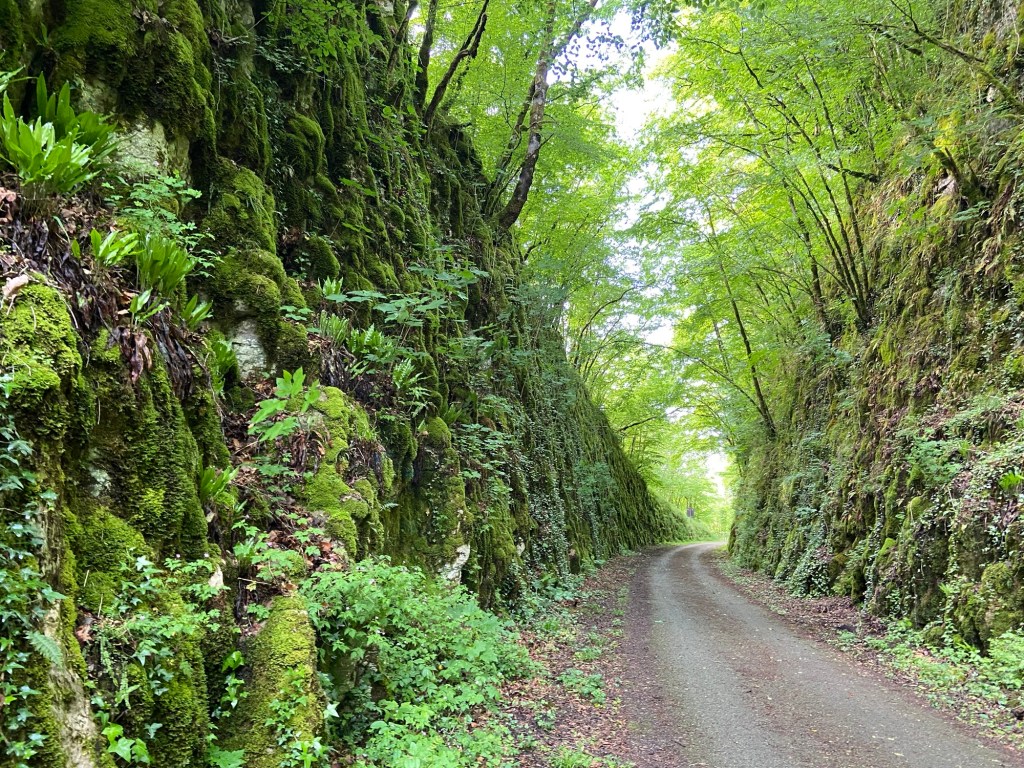
The cycle track continued on downwards, descending gently but surprisingly rapidly down the gorge. The tracks had originally been cut through limestone crags, sometimes open and sometimes so tall and narrow that little direct light fell between them, and here they were covered with thick mats of bright green moss, permanently damp, amongst which were embedded harts-tongue fern, fronds still curled at the tips.
As we got lower and nearer to roads and communities, I started to meet more people. Three teenagers out on their bikes (why were they not in school?) And a young mother with her two small children, the little girl of about three running after her brother on his skateboard, shouting instructions at him.
The old railway crossed the Brême river on a viaduct with piers plunging into the valley below.

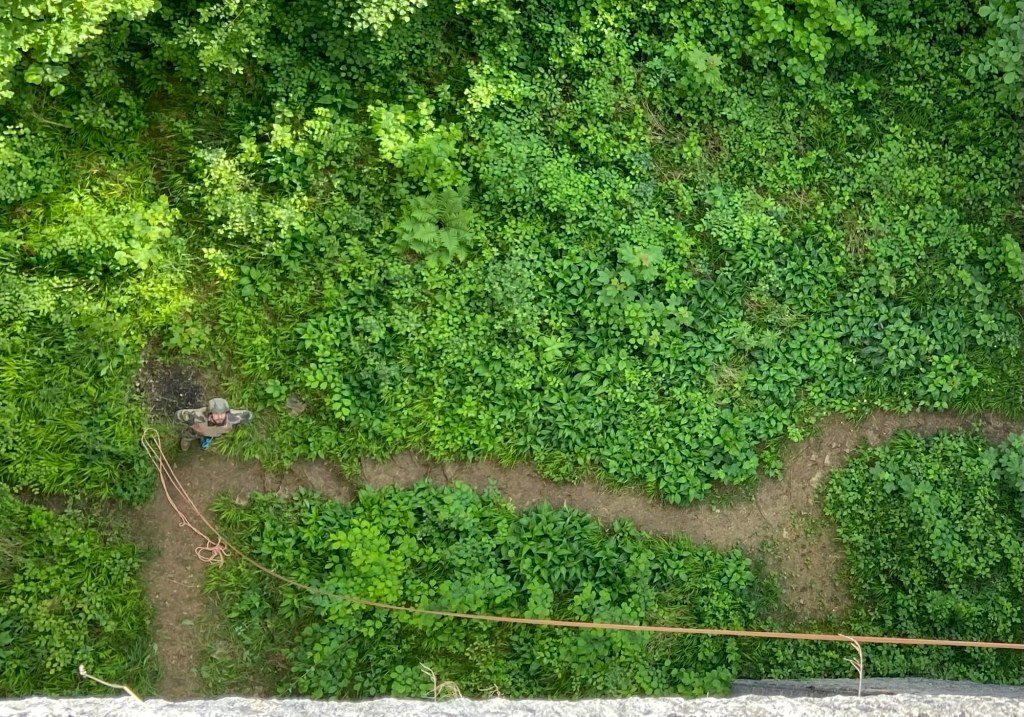
A large group of young soldiers was practising rappelling off the bridge, thick straps and weights clipped securely to metal pins sunk into the stone. The sergeant or captain was haranguing a passing dog walker about the necessity of picking up after her pooch, but it wasn’t her dog who had left the enormous piles at the sides of the bridges. Far below, one of the soldiers waited to receive the abseilers.
At the far end of the bridge, a troop was lounging in the shade and wished me a cheery good day. I asked them whether I could take a photo for my blog and there was an immediate flurry of excitement. They decided that they would have to ask their superior for permission, so the one girl ran off to get permission and when the news came back positive, they sprung into action, strapping on their enormous helmets and assuming well-practised poses showing off their camaraderie, their coolness, or their general joie de vivre. We argued a bit over who was the most courageous, me doing this walk or them throwing themselves off a bridge. Personally, I think it’s them!

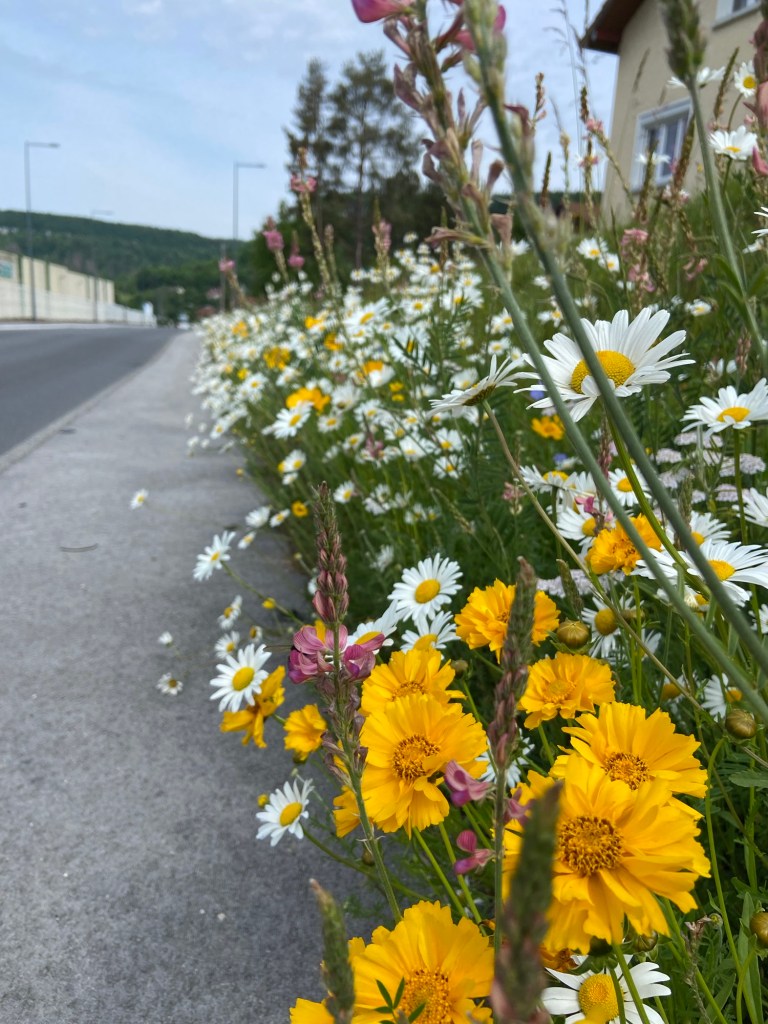
Ornans was a place of delight after delight. Firstly in the modern outskirts, a long corridor of wildflower borders sown with an extraordinary variety of plants —dozens of them — creating a habitat in which bees were thriving.
Next, views of the older streets of a town where the pale yellow building stone echoes the stone of the crags far above on the cliffs.

Even in the centre, amongst the twisting, curving streets, you were never far away from views out to the hills.

Ornans was a town with a long history, reflecting the passing of time in the changing vernacular details of its doorways.

But it was coming down to the river where I had the real thrill. Old houses lined the banks on either side, built right out over the water.

Many were jettied or with little landing stages or watergates underneath.
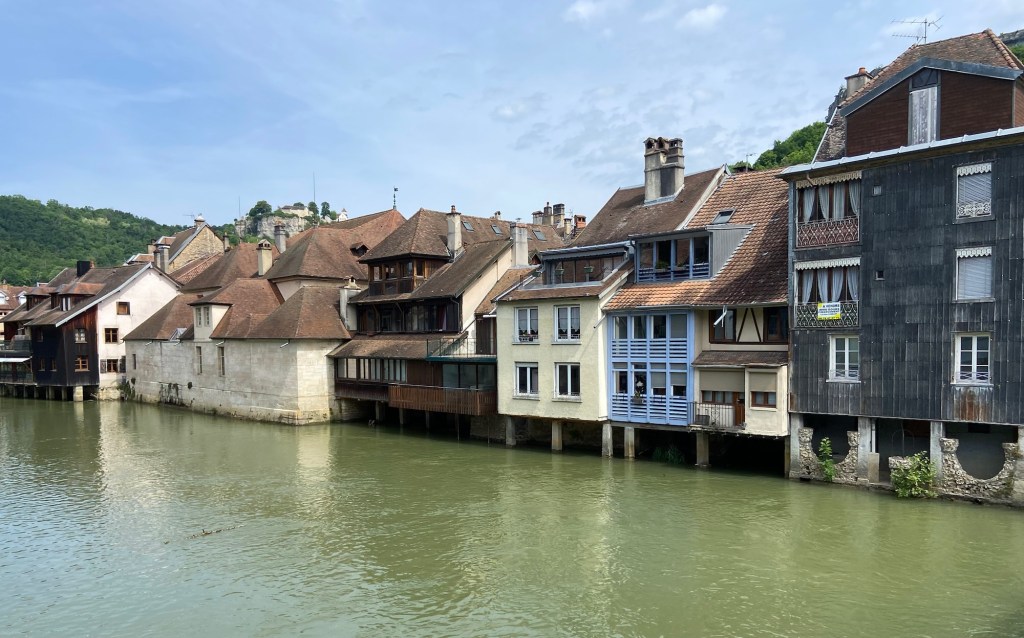
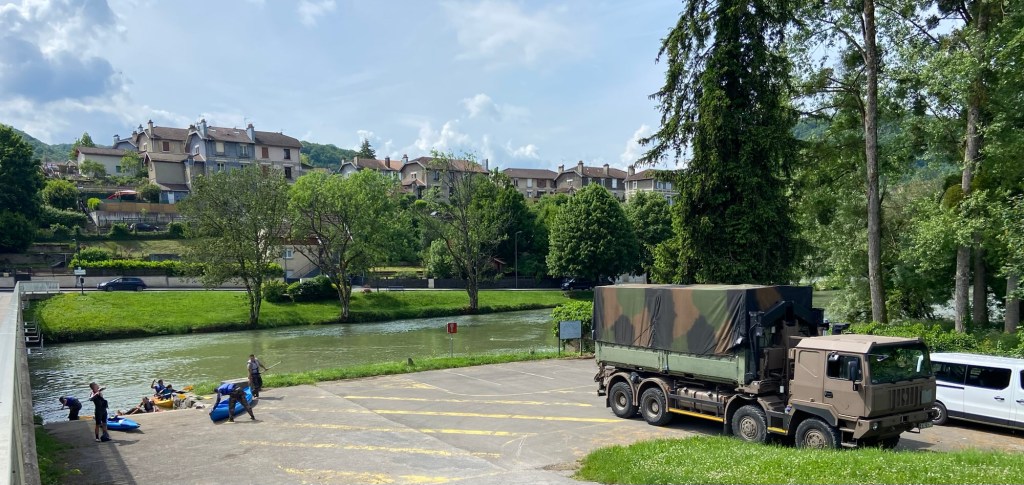
The only people actually on the water were more of the solders on exercise, this group here just finishing their morning’s kayaking, grinning up at me as I took the photo from the bridge above them,

before they loaded their gear onto the army lorry to return to base and swap stories with the abseilers.
Ornans was a town where artists gathered. There were various ateliers of contemporary artists, and also a museum to the town’s famous local painter, Gustav Courbet, a 19th century realist painter whose landscape views of the Loue and visions of the town matched much of what is still visible today, if you strip out the cars and accoutrements of the modern world. There were public sculptures too, like this striking collaborative sculpture, ‘Ensemble pour l’Humanité’, dedicated to the humanists of this world.


I had jobs to do, though. I needed some French cash, carefully calibrated to last me into Switzerland and not very much more. I had ten minutes of hilarious conversation with Alphonse, who had some suggestions about some walking routes in the mountains above Mouthier. In fact, he brought up the website so quickly I think he must’ve had the mapping software already open on his desktop. Rumbled, Alfonse!
Now with cash in my pocket to last me the rest my time in France I asked a young guy heading home on his lunch break where I might find some water. He suggestion was to go back to the square a few streets behind me. ‘No!’ I groaned. ‘I’ve just come from there!’ ‘There’s un kebab further along the road out of town, then,’ he said. He didn’t know whether it was open.
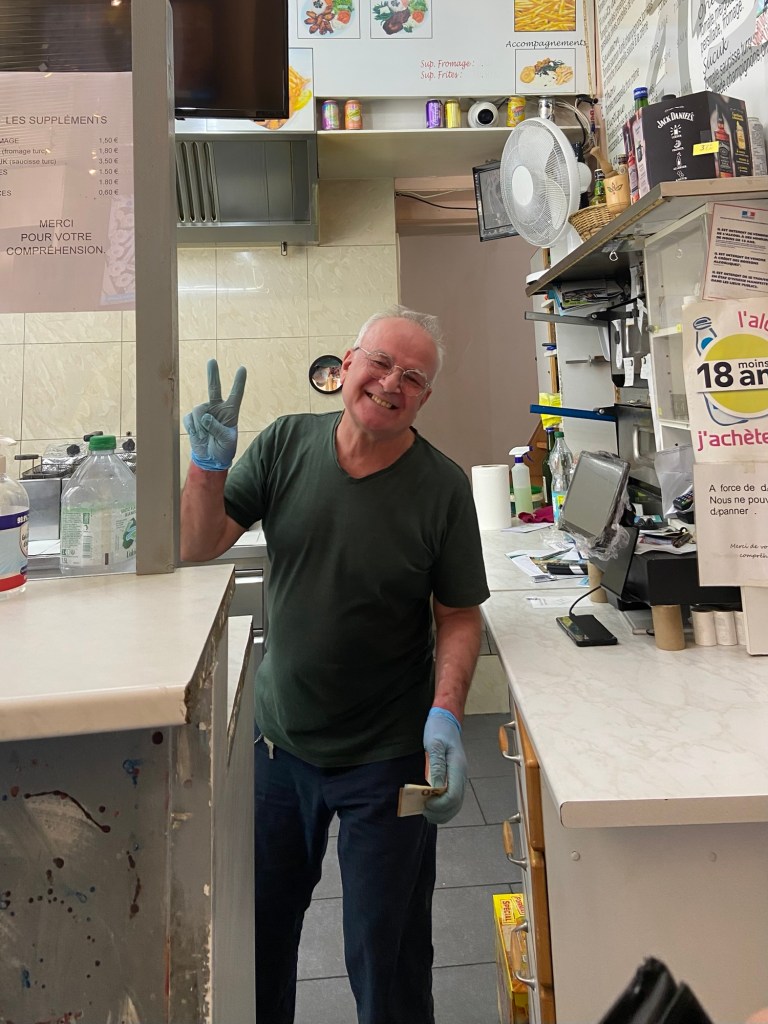
But my luck held out — wonderful Moose not only sold me a bottle of water, but let me empty out my rucksack to extract therefrom the suncream, packed right at the bottom. When he heard what I was doing, he put his hand on his heart and insisted on giving me a handful of dates wrapped in foil to take with me. So lovely. I only wished I was taking one of his kebabs with me, too.
I was, like yesterday, getting a bit concerned about the weather breaking down. I had another 15, 16 km to do, about three hours’ walking. I had with me quite a bit of food that was weighing down my rucksack, and really I should’ve sat down and had a proper break to eat it. But with one thing and another, the whirlwind tour of town, getting money out of the bank and sourcing water, I didn’t feel that I had time for lunch. As I left town crossing over the 17th century Pont de Nahin, I was sure I was going to regret that later.

Out in the meadows, the gravel track quickly made distance, and I kept glancing back at the receding town underneath its limestone scarps.
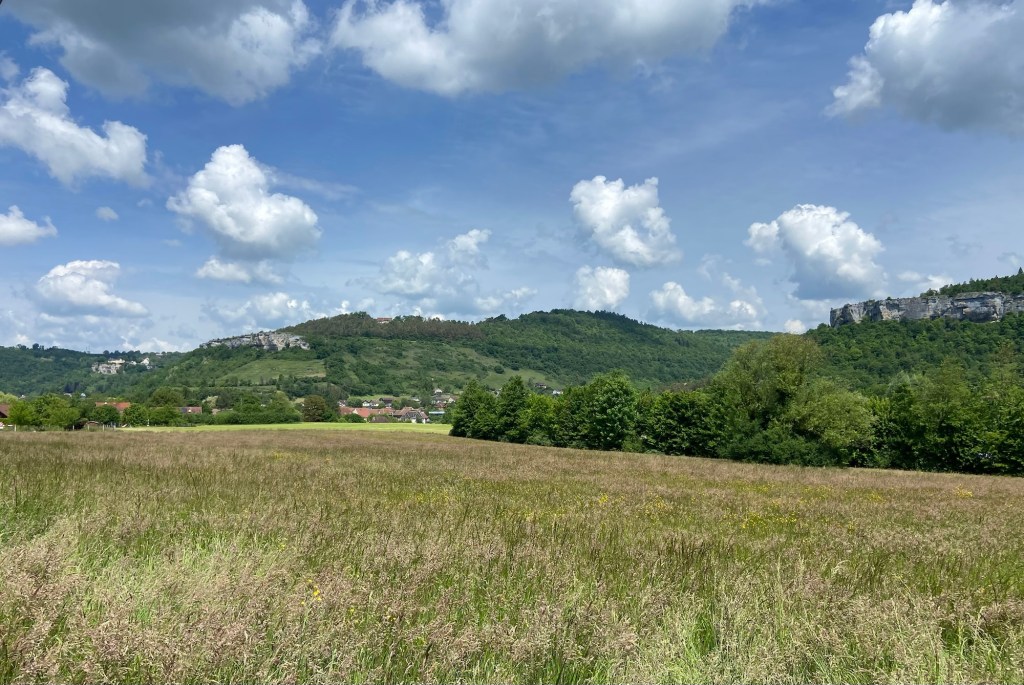
And it wasn’t long before I met some creatures to match the human encounters I had had in town— a huge two-inch long stonefly with long curving antennae clinging to a grass stalk, which spread its wings and flew off over the meadow with a flash of its yellow body,

and a friendly white cat with a sinuous grey tail looking like it had been dipped in paint.

The long, straight gravel road to the next village of Montgesoye ran not far from the banks of the river Loue, although it was screened from view by threes and bushes. I could hear it though, rushing in the other direction, especially where the water thundered over weirs.
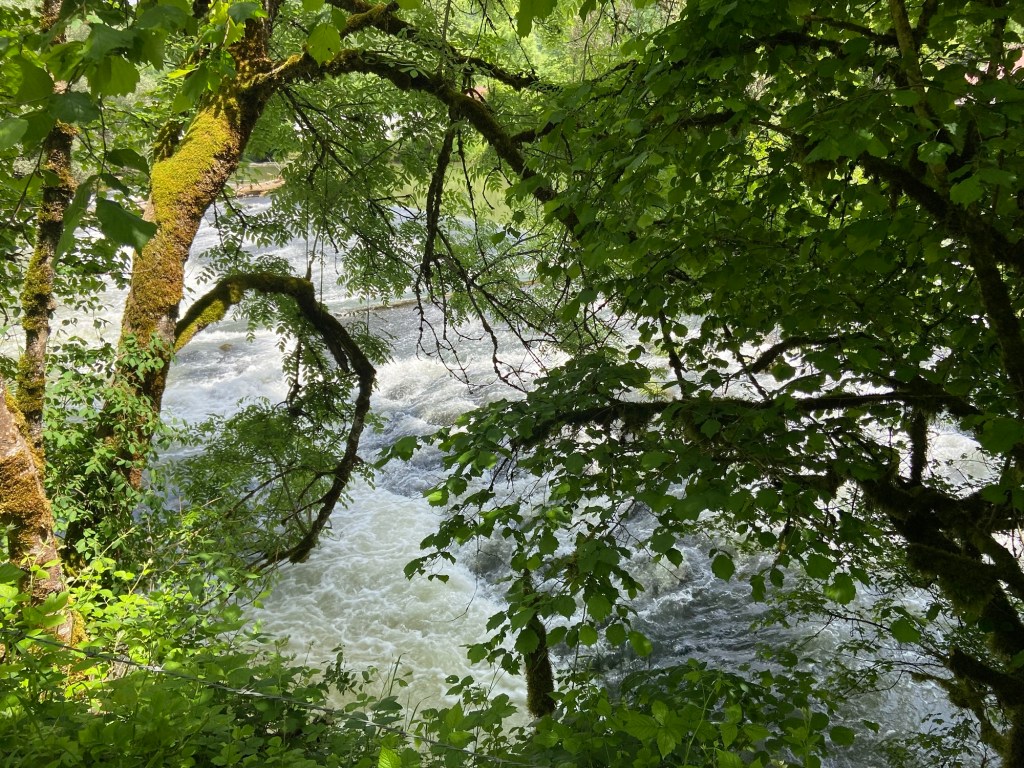
I came to a picnic bench situated on the bend of a river, and although I did not sit down, I took off my pack and sliced myself some of the sausage I had bought back in Besançon to eat as a walking snack along with the remainder of yesterday’s baby plum tomatoes, to keep me going through the hot afternoon.

The valley unfolded itself with views away to the limestone scarps on the other side of the river valley across meadows filled with corn and buttercups and waving grasses.

Even though I was on my own, I couldn’t help exclaiming in delight.

The route passed by a bridge enticing one over the river, but Montgesoye village proper seemed quite a long way away from it. I did want to see the lovely old stone bridge pictured in the guidebook, but on the map it looked as though this modern bridge was the only one there was, and I didn’t want to lengthen my day further tramping around trying to find it, with two more villages still to come upstream. For now I just enjoyed the water flowing smoothly into the weir, then foaming and boiling chaotically.

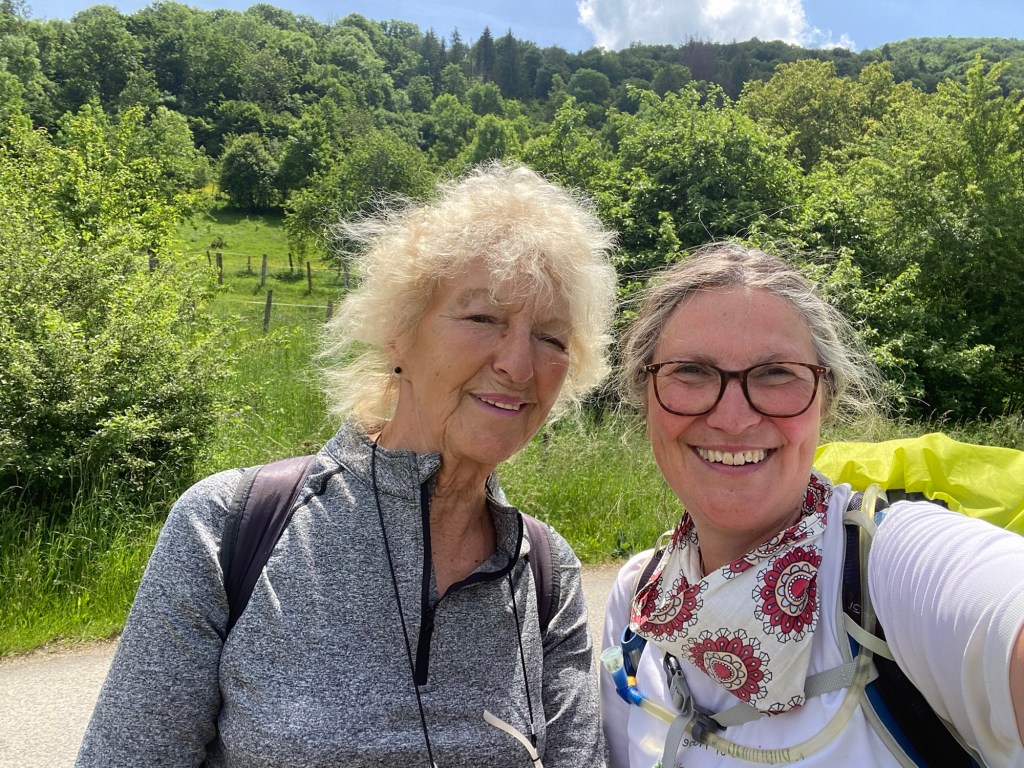
So I continued down the valley on the flat, easy track to the next village of Vuillafons, where after 20 km I was now determined to find somewhere to stop. On the outskirts coming towards me was a woman with a corona of white blonde hair and in the distance I thought for one moment it was my walking friend Jane. However, of course it wasn’t — Jane is back in the UK packing her rucksack for the Portuguese Camino. It was Evelyn, by the looks of things was a really strong walker herself, who insisted that I was ‘formidable’ to undertake this long route. I liked that appellation. It pretty much describes the undertaking in both a positive and negative sense, and with 975km under my belt by the end of the day I feel I will have earned it. We agreed that we did like walking on our own — in Evelyn’s opinion it was hard too find other walkers whose walking rhythm matched hers. It was so nice meeting another woman walker, out on her own — the only one apart from Regine, way back in the Nord Est, and Dalia, whose steady 6km/h rhythm certainly no one could match!
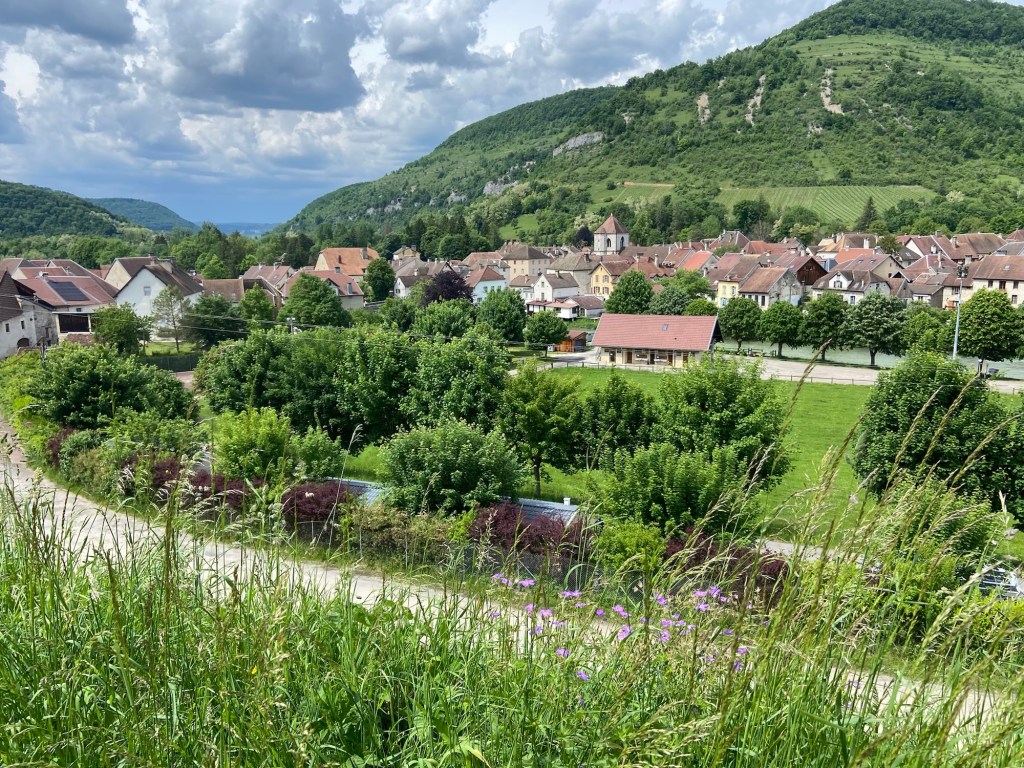
The bridge in Vuillafons seemed to be the one shown in the guidebook captioned as being in Montgesoye. If it wasn’t the same one it was very similar and equally pretty. Here as in Ornans the houses came right down to the river, and the skies were full of house martins.

I was looking for a bench to sit in the shade, when I noticed a little bar restaurant with a selection of lovely tables outside, a board advertising ice creams, and Alain sitting with his afternoon digestif.
I ordered two scoops of ice cream and sat in the shade savouring pistachio and peach whilst I chatted to Alain. At the end of the 1950s he had worked in London as a cook, first in the Hilton on Park Lane, and then in a fancy French place called Le Marcel Restaurant where the kitchen was in the basement, so the waiters had to go up and down the stairs with the dishes. He told me one time he’d put his hand in the flour and patted one of the waiters on the backside, who then carried on serving tables, not understanding why everyone was laughing at him — when he found out he was livid! Chef Alan was an absolute card. He had no teeth, and two fingers and a thumb on his right hand. I asked him whether he was drinking Pernod, but he turned the glass round to show that it was Pontarlier, a less sugary local version. As we said our goodbyes and I shook his hand, I said that I would have one when I get to Pontarlier tomorrow night, and would think of him as I drank it.

Then it was over the old stone bridge and up a steep track climbing above the valley. The early part gave fantastic views backwards towards the village and beyond down the valley the way I had come. These little mountain villages of the Loue really are spectacular — it is extraordinary how the action of the rushing river over the millennia can sculpt these valleys.
At the turn off onto a high gravel track I met Evelyn again coming downhill, just like yesterday when I met the other Evelyn and Nicole coming back from their round walk. We discussed tomorrow’s route onwards from Mouthier and she said the track was periodically closed for rockfalls and fallen trees. She had done it, she said, but it was quite dangerous. It is a real shame because the path up to the source of the Loue river is supposed to have lovely waterfalls, but Ian had already told me it was not to be attempted if it had been raining.

Here it was most definitely not raining. It was much hotter than I had ever anticipated and I was most glad that the afternoon path was a shaded one through the woods.

There were signs up periodically warning of tick bites, ‘a small creature, a big disease’, and I was grateful for the reminder and careful not to let any part of me touch vegetation. I certainly was not going to sit on a bench buried in weeds, with no view to speak of.

The frustration of the afternoon’s mapped walk was that I had to climb to walk an hour on one side of the river, and then descend to the river to cross it only to climb again the other side. But in between was the village of Lods — an unattractive name, but a very beautiful place. The houses cling onto the side of the steep limestone cliffs, and it was good to stop every now on the way up and to catch my breath on the pretext of photographing yet more beautiful things. There was this lizard, for example, who had at one point lost his tail and had grown a new one, slightly mismatched,

and a house with a cascade of campanula and scarlet geraniums on its steps.

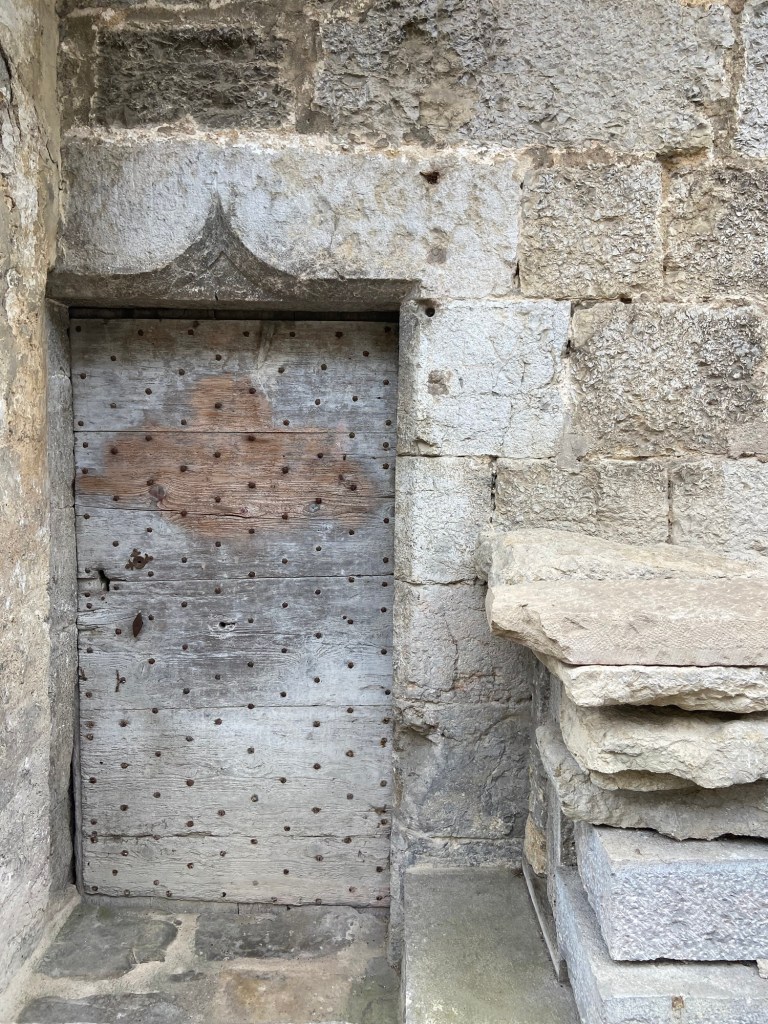
There were keystones above door lintels with carved dates from the 17th and 18th centuries, and hobnailed wooden doors set into ancient stone door cases.
The wine museum was closed but there was still plenty to see on the way up through the village streets: immaculate vegetable gardens, not a weed in sight, roses in full bloom,
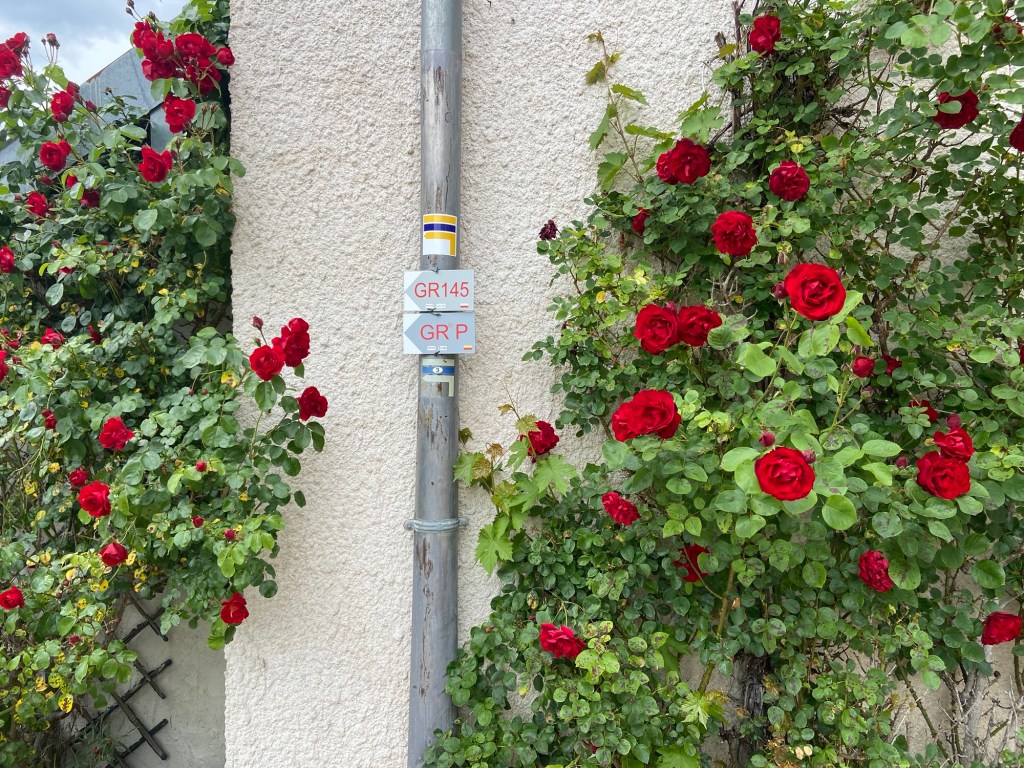
and ancient graffiti.

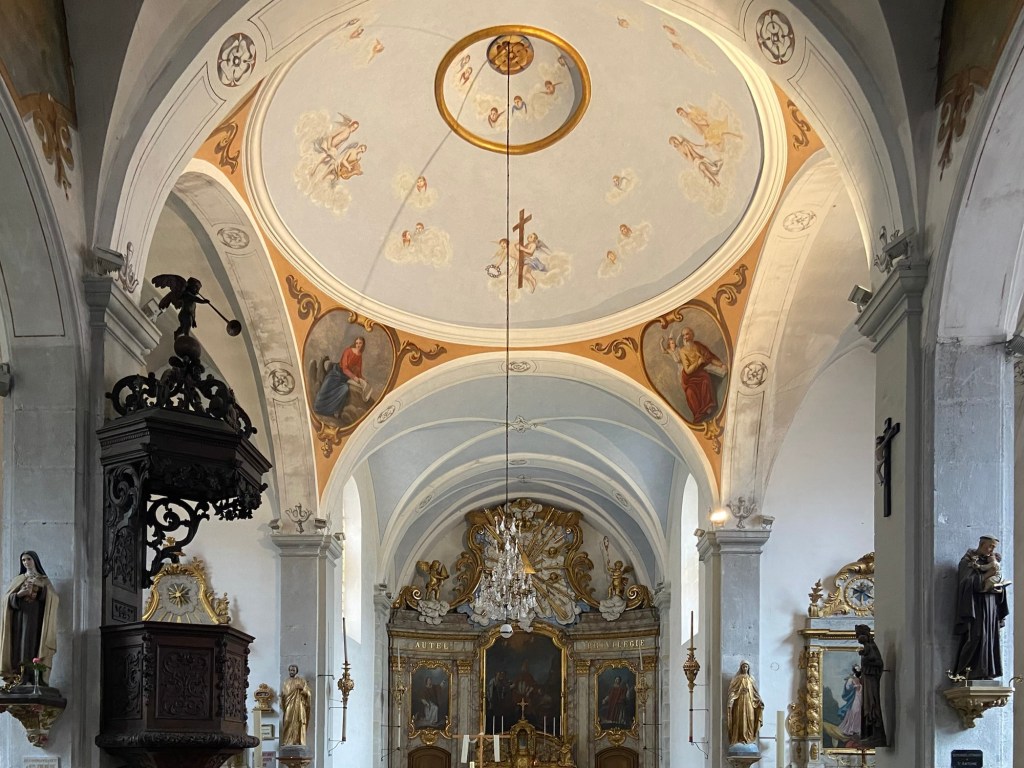
The church was a huge surprise: simple on the outside it was gilded wherever possible on the inside, the cupola extravagantly painted with cherub-covered clouds. Statues lined the columns and there was an ornate carved wooden pulpit with a cherub sounding a blast on a trumpet and standing on one foot what at first I thought was a giant carved octopus.
The path led still upwards, out of the village on one of the Francigena’s very few truly grassy paths, with crickets chirping at the margins and sheep, bells round their necks chiming as they grazed in the steep fields. Ever upwards to a viewpoint signalling an official place to stop, although the wooded crags across the valley and towering ahead were ever in my view as I climbed.
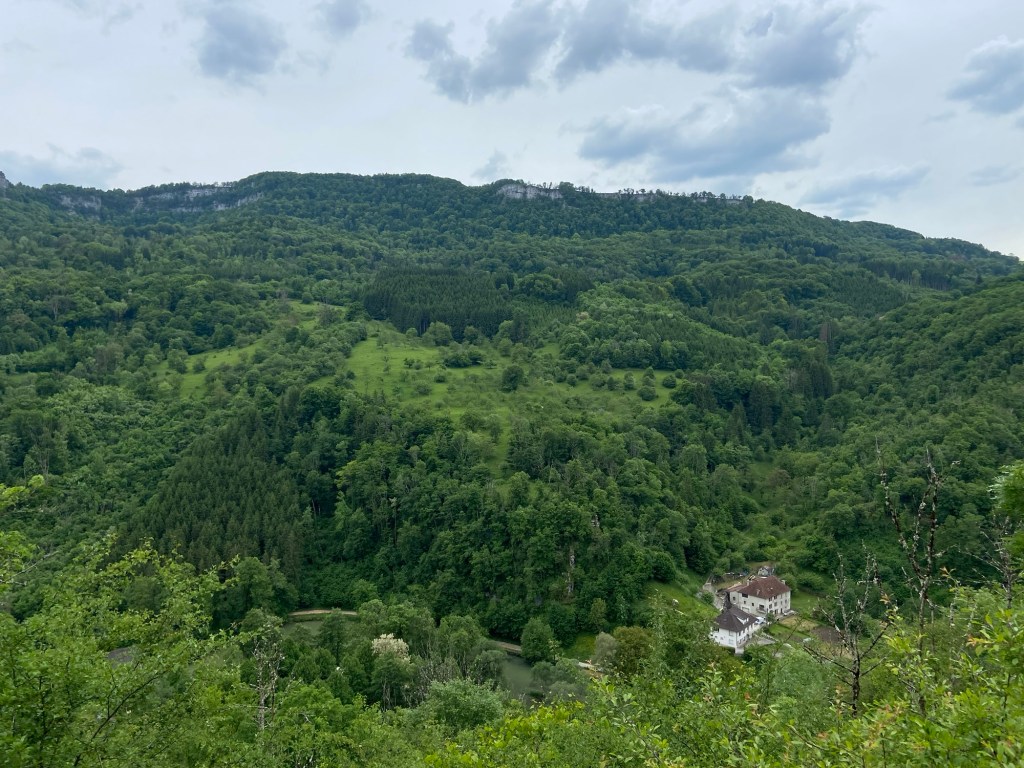
At last, the path gave way to asphalt road and signs pointed forward to Mouthier. The Haute Pierre of its name could have been any one of the rockfaces or calcareous formations above the village, but perhaps there would be time to find that out later. I sat on a bench for a little breather before descending into the village, looking at the first roofs rising above grassy orchards, grateful for Moose’s dates which had provided periodic boosts of energy to get me up the limestone slopes this afternoon, and for Achim’s morning blessing on such a spectacular day.

Stats for the Day
Distance: 28.36 km
Accent: a risible 298 m, although it came in two intense chunks
Pace: 4.7km/h. Respectable.
 Walking The Landscape
What excellent hair Evelyn has! I really enjoyed this, your smiley soldiers and your bar encounters. But I gasped when you said that you didn’t have time for lunch! Whaaaaaat??? 🤣 Glad you eventually had some walking sausage.
LikeLiked by 1 person
HAHAHAHAHAHAHA!!
LikeLike
4.7 is much more than respectable I’d say, especially uphill as on little fuel!!!
LikeLiked by 1 person