
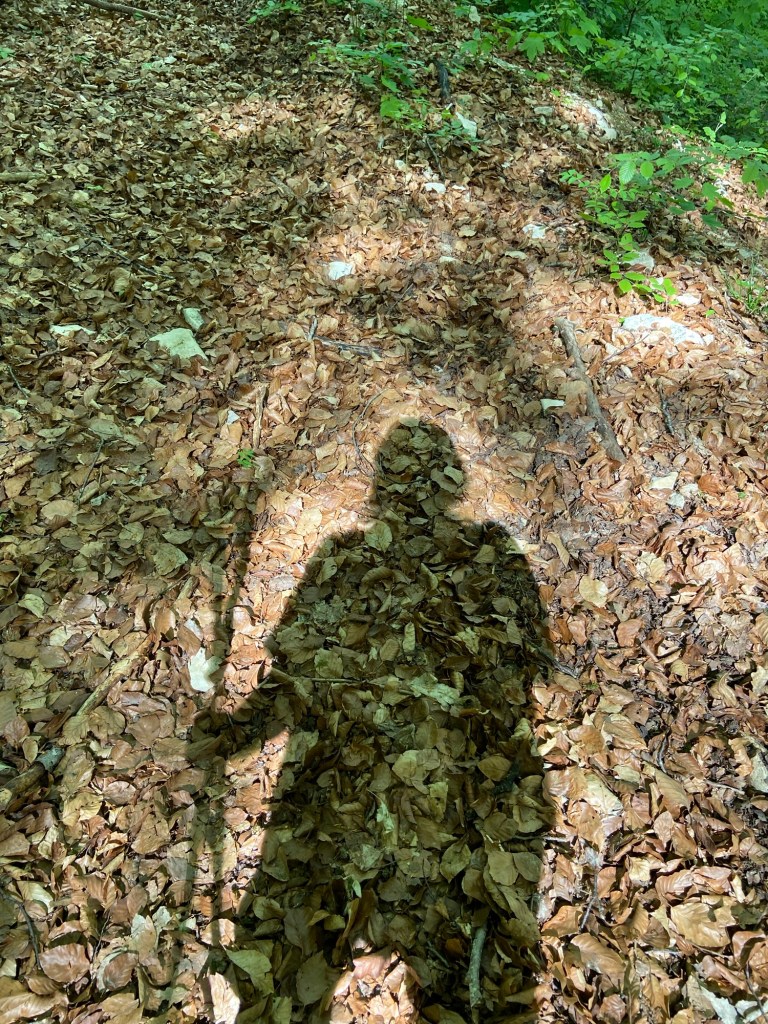
Ambiguity is the essence of the woods, where every step taken asks us to confront our own values and choices.
Fyodor Dostoevsky
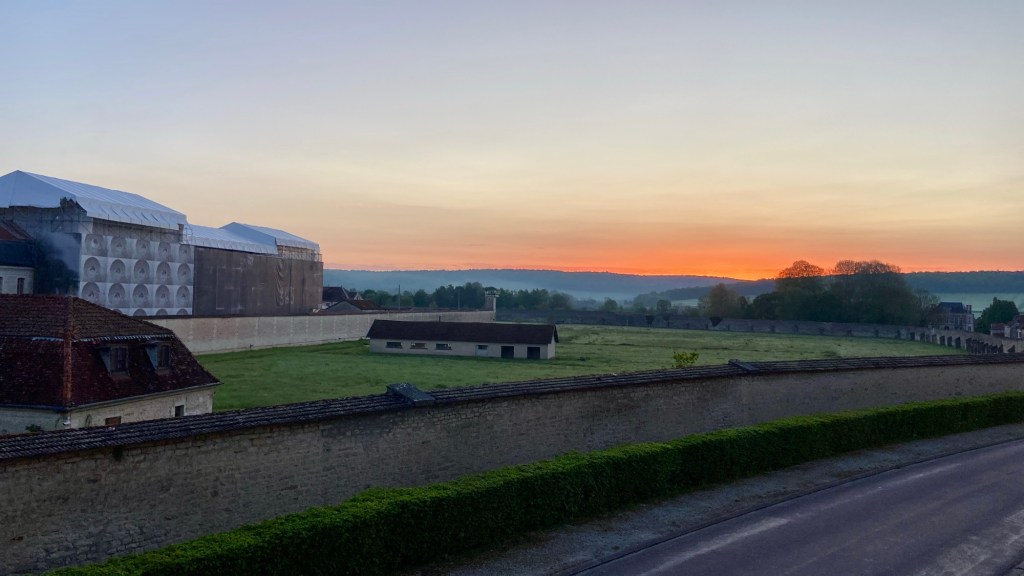
My room in the otherwise unoccupied pilgrim hostel looked out over the wall into the Abbey grounds, where the security lights stayed on all night, and where a blush sunrise suggested that life was rosier on the outside.
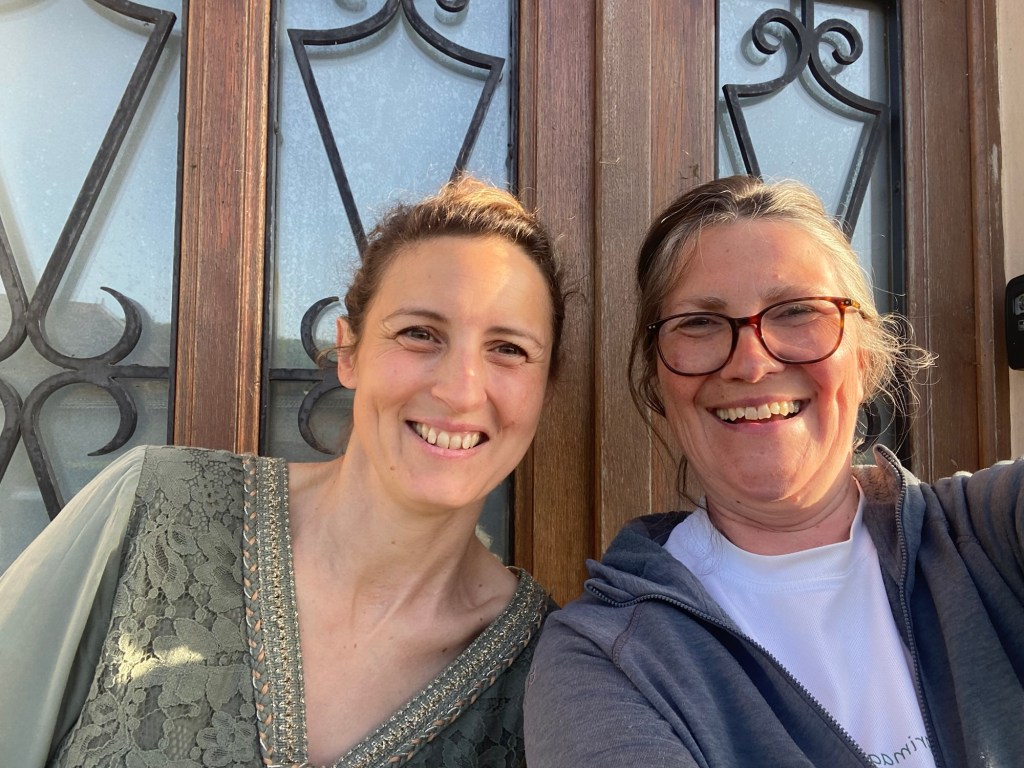
Lovely Aude came round with my breakfast early this morning, because I had been intending to get away early — although as it turned out it took me so long to get the photographs to display properly on yesterday’s blog that I didn’t get away until gone 10 o’clock. Ridiculous! Aude and I had a lovely chat before she went back to her children, and her husband the chef at the Abbey hotel. It turns out that last night’s restaurant quality meal really was exactly that.
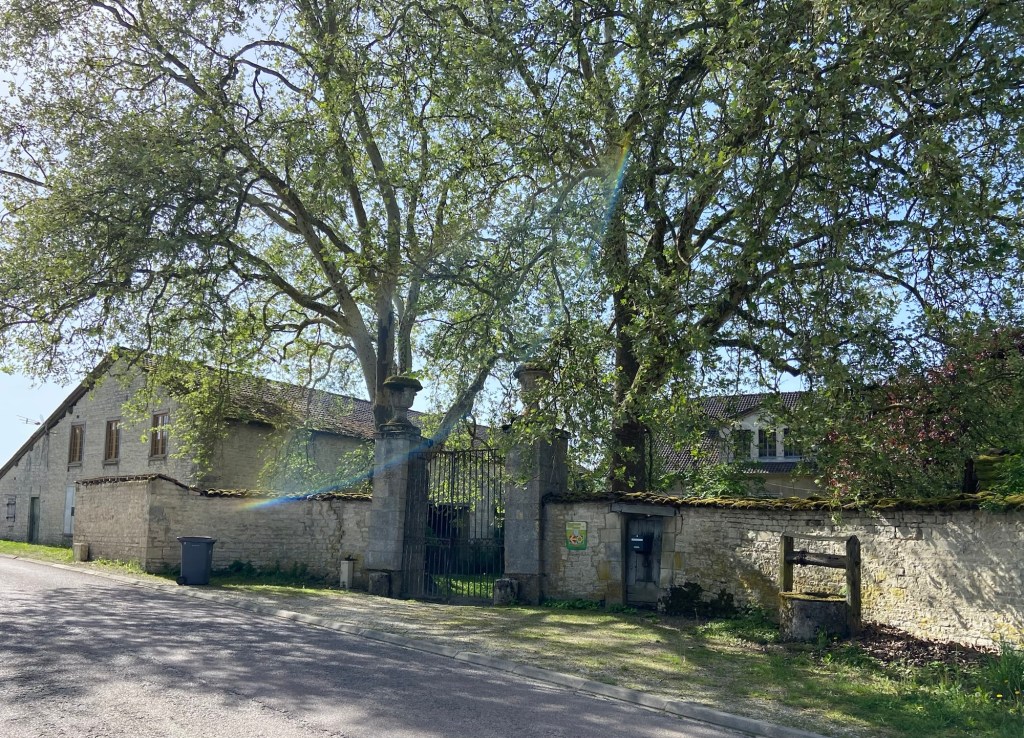
Although I had set off late, it did not yet seem too hot, for which I was grateful because I knew that I had quite a bit of up and down to do today in the forest. I enjoyed some immediate shade provided by two mature plane trees outside a farm with an old wishing well,
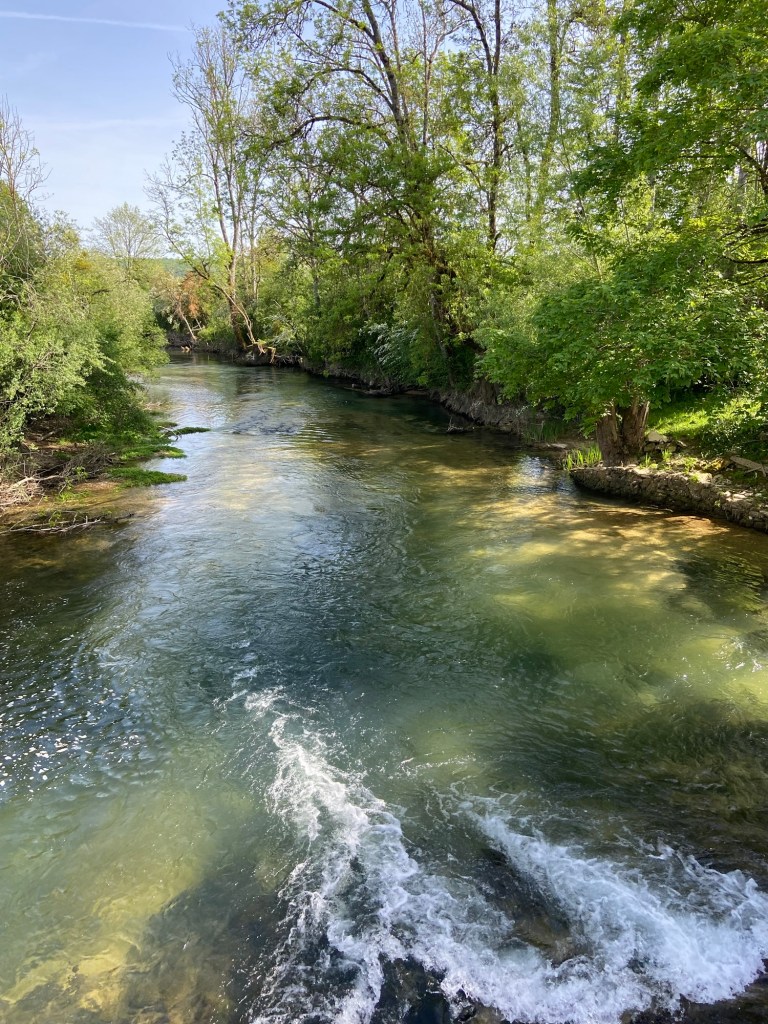
before my fourth? fifth? crossing of the Aube, here just as fresh and limpid, but noticeably younger and smaller upstream.
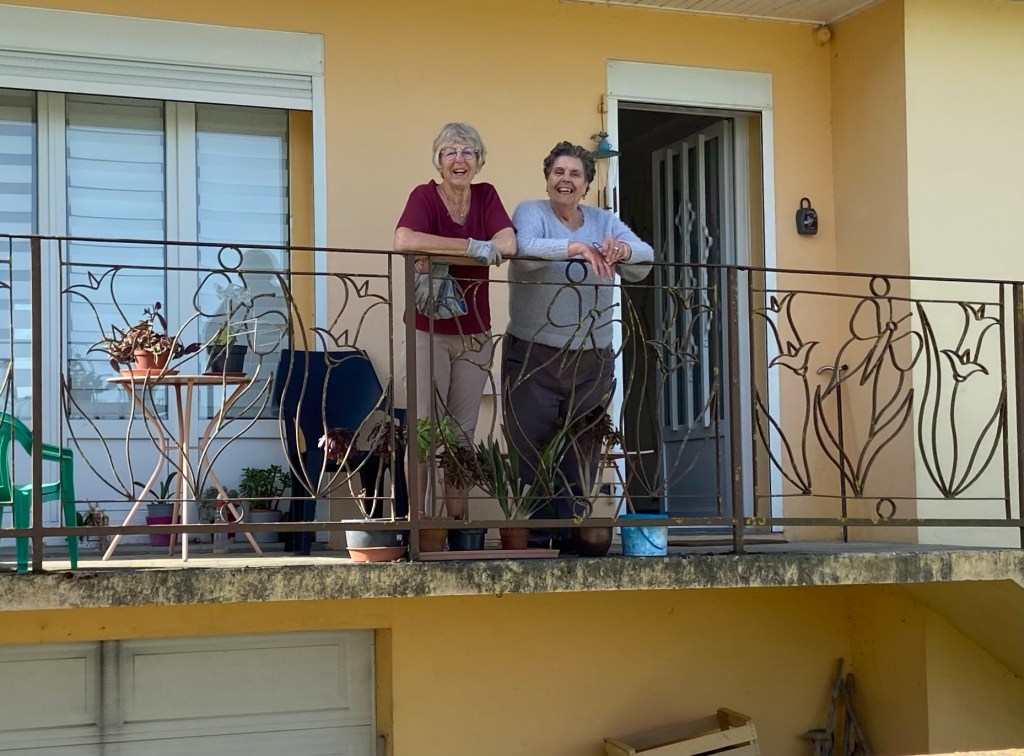
At the bottom of the first climb, I stopped to chat to two neighbours installed on the shady balcony of one of their houses, chatting away. They were so sweet, concerned that I had enough water and asking whether there was anything that I needed. ‘Only a new pair of feet!’ I called back, although this was for dramatic effect, since really my feet have been remarkably happy on this walk. This would change by the end of the day.
Up the hill I went, listening to the climax of my audiobook and completely missing my turn off, continuing for ages before I realised and increasing the day’s length by a good couple of kilometres. I even had had a clear signpost in one of the photos I took looking back towards the Abbey the way I had come, as I pointlessly climbed the wrong hill.
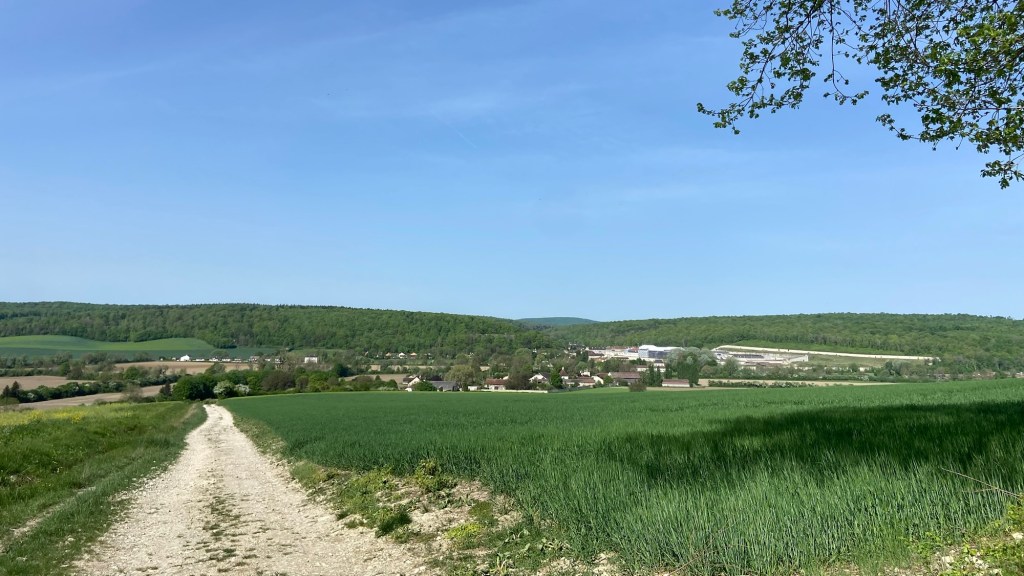
After a little while on the gravel road, the Francigena, here sharing the route with the Joan of Arc trail, turned off onto a dirt track which pretty soon became (according to the guidebook) a swampy path, ‘where you may encounter severe mud’.
There wasn’t any difficulty in this dry weather in negotiating the swampy bits, but I was somewhat concerned that they might be used as wallows by wild boar.
In a couple of stages’ time the guidebook warns to watch out for rooting activity and gives instructions for avoiding encounters. At first I could see no evidence of rootling, nor of tracks, but as the path took me deeper into the forest, I started seeing cloven hoofprints that seemed to me wider and more porcine than the narrower and more delicate prints of deer, and certainly heavier.
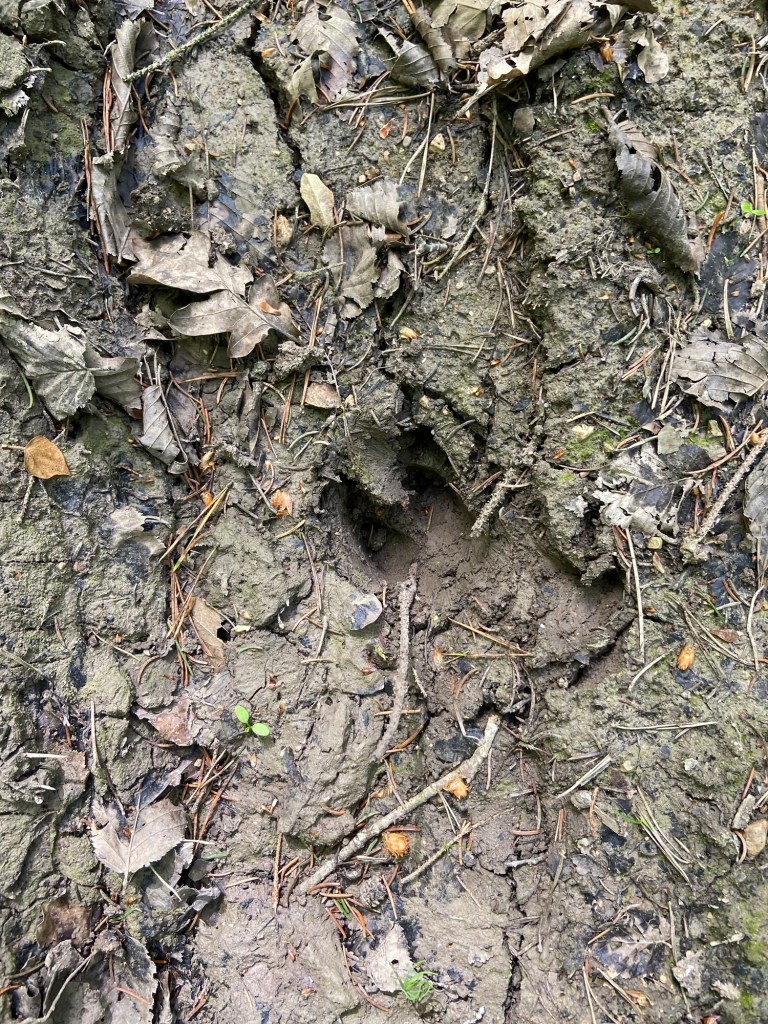
Some of the more permanent-looking muddy patches seemed potentially to have been used as wallows, with flattened sections of mud looking as though a powerful body had lain there and left the impression of its bristly pelt.
I was watching for an uphill turning which would carry me off the swampy path and away from the attractions of the mud. But I was still looking out for rooting activity, and sure enough there it was in the leaf litter on the path.
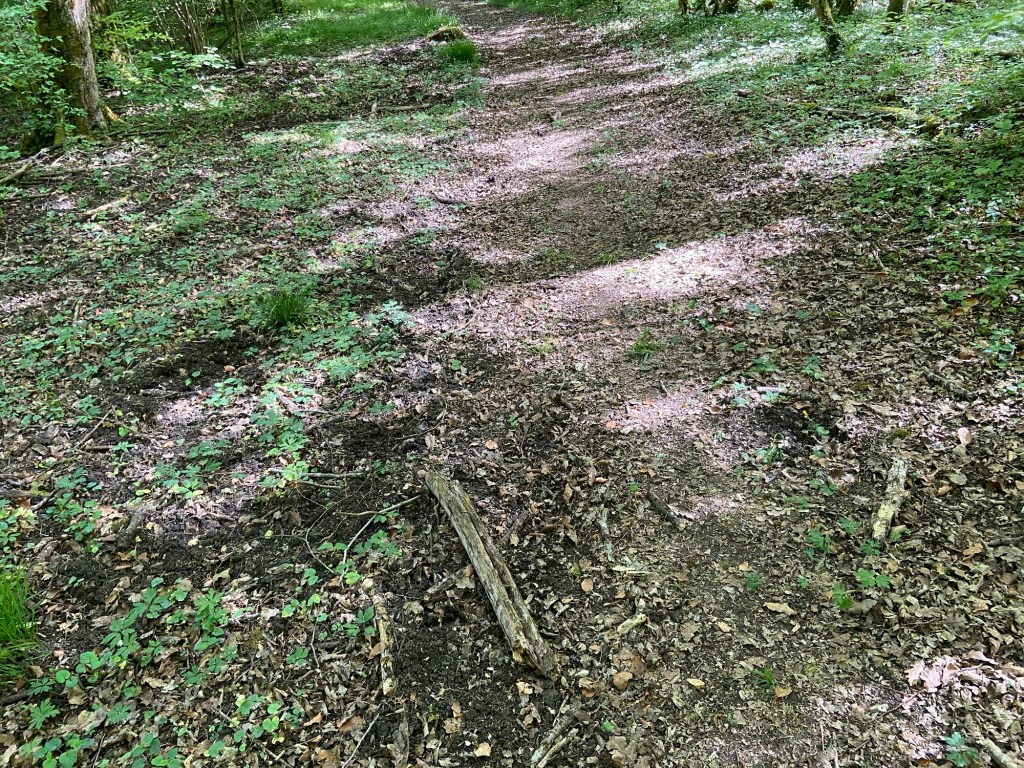
The guidebook had advised to make noise to scare off wild boar, and I was playing my new audiobook at the loudest possible volume. Having absolutely no experience of the creatures, though, I wasn’t entirely sure this constituted enough noise to have the desired effect, so I complimented the noise by talking out loud to the book.
Who knows whether wild boar are more likely to be active during the day or the night? I didn’t. But I did think it likely that if there were boar out during the day, they might well have piglets with them, this being the breeding season. And I did know that a wild sow with young were very protective and very dangerous.
I looked ahead to the map. Most of today’s path was through the wood, and the annotations to the map indicated that the paths weren’t gravel tracks either, but much more casual hunting tracks, grassy or leafy. I came to a brief section where the path intersected with a gravel road for vehicles, and I could see that this dropped down to the road which would take me along the river valley. It might be a longer route, but at least I would feel less at risk. I was feeling, for the first time in 700km, unsure and unsafe.
The gravel road and the hunting blinds soon gave out though, so like the day when I went off route coming down to St Thierry I followed paths on the map (although now I was much better at reading it) through a much wilder part of the woods, ironically making me feel less safe as I tried to make myself more so. Some of them were worryingly underused,
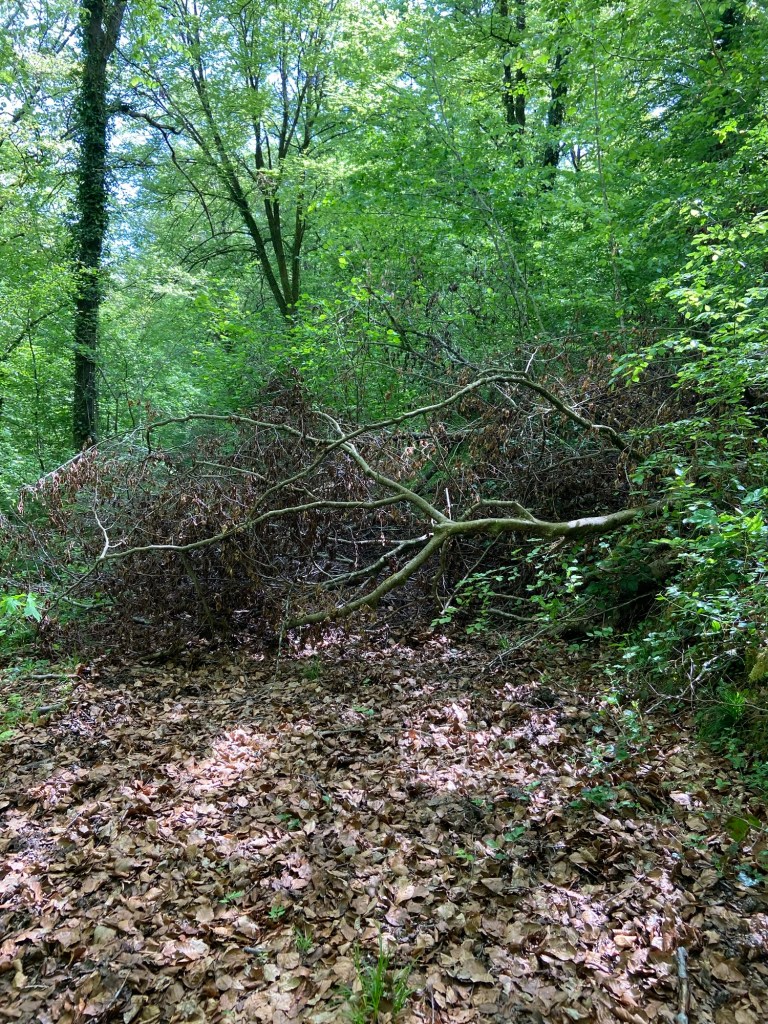
and I had the twin concerns of ticks and wild boar.
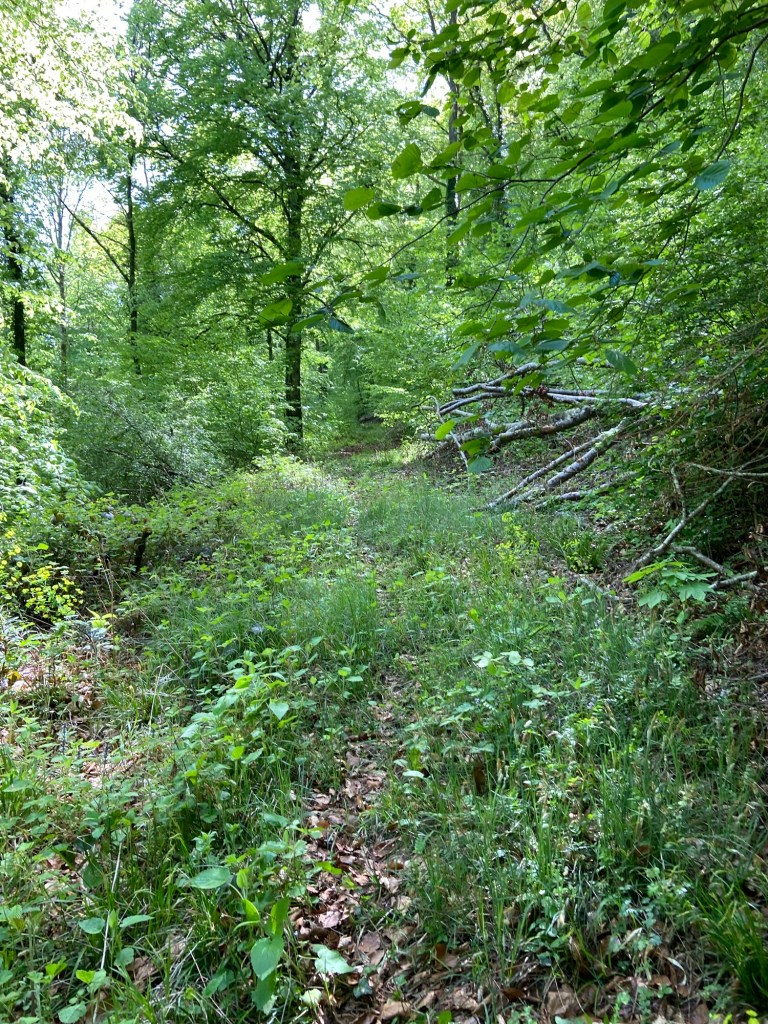
I needed to concentrate too hard to have the audiobook on, so I sang very loudly. I picked the tune of a French Renaissance madrigal (because that is the kind of cultured pilgrim I am), and made up my own words.
Eventually I picked up a clearer path through beech trees, which took me rapidly down the slope, and here I had to watch that I didn’t turn my ankle on chalk cobbles half-hidden under the leaf litter.
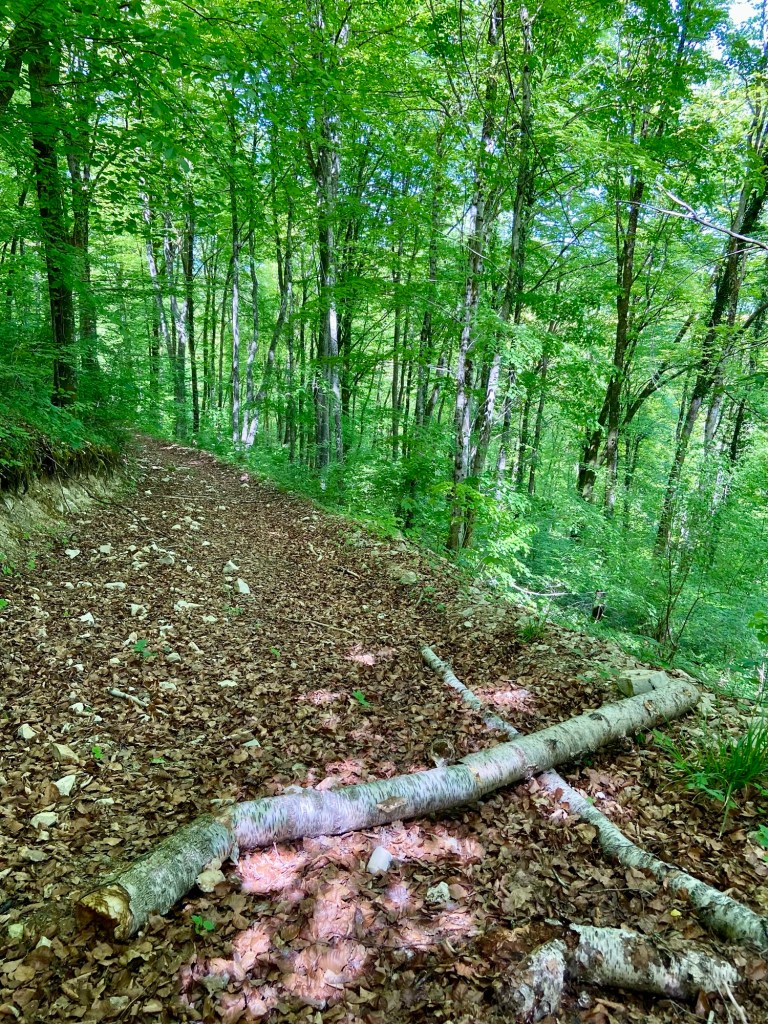
At long last I was back on the road, where my very manageable enemies were only the sun and passing cars.
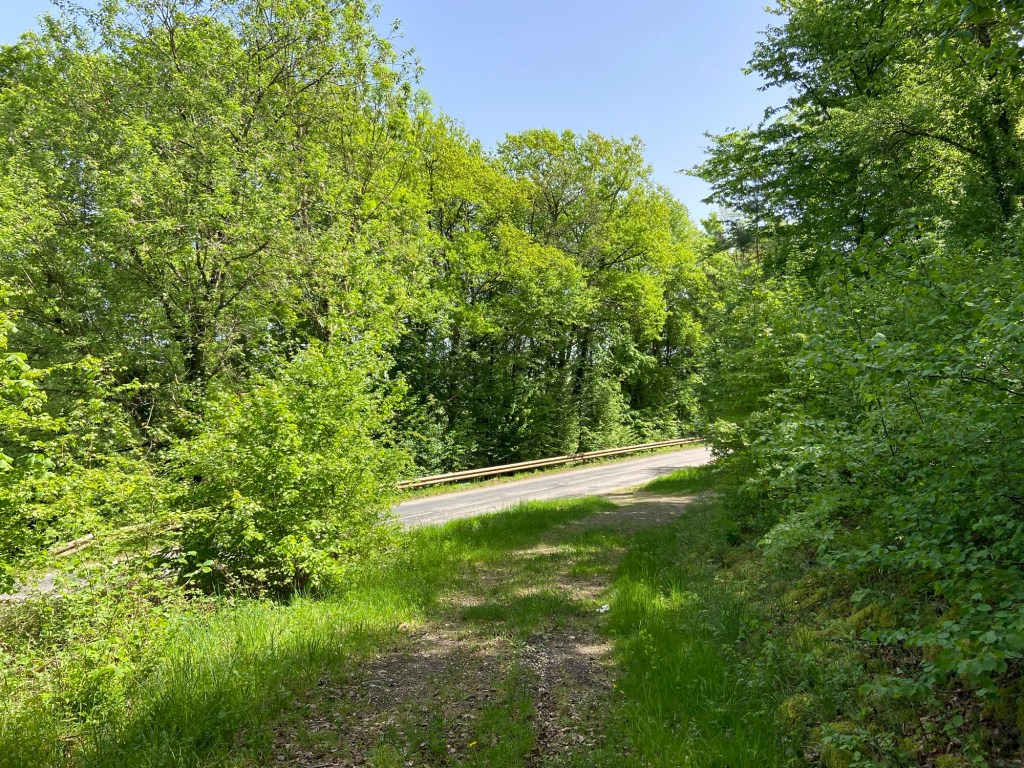
But I felt a lot safer, and my progress was a good deal faster. Here was the cheerful river Aujon, splashing down a succession of little weirs. I promised myself that if I had the opportunity, I would bathe my feet in it.
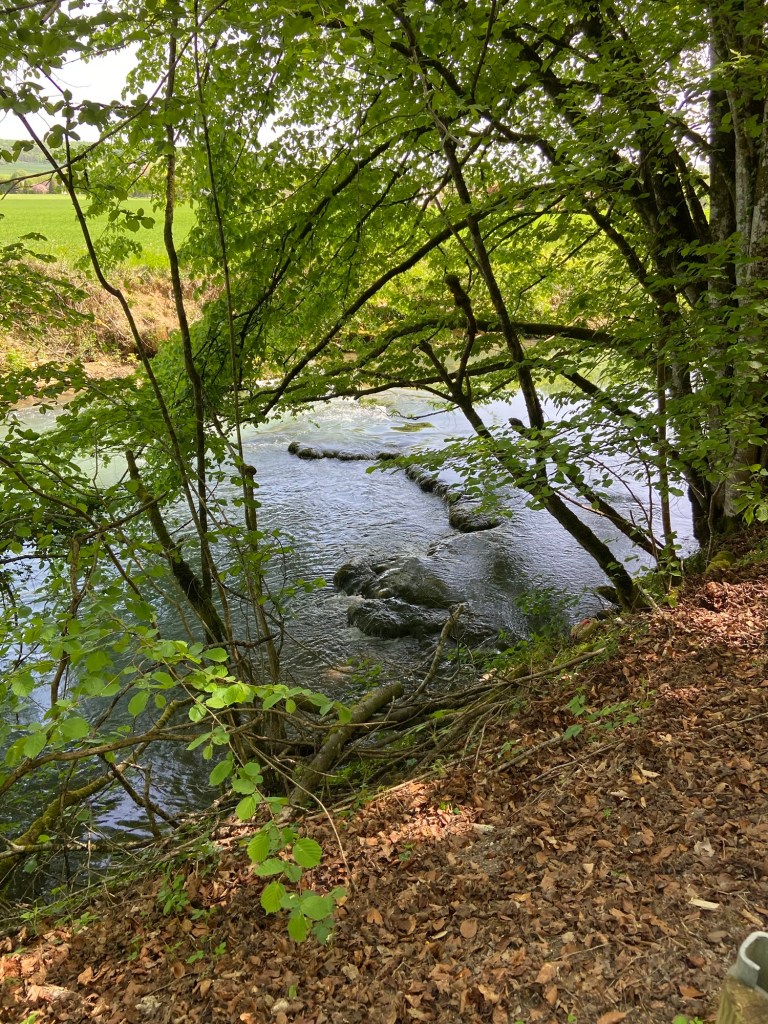
On a suspicion, I checked the distances I had l travelled and those I still had to go via Google Maps. I had come 9.5 km in what felt like a very slow, laborious and stressful two and a quarter hours. If I had simply come around the road from Clairvaux it would’ve taken me just over an hour to go the 5 km from where I had started. I had completely messed up the distances today by taking the wrong turn earlier on, then bailing out of the woods, but I felt 300% safer and very happy with my choice.
I wasn’t hungry yet, although it was 12:45, but I guess that fear does this to one. Does the adrenaline which prepares the fight or flight response cuts off production of the hunger and digestive hormone? I guessed I would probably feel ravenous later.
And sure enough by the time I reached the village of Maranville I was tremendously hungry. There was a providential bench in full shade next to a bridge and an old fire wagon, repurposed as a municipal flower trough, against an aural backdrop of the soothing sound of the Aujon flowing down to the Marne.
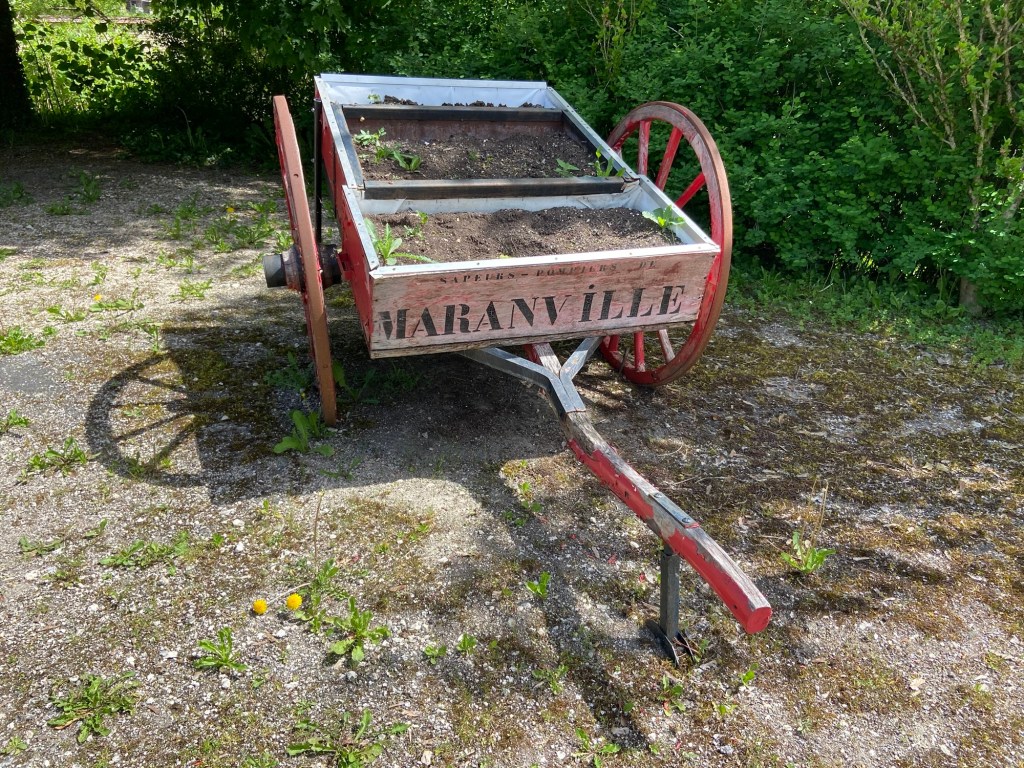
I dug into my pack and pulled out Micheline’s box, still going, which I had stuffed with the lentil, spring onion and chorizo salad from last night, ACTUAL WHITE ASPARAGUS, and a charcouterie assortment, none of which I had had room for after polishing off the enormous plate of beef stew and stoved potatoes. I hadn’t been able to manage any of the bread either, which I had made into a sandwich with the two thick slices of pate and the onion marmalade from last night‘s incredible spread.
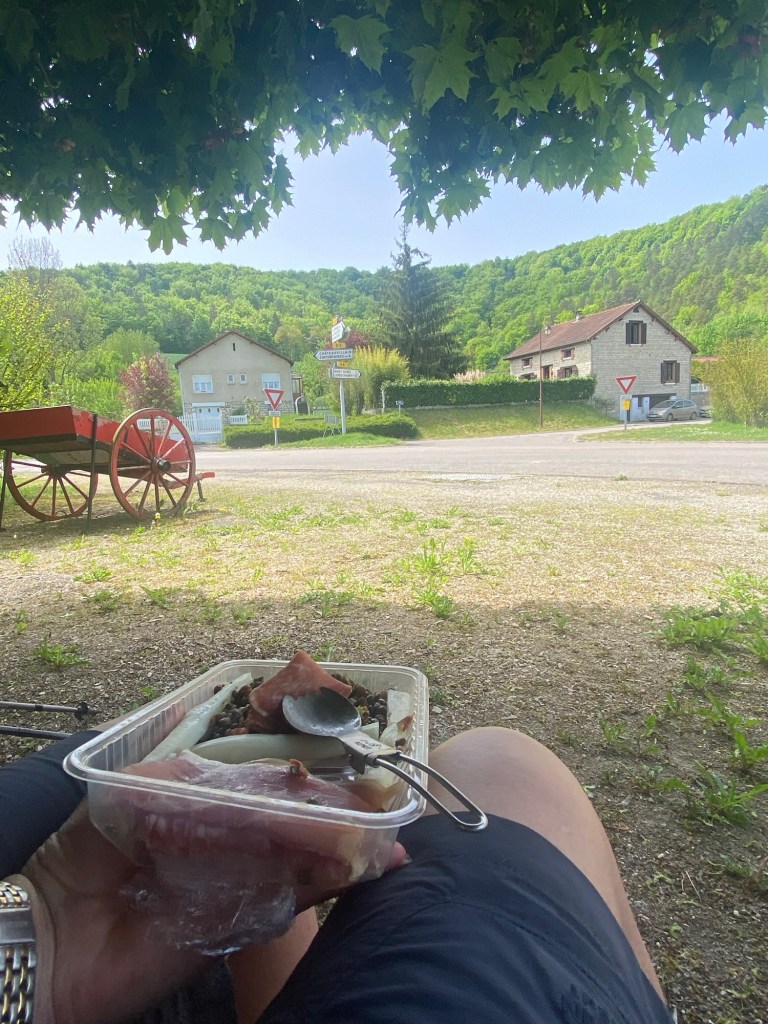
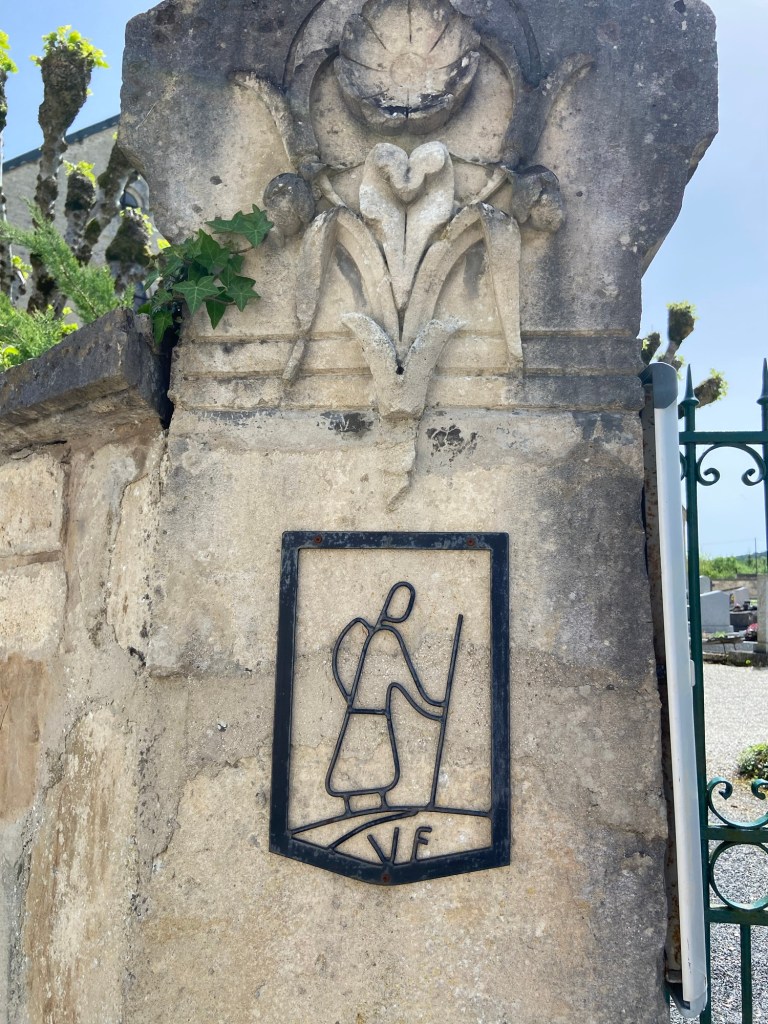
Maranville was small but, after my experience in the woods I was prepared (like Mr Bingley) to be delighted with everything I saw. Behind a high cupressus hedge a nightingale sang in someone’s garden. A pilgrim welcome sign on a church gate made me feel welcome and a good deal less alone.
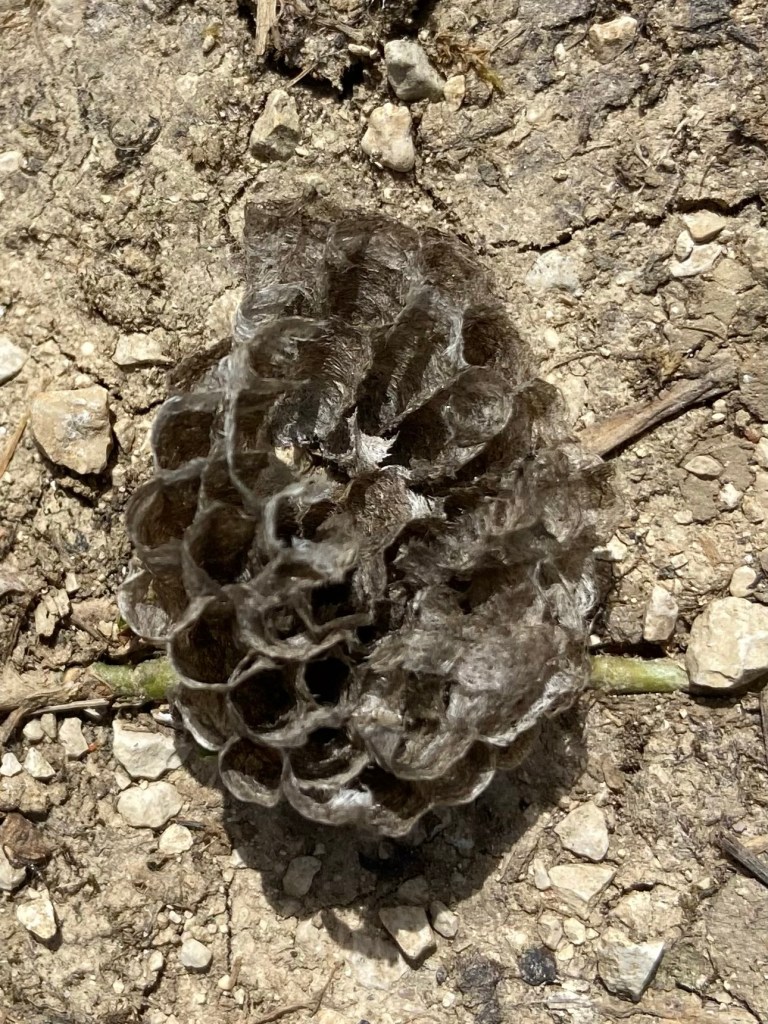
There was a tiny, papery wasp’s nest on the path, much too small to belong to one of the hornets I have periodically seen over the last couple of days exploring the cornfields and verges.
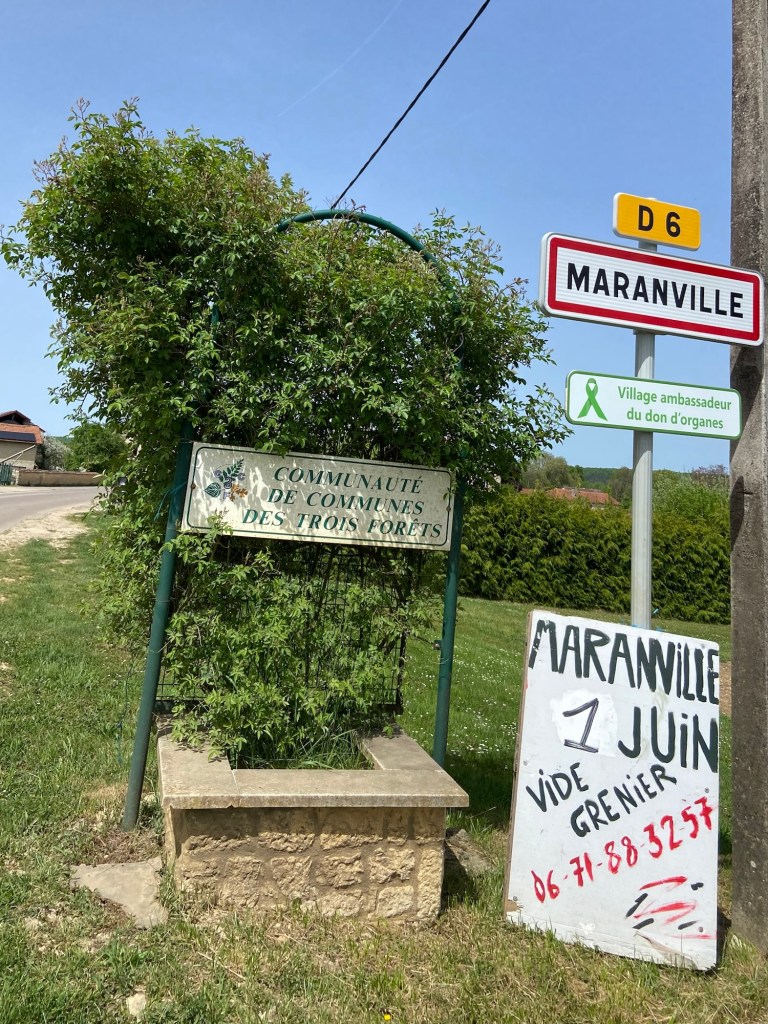
On the way out of Maranville I saw a sign for a Vide grenier. Isabelle had taught me that word the day before yesterday — it means a car boot sale. This evidence of an increasing knowledge of the language also made me feel more connected to the places I passed through.
The next village rejoiced in the name Cirfontaines-en-Azois. I sat down in a tiny patch of shade on the very edge of a bench under a tree pollarded to render its ability to provide shade almost negligible, and inspected my shoes. I was developing a blister on my left heel, and this was because the padding on the inside of my trainer has worn away, the spongy stuffing come out, and so the internal plastic I think has been pressing onto my heel.
Compeed sorted it out as usual, and I stuffed a little bit of the sheep’s wool that Ian had given me down in between my sock and the heel of my trainer. That ought to plug the hole, I thought. If only my running repairs expert hadn’t taken the gorilla tape home with him I could tape it in place. This was a good enough Heath-Robinson repair, though.
The next problem to solve was once again water. And once again, it had run out at exactly the right point, where I might find means to refill it. On the other side of the road was Yvette, sweeping the pavement outside her house. ‘You are not to the first person to ask me for water!’ she said, showing me into her shed where she kept a pack of 2-litre bottles. She filled up my water bladder and let me drink the rest of the bottle. ‘Oh!’ I said. ‘You have swallows nesting in here!’
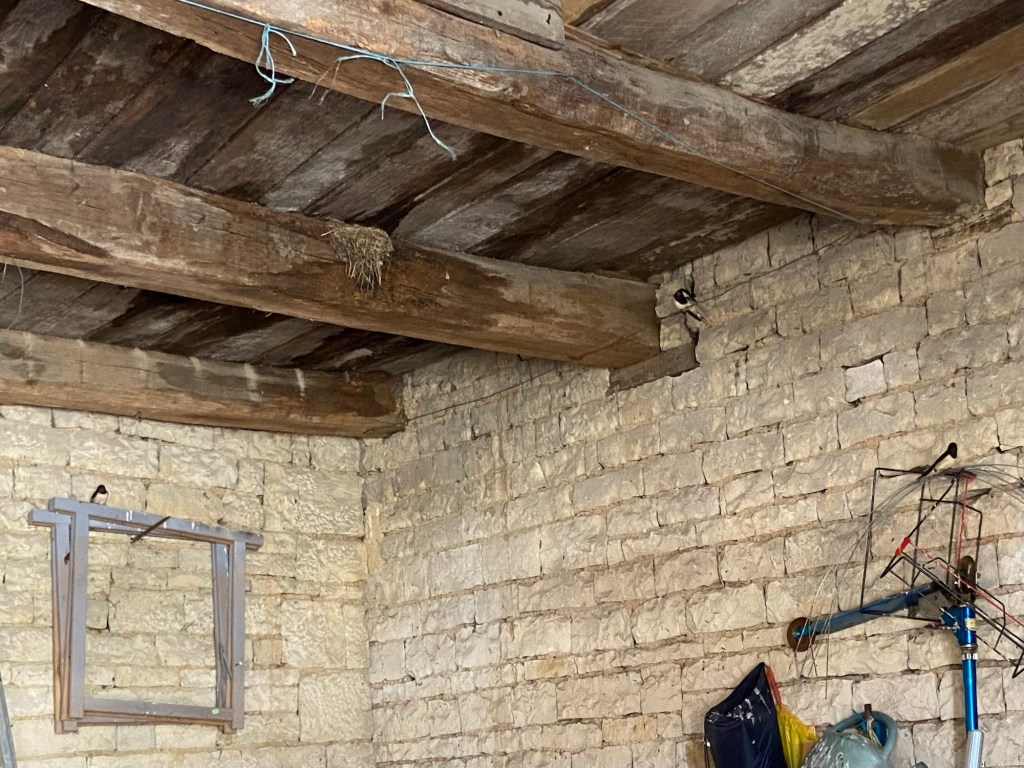
They always nest here, Yvette said. She keeps the street door open for them. Swallows were sitting quite quietly on an old ladder and some wooden and wire frames on the wall. She pointed out a pink bicycle helmet hanging up in her scullery next door. ‘Sometimes they nest in there too,’ she said. ‘A nest fell out of the eaves, and my husband put it and the little birds in there, and their parents continued feeding them there until they fledged.’ I’m so glad I met you, Yvette. Thank you for your generosity.
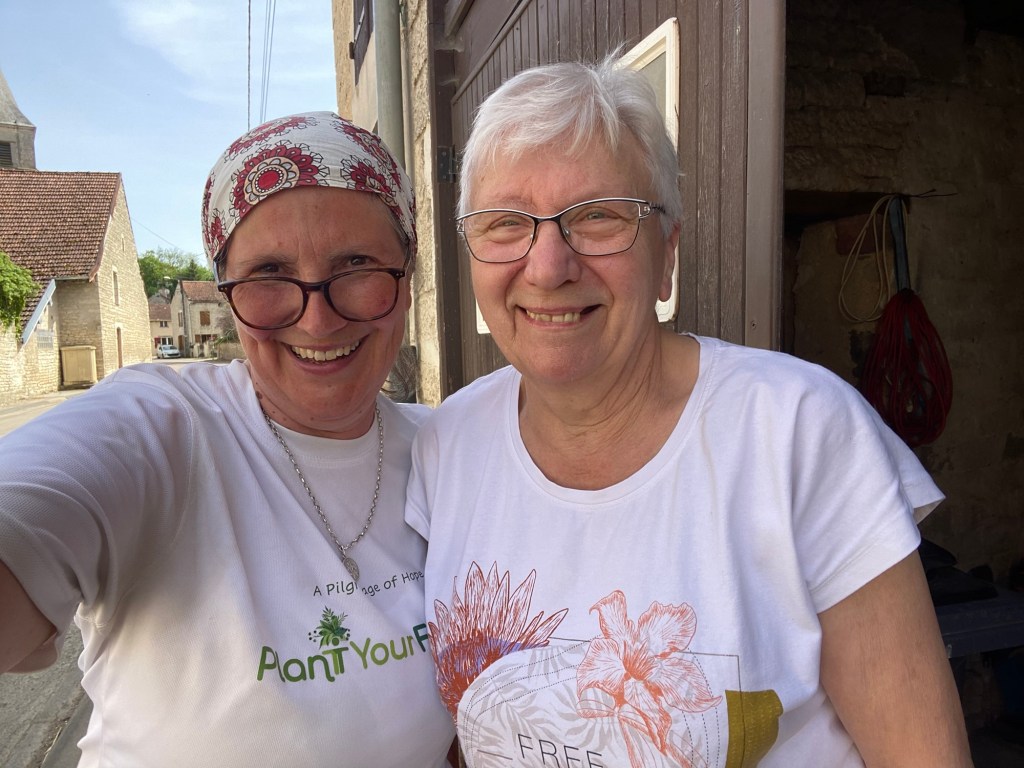
Cirfontaines was an altogether friendly little village. As I checked my route, an old man came out and asked me if I needed any help. His women folk watching from the porch wished me ‘bonne courage’ as I walked on, and when I turned back to wave, two inquisitive giggling little girls were sticking their heads out from another gate, wanting to know what was going on. Me, that’s what. The local curiosity.
With as much water as I needed and a flat road, it was only going to take me now an hour and a half to get to Orges. I hacked along the road and turned off to join up with a back road that was going to be much more peaceful (taking out a small chunk of the official Francigena and thus missing out the 300-year-old mill that is being restored by the daughter of my hosts tonight, as I later learned).
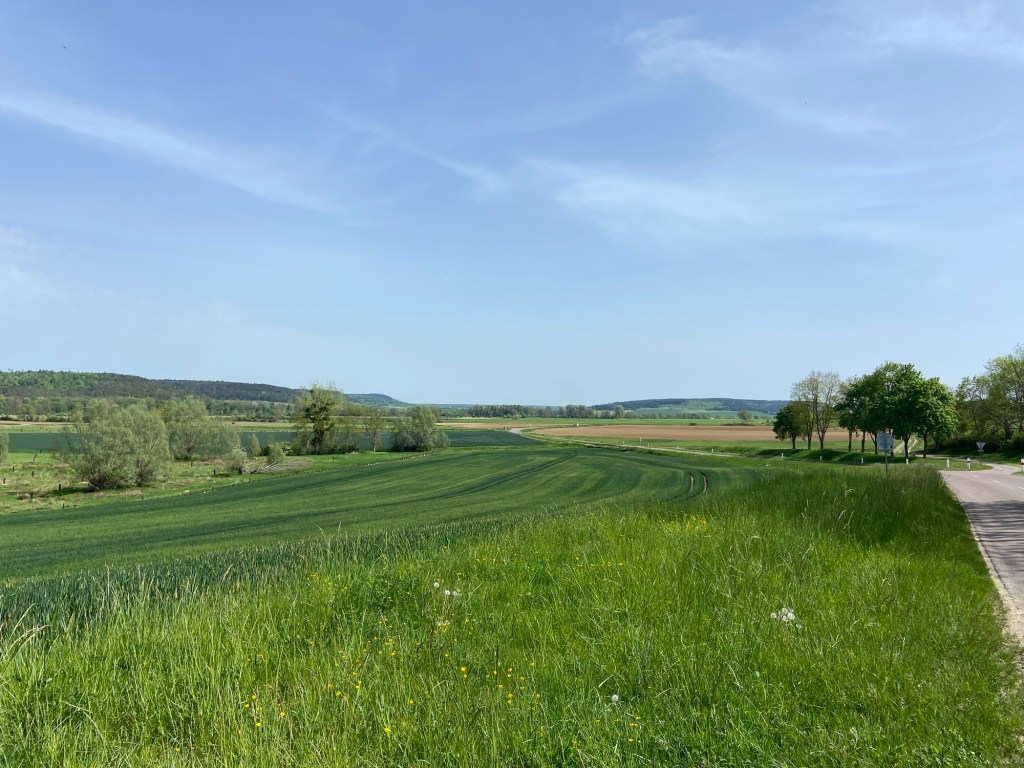
The back road ran parallel to the Via Francigena which climbed onto yet another wooded hill and rose and fell with its undulations until it dropped down just before Orges.
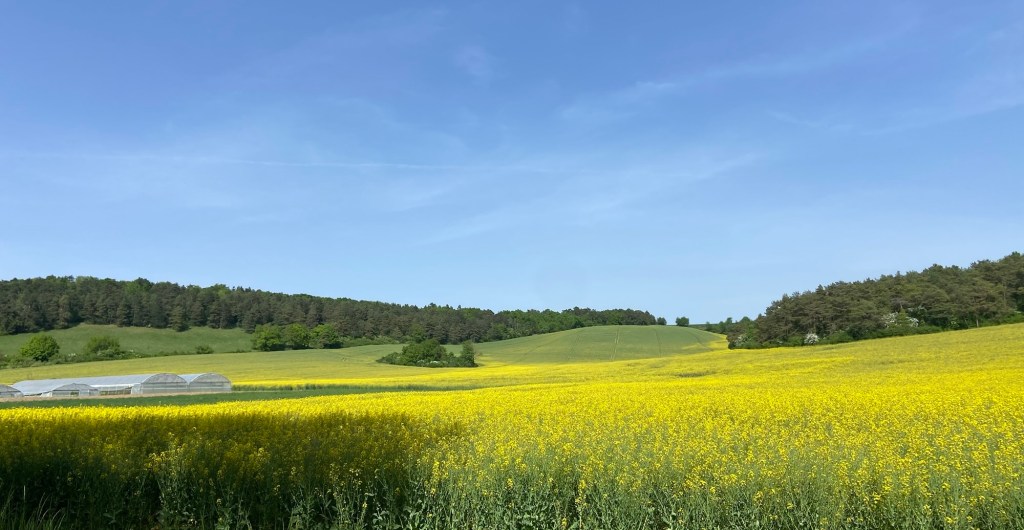
In contrast to the flat alluvial valley I had just crossed, these were familiar chalk slopes, but crops were being grown here, rather than vineyards.
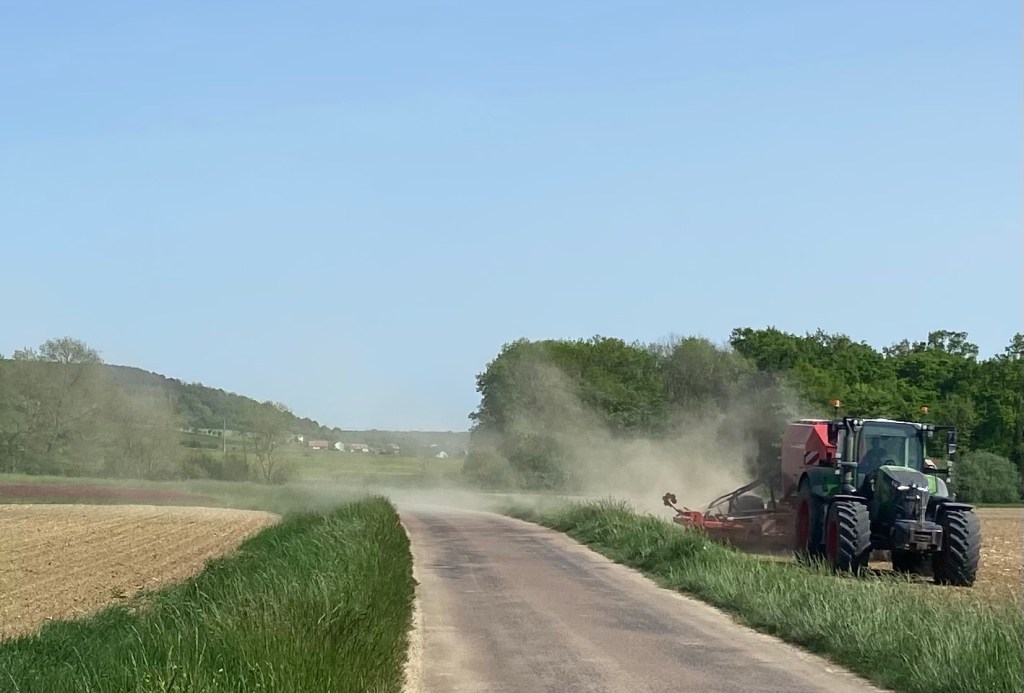
The most startling one was a field full of deep pinky-red clover in full bloom. The white of the chalk behind set it off perfectly.
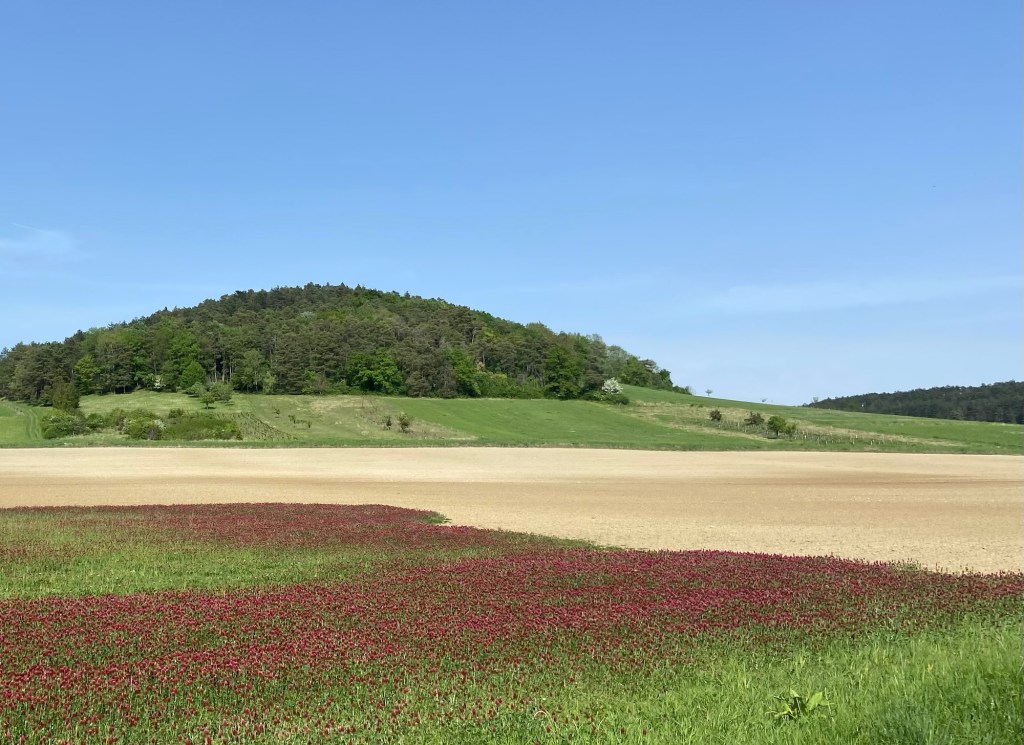
I sat on a bench to contemplate the final kilometre to Orges, and quickly checked on Google Maps to see how long it would take me to get to my accommodation for the night. I saw my dismay that it wasn’t a kilometre — it was 2.5: more than double the distance I thought I had to go, and another 40-minute walk. The place I was headed for was right out the other side of town. It seems always this way at the end of a day! And this was supposed to have been a short one.
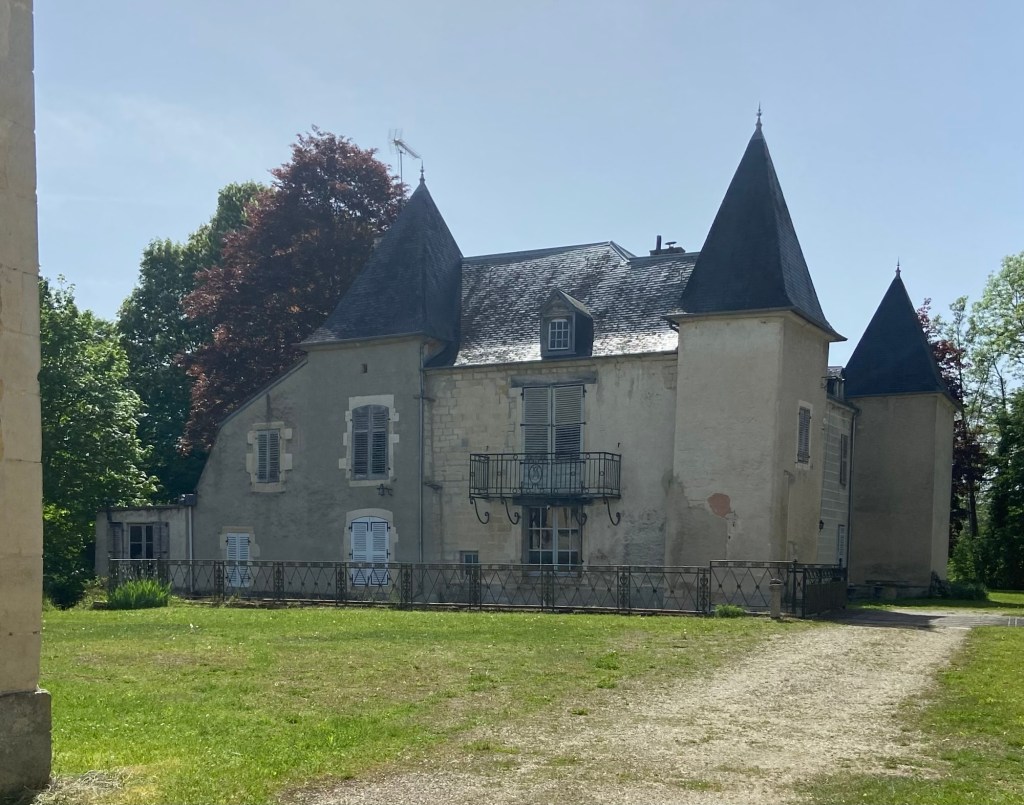
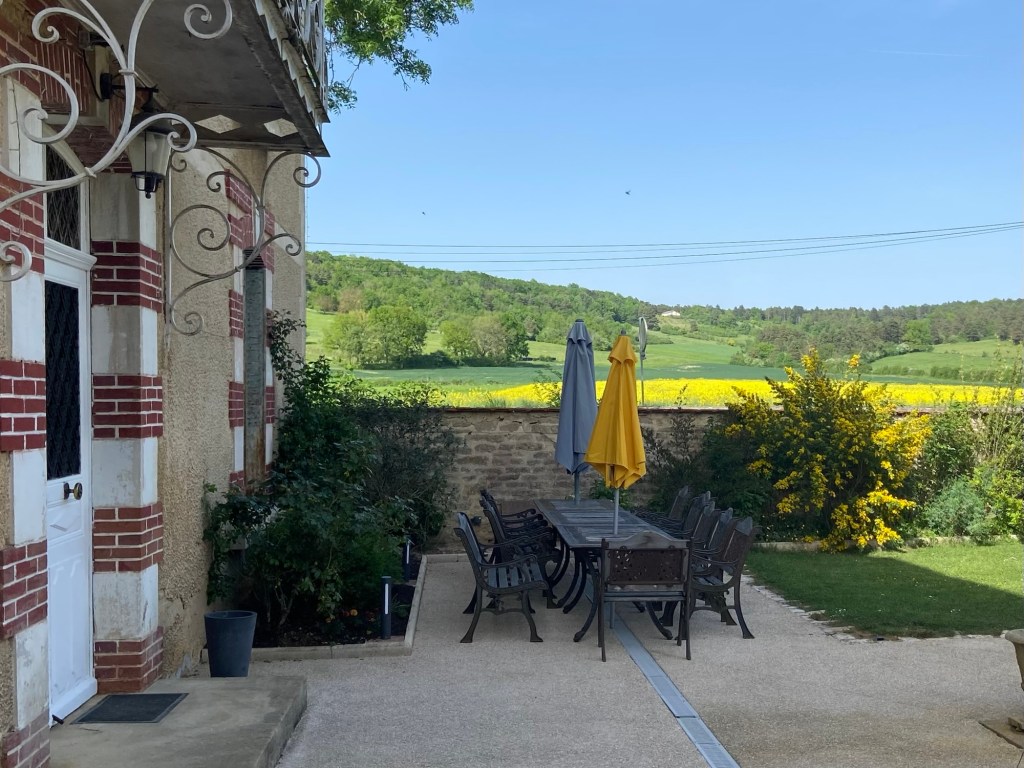
When I got to the Moulin de la Fleuristerie, sitting peacefully by its little river since the days it had been one of the mills belonging to Clairvaux Abbey in the 12th century, Annette my host appeared with an armful of fabric from which to make the silk flowers for which they are famous, sat me down in the shade in the garden to cool down, and offered me a choice between three different kinds of cold beer.
Stats for the Day
Distance: 21.05km (needlessly long)
Time: 4 hrs 26 mins over 7 hrs (needlessly long)
Pace: a blistering 4.7 km/h
Nightingales outside my bedroom window: 1
 Walking The Landscape
Wild Boar!!! Crikey. When we were trying to avoid bears in Canada, we would do the same loud talking trick, but it never occurred to me to create a French madrigal improv song. You are the most cultured pilgrim ever.
You are looking so well, despite the blister. Hoping the sheep’s wool fends it off. Xx
LikeLiked by 1 person
Ah but you do gangsta dancing Jane!
LikeLike
Sophie, I just have to say how cleverly you frame the landscape around you. Your photos continue to bring me joy each day. The first has the look of an oil painting, so beautifully captured.
I loved seeing the swallows and nest. How amazing that they return to a pink helmet sometimes! Ours were late this year, but 5 came back altogether, so we are delighted. They have repaired and refilled the nest which has been there for many years, but also this year have decided to use the rather oversized plaster one that Jess and I made a number of years back. They have even started to add another section to it. A swallow des-res if ever there was one!
LikeLiked by 1 person
I’m so glad you enjoy them! That’s really made me smile. I miss the martins nesting on our street which stopped coming back a couple of years ago, but the swifts are still over the road
LikeLike
I did smile at the thought of you singing French madrigals to fend off wild boar and pleased didn’t actually encounter any. I hope your blister heals soon x
LikeLiked by 1 person
Thank you! I’m not sure about the blisters. I think I might just need new shoes.
LikeLike
I’m not entirely how my user name is appearing as clearlyengineer… it’s Gina!
LikeLiked by 1 person
😂😂😂👋 Hi Gina — I had no idea!
LikeLike
Very resourceful on so many levels! I’m sure the boar were enchanted (literally) by the madrigals.
LikeLiked by 1 person
♥️ ♥️ ♥️ ♥️ ♥️
LikeLike