Very deep, very deep is the well of the past. Should we not call it bottomless?
Thomas Mann
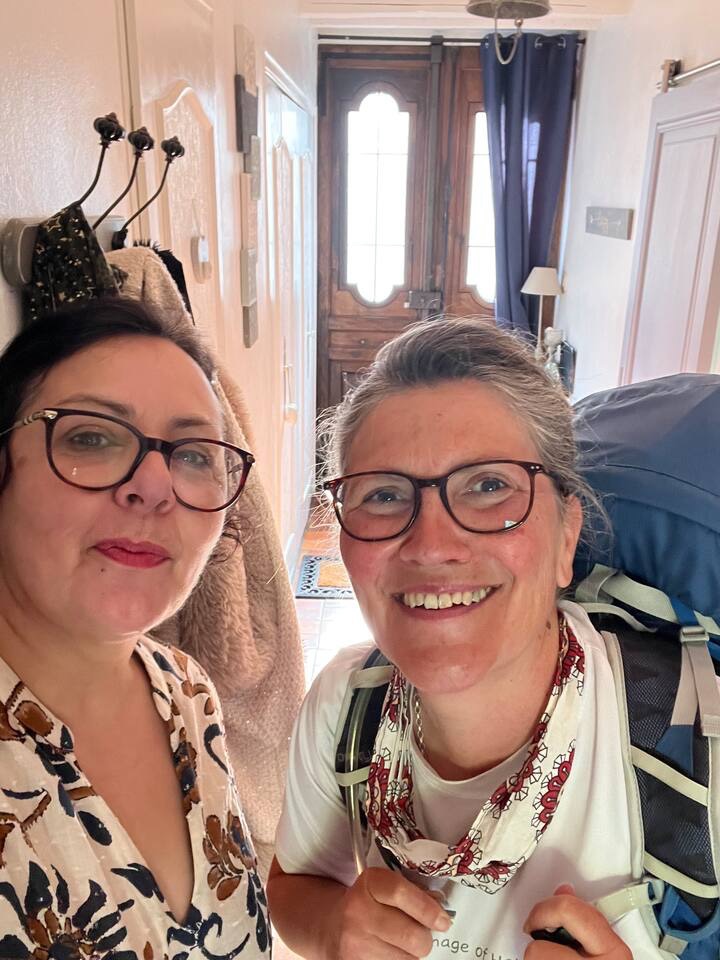
It was very hard to tear myself away from Agnès, her beautiful house and her three soft and shadowy grey cats. We had a lovely breakfast together, and I left with great big hugs. I really hope that I can see her again, and find out in what new direction she has taken her life.
I left the town of Vitry almost without seeing any of it, although I did read up later that it spent most of the Great War as a hospital town to receive the wounded. The town boundary was yet another crossing of the Marne,
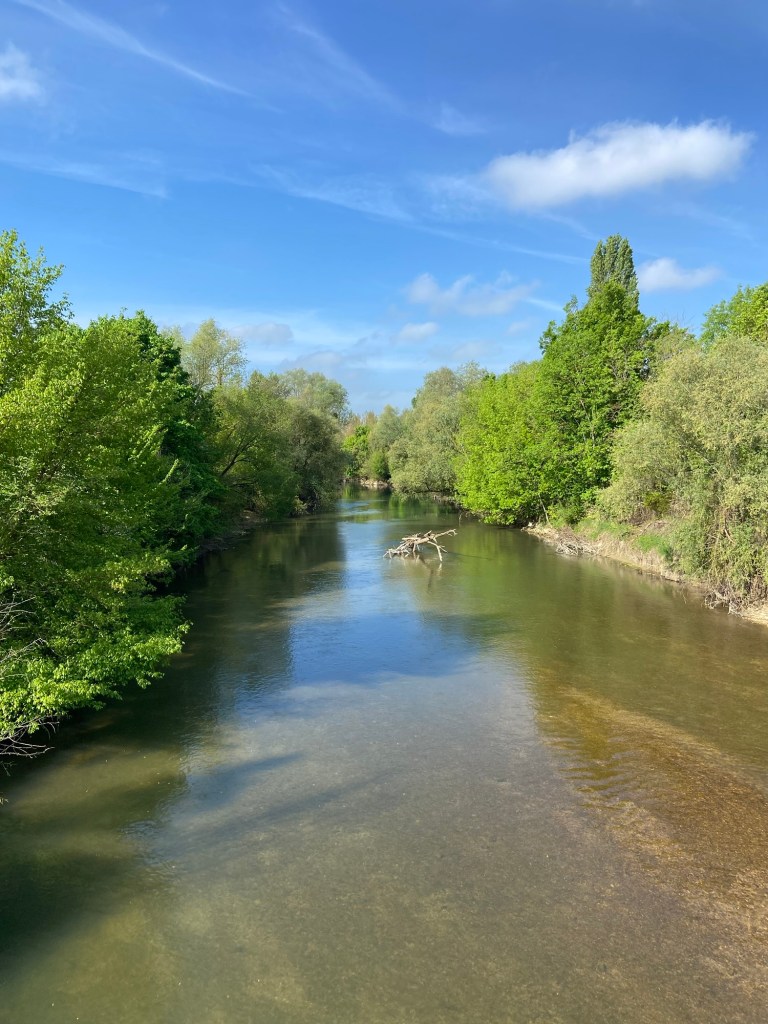
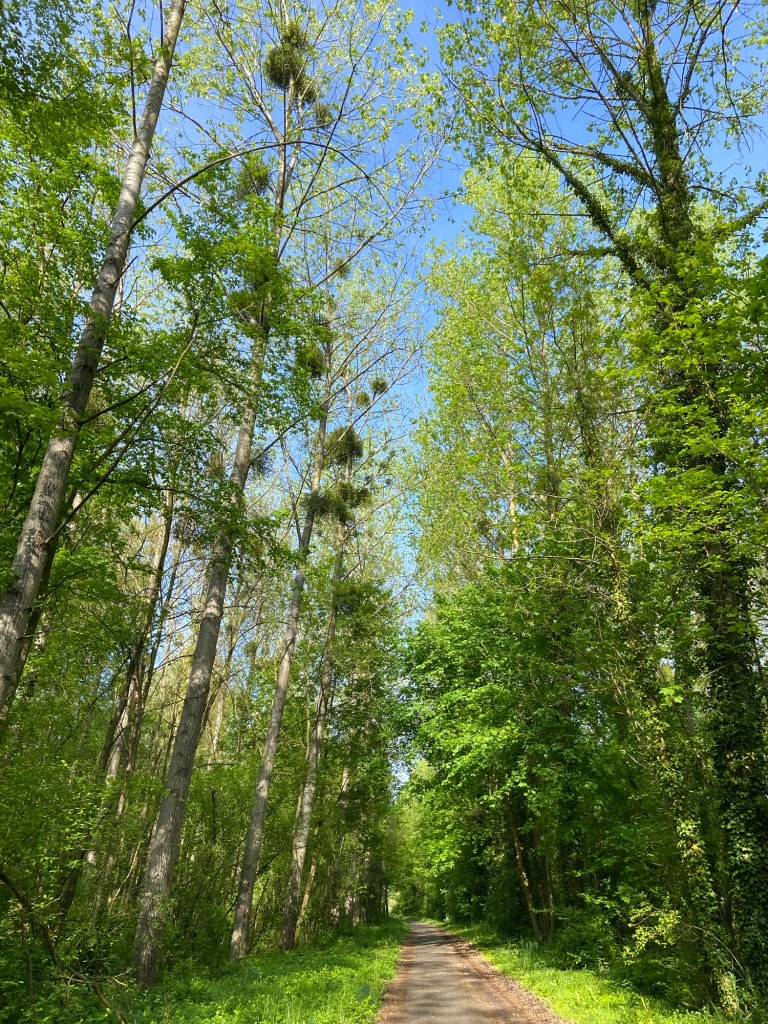
after which slipped straight into the countryside and along field paths between lines of tall trees
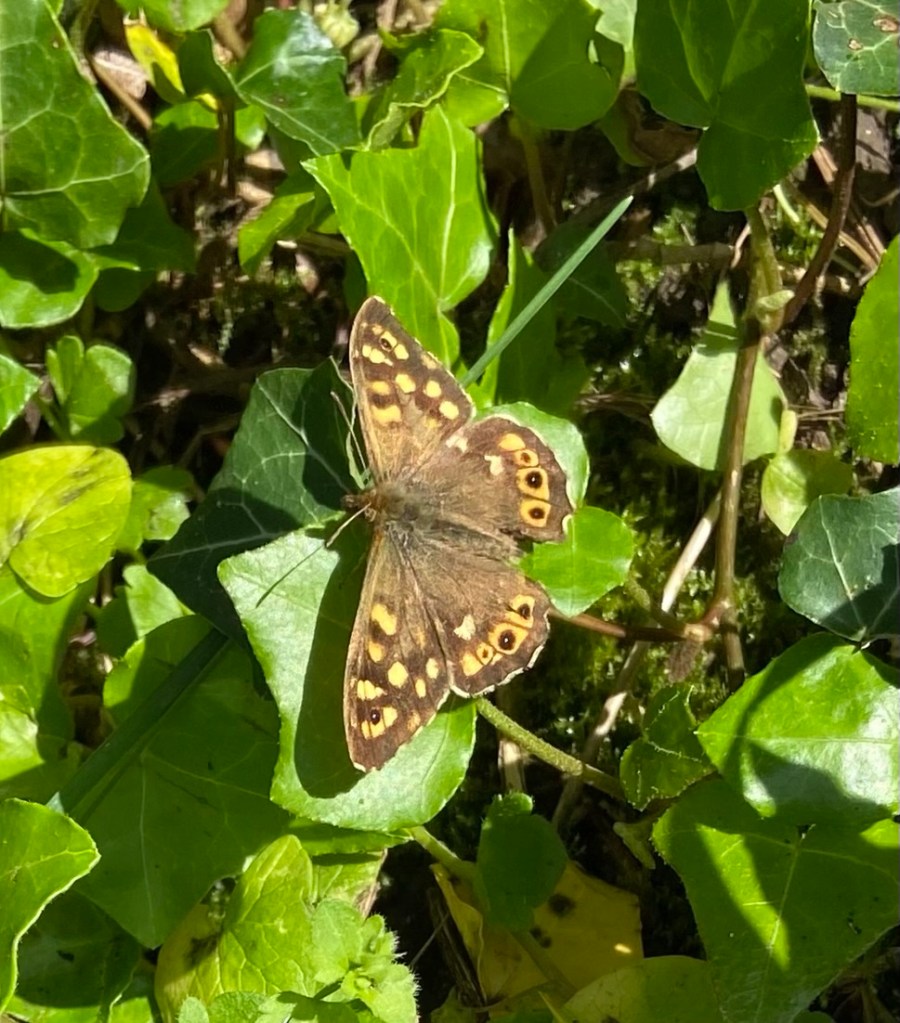
(where I finally managed to find a speckled wood butterfly sleepy enough in the morning for me to photograph),
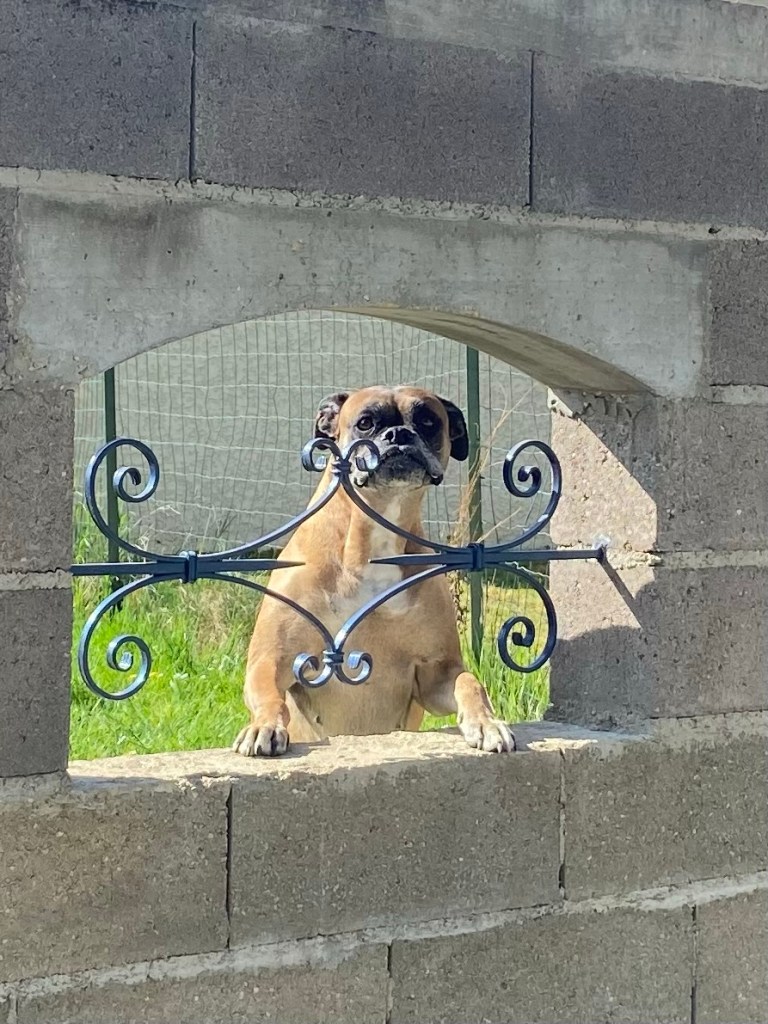
and settlements where suspicious dogs made sure I left the city limits without trying any funny business.
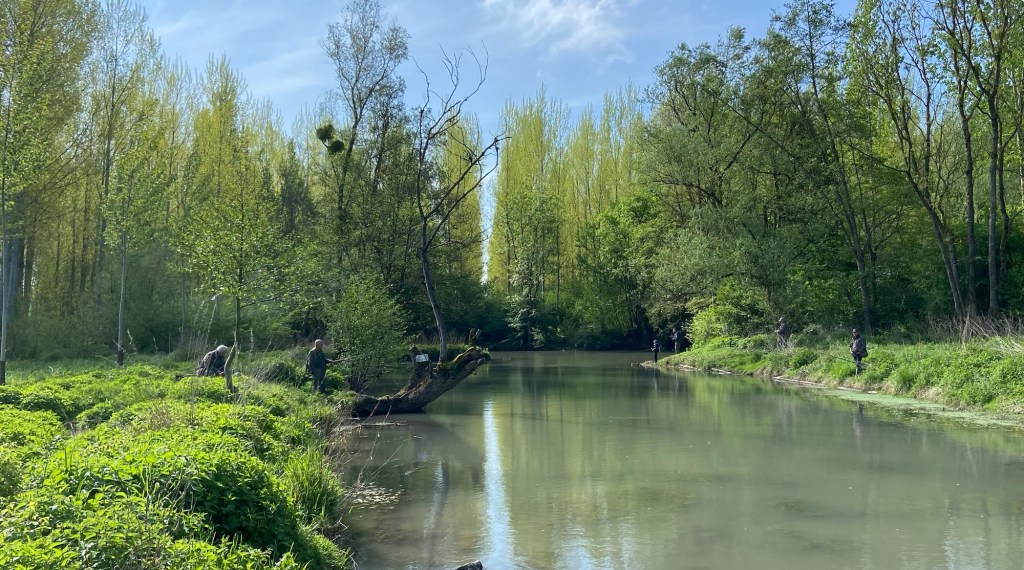
At the first of many river crossings today I met Jean-Pierre and Philippe getting their fishing gear out of their car and van (Jean-Pierre’s SUV had seat covers with close-up photos of wild boar on). When they heard what I was doing they had a good deal to say about my route.
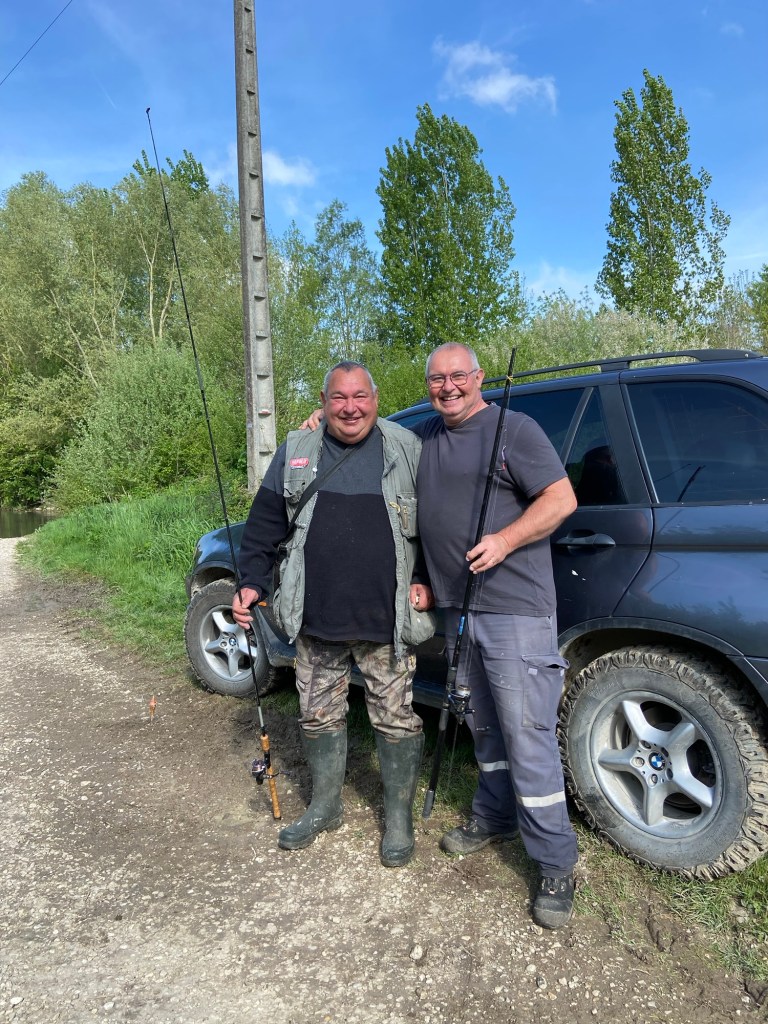
I didn’t understand a word of what they were saying, but I did get very clearly that they didn’t agree with each other! As well as the good natured incomprehensible squabbling, they told me that this was the first day of the fishing season, and that was why there were so many fisherman on the river. I was pleased to see that there was a young lad out as well, learning how to be more Trevor.
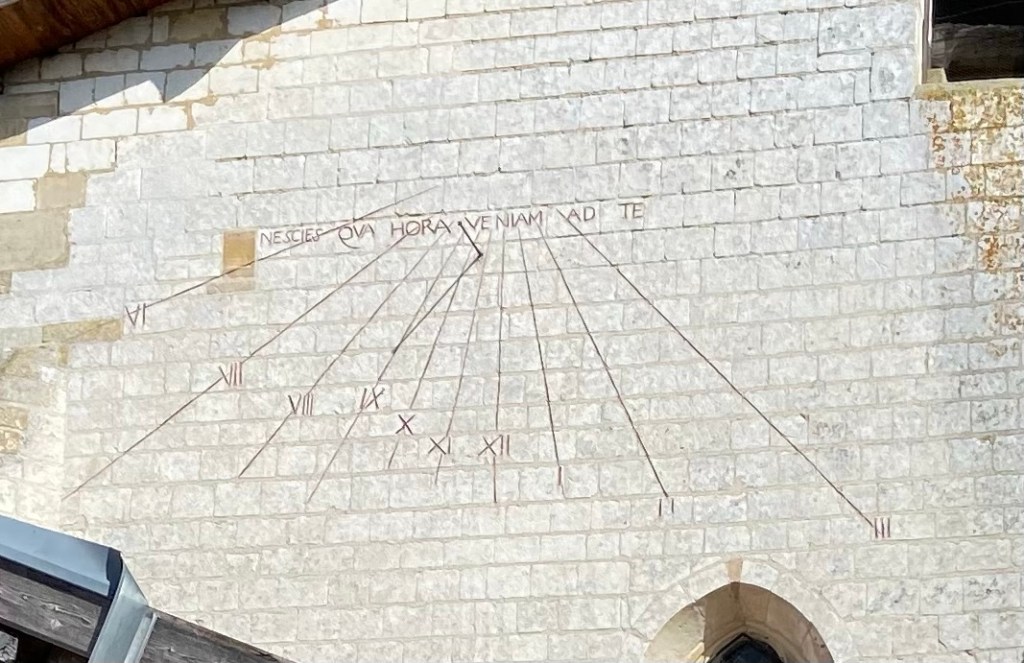
The guidebook instructed that after crossing the stream the walker should consult the sundial on the church to find out what time it was and to see ‘whether these things ever work’. The sundial said 9 o’clock, and of course it was correct. Somewhere in the world it must be 9 o’clock.
My expert at home with the spare guidebook told me this morning that this day would have a lot of half-timbered churches in it, but it turned out that today was actually a day of enormous fields again. Nothing like on the scale of Pas de Calais and the Aisne for sure, but still rather samey, so I put on a new audiobook and strode out.
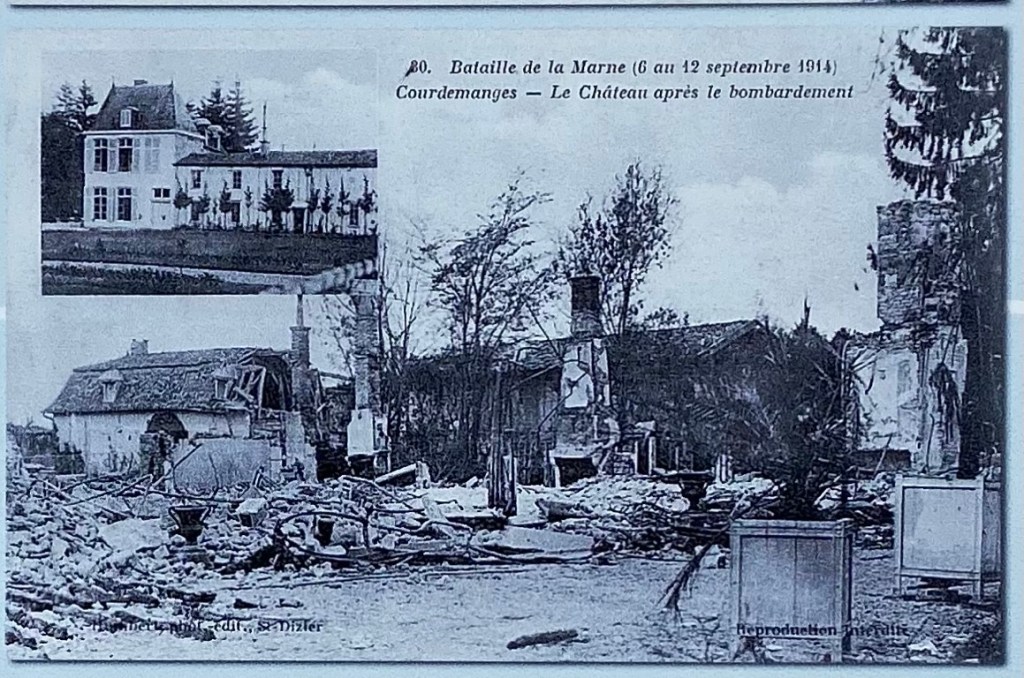
The route passes in quick order through three villages which were on the 16-km front line of the first Battle of the Marne in September 1914. All three suffered appalling physical damage — Glannes (where 53 out of 64 homes were destroyed and only the castle left partially standing because it was used as a German medical post), Huiron and Courdemages (which changed hands seven times in a mad, bloody 3-day battle).
One hundred years later in Cordemages, a poster announced that the village was holding its annual festival this weekend. A big friendly group of people had just set up a load of the stalls and platforms for the 4 o’clock start and were slaking their thirst. As I passed by they gave a big cheer and offered me a beer. It would’ve been churlish to refuse, so I sat down (quite gratefully) on the benches and explained what I was doing. After that they were even more insistent that I took the beer.
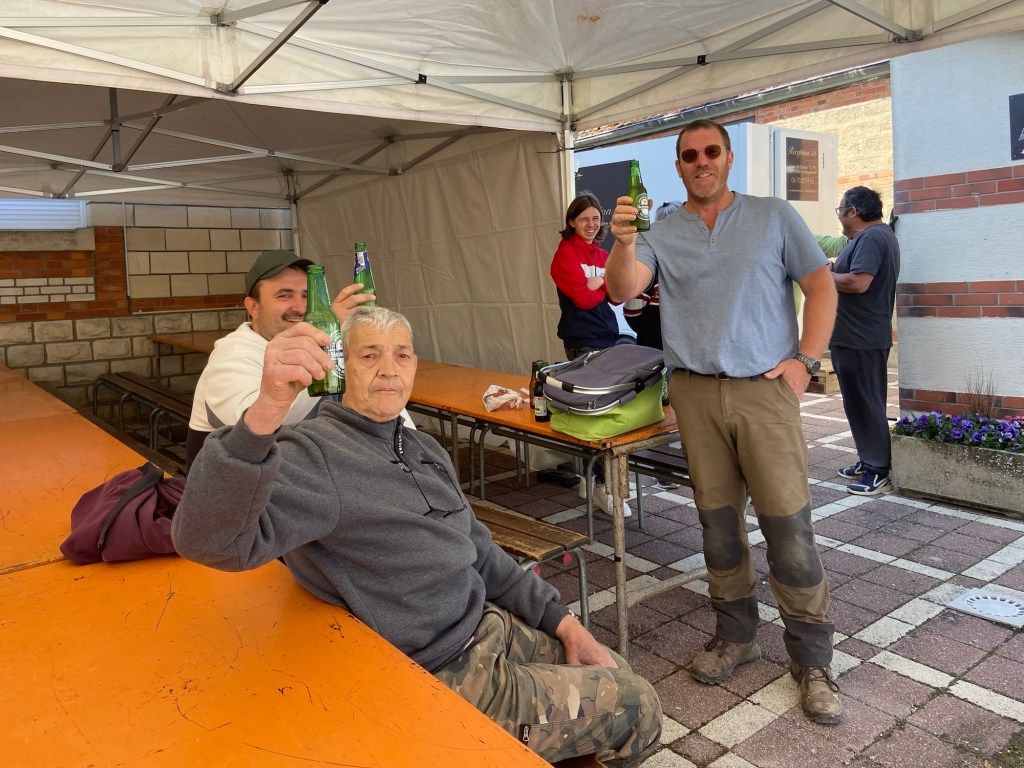
I chatted to Ludovic the maintenance man for a good while. They were all good-natured working folk. There was the local electrician, a guy who worked the trains, two ancients (one with gleaming false teeth and one with none). They decided that I needed some pâté-en-croute and fed me some.
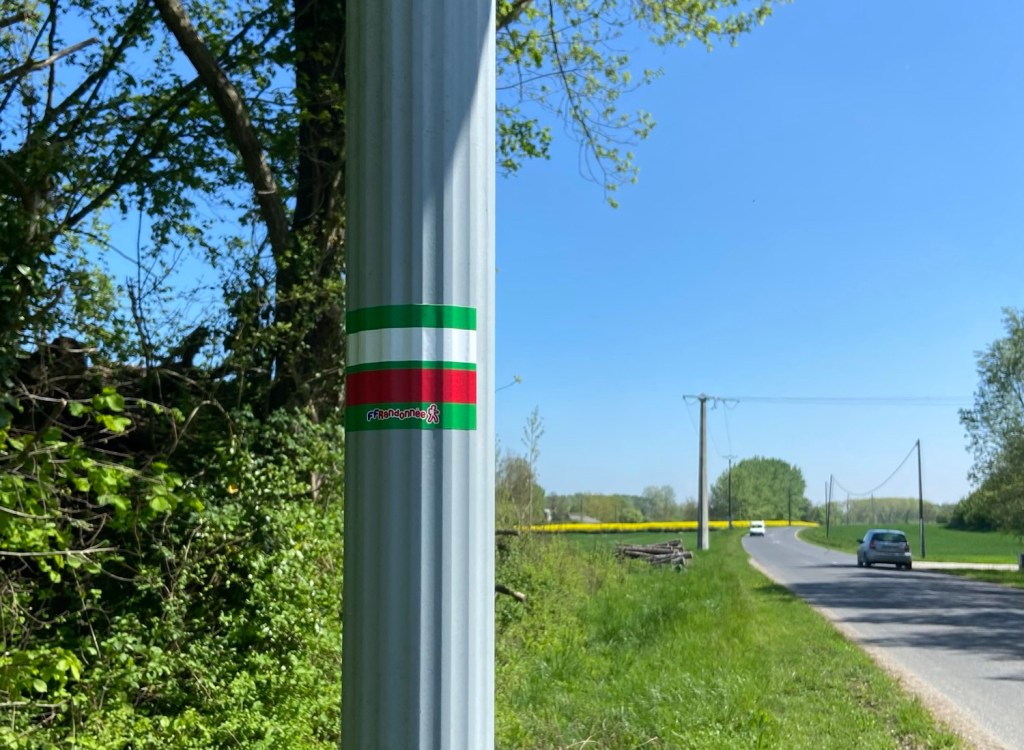
Then I realised then that the day’s pages of my guidebook with the maps and route instructions weren’t in my pocket — they had fallen out some time back. And it so happens that today’s route is not marked on the IGNRando app for some reason, I think because the person who recorded it didn’t walk this day. So: method one for route finding (physical map) had failed. method two (IGN Rando app) had also failed and this is where having two belts and two braces, or some other means of holding your trousers up, turned out to be essential. While I finished my beer I was able to download the stage on the AllTrails app that I had been so scornful of in the UK, and use it to triangulate with the signs on the road. Thank heavens for the stewards of the VF and their impeccable signage — because the group of beer drinkers all had conflicting opinions on my route, like the fisherman earlier!
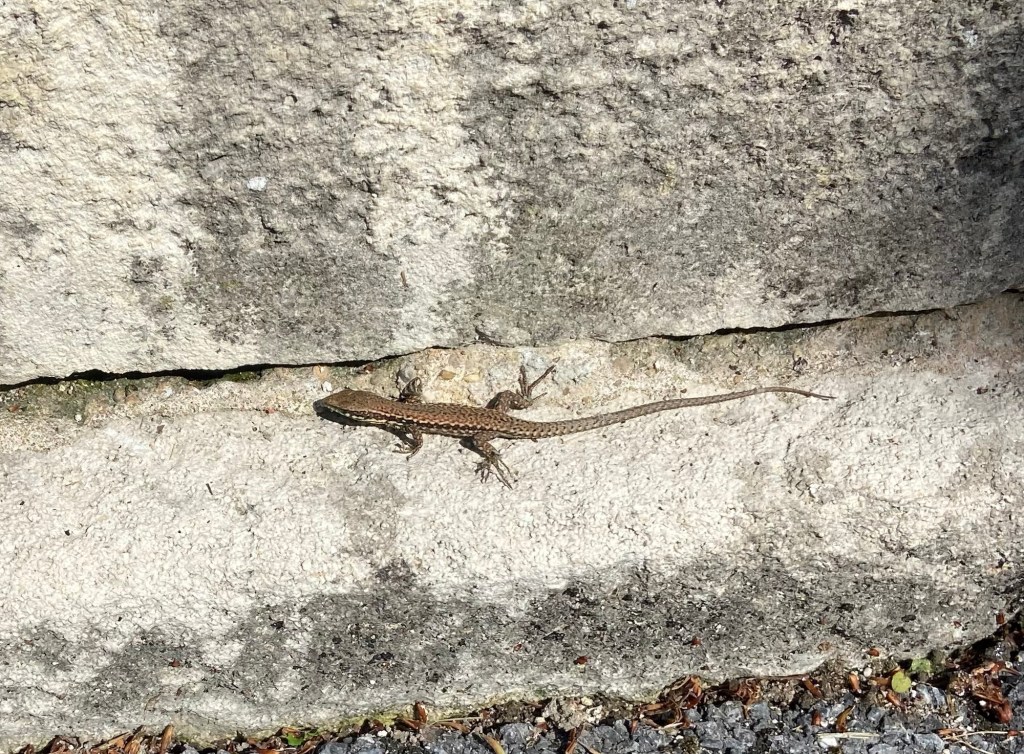
With the comfort of a knowing I still had a digital route map and GPS tracker of my position on it, I was able to enjoy the contemporary sights of the village: a careless lizard basking in the sun,
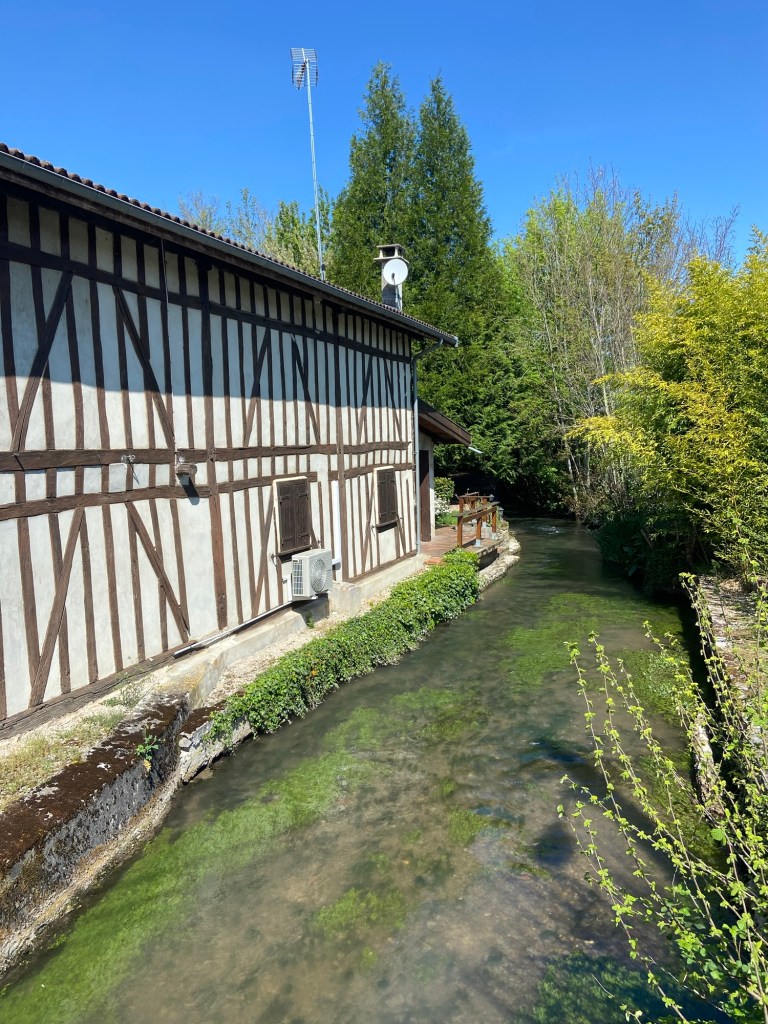
and the clear stream passing by a half-timbered house.
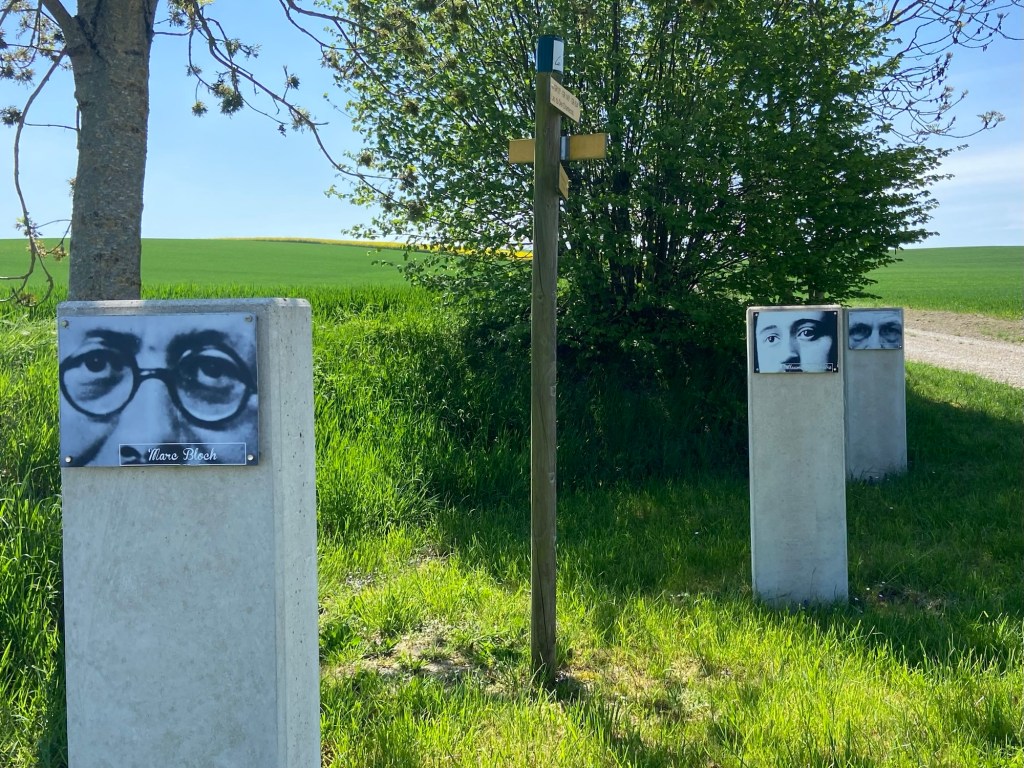
However, the Via Francigena is focused here on the history of this area and it wasn’t long before the path turned off the main road and took me up to a monument. My steps were watched over by the eyes of Marc Bloch, a French historian who had fought here at the first Battle of the Marne (and who was later executed in 1944 by the Nazis as a Jew and a member of the Resistance). His gaze collapsed the years down into a single moment in time. I climbed to the hill where so many fought and died in the battle for Mont Moret.
Halfway up the hill there is a monument with the twin flags of France and of the European project — which has more or less brought peace to the continent for 70 years. It celebrates the bravery of those who died in the campaign to gain control of the hill.
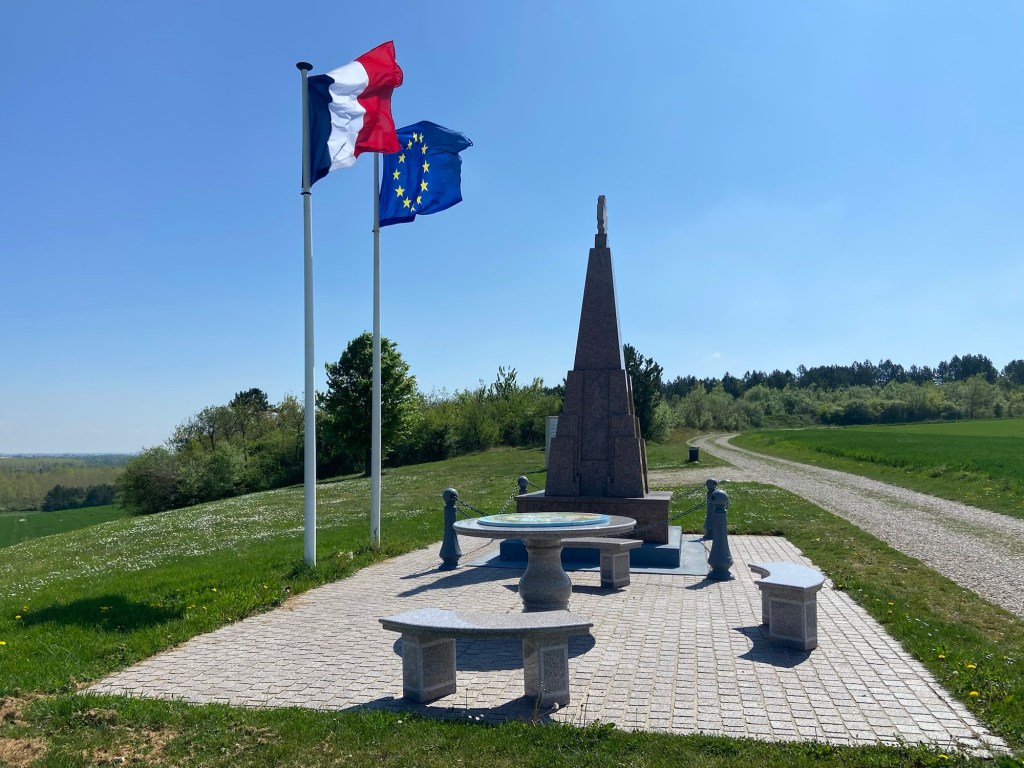
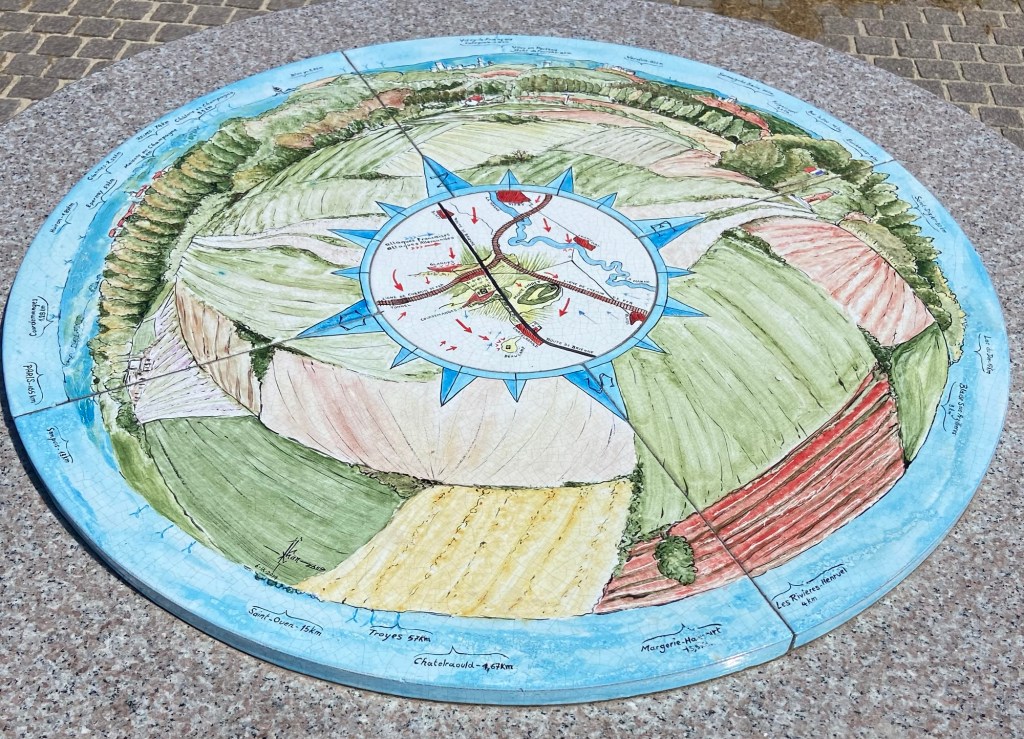
The painted ceramic map of the area at the head of this post indicates the towns and villages that were involved in the week-long struggle for control over the river Marne. There was enormous loss of life on both sides: in the titanic battles between 5th and 12th September 1914, in which more than half a million French, British and German men lost their lives. The craters from the 20,000 shells that fell daily are still visible in the woods up here.
I gazed around this hill where the first French trenches of the Great War were dug, at the peaceful fields of grain, barley and oil-seed rape, at the surrounding 21st-century towns and villages visible from this vantage point, at the little woodlands turned during wartime to strategic use, and understood what a literally commanding view this represented.
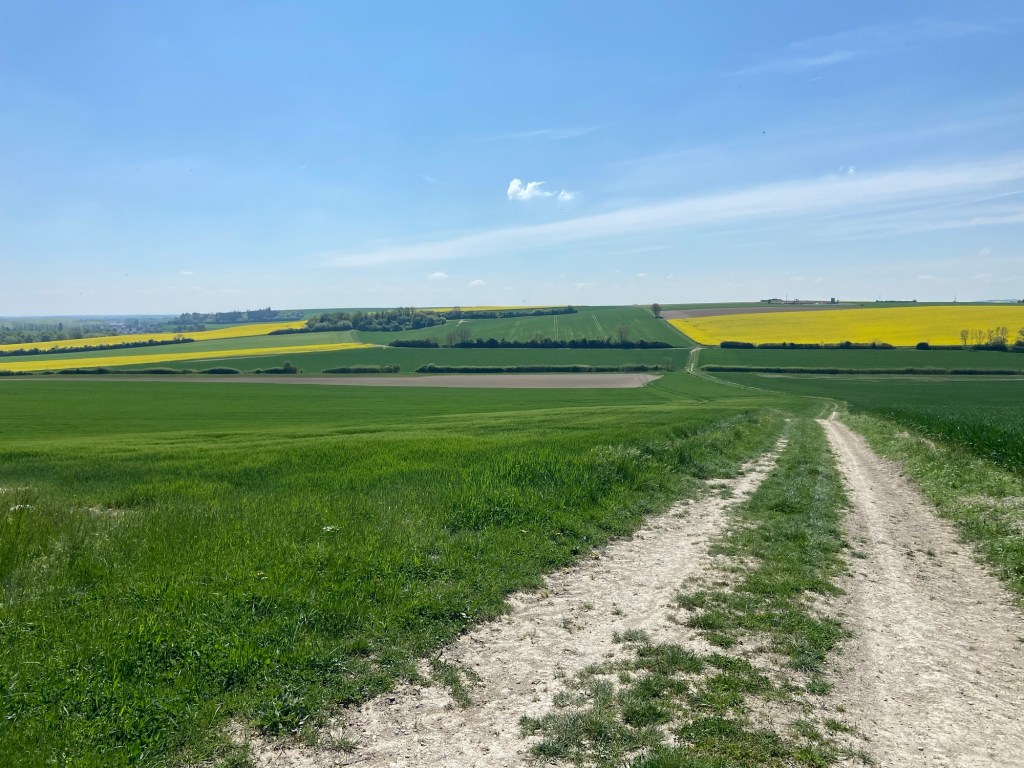
The road forged on over the rolling hills and at one o’clock I stopped for the pan au chocolate lunch that Agnès had sent me away with, and a long phonecall with Ros. Apart from Stephen, she is the first person I have actually spoken to from home in four weeks, and it was lovely to superimpose what I might call ‘real’ life over this waking dream of the French landscape rolling under my feet, step after step.
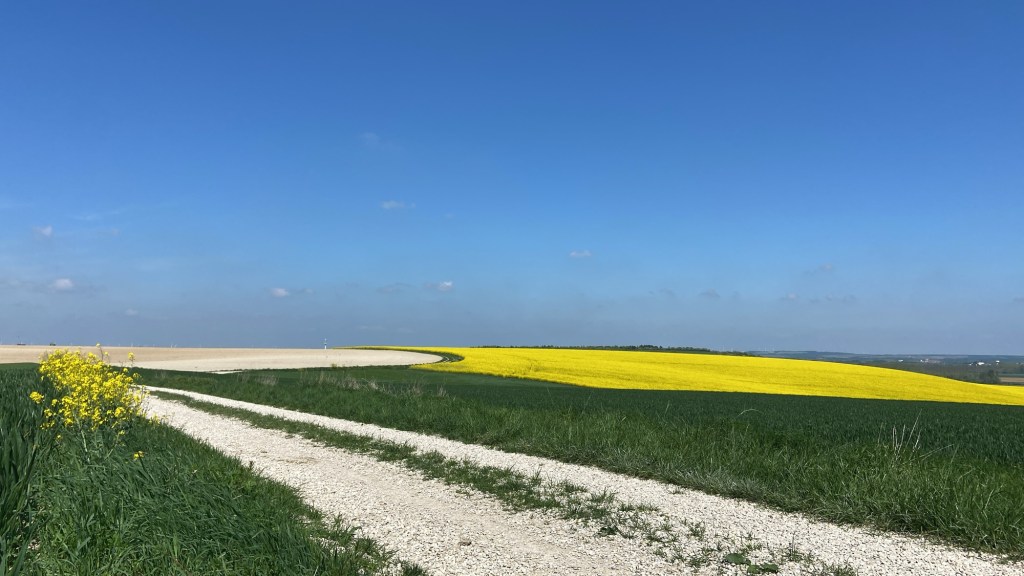
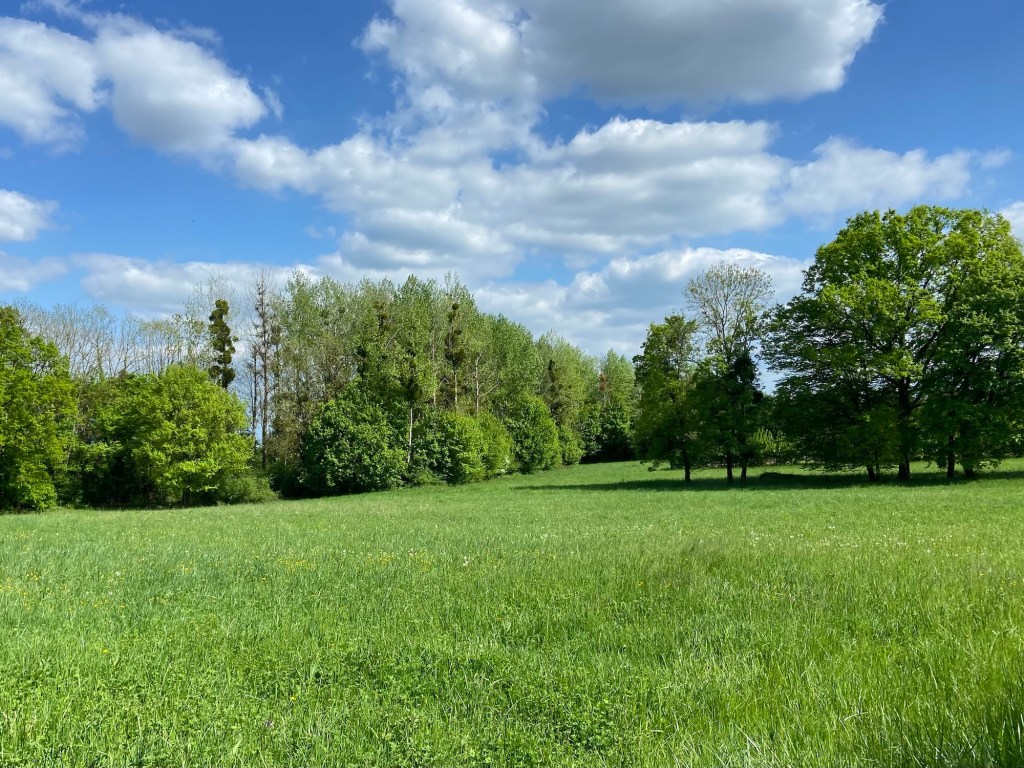
In the afternoon I fell in with Rainer, a German lawyer walking to Compostela in three- or four-day chunks when he has a few days off work drawing up contracts for a construction firm. He started out from Germany at six o’clock this morning, driving down and parking the car at Troyes, then taking buses to the start of his walk today. Our route is the same for the next few days but tomorrow he has 13km to walk and I have up to 29, so I doubt we will meet again. But it was very pleasant sharing this part of the journey with him, the last hour and a quarter of the day in which we traversed large-scale aspen plantations and passed meadows bordered with oaks that seeking overnight had come into their full, vibrantly green spring foliage, made more impactful by the blue of today’s sky.
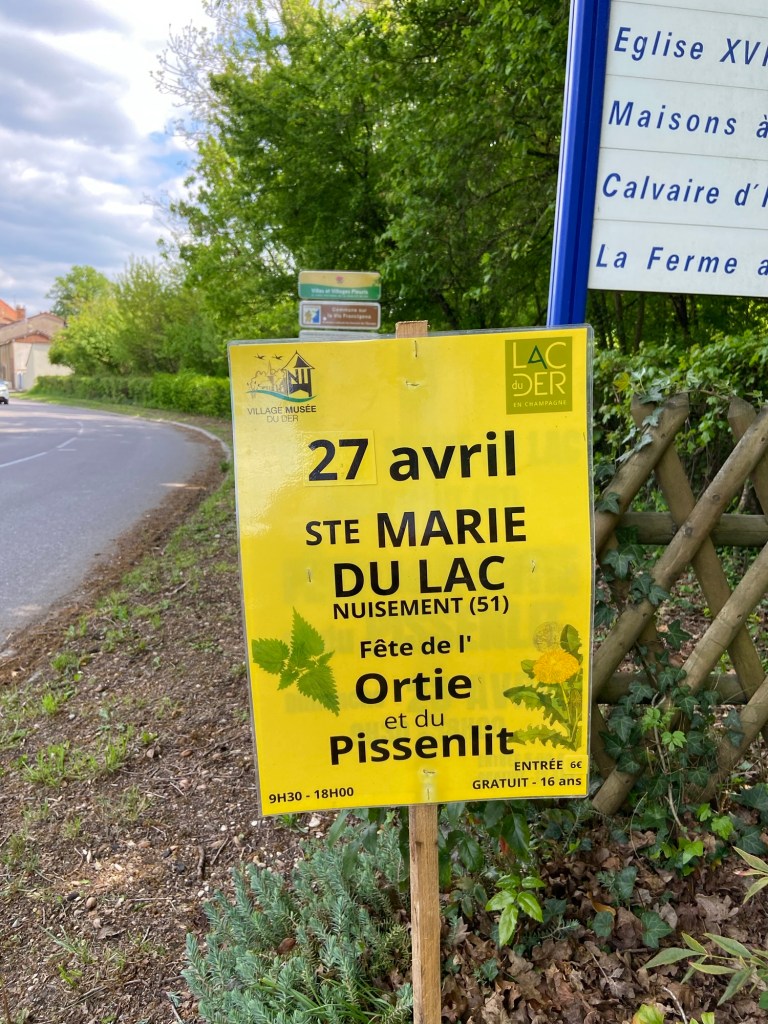
The time and the kilometres passed quickly, and we came into St-Rémy-en-Bouzemont sooner than we expected, passing a sign for a nettle and dandelion festival that I rather wistfully wished I could attend.
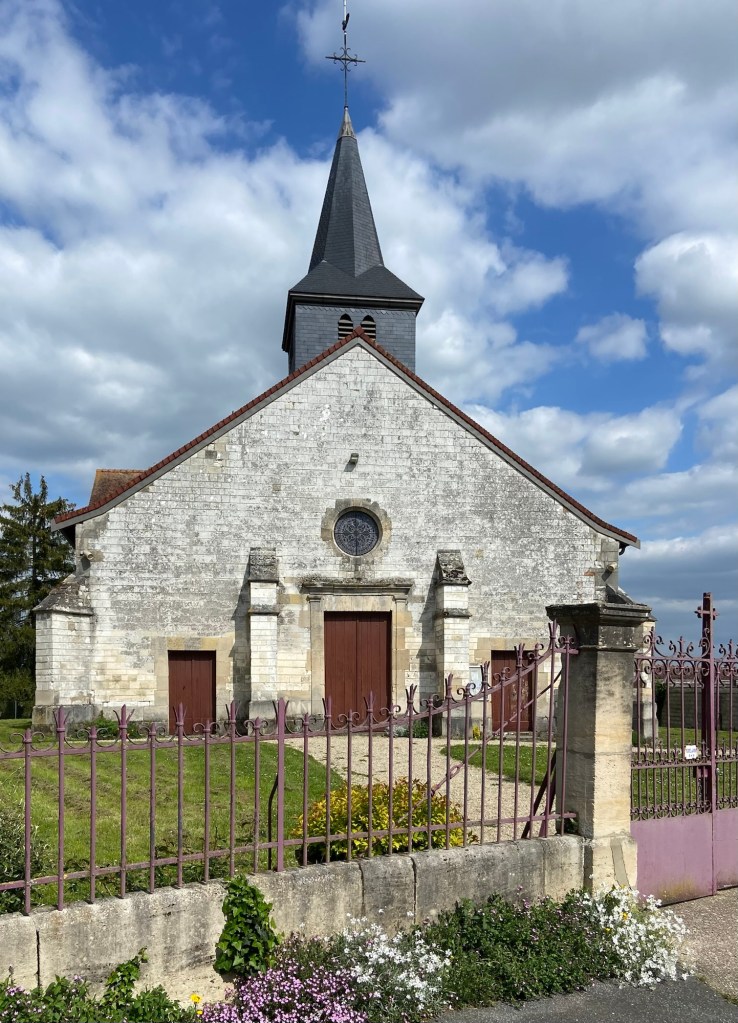
The church was as sleepily pretty as the rest of this village,
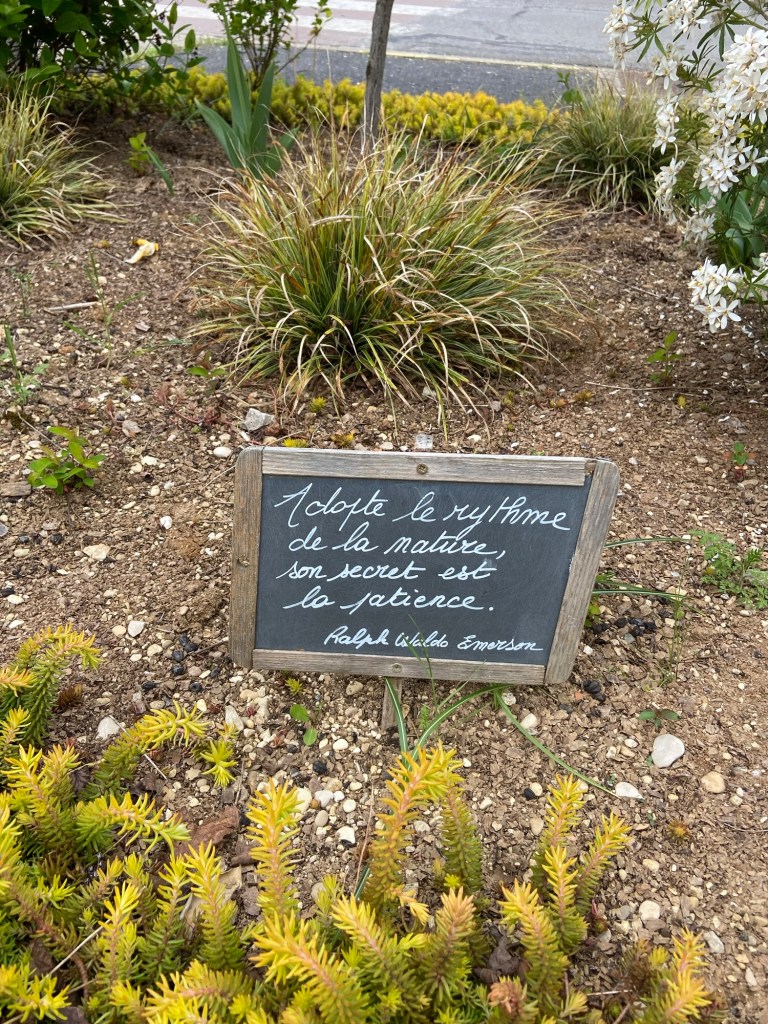
but the more you looked the more you saw little caring community touches that marked it out as somewhere slightly out of the ordinary.
Their council hostel for pilgrims was one such example. Over the porch gate to the old girls’ school was a tiny golden Via Francigena sign — like some kind of secret sign or Masonic handshake.
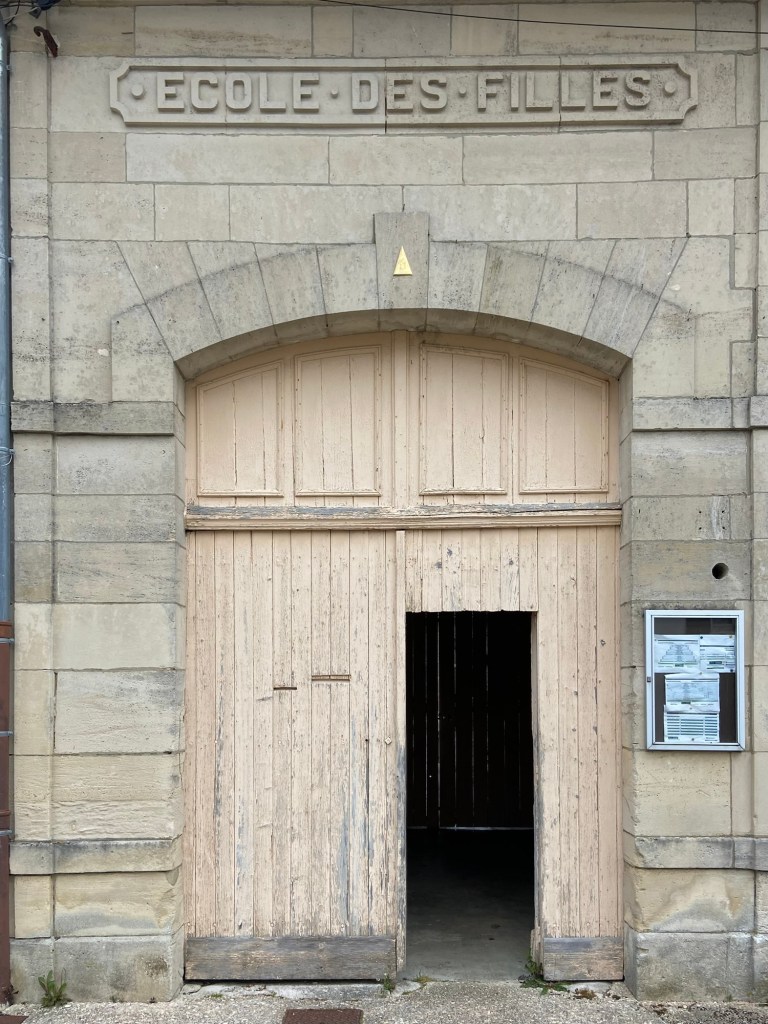
And inside, upstairs, a small, simply-equipped studio flat had been created: bunkbeds and a pull-out sofa for sleeping, a shower (very welcome!) and a loo, a kitchen for cooking, with tea, coffee and sachets of soup, all for a suggested donation of 20 euros.
Stats for the Day
Distance: 20.89 km
Time: 4 hrs 18 mins
Pace: a steady 4.8 km/h
Shouty couples at 2.45am in caretaker’s flat next door: 1
 Walking The Landscape
It was so lovely to catch up on the phone – even if we spoke far more of my life than your journey! You are doing so well – I can’t believe the kilometres you’ve conquered and you are really learning so much about so much – including commercial potato growing, champagne production and the First and Second World Wars (will you consent to watch a WW2 movie classic on your return I wonder – Colonel Blimp or Mrs Miniver would be 2 good ones?). Missing you and let’s chat in person again soon!
LikeLiked by 1 person
♥️ not sure about the WW films although I have watched JoJo Rabbit twice! 🍿 I will drink champagne with you any time, though!
LikeLike
The films I like best don’t tend to have the war as such in them – its more the impact on the people involved. Colonel Blimp is a complete masterpiece and astonishing to think it was made during the war (though not released at the time as the British govt. thought it was too critical).
LikeLiked by 1 person
You’ve convinced me. As long as there is champagne.
LikeLike
Enjoyed catching up on your week of walking, people and places. It’s an incredible amount to pack into week.
LikeLiked by 1 person
It’s odd — even when I am going at walking speed it still seems to flash by! Yesterday was definitely a day to come back to, though… The wooden churches.
LikeLike