When France gives you rain, drink champagne!
Jennifer A Walters
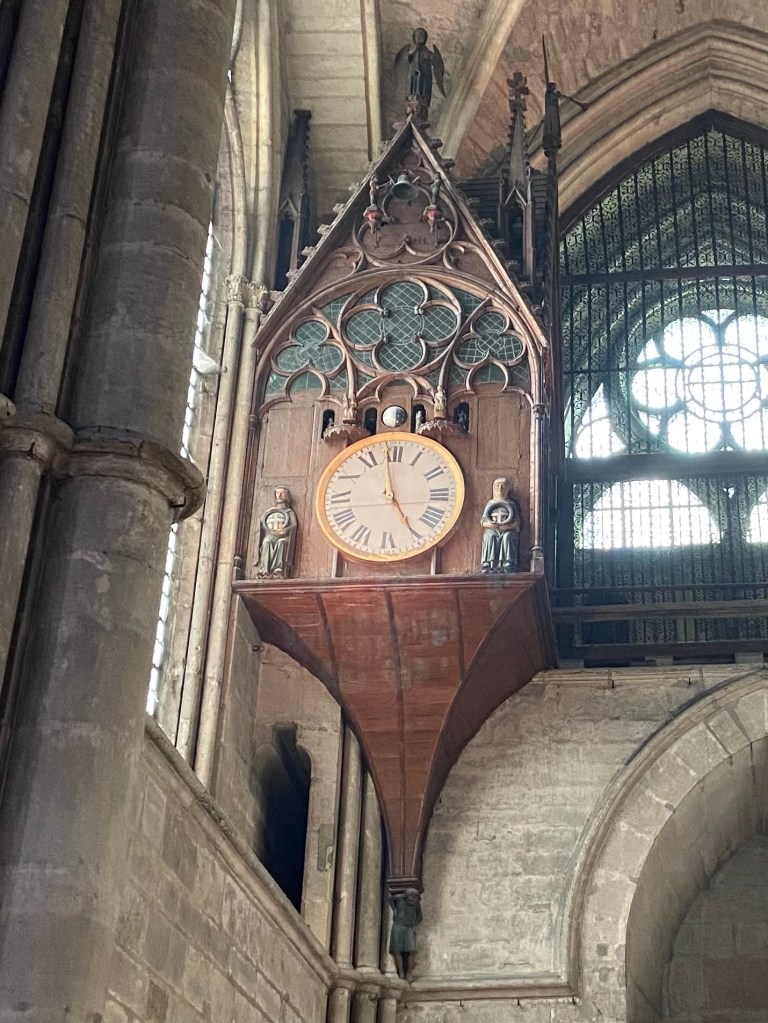
The rest and recuperation that I had planned for my rest day didn’t quite happen, because owing to Internet security night terrors, I slept only two hours on Saturday night. This pretty much wiped me out for the whole of Easter Day, and I had just enough energy to write Saturday’s blog, But I’m afraid it was my get-out-of-Mass-free card. It was probably for the best since I think I might have struggled to sit through a two-hour service with baptisms, be it so ever the coronation cathedral of France. I went in to the cathedral later at about teatime, when I went out for a little bit of air, and was disappointed that there weren’t more flowers: just a small arrangement on the high altar, and one on the floor by the lectern. I revisited the marvellous Chagall windows for a while, though, and watched the 15th century clock strike five, and the little figures hidden inside rotate mechanically and enact their tiny hourly play: the three kings, led by an Angel, and Mary and Joseph with the infant Jesus, fleeing two of Herod’s minions.
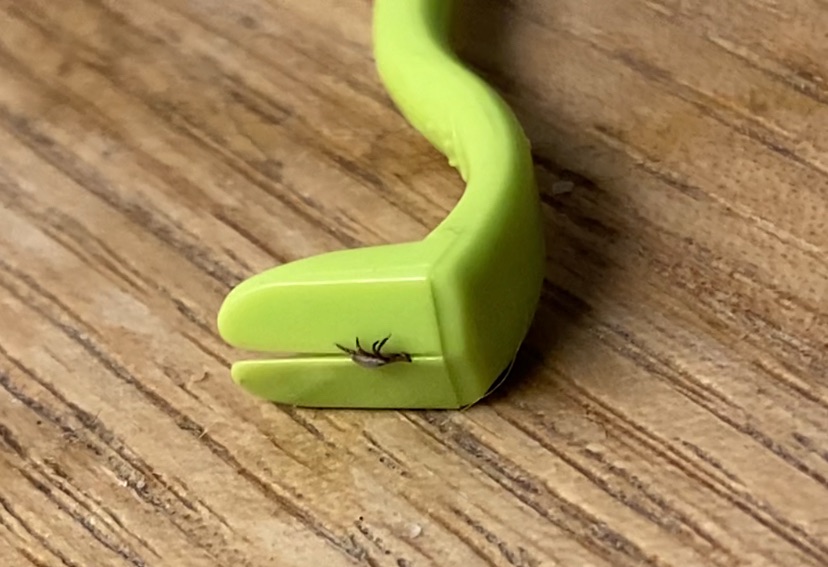
The small drama reminds me that I did not relate one of my own in yesterday‘s blog: the discovery that I had been bitten by a tick. With the correct implement, which I carry with me on all walks, and Olympic-level tick removal skills, I managed to remove it cleanly and it crawled about on a paper towel for a bit while I identified it as a deer ticking nymph. Googling revealed that 20% of these carry Lyme disease; having been infected with Lyme disease before from a tick in Scotland, and struggled to get treatment (eventually succeeding with the tireless help of my friend Ros and medical advice from my cousin Frances), I feel myself forewarned and forearmed in this regard, and I’m keeping my eye out for the bull’s-eye rash.
Getting up and out for some air galvanised me sufficiently to be able to gather my thoughts to mentally prepare myself for the next block of days.
I have found that if I have done all the planning, then each day I simply need to focus on sourcing whatever food needs to be found, on route finding, and on managing the day’s walk. This means that on a rest day, as well as washing all my clothes, stocking up on supplies, getting some proper sleep, and so on, I also need to be planning reasonable days. The stages in the guidebook sometimes need to be smoothed out if possible (for example an 18 km day followed by a 29 km day), which depends on the availability of food and accommodation. even given the helpful guidebook and accommodation book and the information available on Google, it is not always straightforward. All of it needs to be uploaded into my brain, organised, and then recorded in someway, so that I don’t have to think about it at all, day to day. Because this was Easter Day, I wasn’t expecting people to be sitting at the computer dealing with with emails, but I was pleased that I managed to get all of the requests off, and even receive replies from a couple of places. Stephen was very helpful from home, armed with his intact copy of the guidebook. Mine is getting a bit thin as I tear out the pages for each day to have them handle it in my pocket, and pack the rest away in the bottom of my bag.
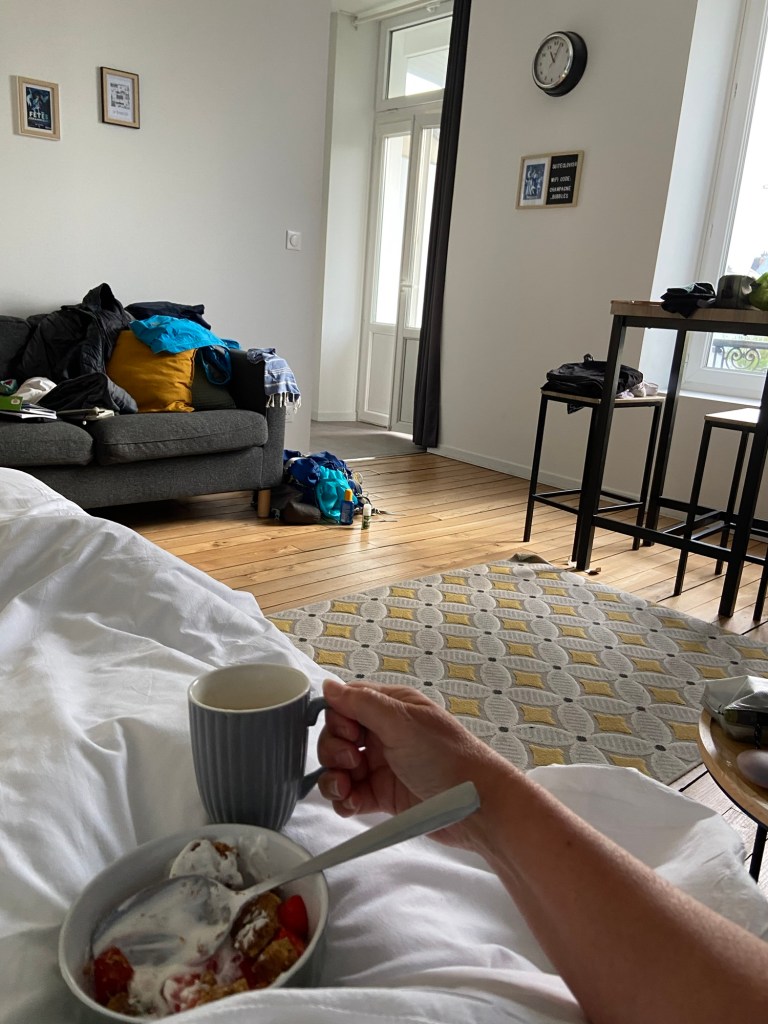
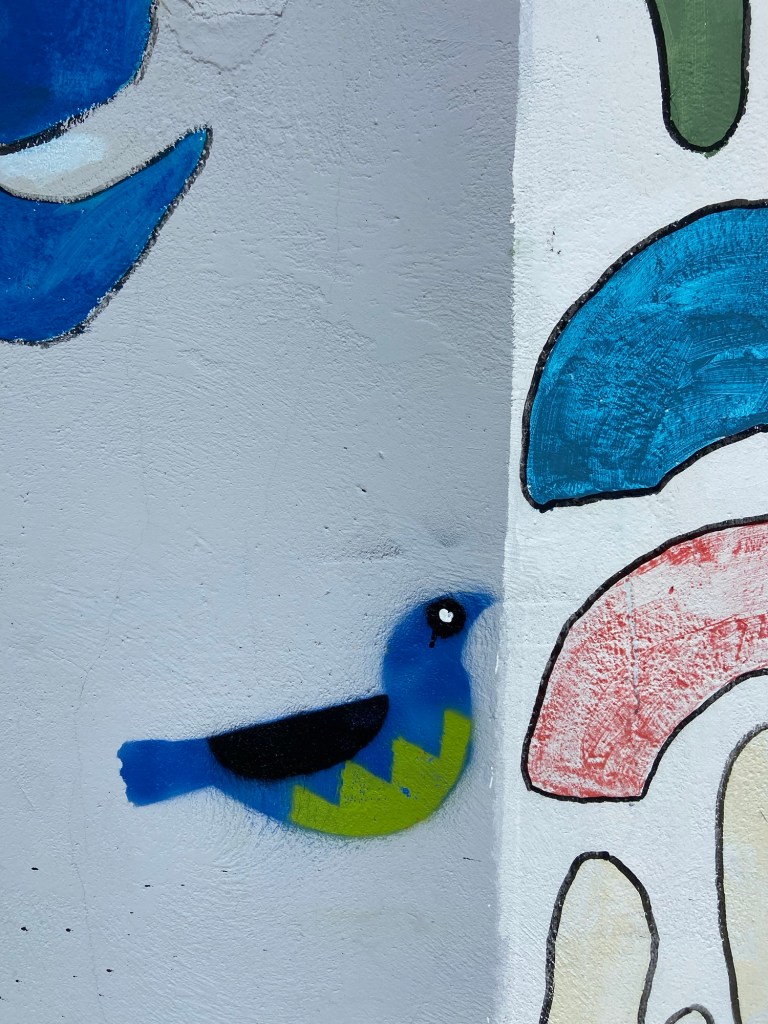
I needed to pick up some more cash before I left the city, so I located an ATM on the way out, and just enjoyed walking through the city, noticing nice things, like for example the tiles on the houses above the musical instrument shop (and its graffiti-ed shutters).

I met a winsome little puppy who whined like anything when he realised he couldn’t come with me, and I think, for the delight and delectation of my dog-enthusiast readers, I may update the Chiens de France photo essay as and when I meet particularly significant examples.

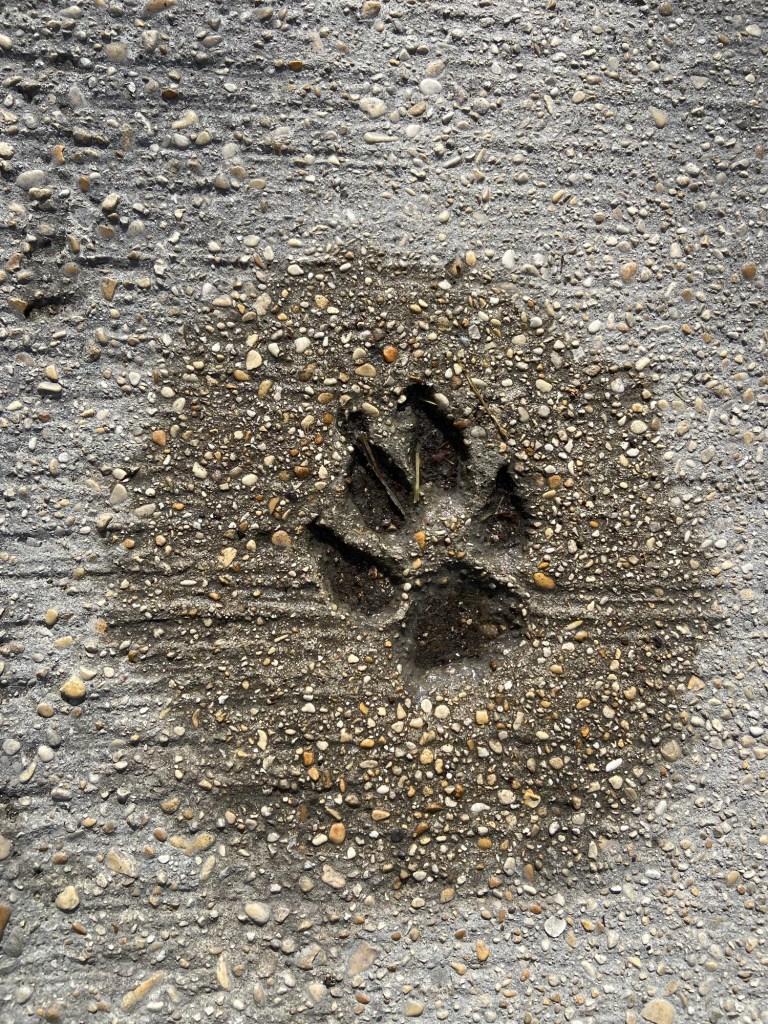
I felt very aware of my footsteps, not having taken many yesterday. Reims felt like something of a milestone: not quite halfway on this first section of the route to Rome, but an icon nonetheless and a mental staging post. Each of my little steps is really so insignificant, a tiny movement over less than a metre of ground, but stitch them together, metre by metre, and it seems that I can walk the equivalent of home to Glasgow. The steps of my way are transient, ephemeral, in contrast to those of some others —
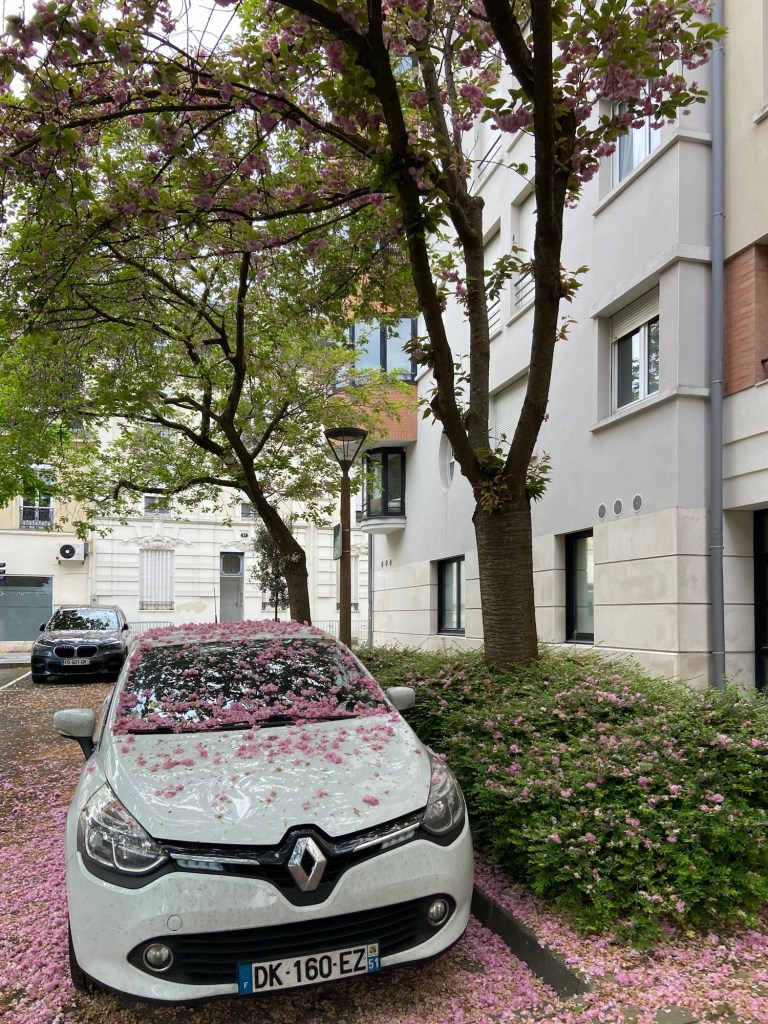
Another thing I am very aware of is the passing of spring. The blossom was already falling from the cherry trees in the city and it feels like we are moving onto a new phase of the season.
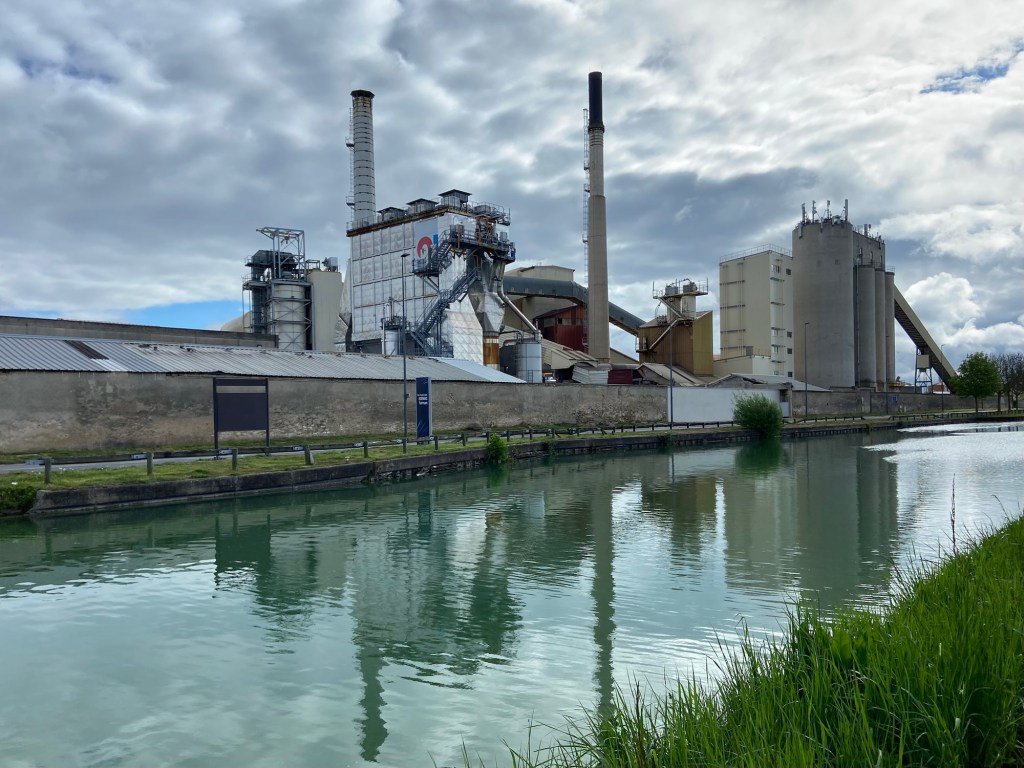
The majority of the route today followed along the canal, a proper industrial waterway, and a place for the citizens of Rheims to live, work and play.

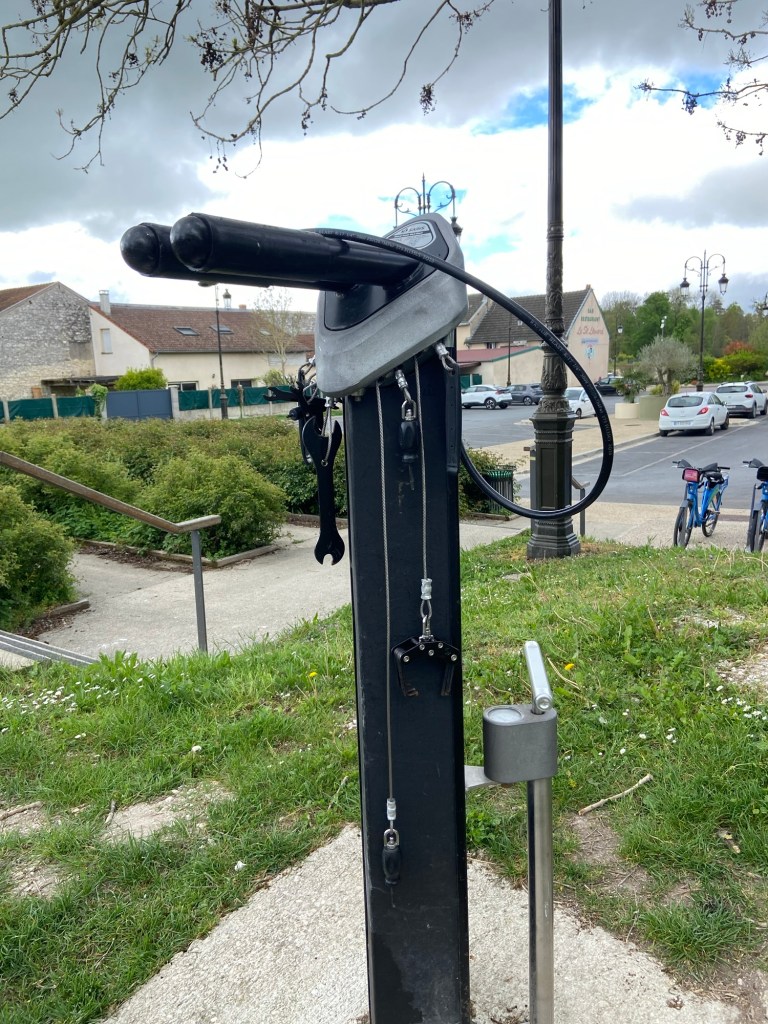
Being Easter Monday, it was unsurprisingly densely populated with runners and cyclists. In this country of cycling enthusiasts, the canal was equipped with a tool station on the towpath for anyone to use.
There were also fishermen on the opposite banks, and I was astonished to see a woman amongst their number: this is a vanishingly rare sight, in my experience. The fishing was largely happening on the banks nearer the city, where the colossal silos were.
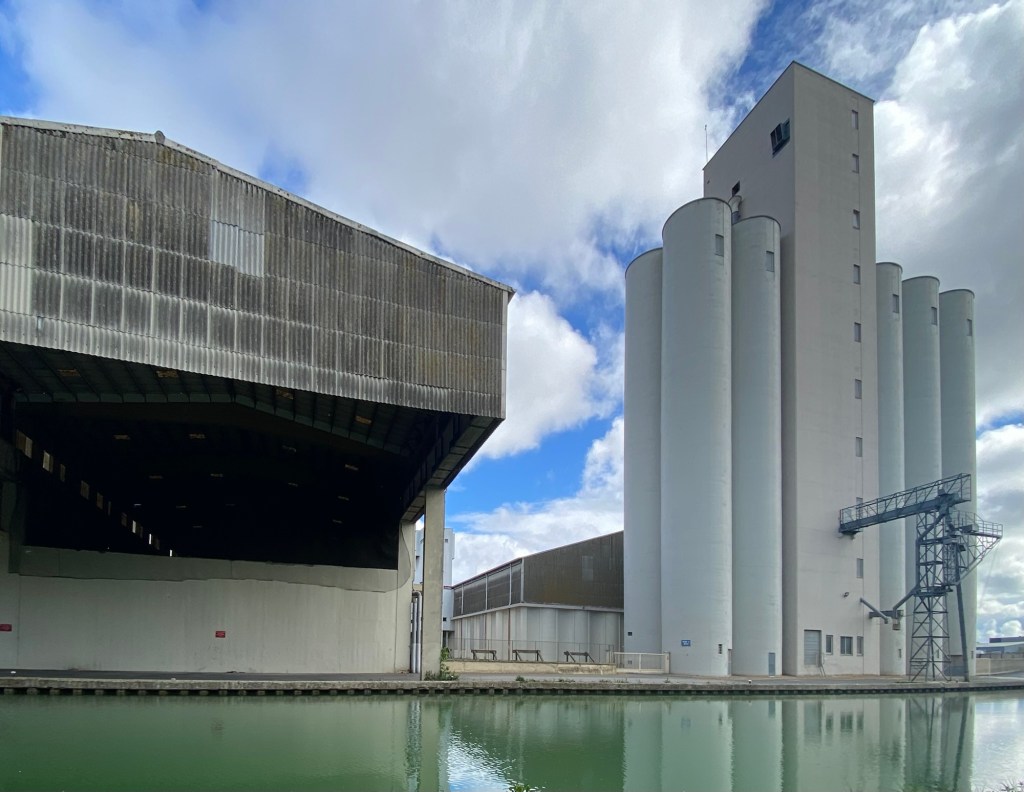
I found out later (dear reader, you shall hear how) that these are drying silos for the grain that comes in from the vast fields on the plains; and for alfalfa, a nutritious member of the legume family grown as an animal feed. I now realise I have seen this crop growing too, although I hadn’t known what it was.
The quality of graffiti in Reims was much better than the norm. It might have something to do with the concentrations of creative minds in a city; I think my favourite example was this tiny little picture of Alfred Hitchcock, a bit too far away to photograph properly.
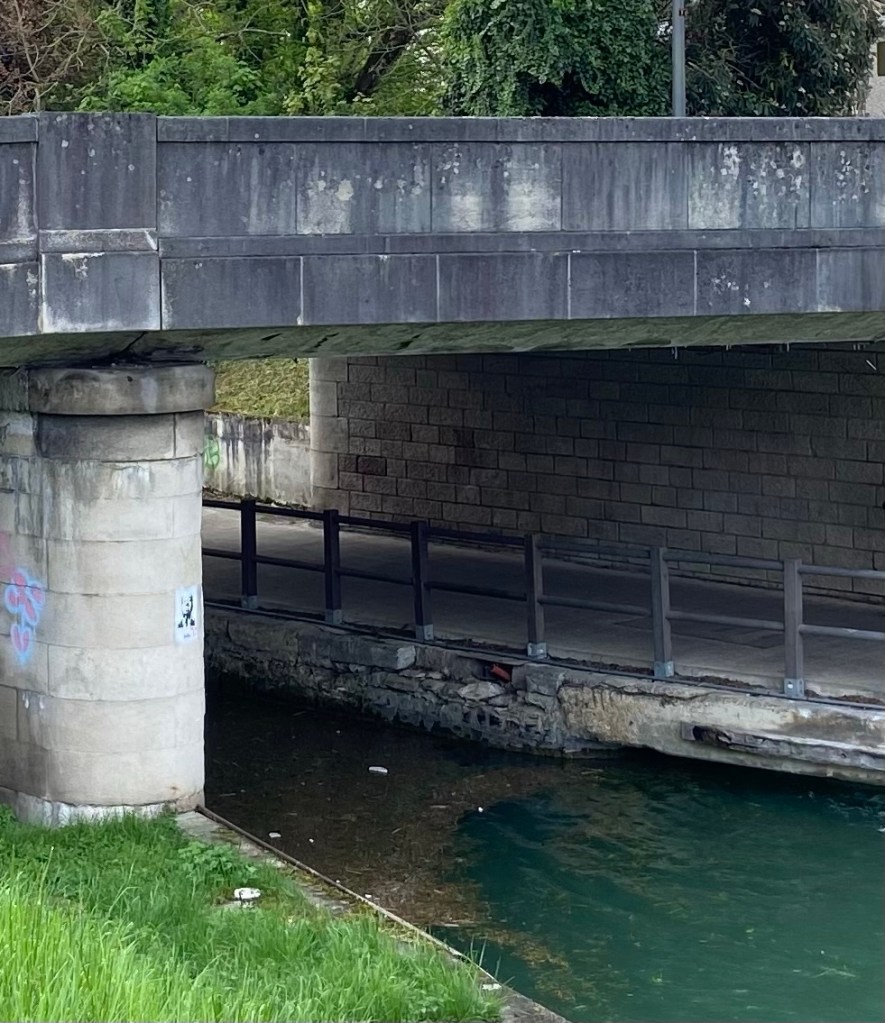
But I also liked the Yoda on the other side of the canal.

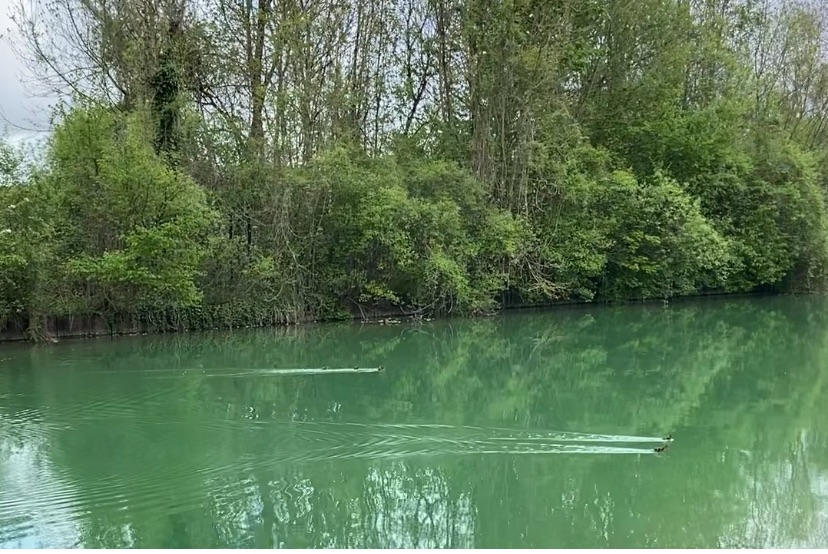
The canal was, like all canals, long and straight. I was feeling really quite enervated and underpowered, not surprising after my disrupted weekend. So I just got into a steady rhythm, and put an audiobook on to take my mind off the monotony. I switched it off though, to watch a mallard shepherd her nine tiny ducklings on the river. They were wayward creatures, paying absolutely no attention to her quacks, but chasing each other up and down: they could move pretty fast simply with their little feet under the water, but when they wanted to go anywhere really rapidly, they did what looked remarkably like water skiing, lifting themselves up onto the surface of the water and running. And they were fast.
At 11.15 a woman walking with her daughter stopped me and asked me whether I was a pilgrim. We chatted for a bit before she asked whether I had heard that the Pope had died. I had not — and it came as quite a shock. I think of all the devout Catholics that I have met on this path who will be mourning him so deeply — a man of humility and openness, who sought in many ways to lift up the poor and marginalised, and to begin a process of modernising the Catholic Church with a message of inclusivity and acceptance. The woman said as we parted that she would be praying for him and for me as I continued on my journey. Which I did very thoughtfully, putting my audiobook away for a while, and glad of my rhythmic steps on the canal path which are conducive to meditative thought.
I thought particularly of the way Pope Francis spoke to the powerful warmongers of the world, in Africa, in Europe and in the Americas, and his Jubilee message of Hope in the spirit of which I am walking, and felt this was a crucial voice that has now gone from the world.
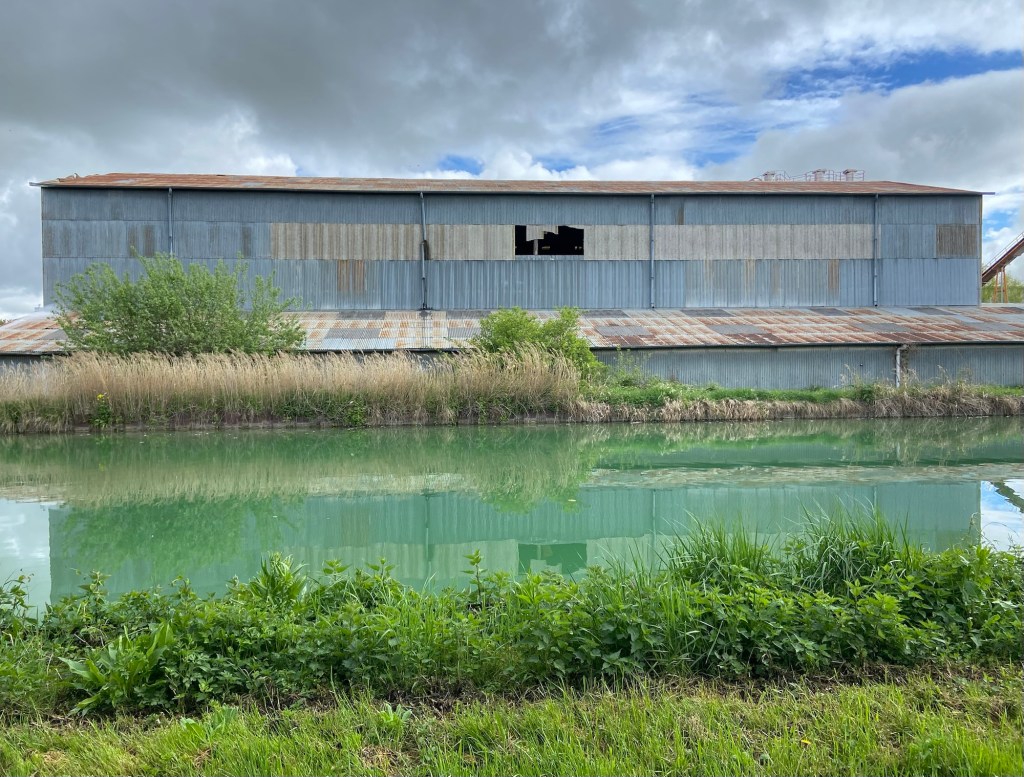
At the Marina of a little modern town called Sillery (with its huge factory to process 11,000 tonnes of locally-grown sugar beet per day), the Francigena breathed a sigh of relief and left the canal side. Now the asphalt carried me into the champagne vineyards.
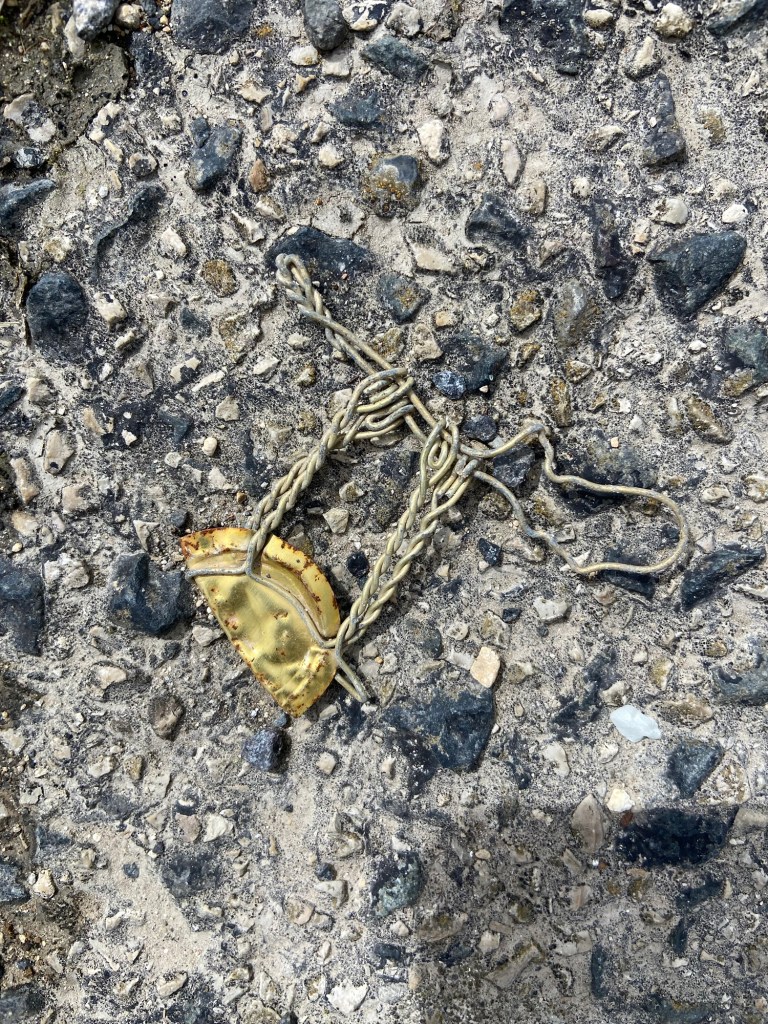
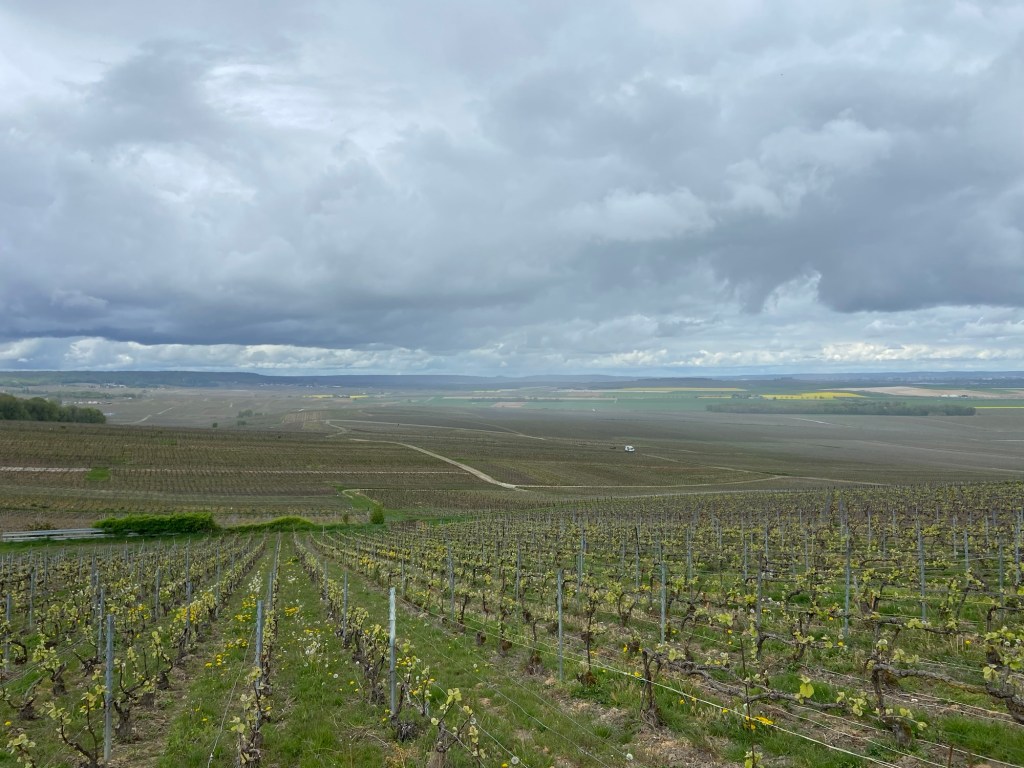
Here I needed more of my attention both for walking through the hilly terrain and for experiencing the features of the path.
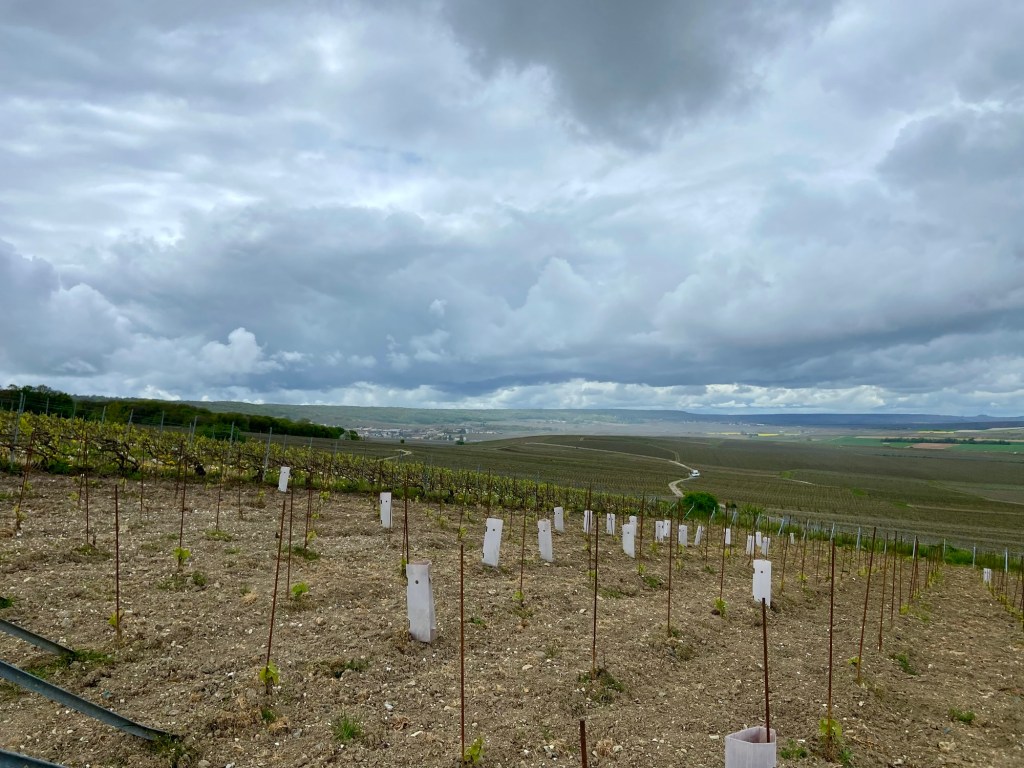
There were stones and signs by the side of some of the vineyard plots with the names of the champagne houses. I don’t know why it was such a surprise to see famous names here, but it was — and exciting.

I was also looking for a place to have lunch: I’d come nearly 18 km and needed a sit-down. There were several places with grassy banks and even a wall or two to sit on, but despite a clear forecast I didn’t like the look of the clouds, and I thought I better get closer to somewhere which might provide an element of cover.
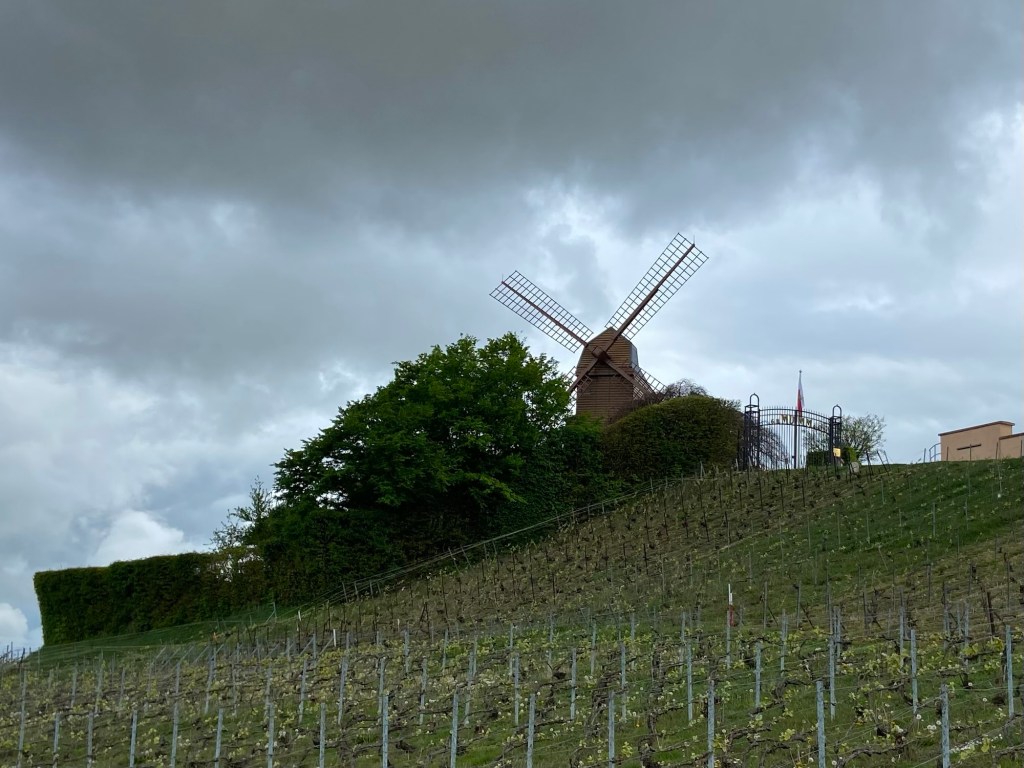
Sure enough, just as I passed the historic grain windmill on the approach to the village of Verzeney the first drops started to fall.
Luckily, the path into the village skirted it, going instead through the wood on the top of the hill, which provided shelter from the rain if not anywhere to sit, and when I came out of the wood in a lull between showers, there was an antique grape press proudly displayed in the centre of town under a protective shelter. I decided that the protective shelter could provide cover for an antique pilgrim as well as for a grape press.
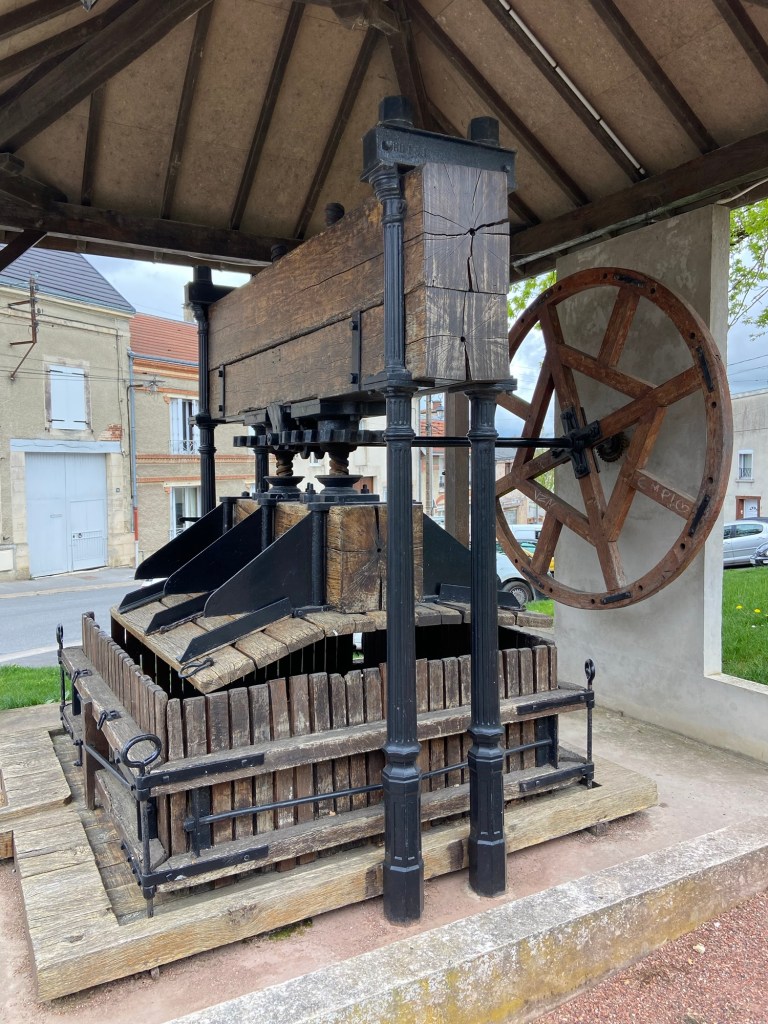
So I sat in the dry on its low wall, eating my packed lunch with an extra layer or two on to try and keep warm.
I got a text message from my host for tonight saying that they could receive me from 6 o’clock, so I had about three hours to kill — I was only two kilometres away from the end of the walk.
But I was getting really quite chilly, so I thought I might as well head on over to the village in which they lived, and try and find some more shelter from the showers, ans more importantly a boulangerie open (something of a tall order on Easter Monday), because there is no food offered this evening.
There was a strange kind of lighthouse thing at the top of the hill out of town which I had noticed from quite far away as I made my way up through the fields to the village, and now I could see as I got nearer people going in. I thought I might as well investigate, seeing as I had a lot of time to kill.
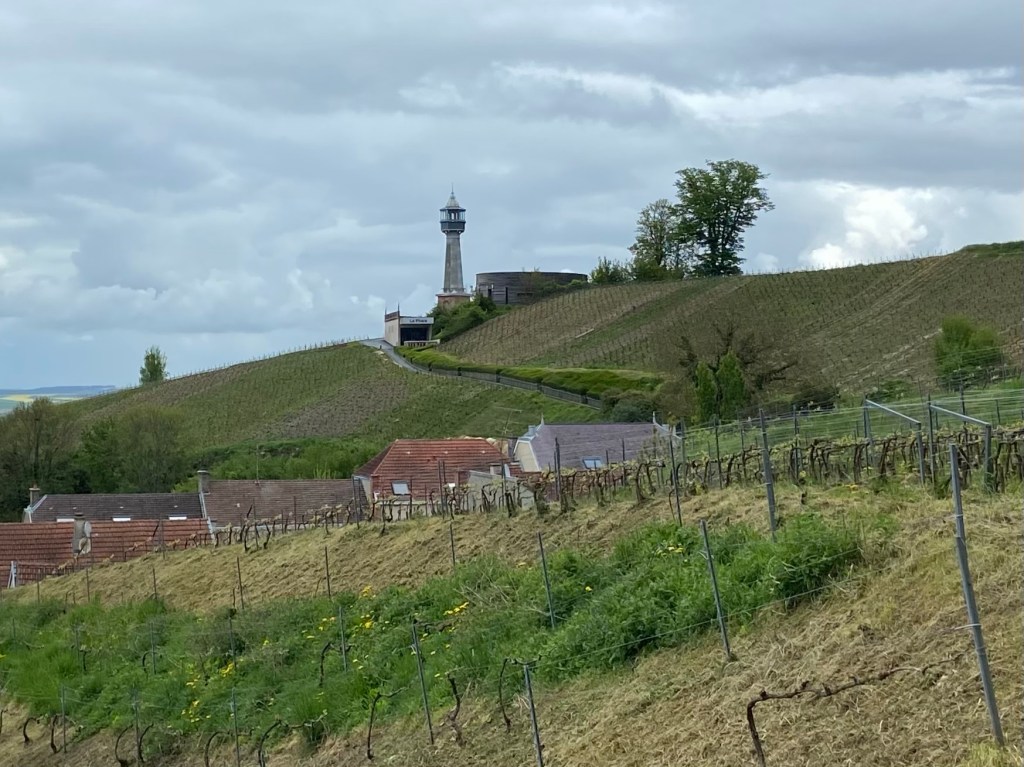
It turned out that by a fantastic piece of luck, the lighthouse was part of a museum to champagne. Avec dégustation. If there was ever a better way to while away three hours on a cold, wet afternoon, I don’t know what it would be.
The lighthouse afforded panoramic views out over the hills of this part of the champagne region. I could see all the way back to Reims cathedral, its towers and massive façade recognisable even from a distance of 22km.
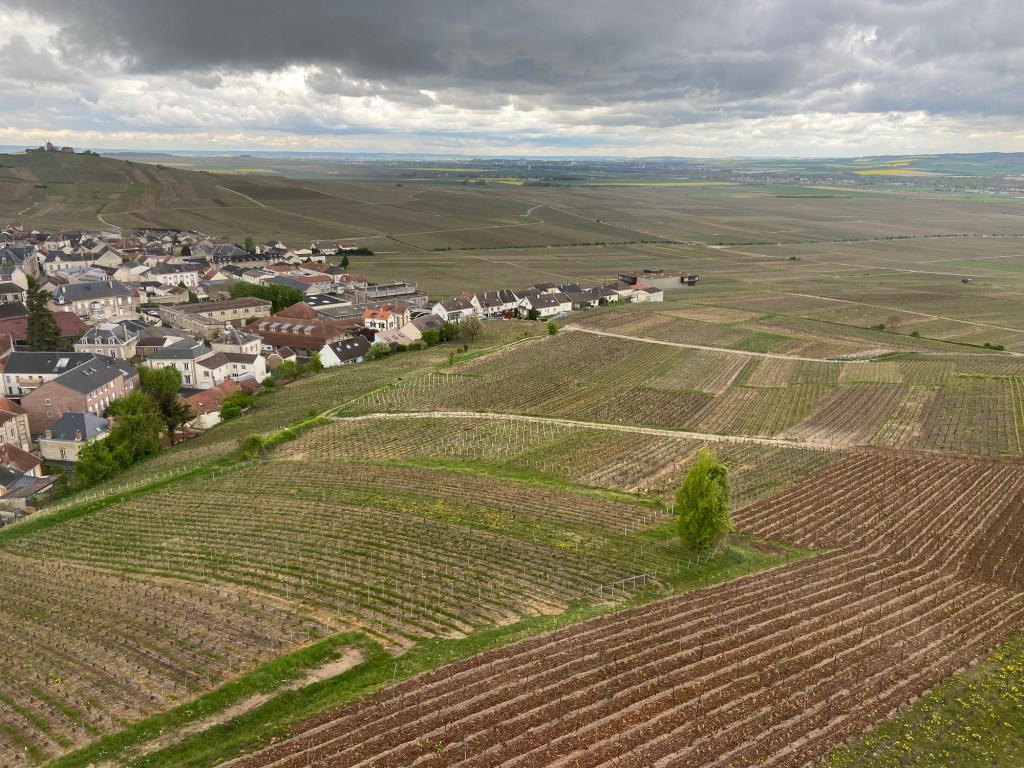
Downstairs was the museum of champagne with an English language audioguide. I came away with the distinct impression that the champagne business is incredibly complex and requires exceptional knowledge built up over centuries. The business of the terroir isn’t just about the soil (chalk, marl and sandstone), which has been improved over the years by the addition, amongst other things, of charcoal, but also about the climate, the slope of the hills in relation to the sun, and the type and depth of chalk layer on the surface of the soil. The set of the hills here is of the utmost significance, as is the bois at the top of the hills, which provided the wood for charcoal and the stakes for the vines, and is also involved in the drainage or otherwise of water through the soil.
The chalk and sandstone matrix drains water well off the surface, important to stop the root mats rotting, but it is then held underground by the underlying marl clay beds, where the roots of the vines, stretching downwards for up to 20 meters, can reliably reach it.
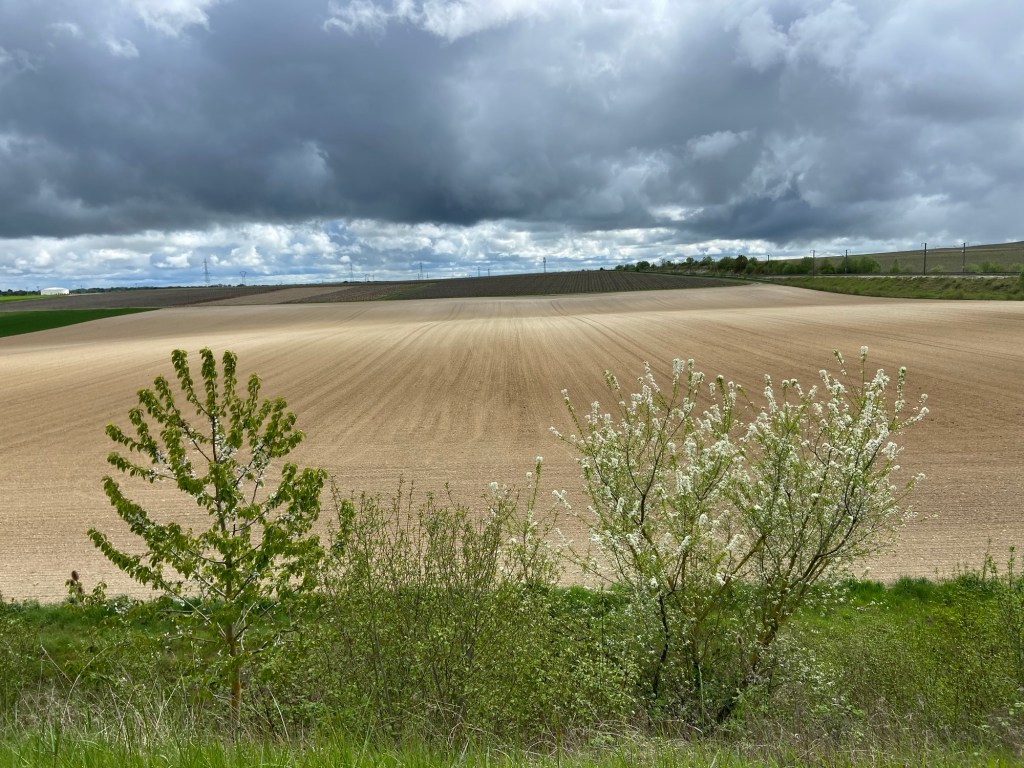
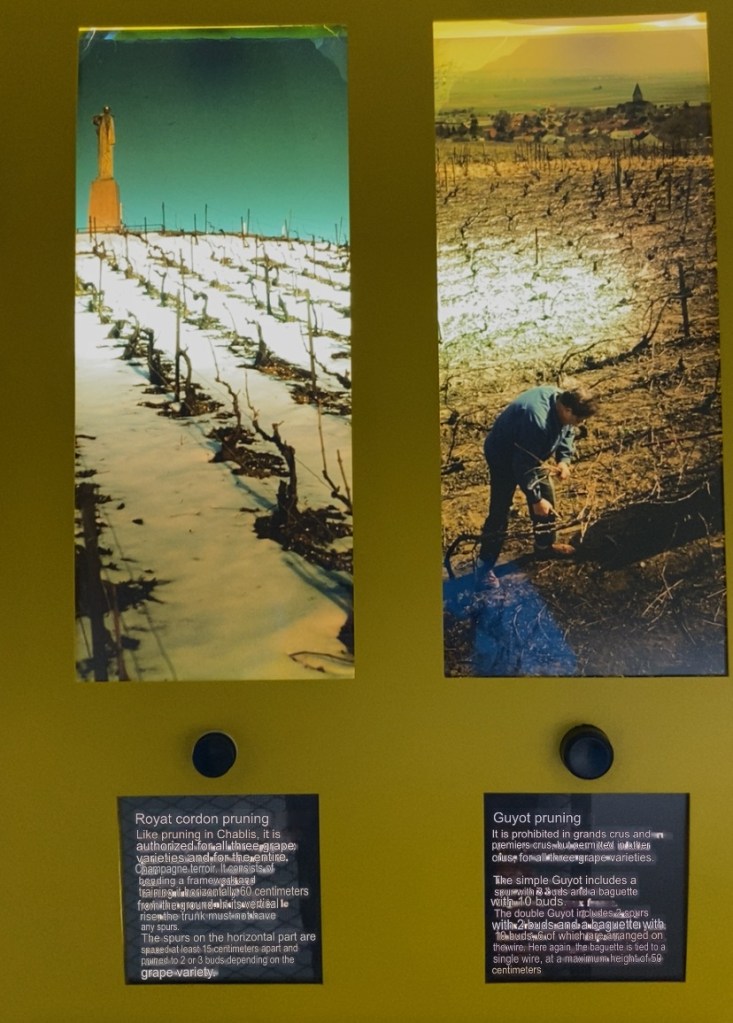
The section on pruning was interesting too: there are three methods, prescribed for different wines, for different vines, and on different slopes at different angles to the sun. The pruning is totally controlled and uniform, down to the number of buds and the length of the stem (as I had seen and remarked on), and the height off the ground of each. Pruning happens throughout the year in different ways as the growers seek to maximise the amount of sun each vine gets.
And that’s before you even start on the harvest — where the houses employ specialists who test twice a week for acidity, sugar levels, maturity and so on, or the blending of the three grape varieties: Pinot noir, Pinot Meunier, and Chardonnay.
The houses usually each have a hectare of vines and on that hectare they have to grow all three grape varieties. They need exceptional and comprehensive knowledge of every foot of their soil to be able to plant the right grape in the right place and train the vines in the right direction on the slope, explaining the patchwork of vineyards all with the rows facing in different directions.
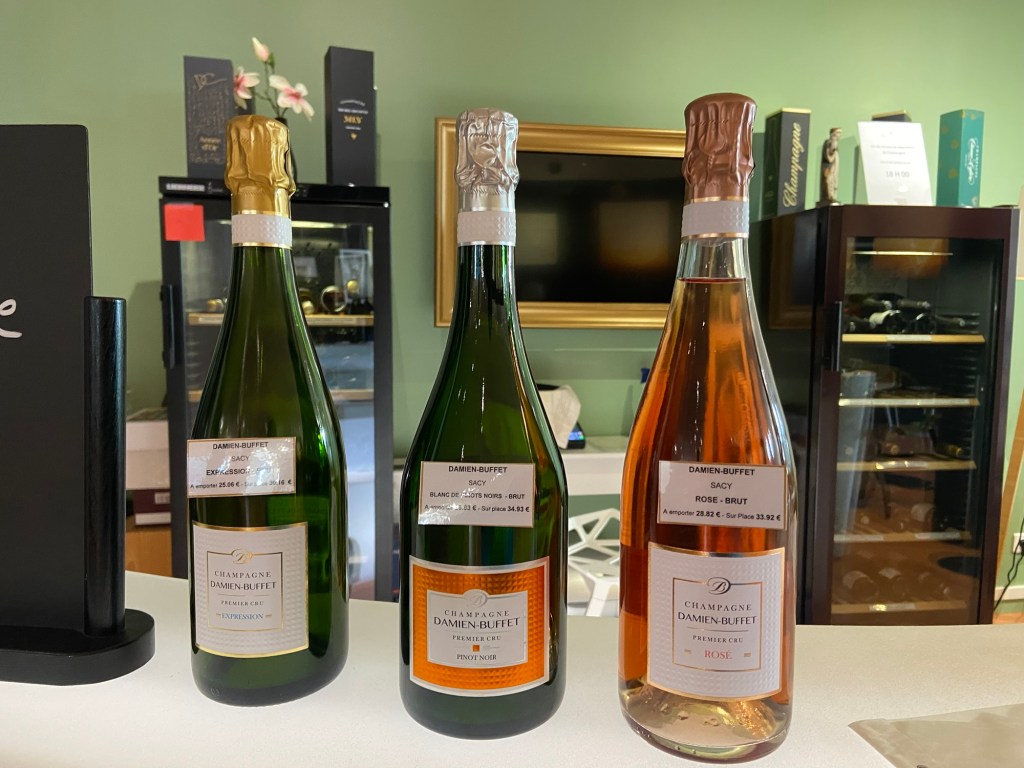
After cramming all that knowledge inside my head, I deserved a glass of champagne. And so I had my own dégustation. It felt completely wonderful sitting there on a sofa with my rucksack off, my phone charging, and a glass of champagne in my hand.
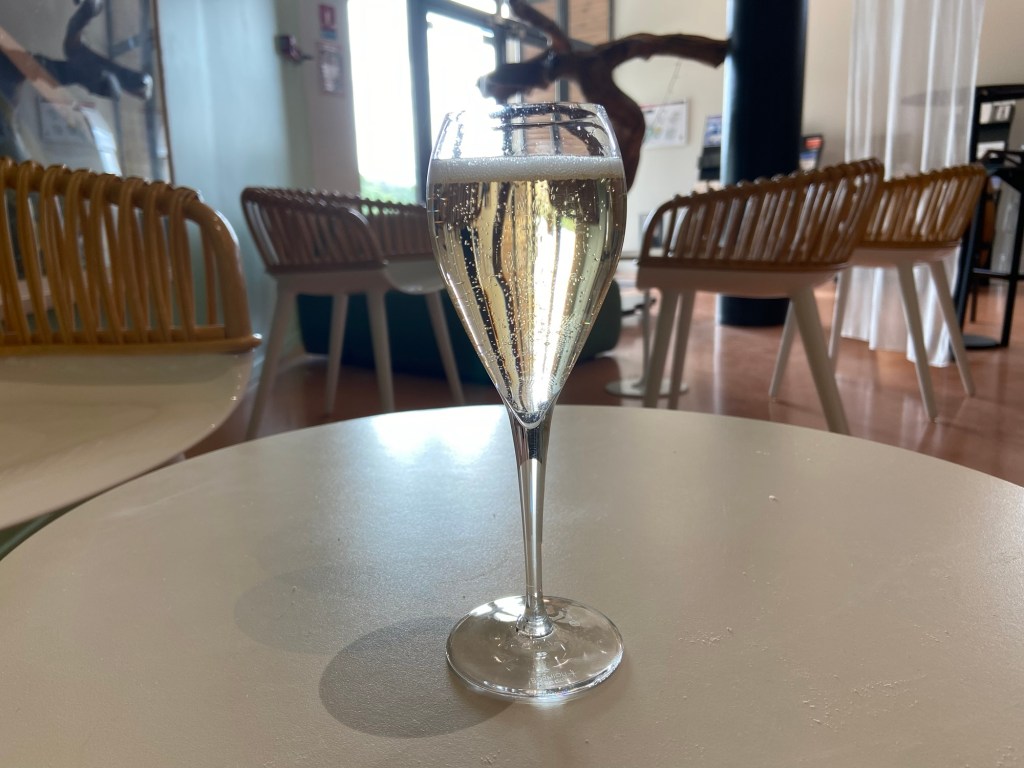
I had successfully filled up two hours with the tour, aided by the lovely girls at the museum, and now I could go to my gîte for the night.
The slow-moving clouds had passed over and behind them the sun was shining. The tiny little leaves on the vines and I appreciated its warmth.

In fact I was appreciative of everything after my glass of champagne on a pretty empty stomach — it had also banished the lingering remains of the tiredness headache (as did the fact that I had happily dozed off on the sofas of the last part of the exhibit, short films of children’s stories about the origins of various elements of champagne growing, production and tasting, such as the champagne flute being better for tasting than a coupe). I wandered the woodland path the last 2 km to Verzy, feeling bubbles of happiness coursing through my veins.

When I got to the gîte I found that Ian from Holland was also staying. With no food provided and everything closed for Easter Monday we pooled what we had: I contributed a packet of mushroom soup (surprisingly nice with the fag end of a bag of tagliatelle which I found in a cupboard), and Ian threw in his chicken Caesar salad which we supplemented with my lettuce and tomatoes. We had half a clementine each, and then Ian came up trumps with a pain au raisin and a snickers bar, and I shared some of my almonds, walnuts and hazelnuts. It was a feast!
Stats for the Day
Distance: 23.37km
Time: 4hrs 50 — much meandering
Pace: 4.8km.
 Walking The Landscape
I’m so glad that the champagne lifted your spirits, and what a meal that sounds like! Your resilience is at Olympic levels. What’s the current audio book?
LikeLiked by 2 people
It’s a murder mystery — The Imposter
LikeLike
Beautiful scenery, a glass of fizz, a well earned snooze and a feast: what a day! Xx
LikeLiked by 2 people
Fun fact- In the UK you can send your ticks to Porton Down so they can become part of the UK tick surveillance programme. They accept them by post but prefer you to warn them if they are still alive… I don’t know if France have a similar scheme.
I feel you should be congrated on your creative supper which I’m sure was much improved by pre-dinner champagne. Hope breakfast is excellent and plentiful.
LikeLiked by 1 person