William Wordsworth
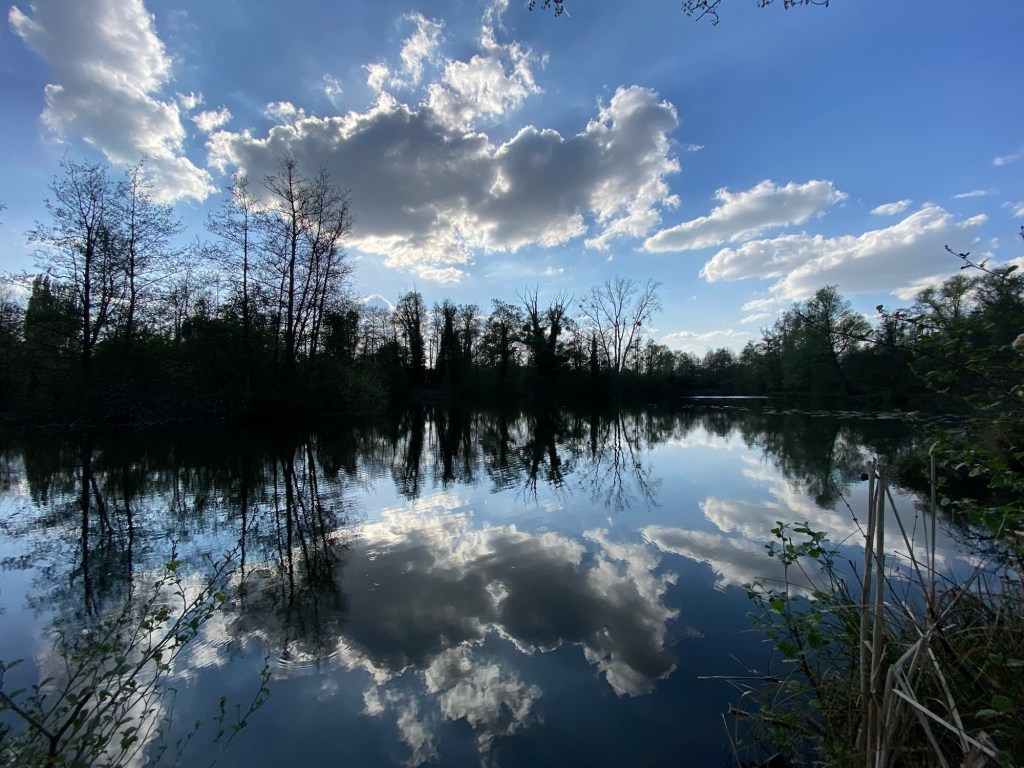
Into a gradual calm the breezes sink,
A blue rim borders all the lake’s still brink
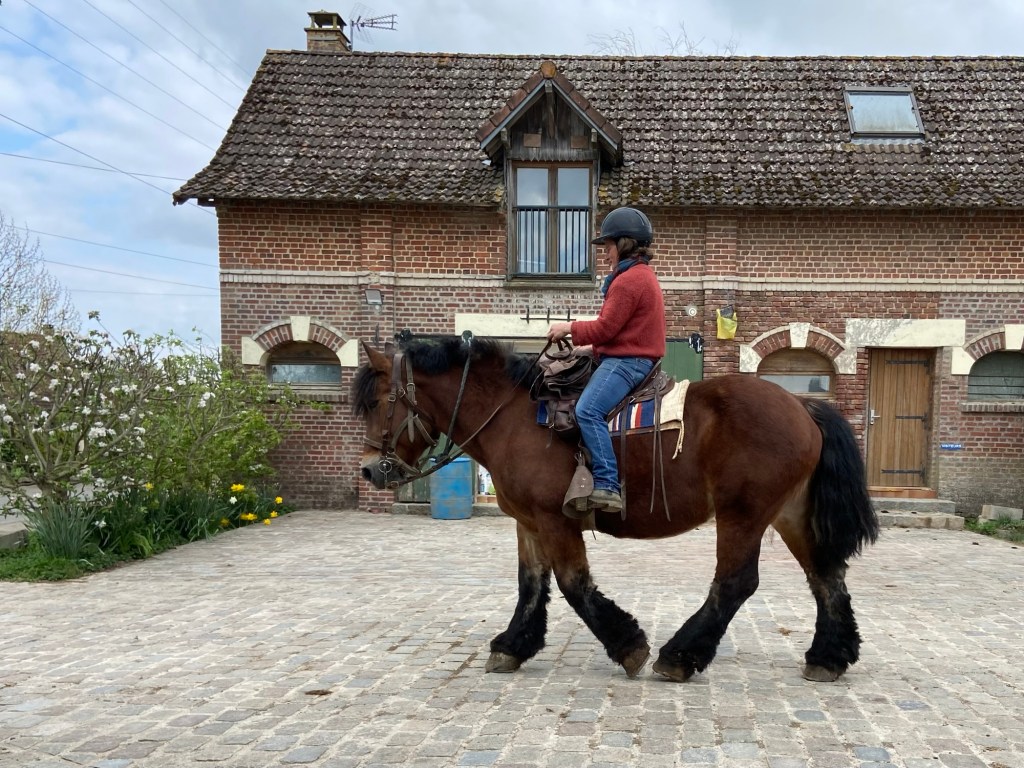
Trefcon is a tiny village in the middle of nowhere. M and Mme Wynards have an ancient farm which they have turned to different uses: they rent canoes for trips on the Somme river (the water is too high to canoe at the moment, said M. Wynards), and provide a gîte and stabling for people on long-distance riding treks. They also provide hacking days out to explore Picardy. Last night a young woman was taken out on a hack by their daughter, who was riding a huge, heavily-muscled horse which Matt and I (sitting in the yard with some crackers and feta cheese) thought must have been a draft horse. This was confirmed by M Wynards: a Percheron. He then showed me some photographs of the leather saddles they make during the winter, sitting around the stove in the kitchen for warmth.
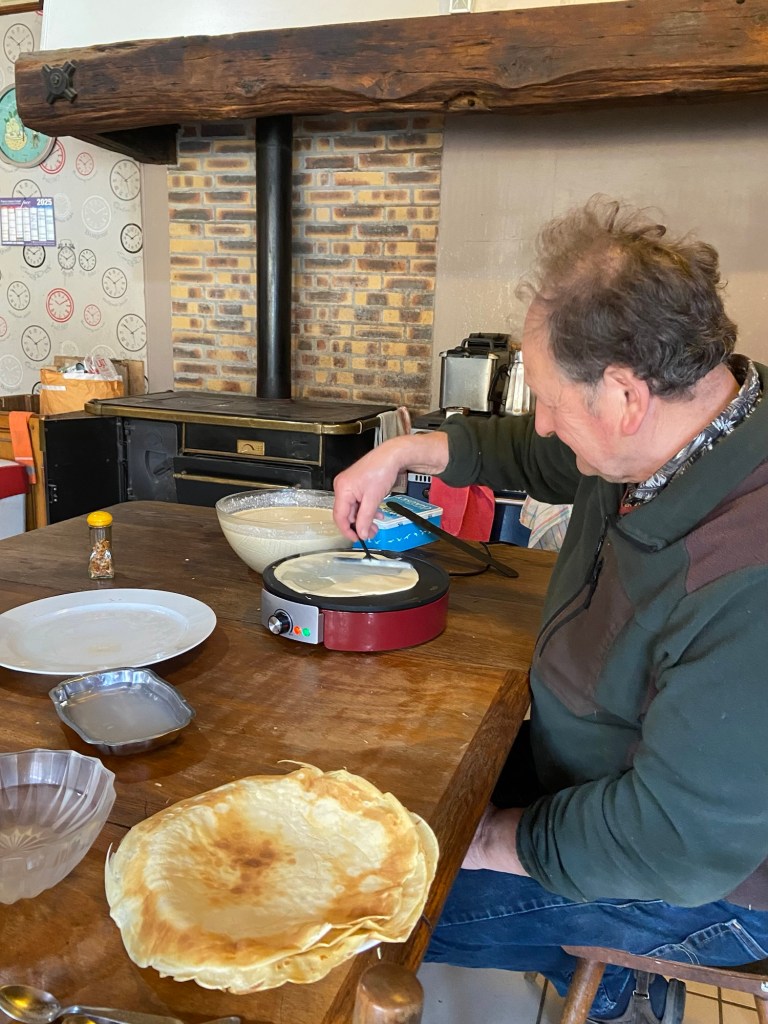
Matt was cooking for me and him — a huge Spanish omelette with potatoes, chorizo, peppers and chicken, made with eight eggs that Hubert provided from local hens. I made a virtuous salad which is about the limits of my culinary prowess. There was enough for the lucky Belgian man who had arrived without any supplies. We even had a little starter: freshly-made crêpes from a bucket of batter that Mme Wynards had produced and M Wynards had patiently cooked on a special crêpe griddle.
After supper and washing up (me — the expert) we went for a small walk to case the joint, over to the church where jackdaws had colonised the tower and built huge nests, the jettisoned or accidentally fallen sticks of which lay all over the church steps like a tide line.

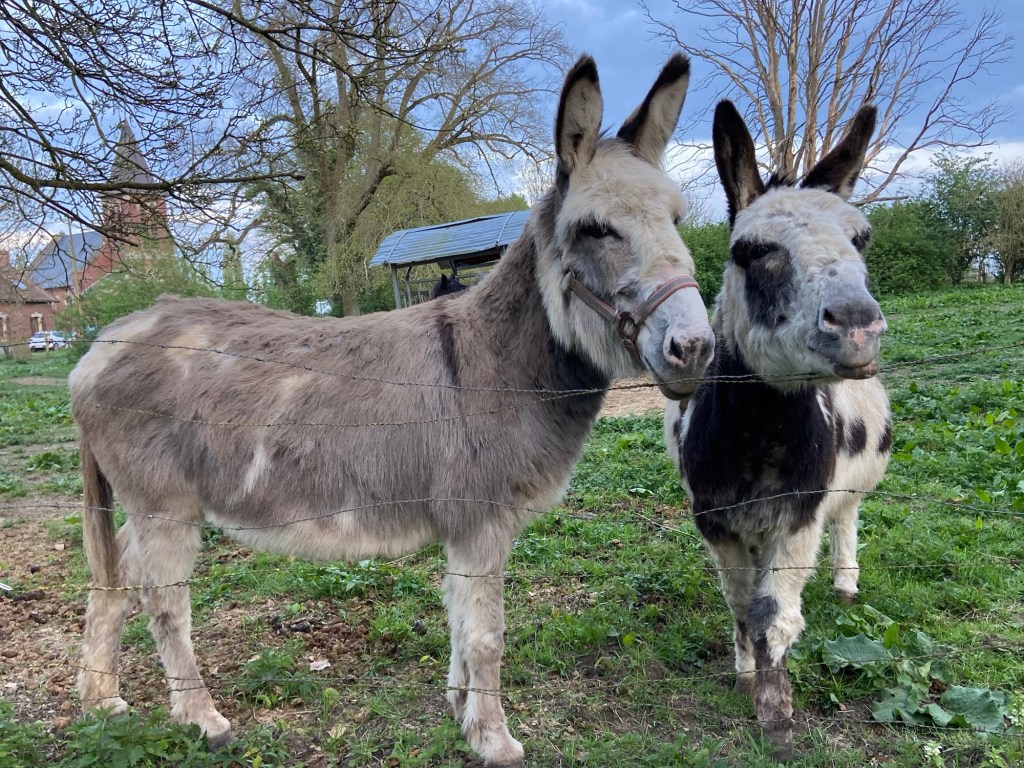
Then Matt and I tried to work out what the relationship was between the three animals in the field opposite. I think we came to the conclusion at the horse and the donkey were the parents of the smaller third animal, which would’ve then been a mule. Whatever, two of the three were very friendly and came over , expecting treats.
I slept with the windows open last night in the hope I would hear nightingales. I didn’t hear any, but I was awoken beautifully by a blackbird singing outside my window. I drifted in and out of sleep for awhile, dreaming that we had bought a horse, which turned into a huge cat when we were trying to saddle it up to ride it. I had been clearly inspired by seeing the horses in the yard last night!
The Wynards had put on a terrific breakfast with croissant, two types of bread, gorgeous butter, and jams, and a fantastic pot of filter coffee brewed on the farmhouse stove. When I told the tale of poor Matt falling down the manhole, M Wynards burst out laughing, a quite unexpected response that had me laughing as well, at his laughter!
Matt and I set off together on the first 10 km which we would do together until the parting of the ways at Savy, when he would head off to the large town of Saint Quentin, thence home, and I would carry on straight to Seraucourt, and points south east.
At the crossroads where we left Trefcon, a nightingale sang us on our way. A haunting sound, filling the air quite unlike anything else.
On the road, Matt and I chatted about the difference between contrails and chemtrails for cloud seeding, about the Camino and one of the best Camino accommodations he ever stayed in — an environmentally friendly place with a long-drop composting toilet and a solar shower. This explanation came complete with diagram.
I didn’t pay much mind today to the road or the names of the places we passed through before Savy, but a dog barking madly at us over a garden wall did draw the attention somewhat,

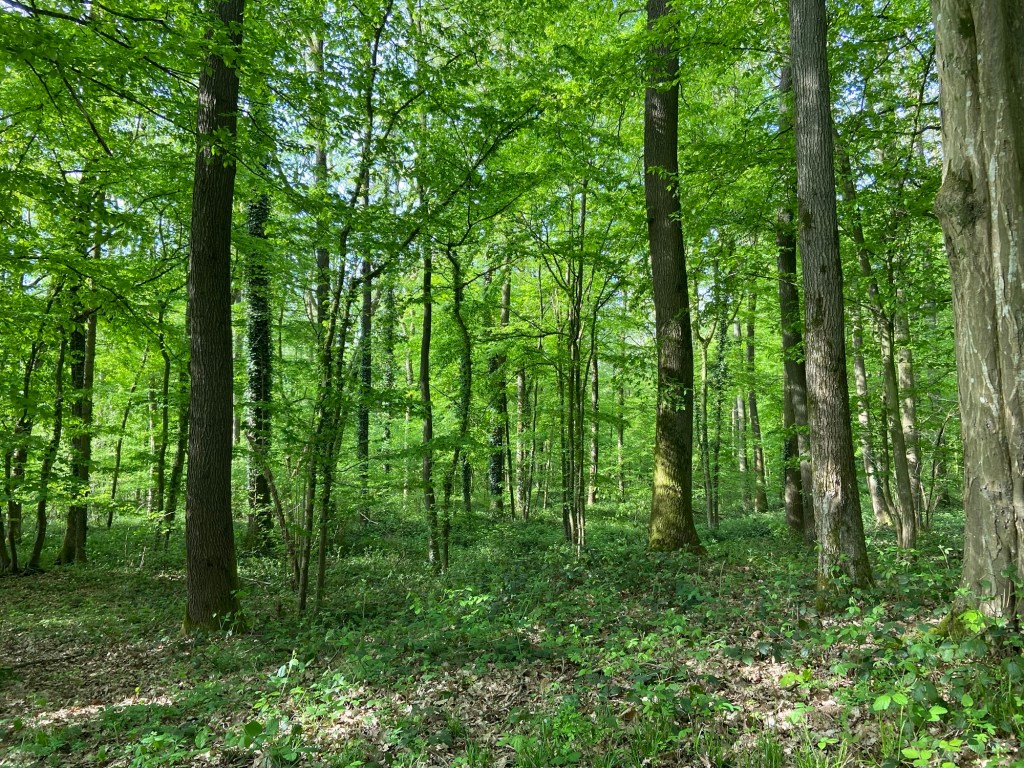
as did the watery green light filtering through the now-open leaves of a beach wood.
We pretty much chatted our way through it all.
And finally it was time to say au revoir — not goodbye! — it has been such a pleasure catching up with you properly, Matt. Thank you for your cheerful company and endless supply of stories.

The speckled wood caterpillars have now hatched, so on the shadier parts of the paths I was accompanied by them and not the peacock butterflies any more, which prefer full sun. I decided I was going to try and make it today’s mission to get a photograph of one, but it was hard, so young and vigorous were they, fluttering around with all the joie de vivre of not being any longer earthbound.
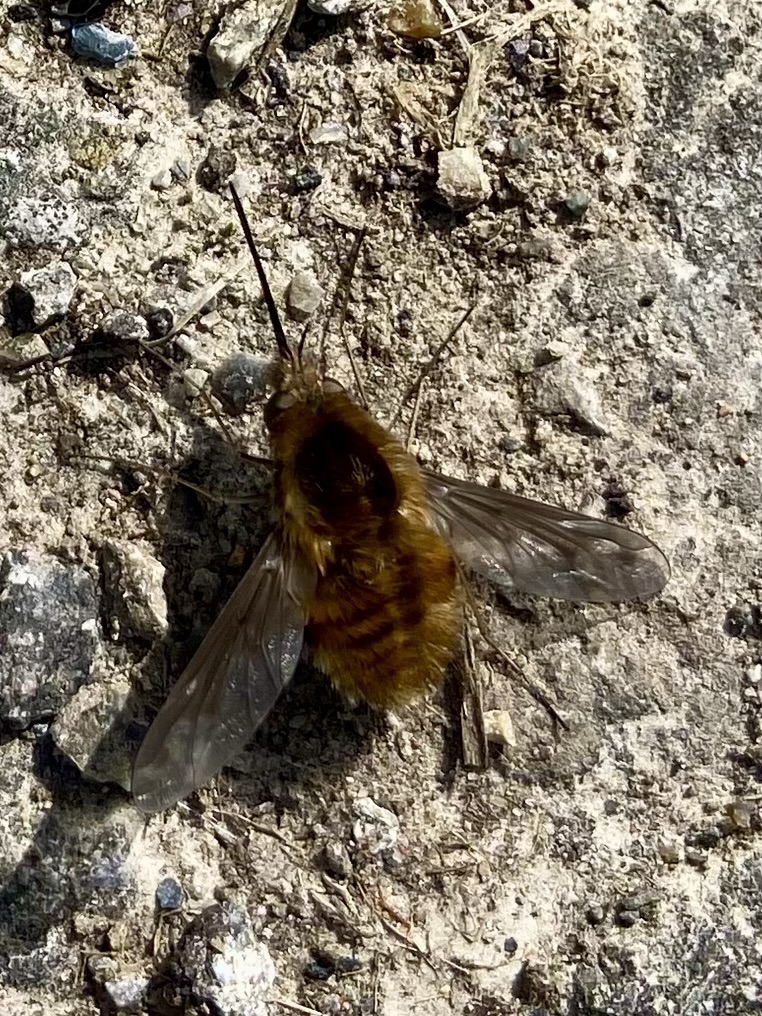
A bee-fly led the way in front of me on the road out of Savy. Being extremely small it couldn’t fly very far before having to land to rest, so when it did, I crept up in triple-slow motion and managed to photograph it. Look! Doesn’t it look like a bee? But it’s a fly. All fat and fuzzy, with its long straw-like tongue sticking out in front.
The road had changed to a pavé surface: huge blocky cobbles. It’s the surface for much of the classic Paris-Roubaix bike race which had been run yesterday. Dutchman Mathieu van der Poel whom Stephen and Annie had fancied for the winner had won (despite being hit in the face by a full bottle thrown at him by a spectator). I had been a day’s walk away from the route yesterday, and couldn’t have experienced it (although I wouldn’t have swapped my nightingale walk day for the world). I loved walking on the grass in the middle of the cobbles. It made me feel really purposeful, like a Roman soldier treading ancient ground.

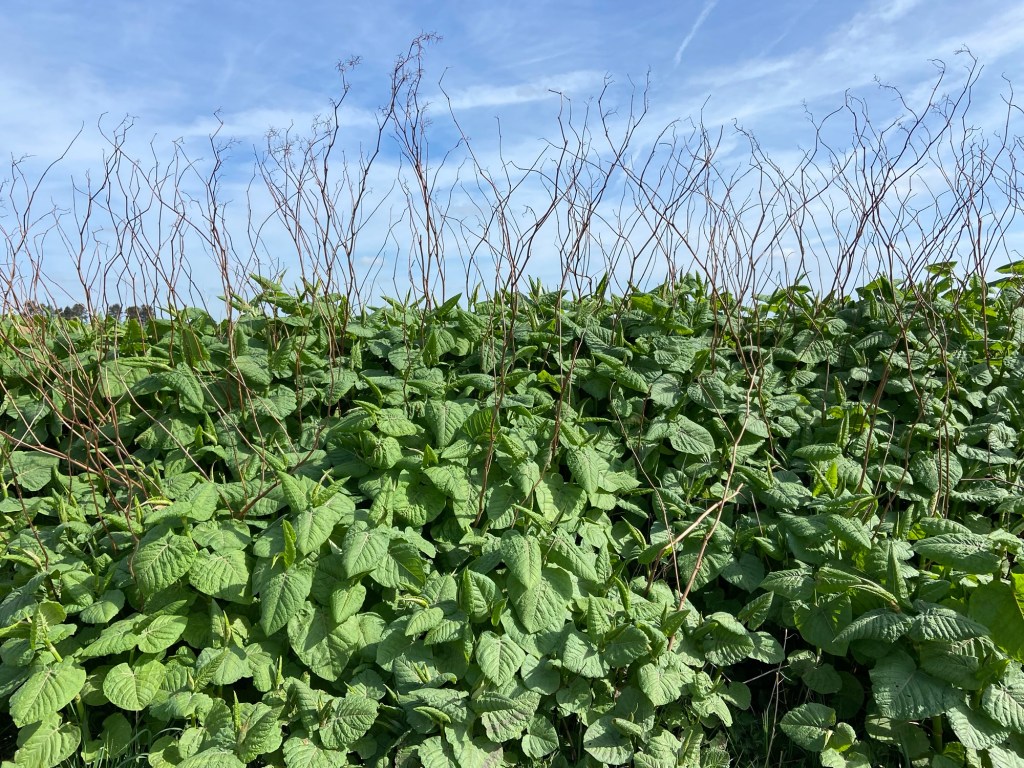
The road also had more horrific stands of Japanese knotweed, just one of very many that I saw today which nobody seems to be doing anything about. I had a look at several online forums, and everybody said that the French are about 20 years behind the curve on the threat. It’s just going to develop into a shocking problem, if they don’t get on top of it.
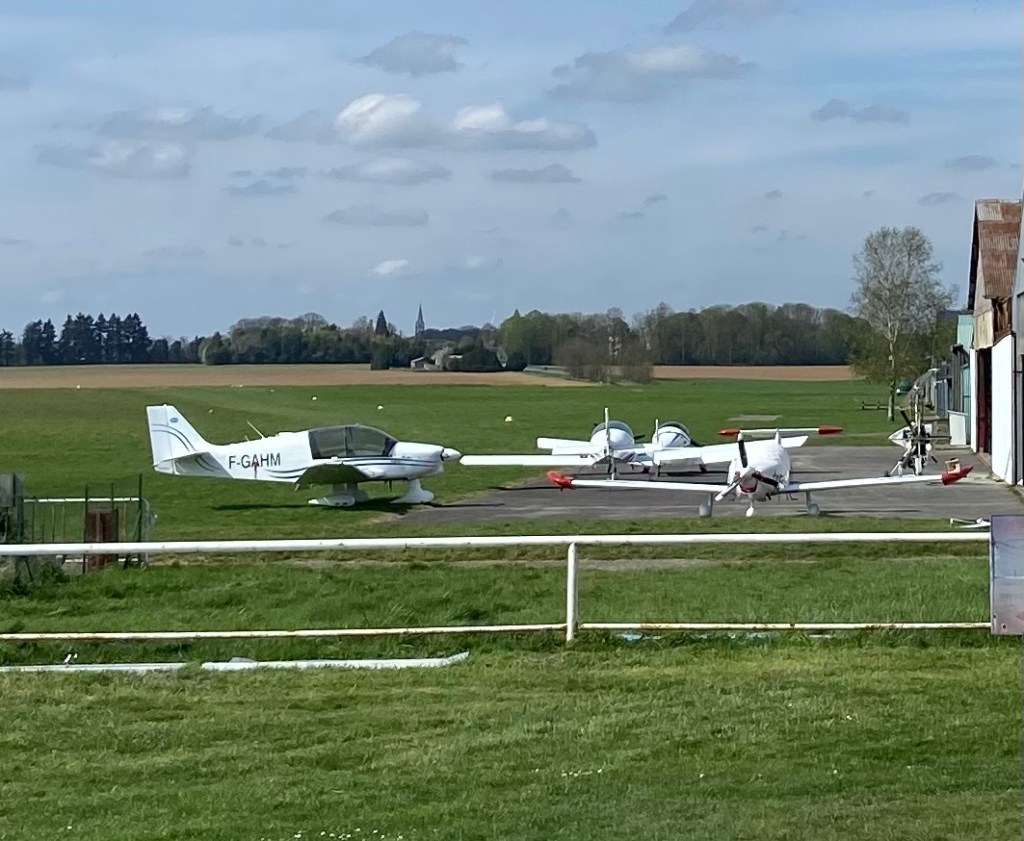
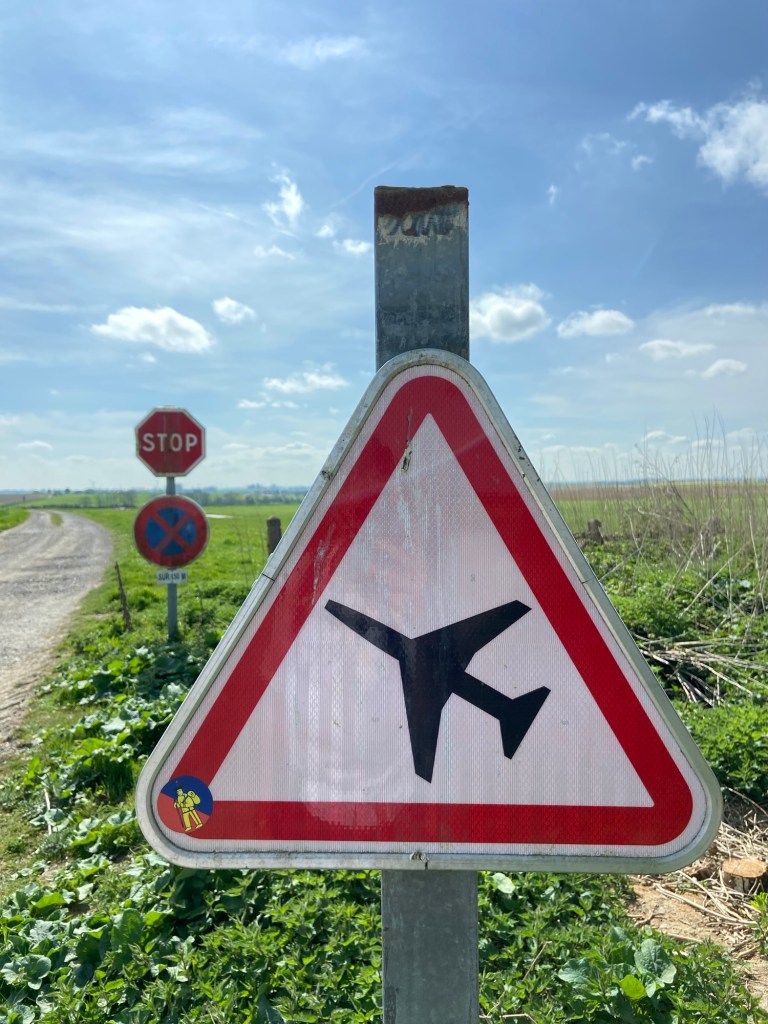
I was out in wide fields again here for a stretch, cooled by a light breeze. Then I happened across an aerodrome. The thing that attracted my attention was not so much the sign saying ‘aerodrome’, but rather the sign saying ‘bar’, where I thought, being almost 12 o’clock, that I might get a cup of coffee or a snack. Or preferably both.
Sadly, it was locked, but I peered through the windows at the inviting wine glasses set out on the tables. So near, and yet so far.
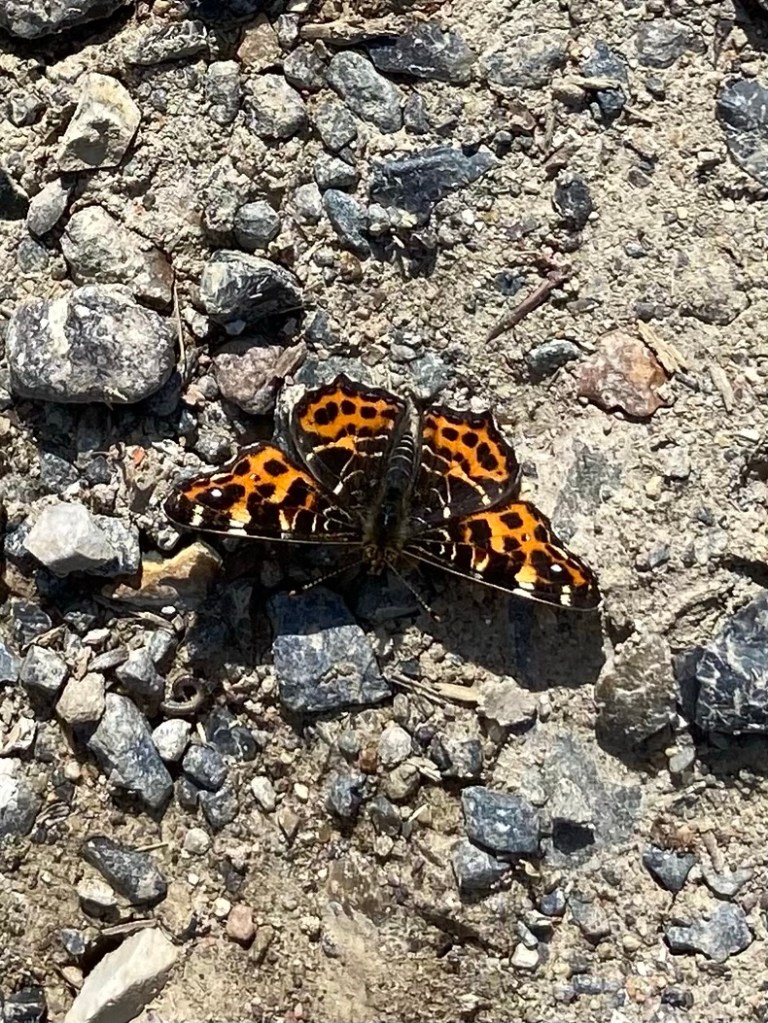
The gravel road descended between two banks, and now I was walking through the thinnest of gossamer spider threads, batting them out of my way as I watched two speckled wood butterflies encounter each other and spiral upwards in either fluttering ecstasy or fury, I didn’t know (I have since looked it up and it seems that the spiral chases can be for territorial defense, mating rituals, predator avoidance, and also resource competition, so my butterflies could have been anywhere along that spectrum!) Newly-opened flowerheads on the Queen Anne’s lace were attracting tiny insects to do their pollination for them. A real thrill was a new butterfly for me: a Map, Araschnia levana. It is seasonally dimorphic which means that the striking orange colouration of the spring brood is different from the white coloured ones later in the summer.
Further on, I stopped to watch minuscule hover flies sipping nectar from tiny blue speedwell flowers, and a small bee collecting nectar from a self-seeded oil-seed rape flower, inadvertently pollinating it to create more seeds to keep the plants thriving by the side of the road.

But much as these tiny creatures were lovely, I wanted to get on and to reach the end of this shortcut route which would join me up with the Canal du Saint-Quentin. From there I would take the canal path all the way down to Seraucourt-le-Grand, about 4 km away. I joined the canal by crossing over it as I had done with the Canal du Nord, but this time the route did not immediately twist away, but rather coiled round and round and joined the towpath.
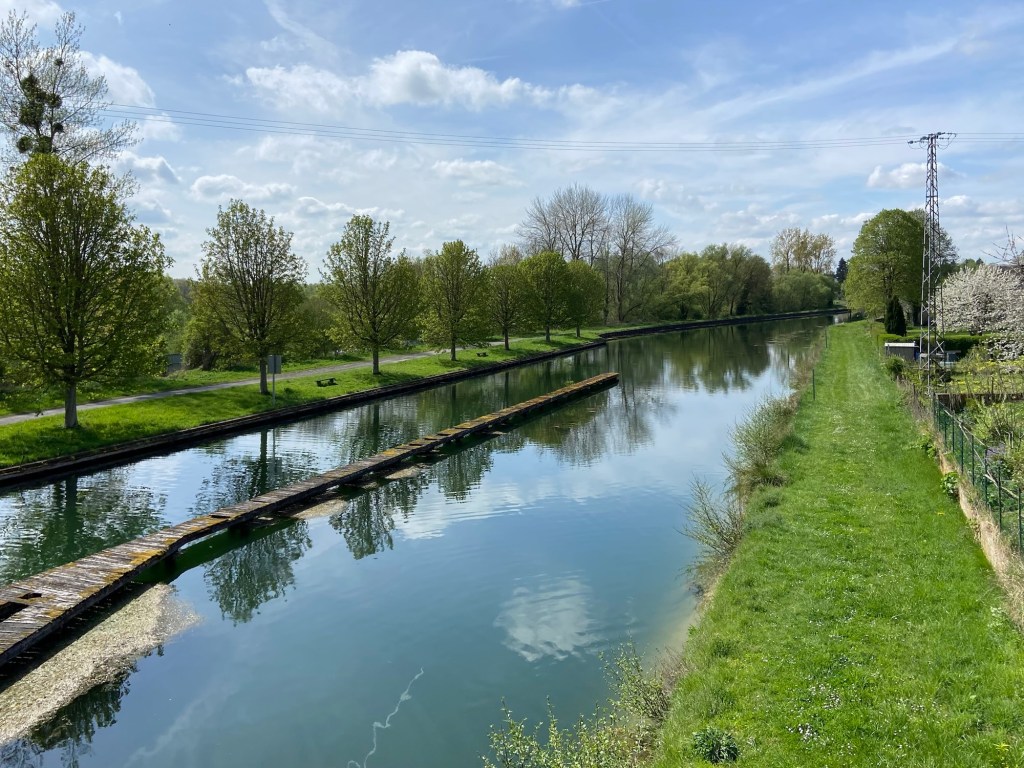
Lucky, lucky, lucky me, to be able to spend 4 km walking next to this beautiful waterway.
I found a bench and sat down to have a bite of lunch: some nuts from my pack, and an oat bar. There were to be tomatoes, but those had been left behind by accident in the Gîte. Pas de problèm! I had the view.
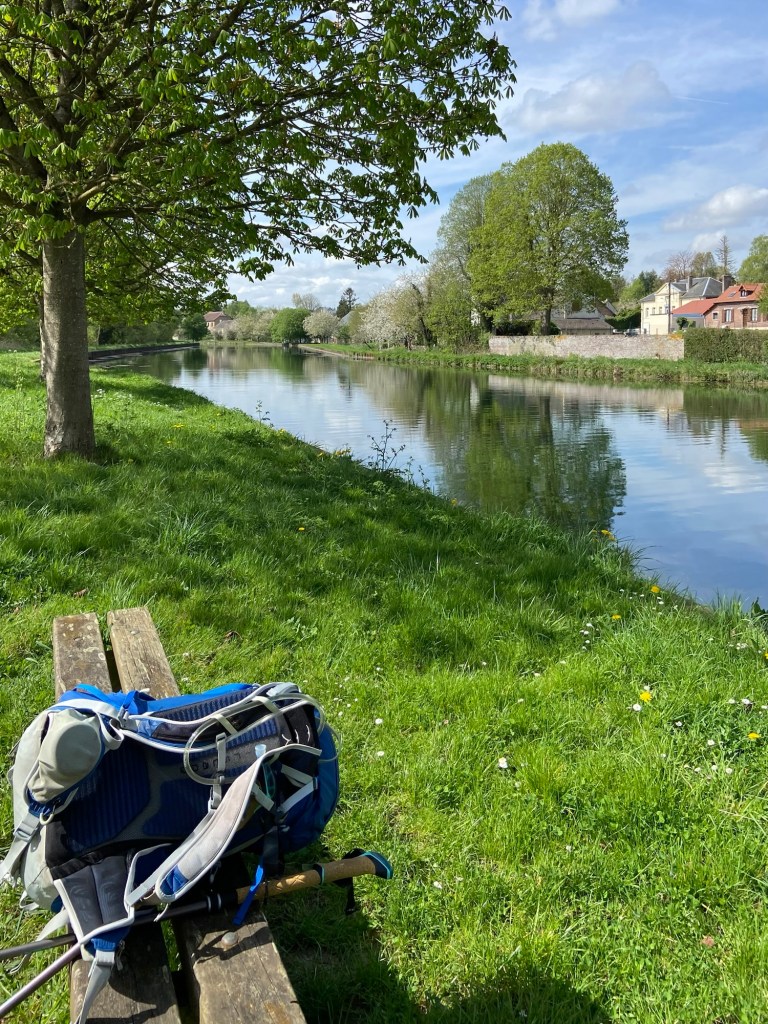
There were fish leaping, and I watched the ripples spread out and fade away. There were small clouds of tiny gnats — fish food? — but they weren’t interested in me being theirs. Better yet, behind me in the thicket of willow, another nightingale was singing.
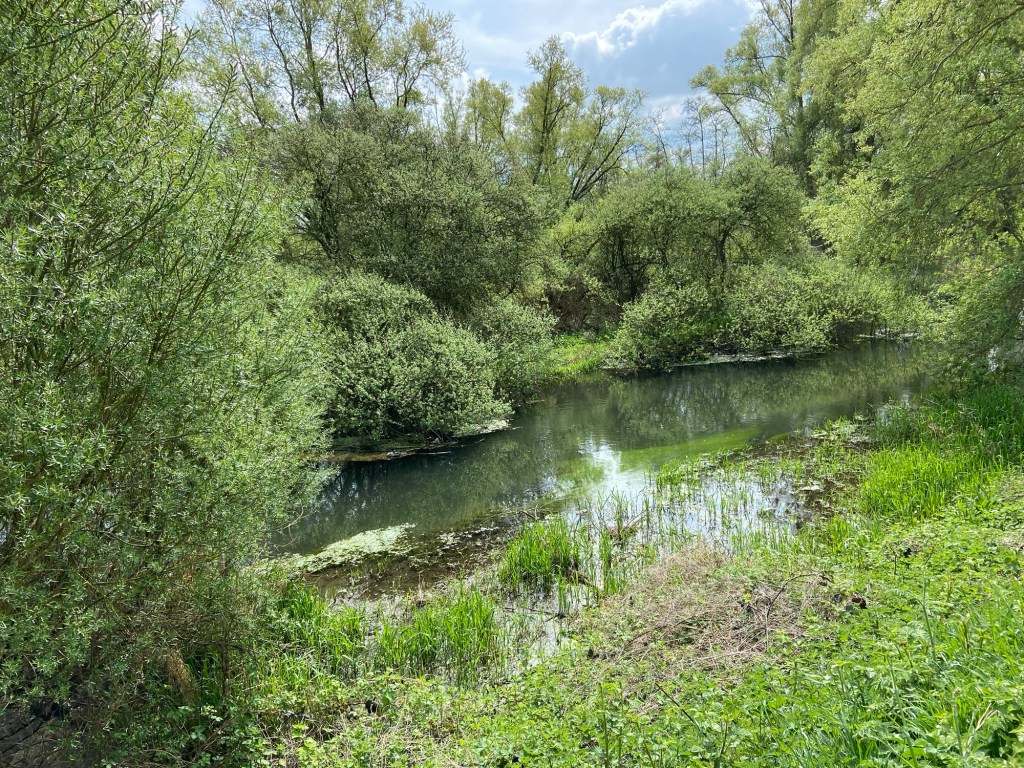
I realised that I was walking between two waterways: the canal, and a river twisting away amongst marshy ponds and reed beds to my left. It was the Somme again, here spreading out to create a mosaic of watery habitats.
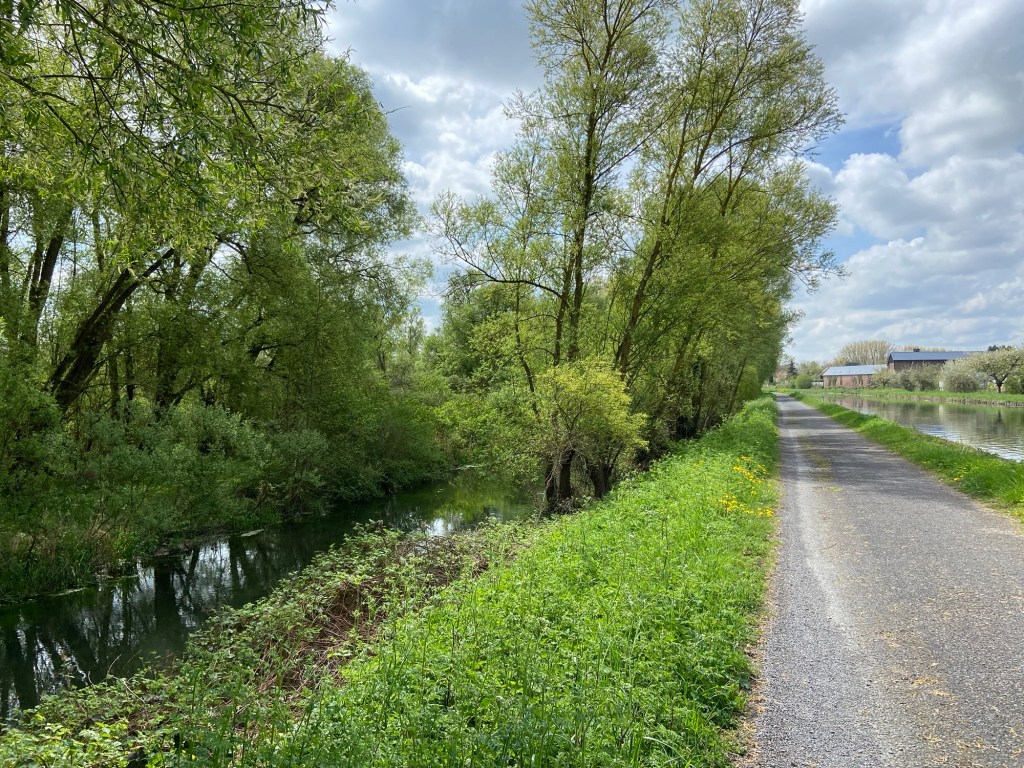
It was just extraordinarily beautiful, and reminded me of the best days of my wonderful walk to Cambridge a couple of years ago peaceful, green, and literally and figuratively reflective.
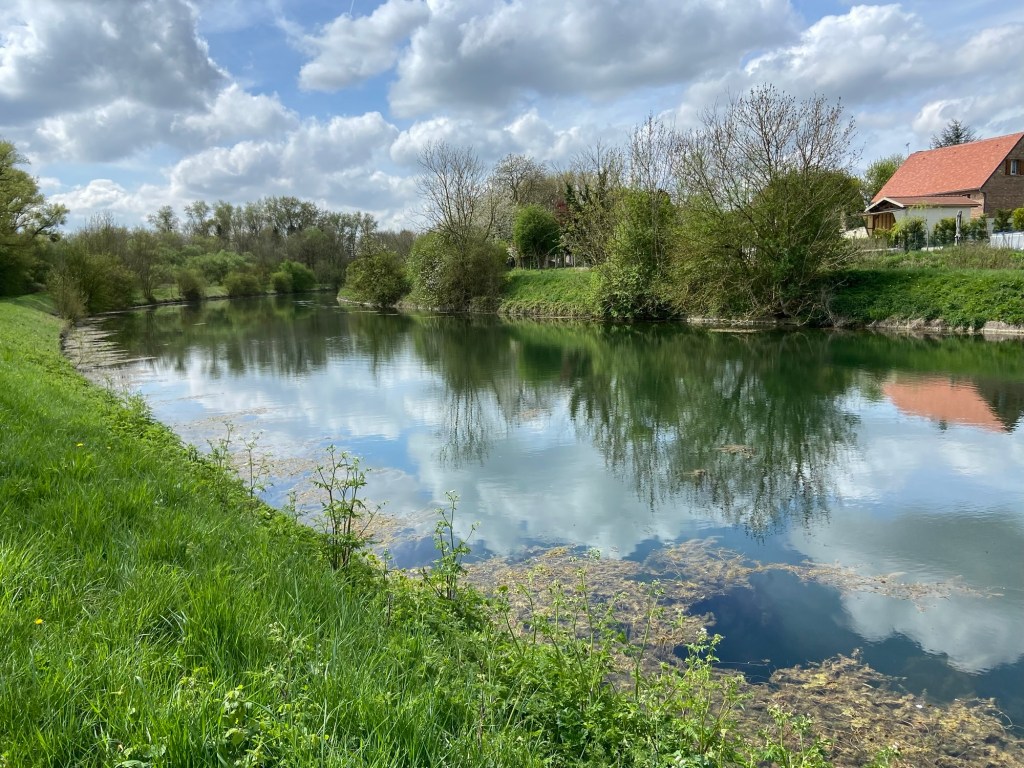
As well as the nightingale I had short-toed tree creepers and greenfinch singing to my left in the depths of the thicket. It was sensory overload, after all those gigantic, soulless fields. I had to physically grit my teeth and walk on to stop myself from taking photograph after photograph.
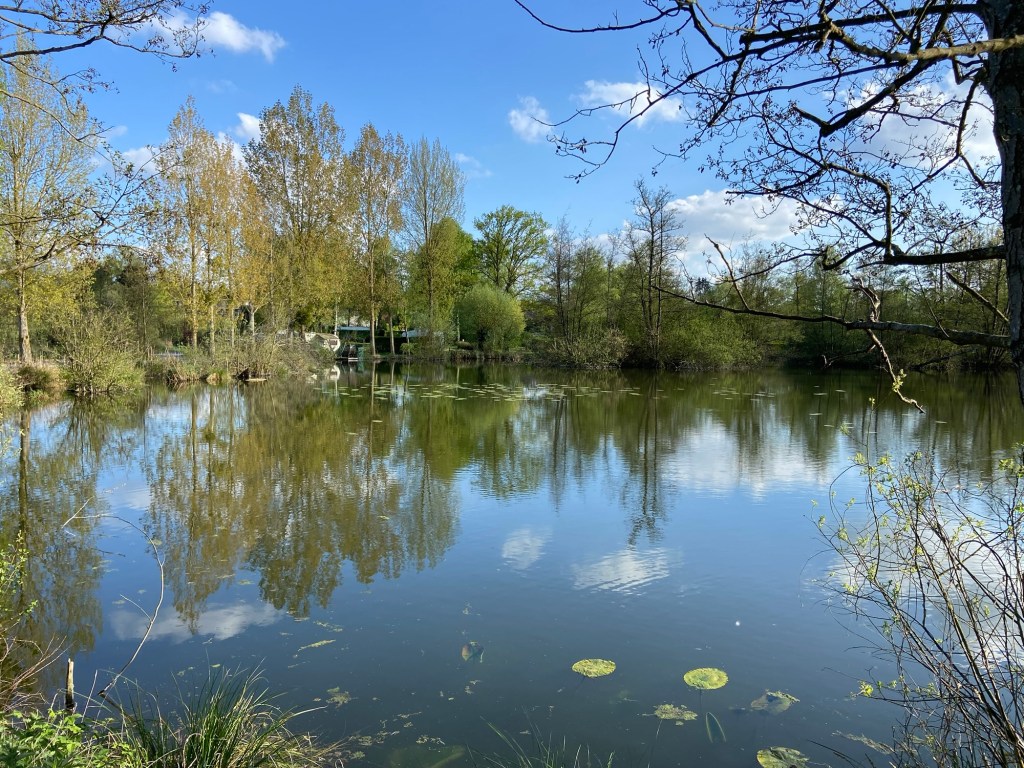
All too soon the path turned off to the left and up a stub of canal that led to the village, while the canal itself curved placidly away to the right. There were now fishing lakes on my left, and I could see, with patchy wifi, that the place I had booked to stay at, ‘Camping du Vivier’, was in fact ‘Camping du Vivier des Carpes’ — and I wondered whether I was staying at a carp fishery.
Such proved to be the case. This was an oasis of green on the verdant edge of the Somme river. Though still in the Hautes de France region, I had now crosssed into the Aisne Department. A lake with five islands connected by grass pathways and bridges provides an amazing getaway caravan park for fishermen (and women). A spotless games room with pool and table tennis and three bookshelves of decent English books, a bar restaurant (closed until the season gets underway)… it was a crying shame I was only staying one night!
Stats for the Day
Distance: a modest 18.01 km — the last of the short days. I have four back-to-back long days to come.
Time: 3hrs 45 mins
Speed: there was quite a bit of strolling, but when I was walking, it was at around 4.8 km/hr
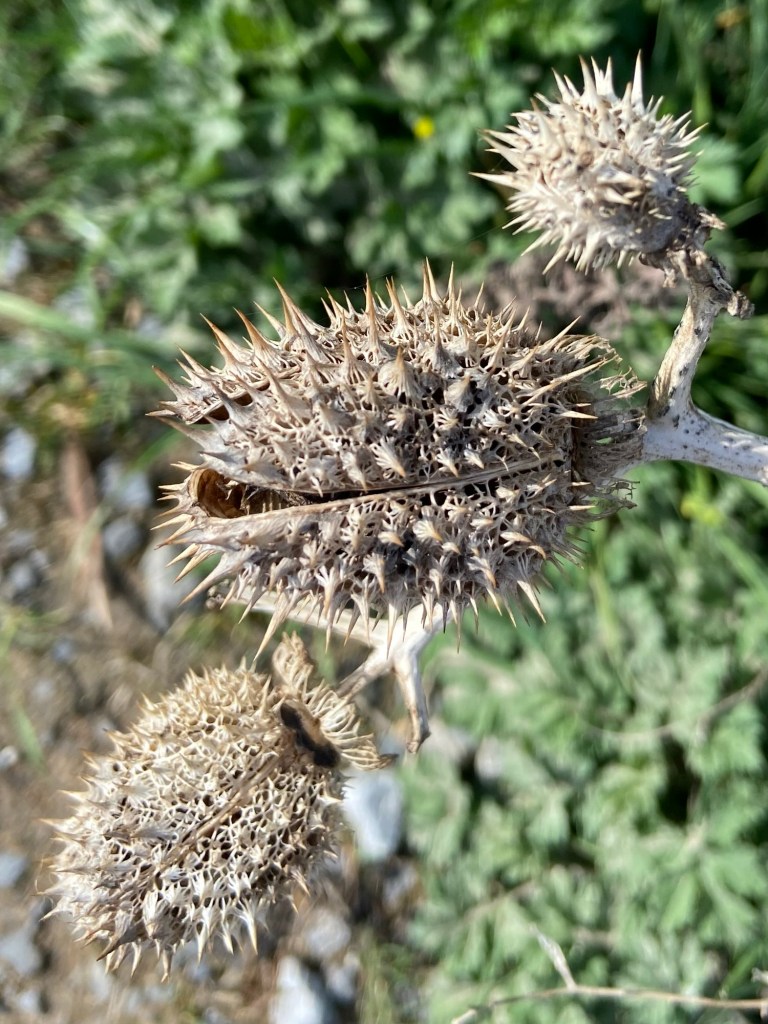
Bonus mystery seed pod
 Walking The Landscape
Had to look this one up… jimsonweed. Datura stramonium. X
LikeLiked by 1 person
Yikes! Super poisonous and fatal if consumerd in even small amounts. Nightshade family. Thanks for the warning! Xxxx https://www.westsiderag.com/2019/09/13/little-shop-of-horrors-is-toxic-jimsonweed-taking-over-or-are-we-all-just-overreacting
LikeLike
I didn’t think they were highly toxic, my sister called them angel’s trumpets. The flowers are very pretty and quite fragrant. She grew them in her little conservatory, growing loads from cuttings. Might not be the same species?
LikeLike
Huh. I have no idea — I just googled and up came all the stuff about it being lethal!
LikeLike