
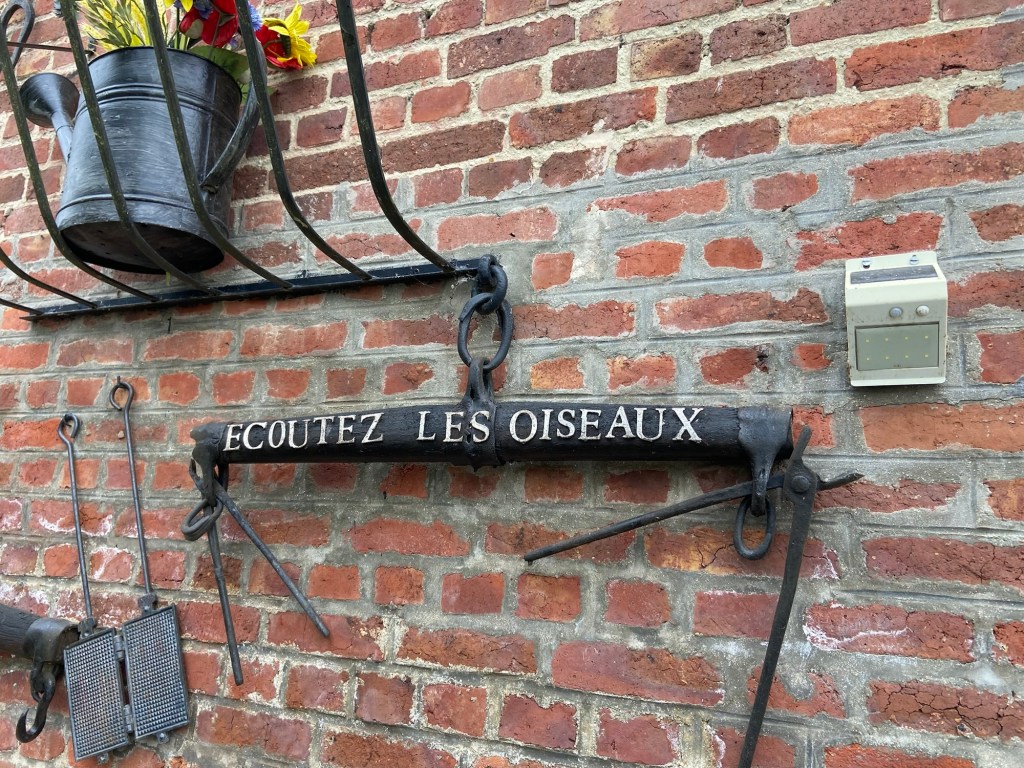
John Keats, ‘Ode to a Nightingale’
That thou, light-winged Dryad of the trees,
In some melodious plot
Of beechen green, and shadows numberless,
Singest of summer in full-throated ease.
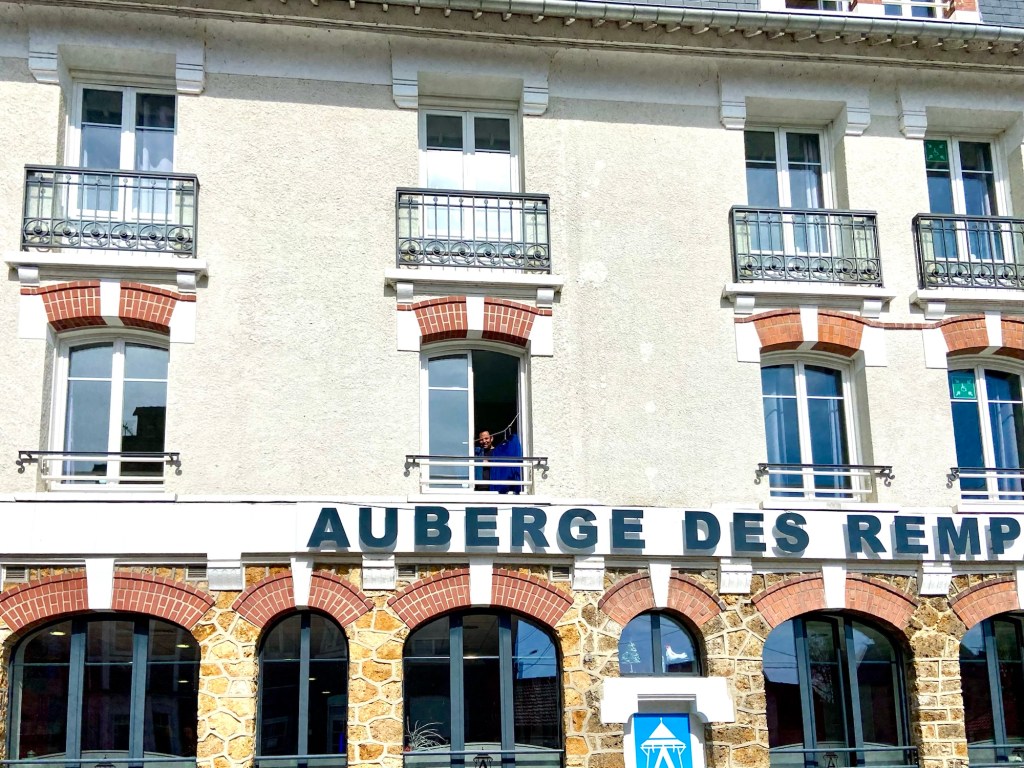
After a day in which I had talked to nobody at all, I was not expecting the first sound I heard when I arrived at the Auberge des Remparts to be a loud hail of ‘Sophie Holroyd!’ from an upstairs window. It was Matt from Thérouanne who’d arrived earlier and had jerry-rigged an ingenious washingline in the window on which to dry his clothes. I had company!
By the time I had showered and come downstairs, Matt had installed himself in the bar with a beer and a free packet of crisps (this is Matt’s Olympic sport, getting offered free stuff), and a tableful of the most unbelievable ex-paratroopers who are now international sky-divers. There were 35 of them staying, all in their late 60s, absolute machines. Beire had had two knee replacements and a hip replacement and was still precision skydiving.
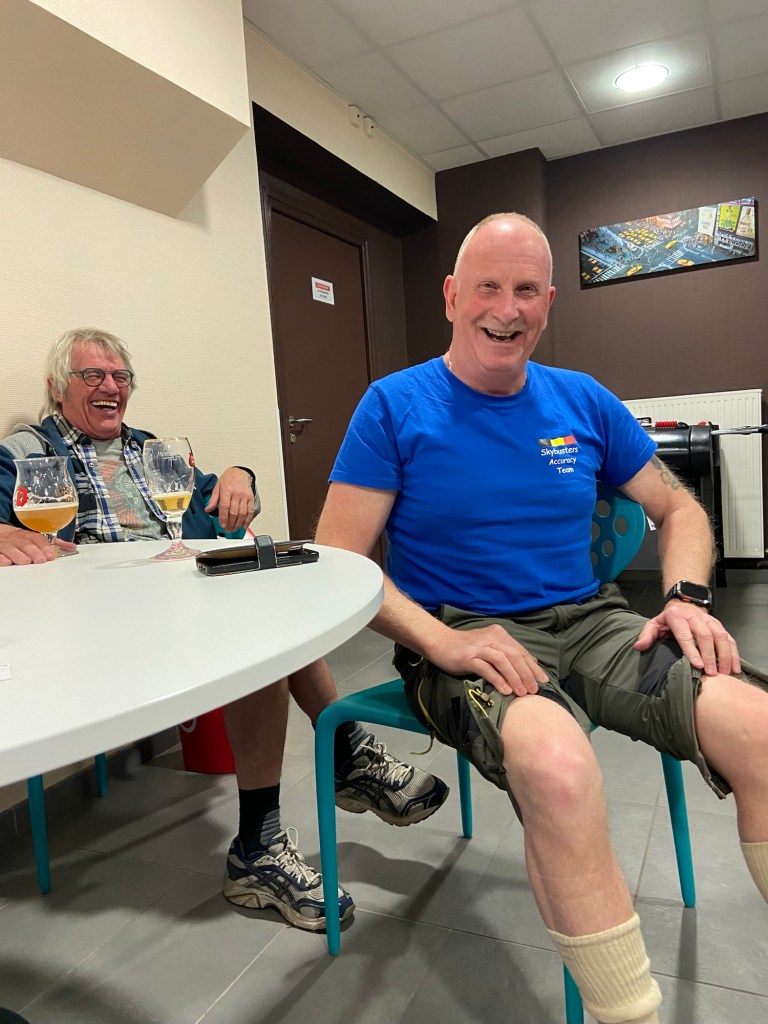
Les Carroll from Devon also had some tales to tell. Matt and I, walking to Rome, felt incredibly dreary and boring in comparison.
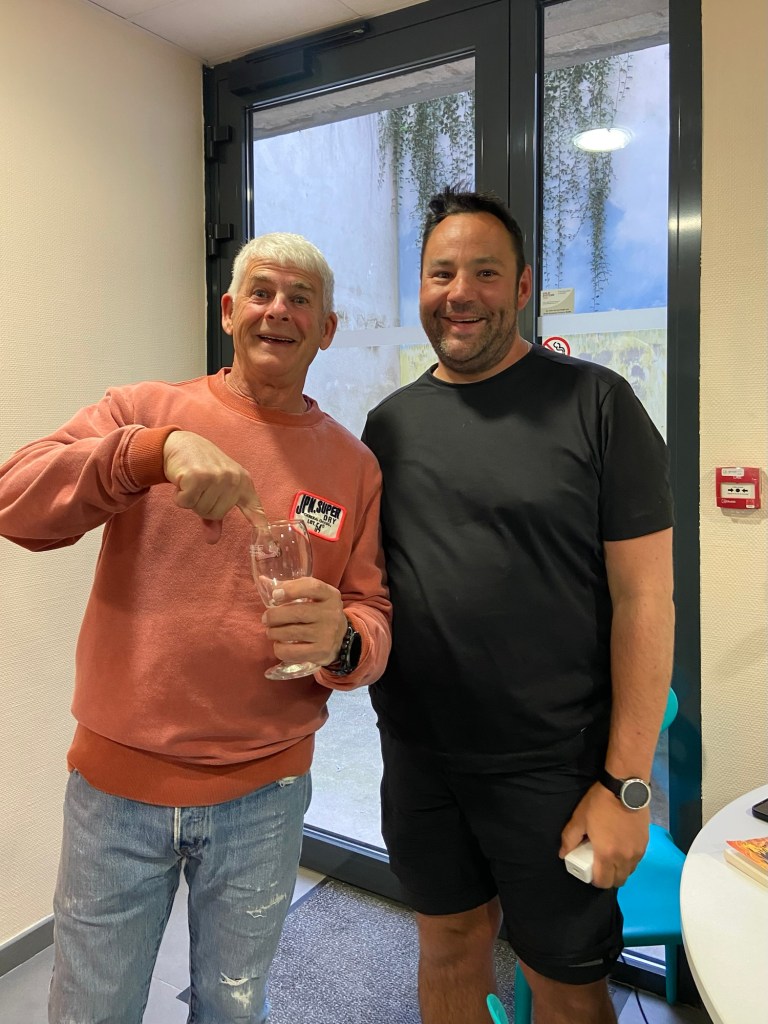
We went out to dinner and had an excellent lasagne each — which I bought for Matt because he was not only buying the ingredients for supper tonight, but was also going to carry it all AND make me a giant frittata.
I had an excellent night’s sleep and opened the curtains to see… very grey skies for the first time in more than two weeks. It was going to be something of a relief to not have to walk a long way in sweltering heat. We somehow managed to get the coffee machine to work and get it to extrude sufficient double espressos to resemble an actual decent cup of coffee to fuel us for the walk; there was nowhere to buy food until tomorrow night.
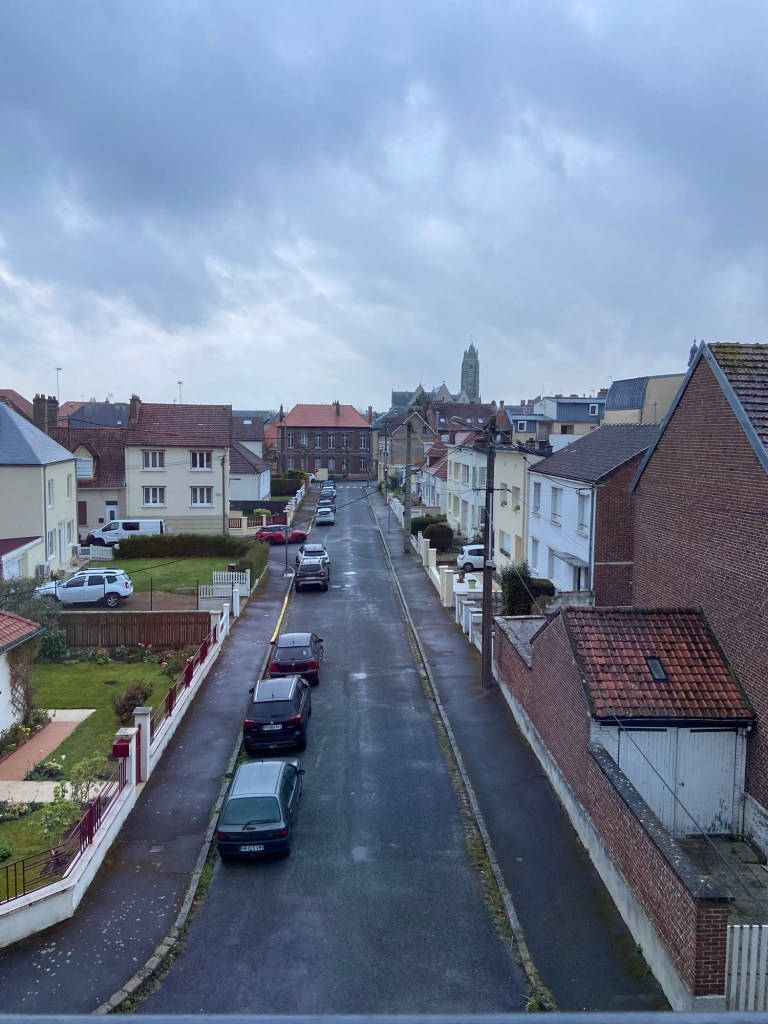
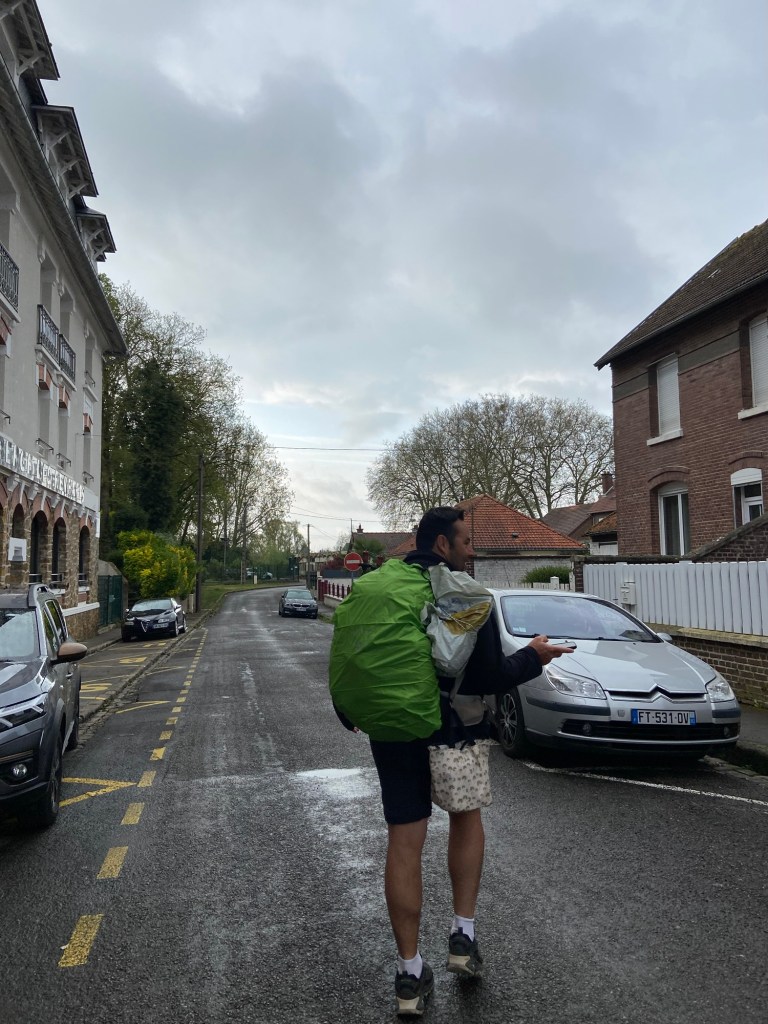
Matt and I were staying in the same gîte tonight in the same settlement of Trefcon, an almost flat 18km away. So we set off out into the grey morning with our rucksacks already preventatively hidden under their rain covers.
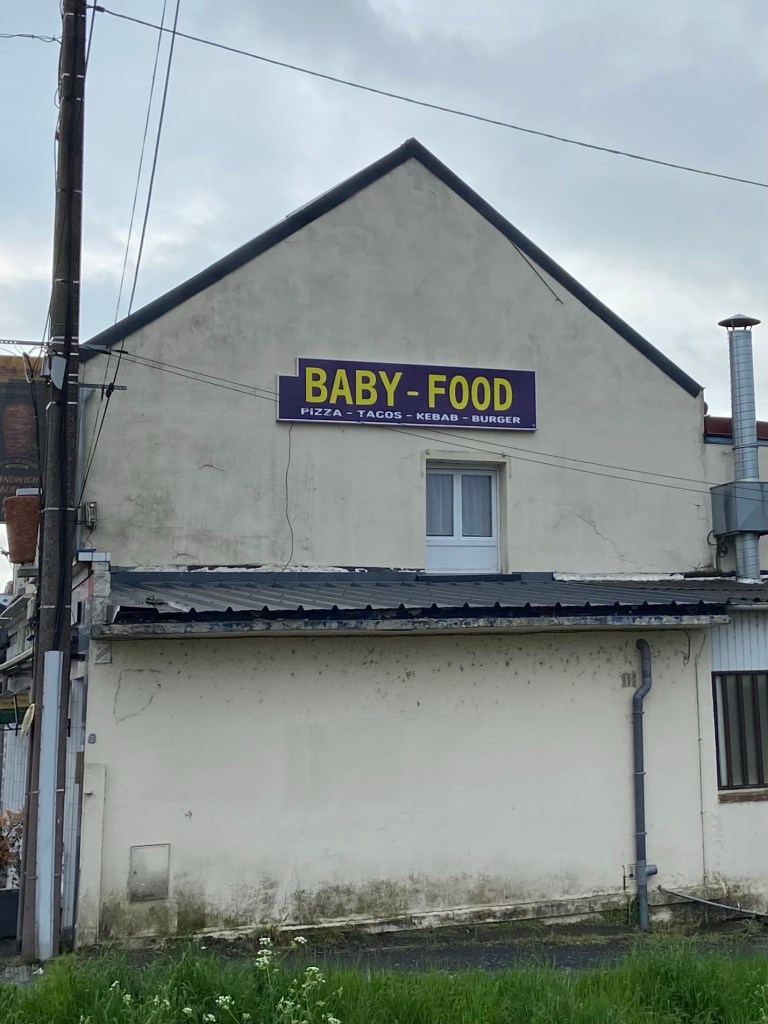
We were not convinced by the shop selling baby food — we didn’t think the suggestions particularly suitable for infant diets.
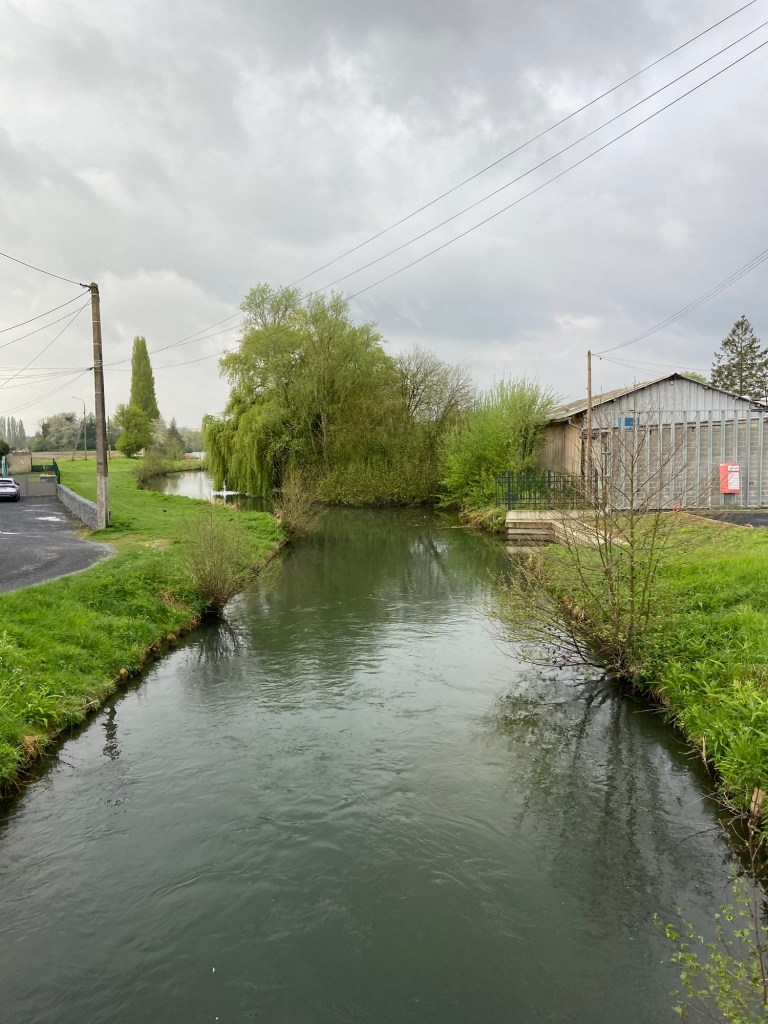
Péronne stands on a bend of the river Somme, with marshes and islets galore.
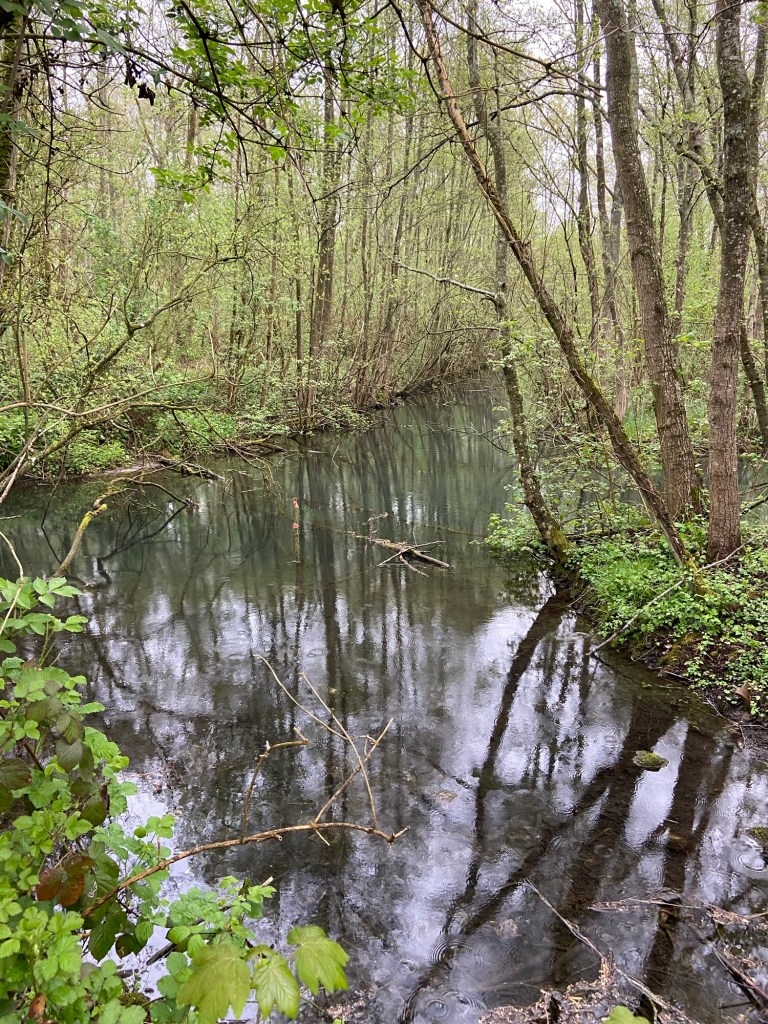
We headed west into the Marais de Belzaise, a green path that would motor us out of the city across damp, marshy land.
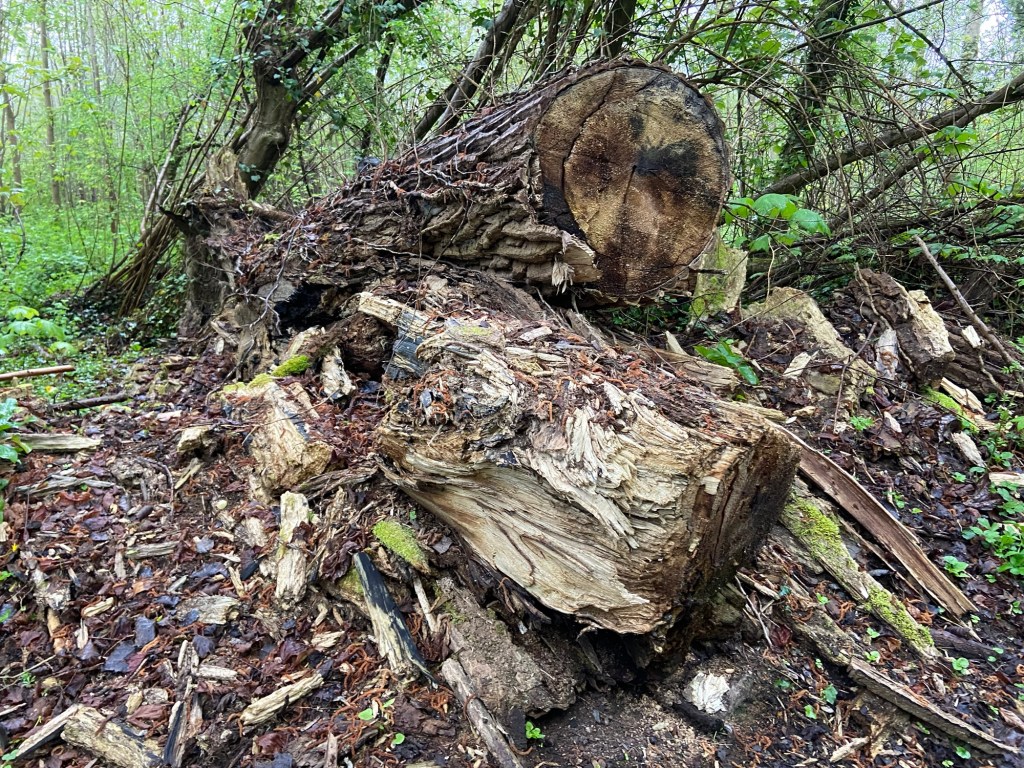
Uprooted fallen trees were left to rot,

providing rich pickings for burrowing insects which in turn fed the birds.
It started to rain almost immediately, but they didn’t matter because there were nightingales in the woods. An absolutely unmistakeable churring followed by piercing repeated notes and then a liquid melody to finish. They followed us the five kilometres all through the woods, buried deep in the thick willow scrub which is their preferred nesting habitat.

It was a bucket list item for me.
There were also sedge warblers, black redstarts, wrens squabbling over nesting sites and blackcaps. The whole bird world had broken into song.
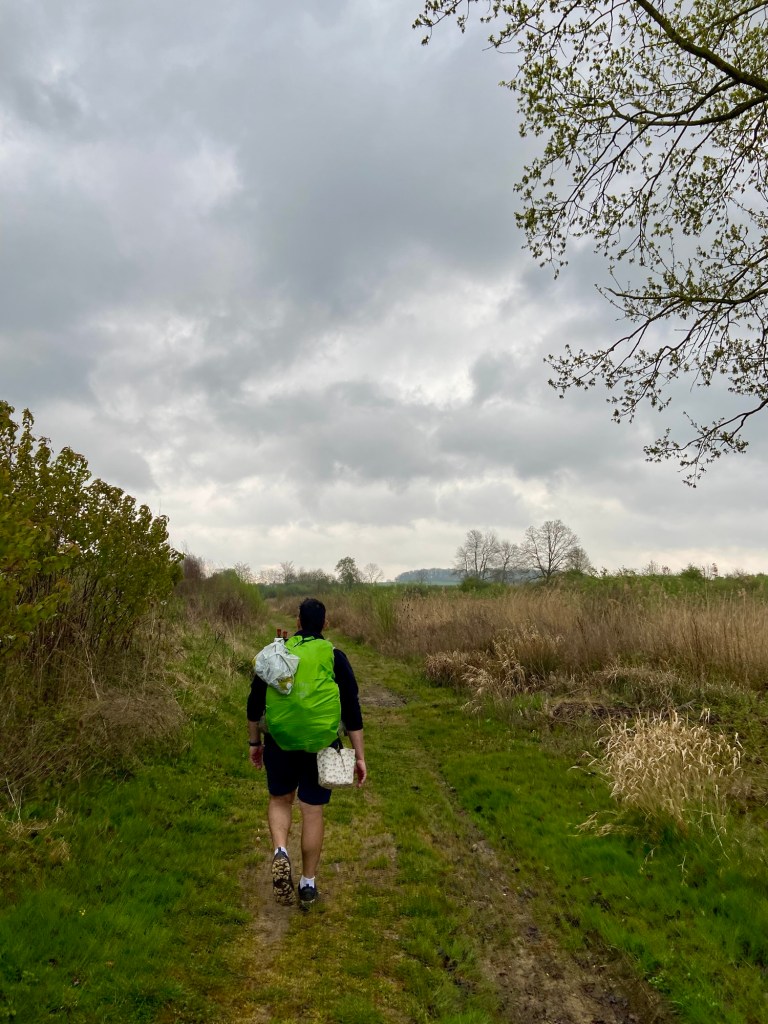
The path was a dream: softened by the rain, and all the dusty colours washed brighter, albeit under a lowering sky. Willows gave way to more open skies and phragmites,
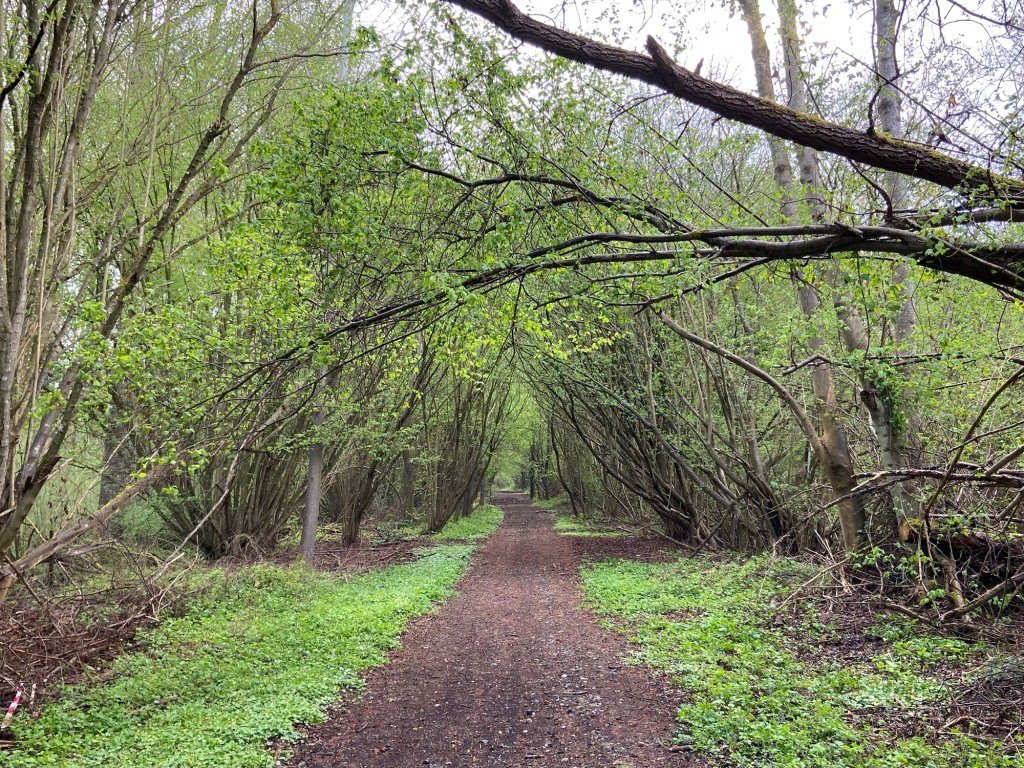
then we were plunged back into another green corridor, this time with a thick border of celandines, flowers now over.
Aside from winged denizens of the woods there were also mosquitoes (I had been forewarned and taken precautions) and molluscs too — giant snails I think of the edible kind…
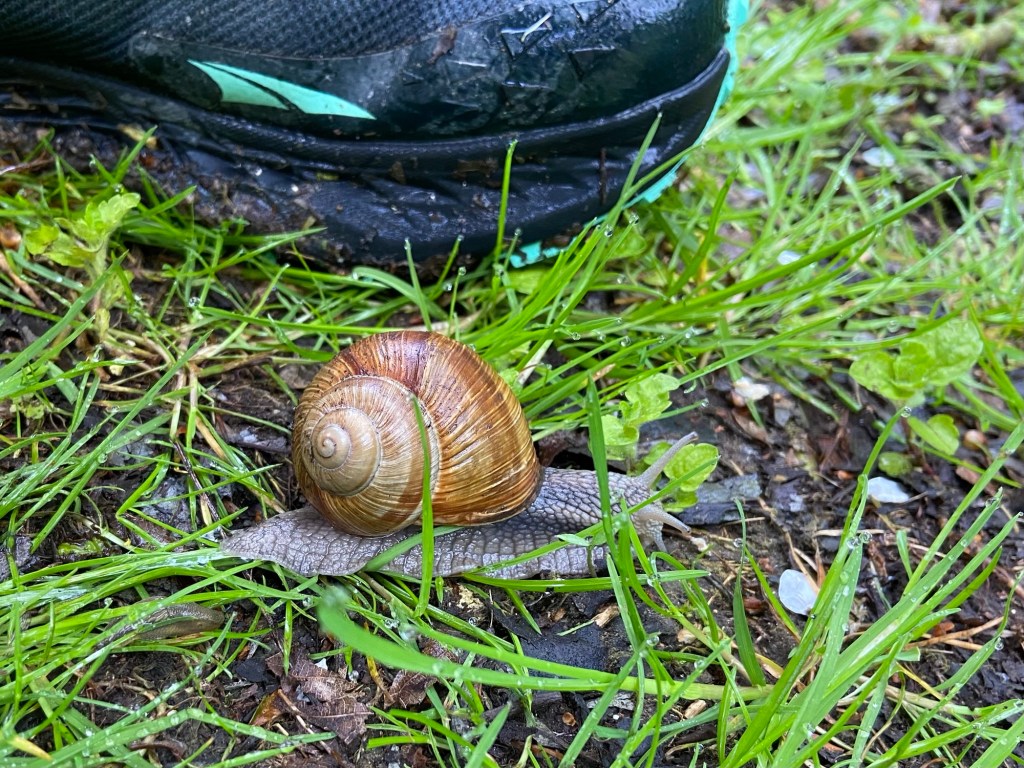
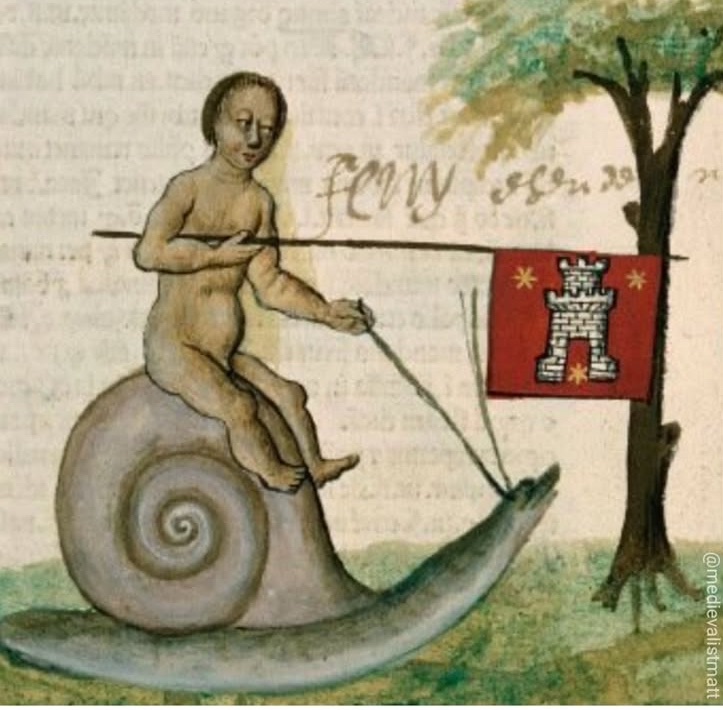
The place we were going to did not provide food, as I said, and if we hadn’t made provision, perhaps we would have had to resort to them. I refer my learned colleagues to the photograph I included in my first or second blog post for the walk, and which I reproduce here. Little did I think at the time this would be an actual picture of medieval me travelling from Péronne to Trefcon.
The Marais de Belzaise gave way to the Grand Marais and then Les Petits Prés, a huge long biodiverse environmental corridor. The nightingales accompanied us the whole way. The marshes ended at Cartigny, where the cuckoos took over.
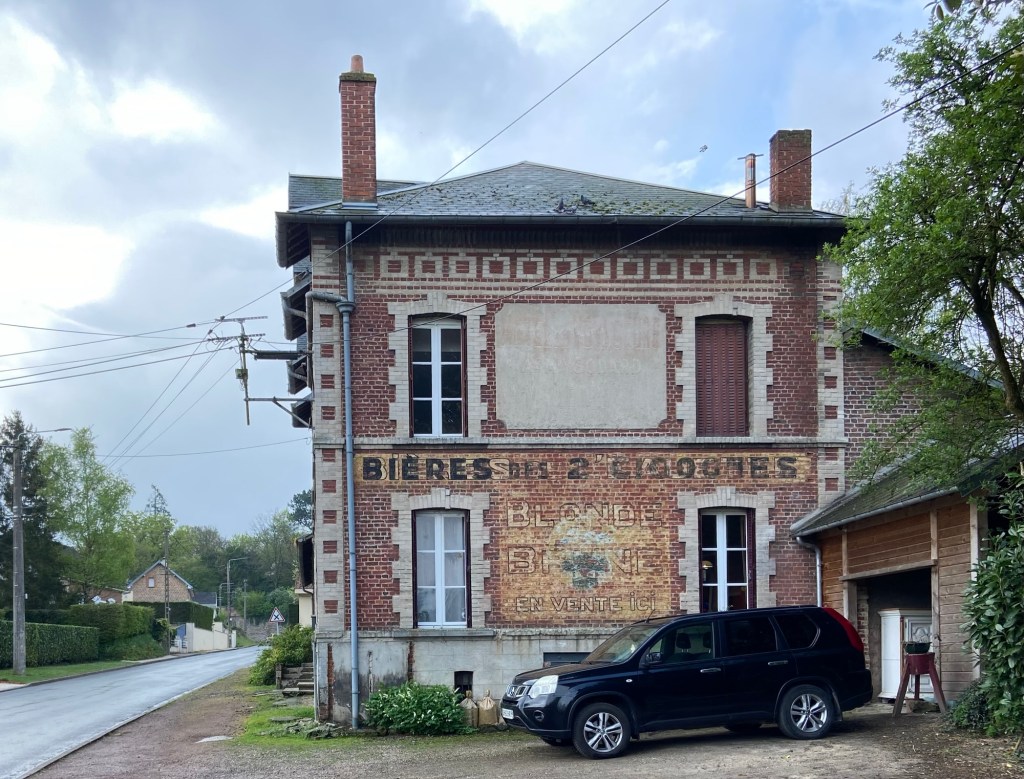
There were more faded advertisements on the outside of brick houses, for beer this time,
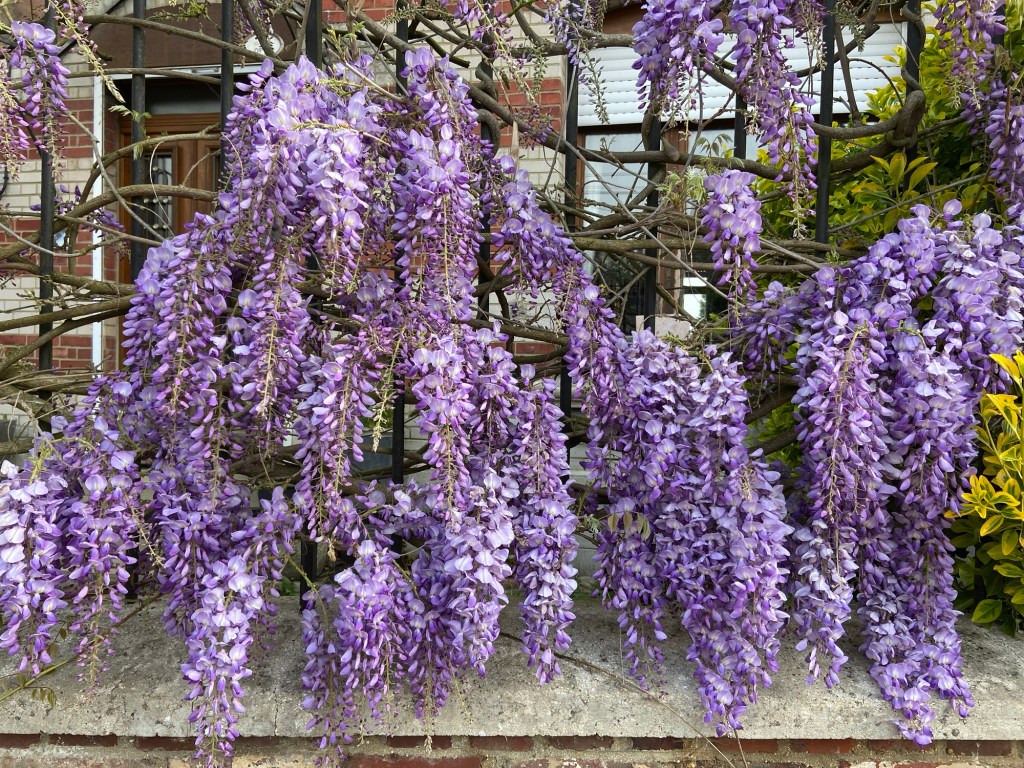
and a wall of wisteria in glorious, heavily-scented full flower.
There were no services advertised in the town, but there were two of the vending machines that seem so common in these smaller places: a pizza dispenser and a bread dispenser.

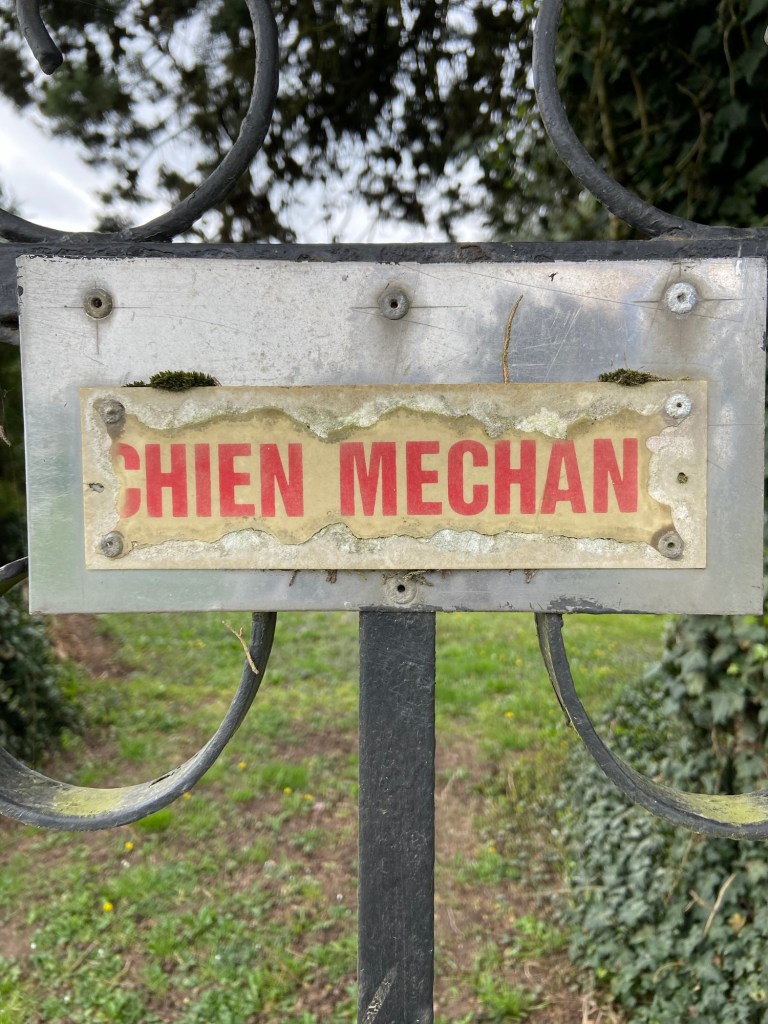
The usual barking dogs were on guard at almost every gate, although the place seemed pretty deserted in parts.

Also deserted was the tiny 15th c chapel of Nôtre Dame des Vignes, out in the fields
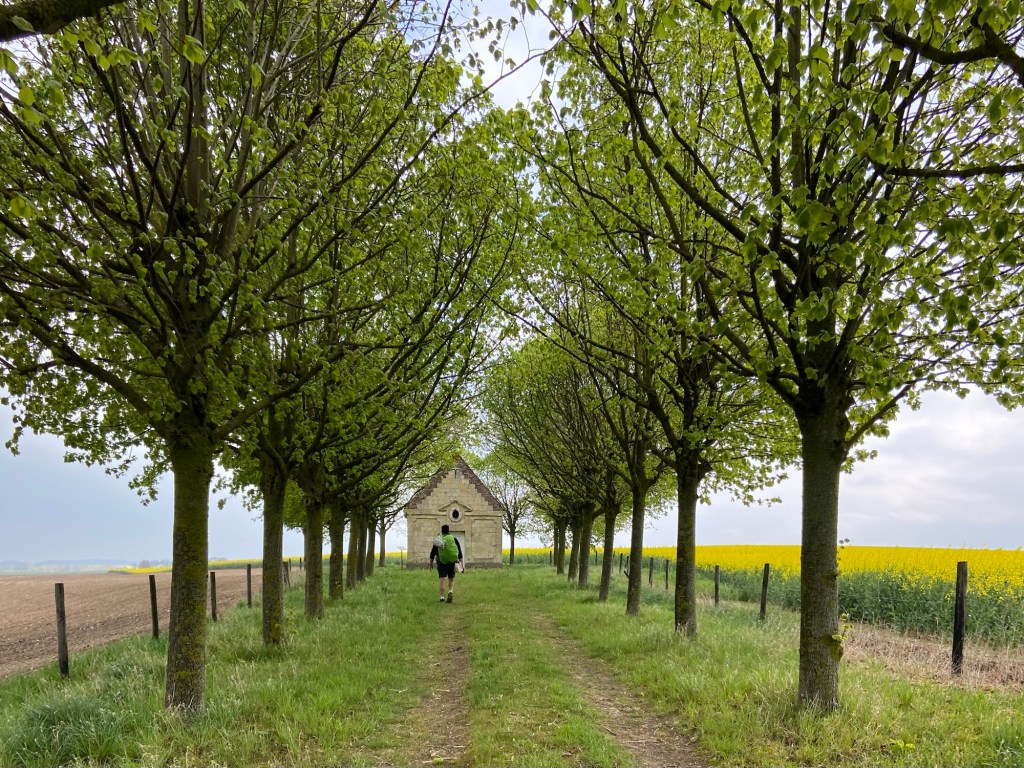
where ancient graffiti had been carved into the pale stone.
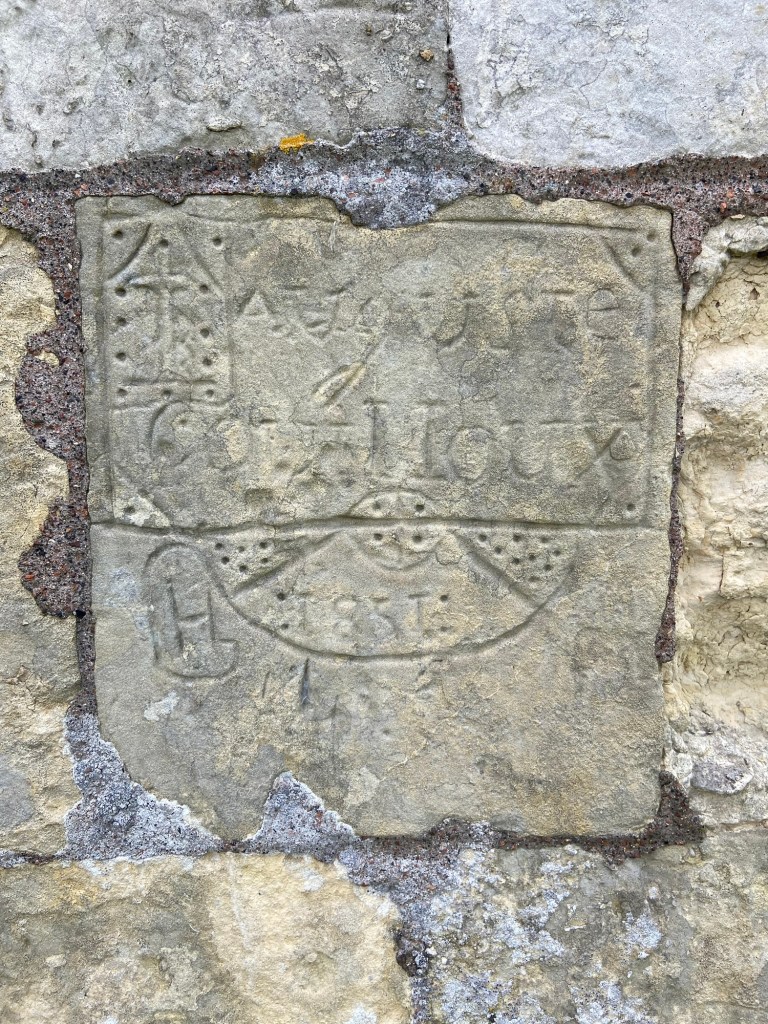
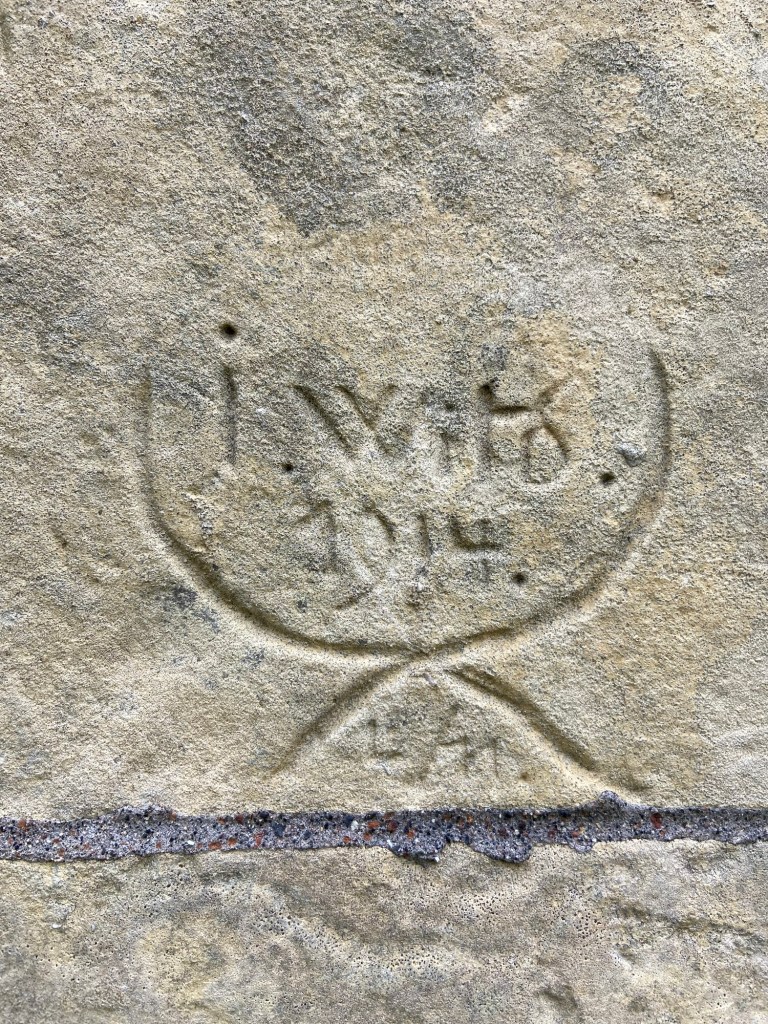
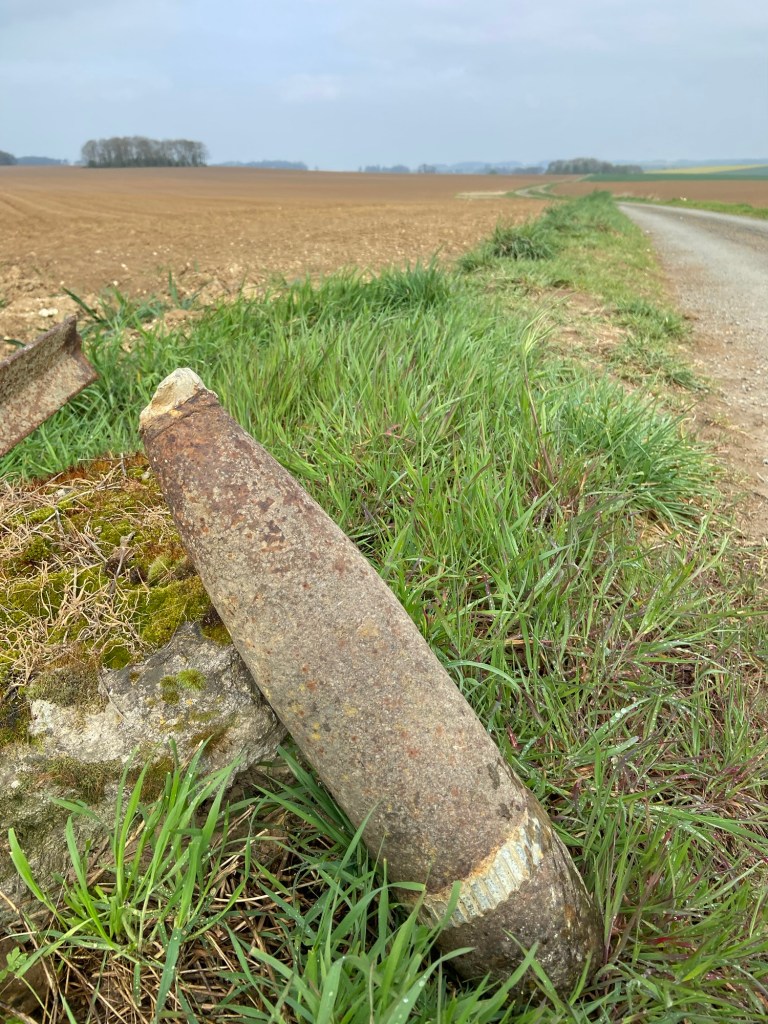
The road led us on, with various dangers today that we had not encountered before: slippery, clayey mud in the middle of the road, reconstituted from the dust of yesterday by the overnight rain, ancient ordinance dug out of fields,
and wild beasts.
Bouvincourt-en-Vermandois was a grander place than the preceding village,
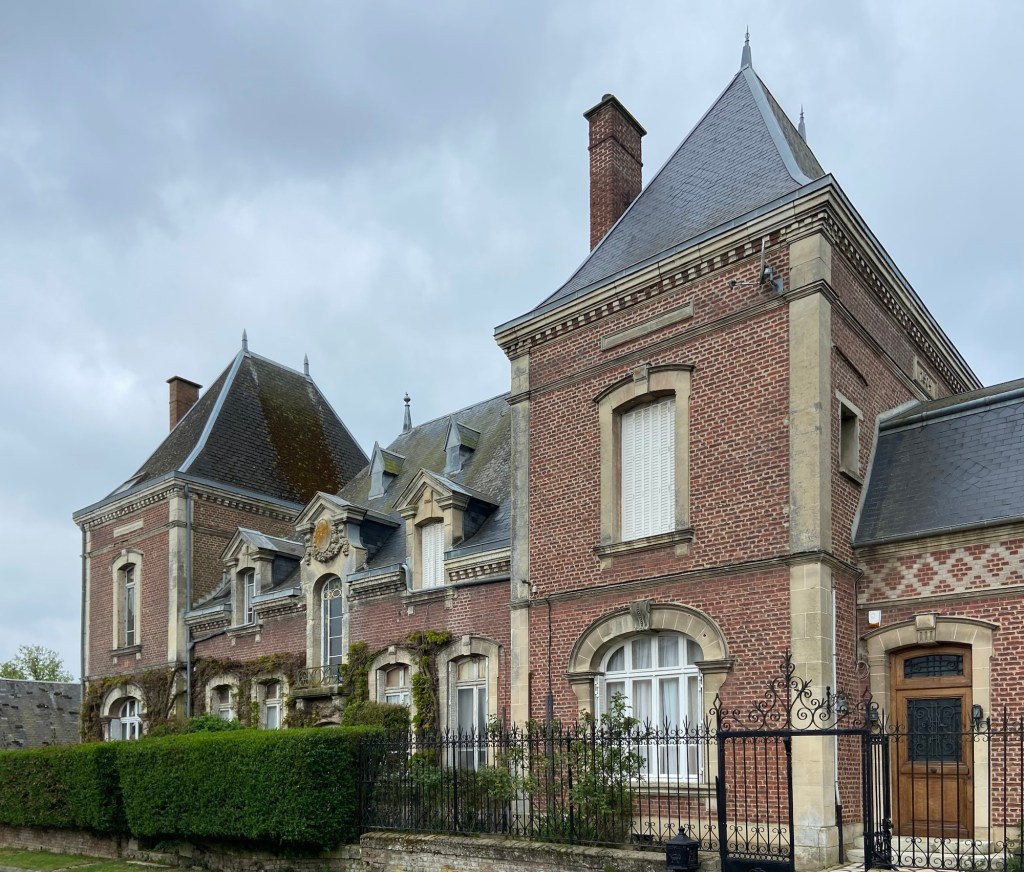
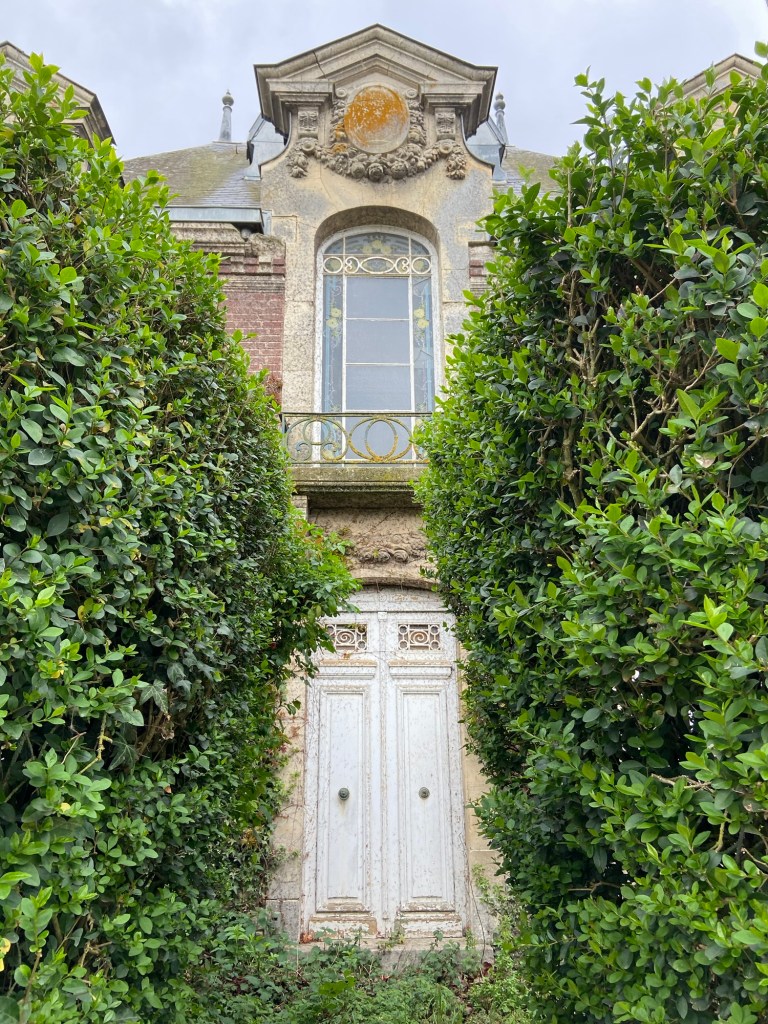
But still with many seemingly deserted buildings. Matt said that he’d heard that many families had gone away on holiday for Easter.
We stopped by a huge barn door, big enough to accommodate giant high-sided wagons piled high with hay,
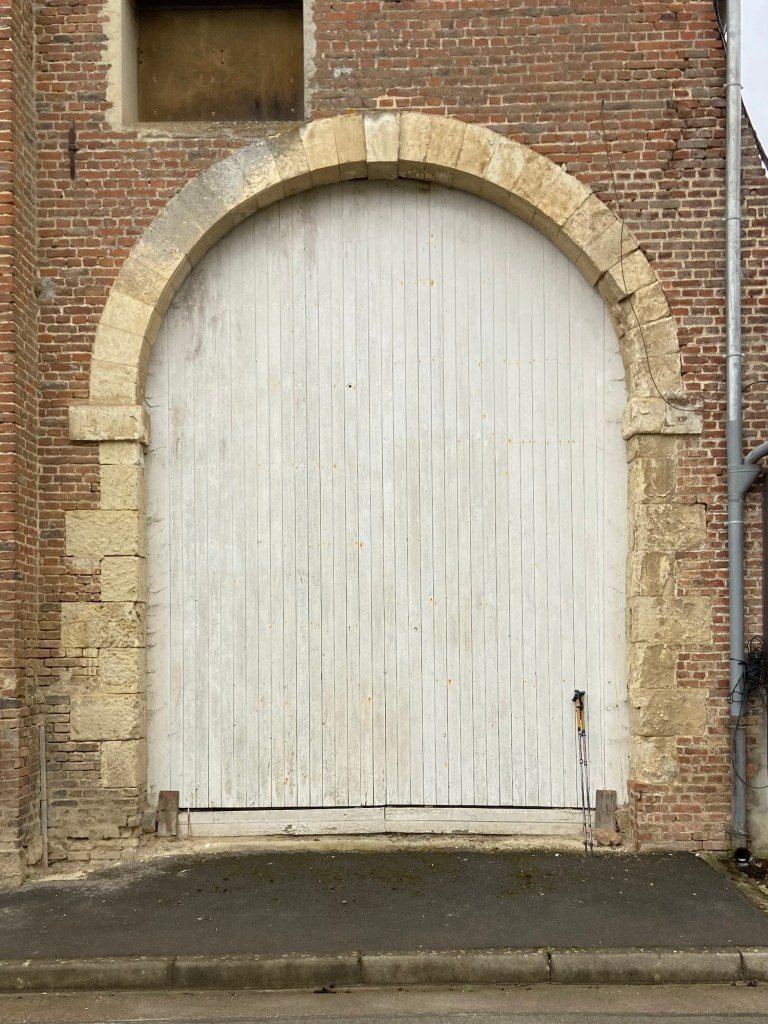
and had some snacks — little madelines that Matt had saved from breakfast, and chocolate cookies.
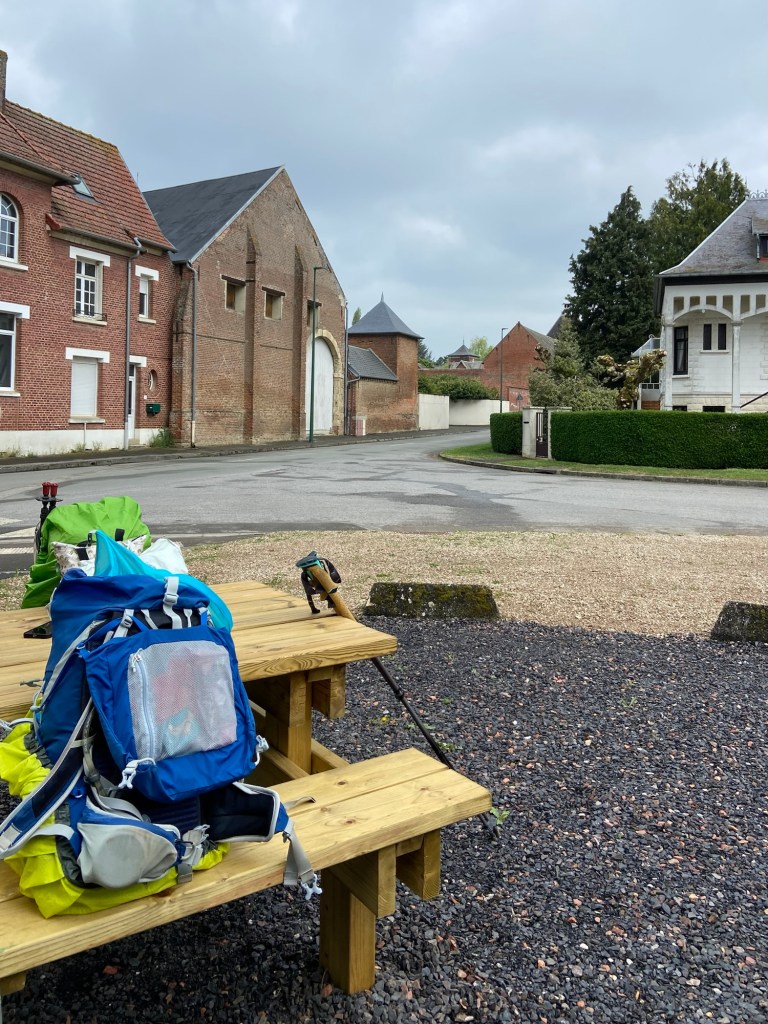
The next village had suffered under German occupation during the Second World War before the retreat back to the Hindenburg Line. Just south of the village the Nazis summarily executed eleven Resistance members from Saint-Quentin. In parts the village still had a forlorn air, as though the occupying force had just left, leaving a trail of destruction behind them,
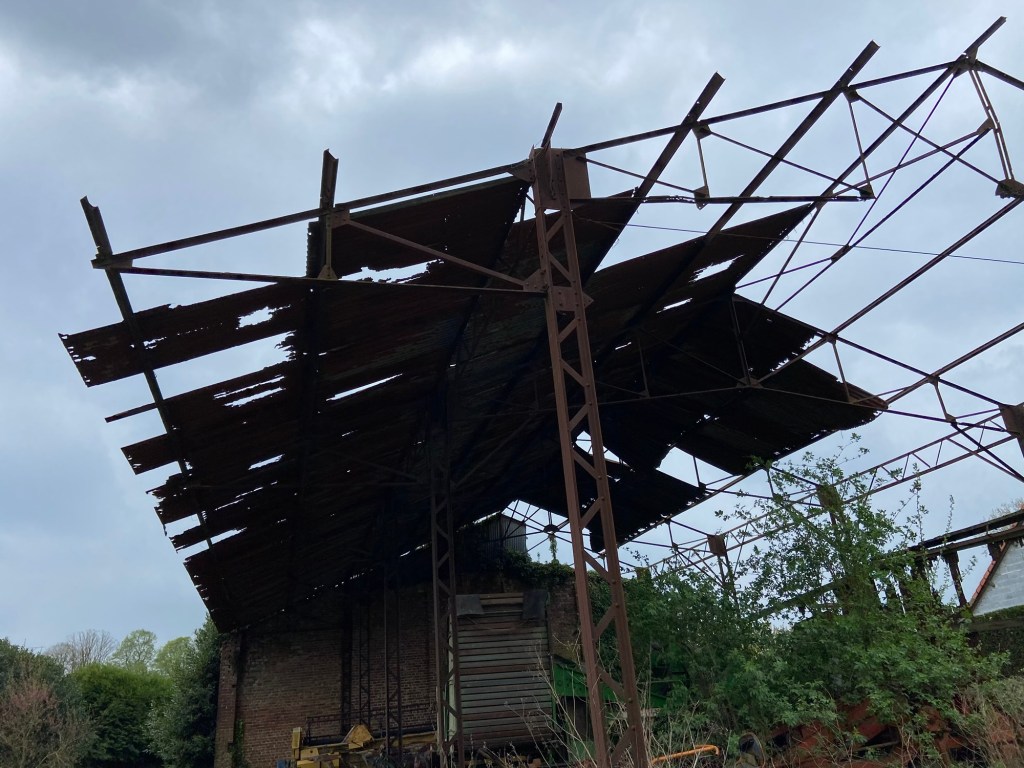
and in other parts there was an effort being made to cheer the place up.
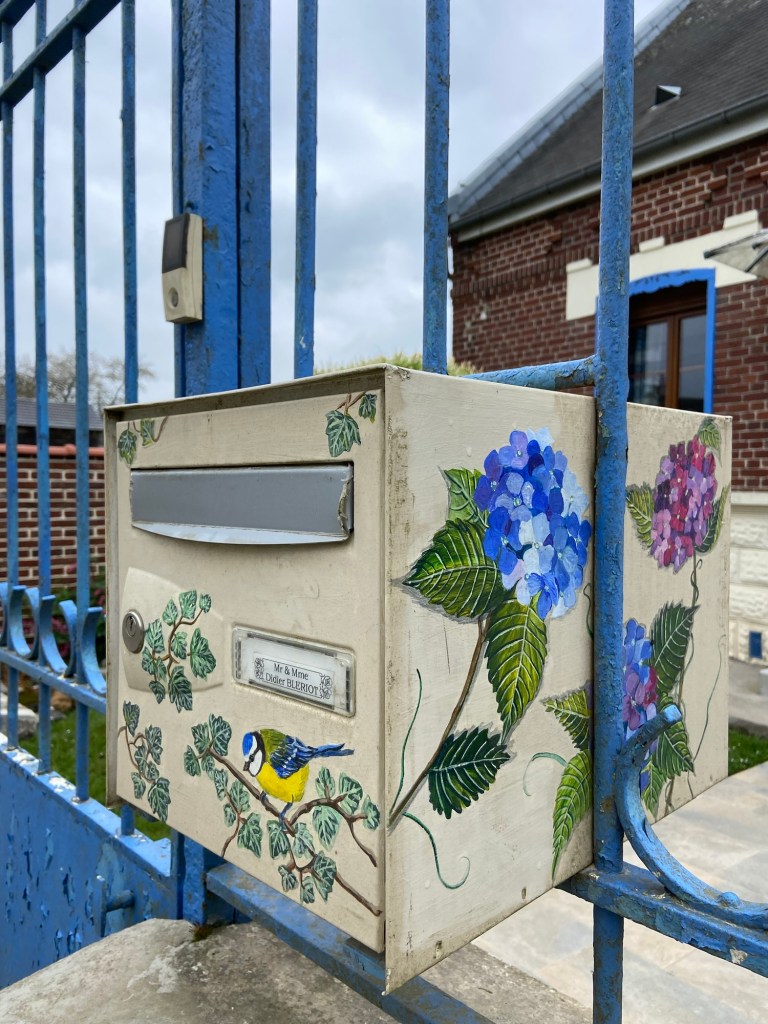

Here the first apple blossom was out,
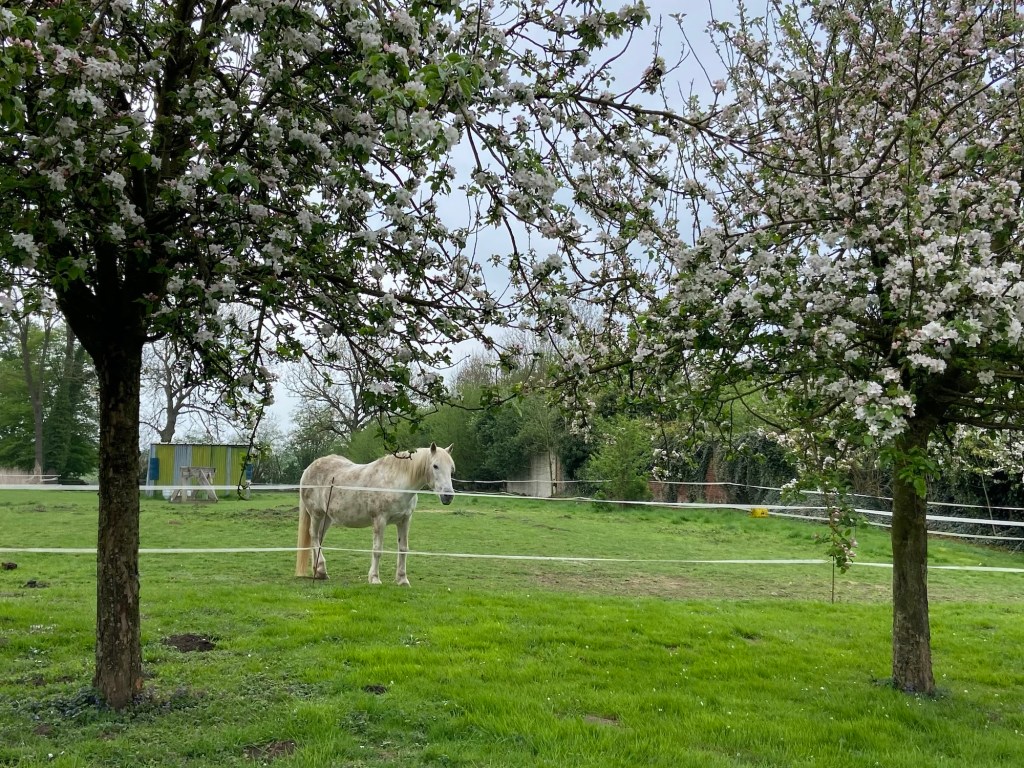
And gardens had been planted to make half-derelict places more attractive.
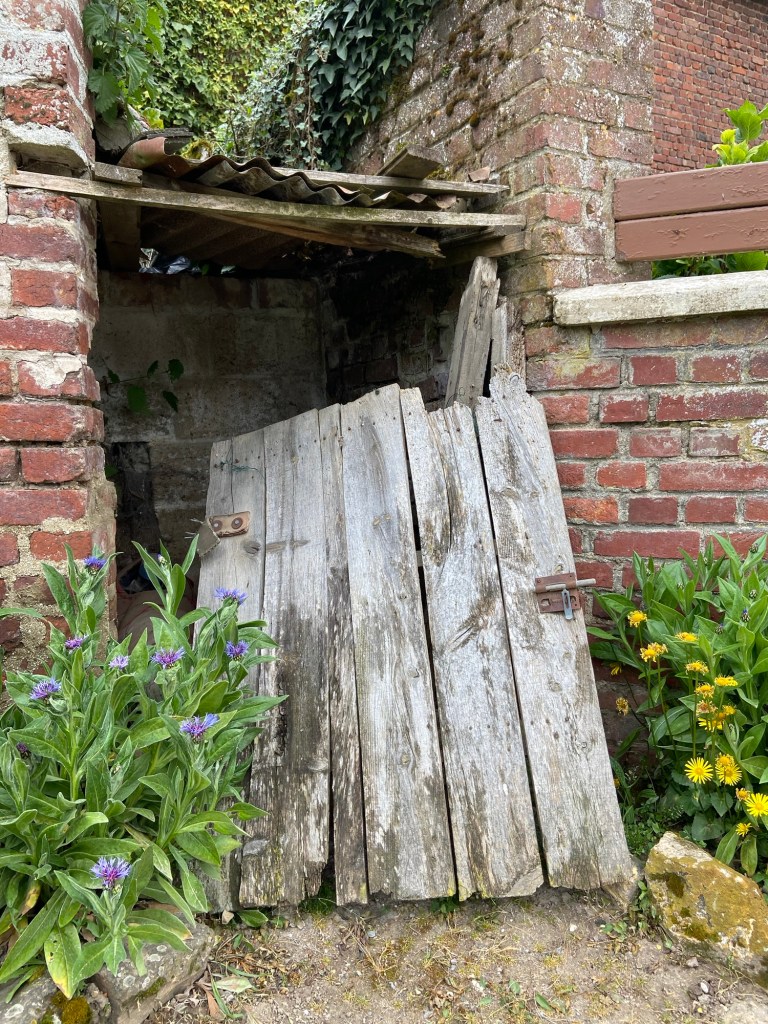
Pilagrims were certainly welcome.
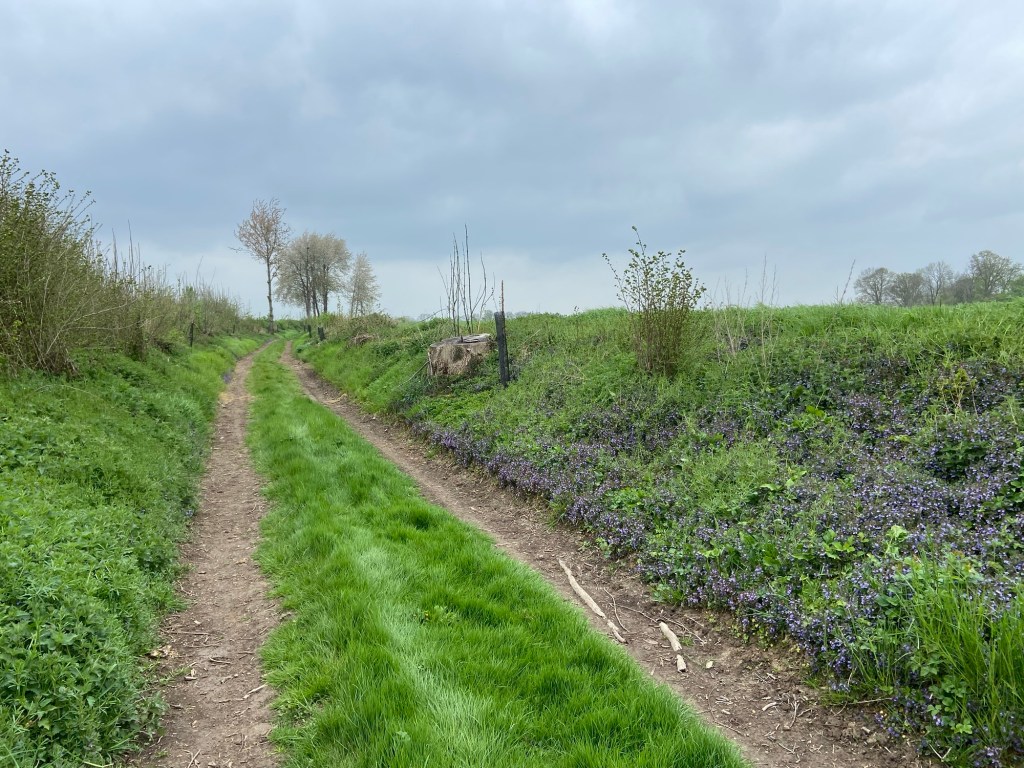
Between the villages, gravel roads of recent days were today soft and grassy, with pollarded trees and cherry saplings planted to make a shady walk for future years.
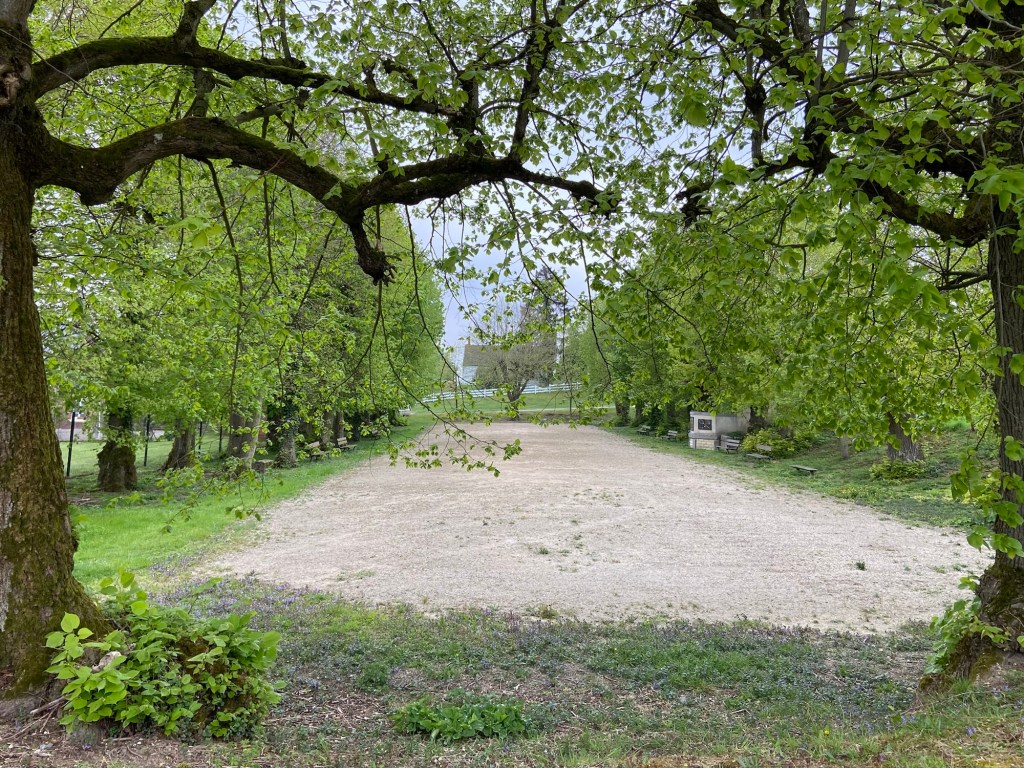
Tertry was the final village before our day’s end, just on the Somme side of the border before it became the Aisne. It had an enormous boules ground, created in the shade of huge lime trees that were already in full leaf.
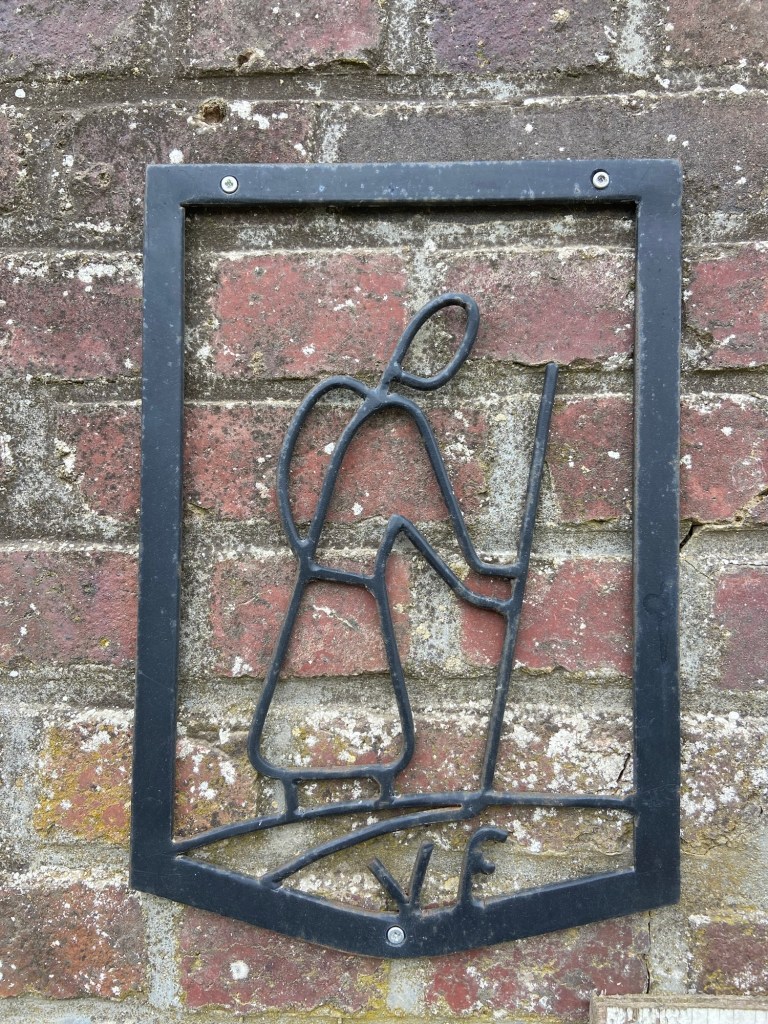
It was also the site of today’s mystery object, peeling gently onto an old brick and plaster wall.
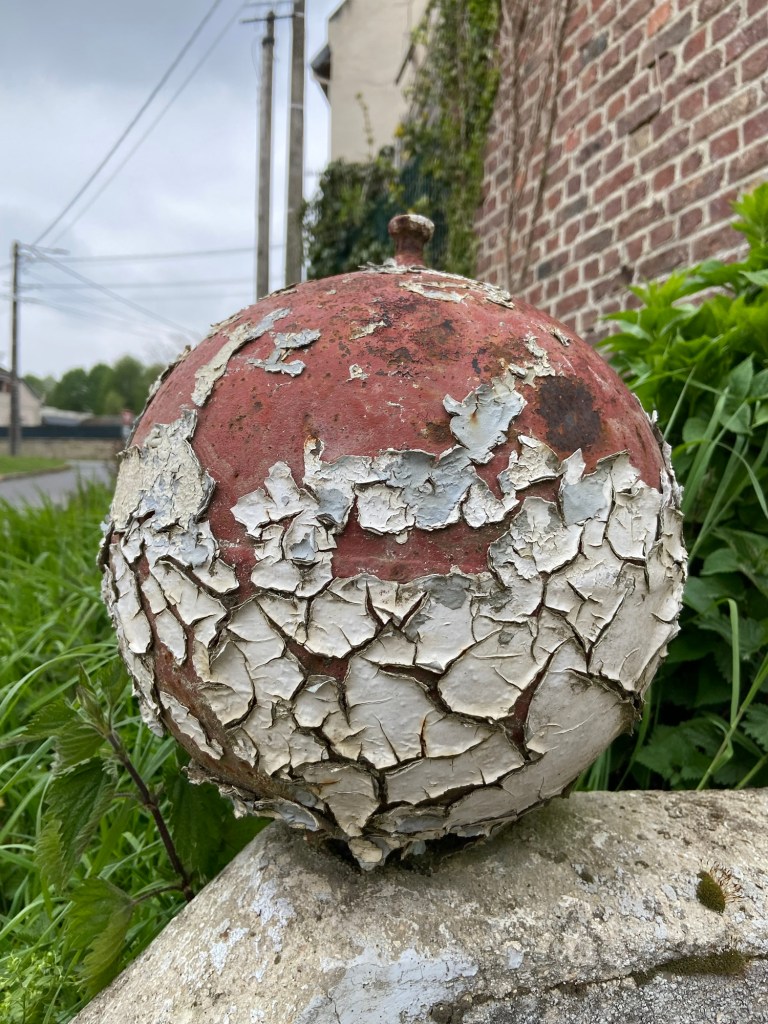
The little village bordered the Omignon river so we knew we were getting close. The name of the Gîte was Le Val D’Ormignon.
But the path hadn’t finished with us yet.
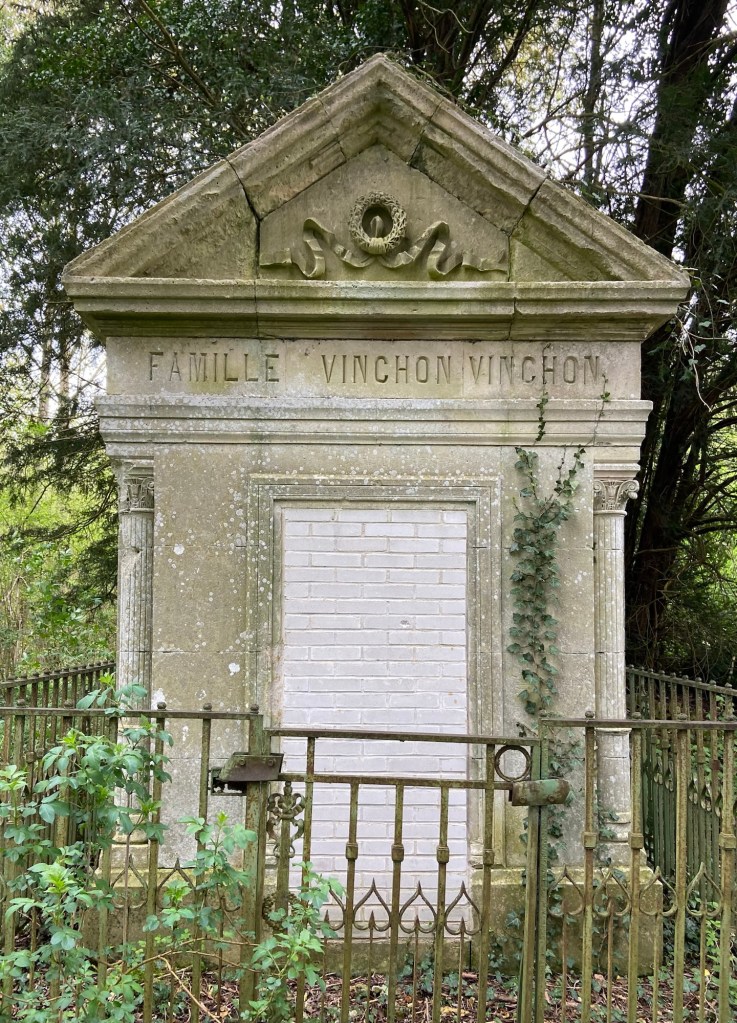
The guidebook points out the tomb of the Vinchon family, though nothing remains of them or their house. What the guidebook didn’t mention is the remains of the ruined church hidden in the woods behind it.
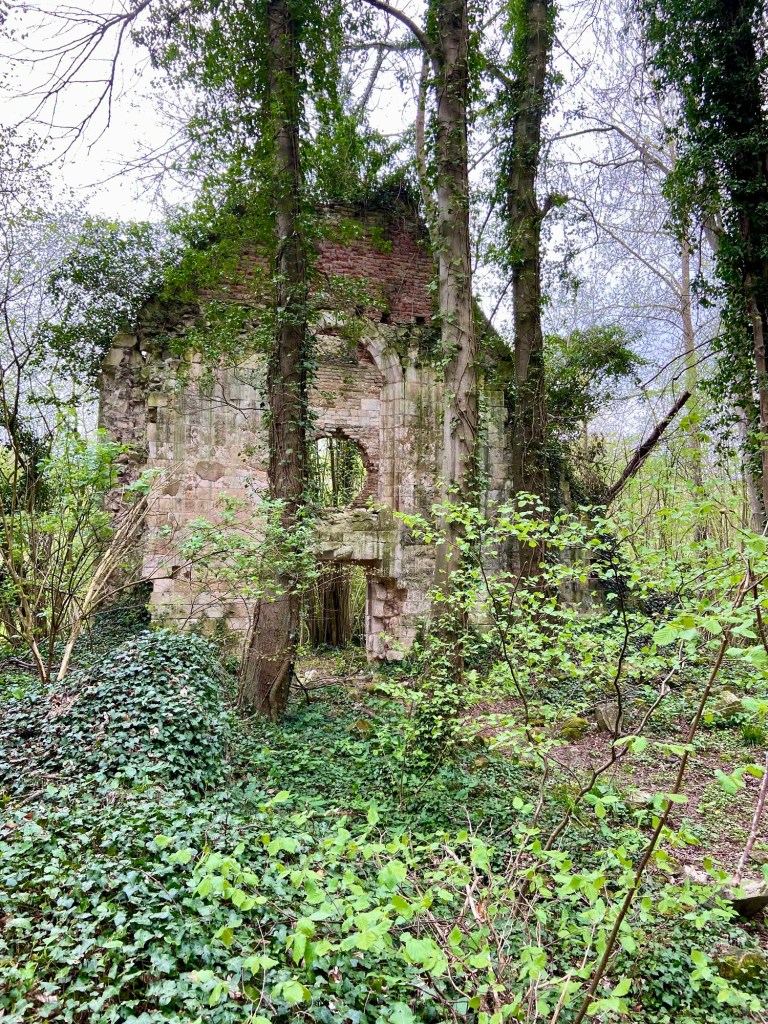
The tomb was the grandest of the monuments in the graveyard although there were several empty brick-lined vaults with their slabs dragged to one side,

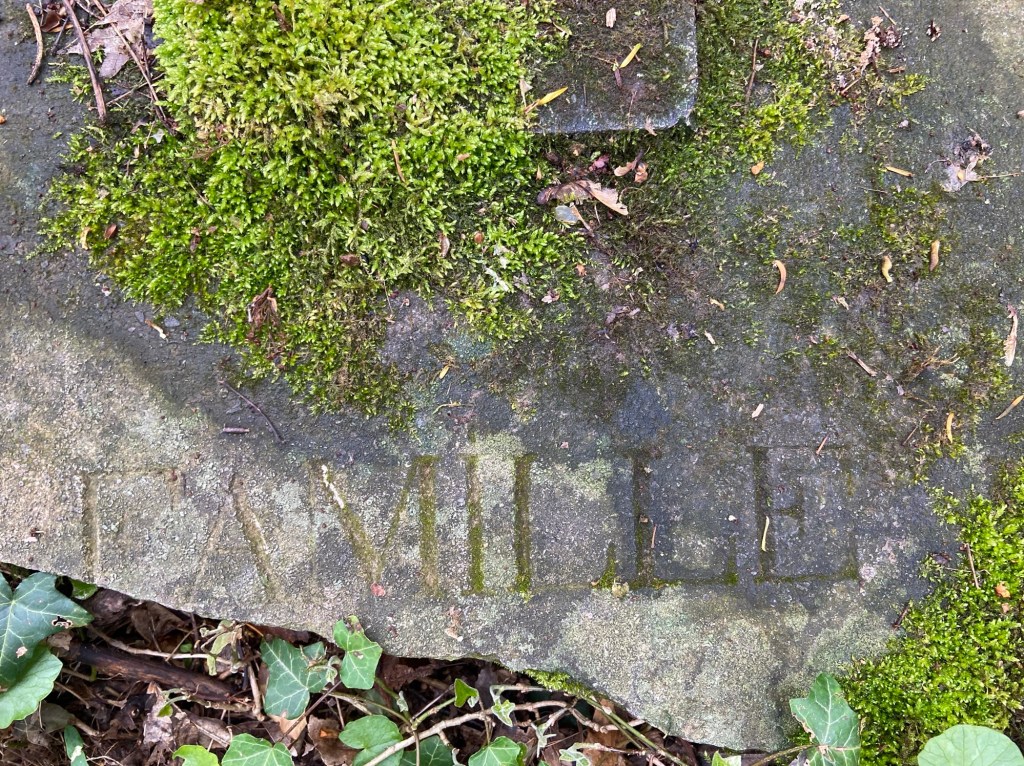
fragments of the inscriptions just visible.
There was a pair of eighteenth century headstones which seemed to be withstanding the ravages of time reasonably well, a father and son.

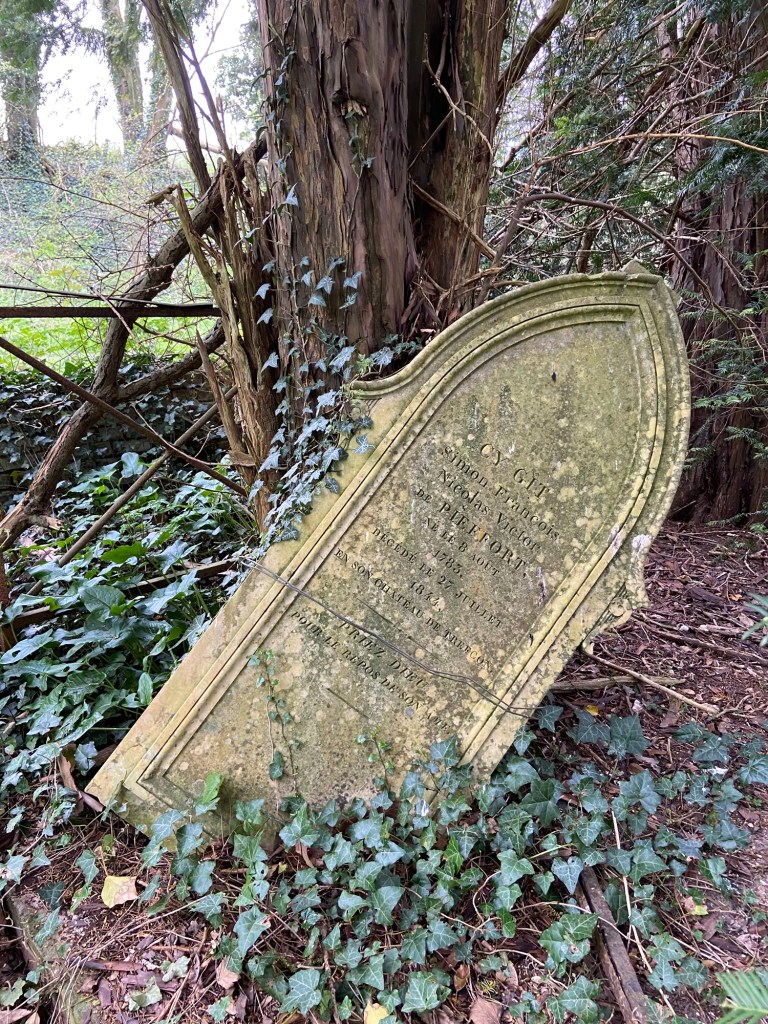
Others were being swallowed up by the wood, a slow, contemporary re-enactment of the Old Man Willow episode in Lord of the Rings, 170 years in the making.
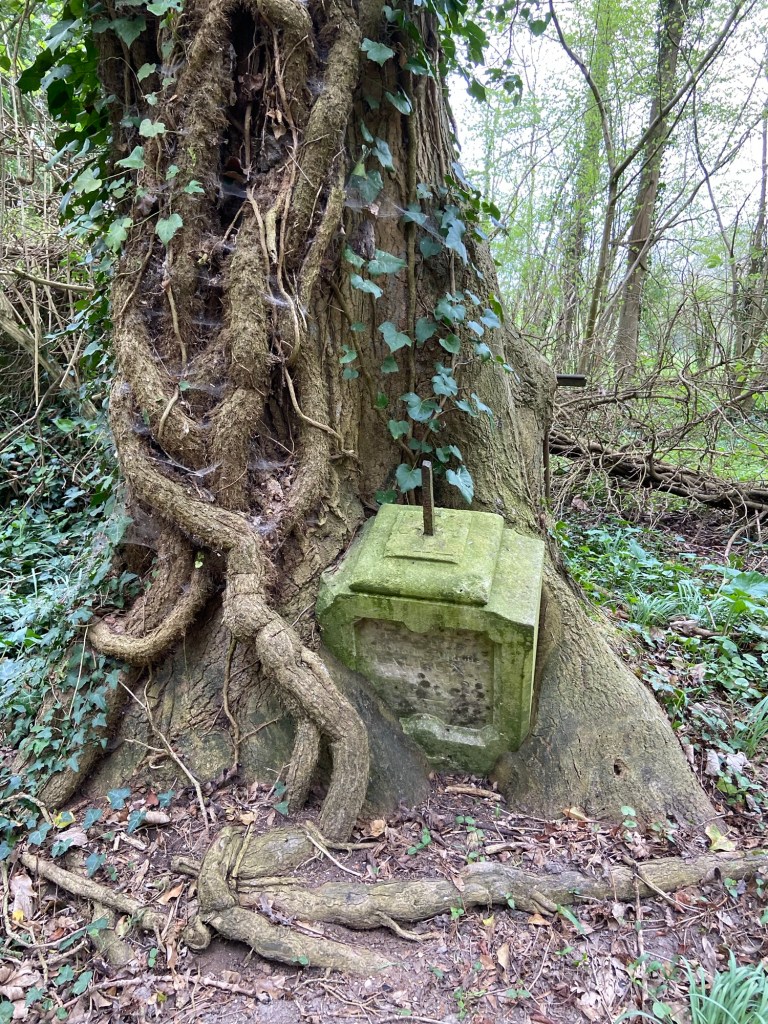
Here, rather than a hobbit, it was little Léon Charles Alphonse Laleux, who died aged 30 months in 1865.
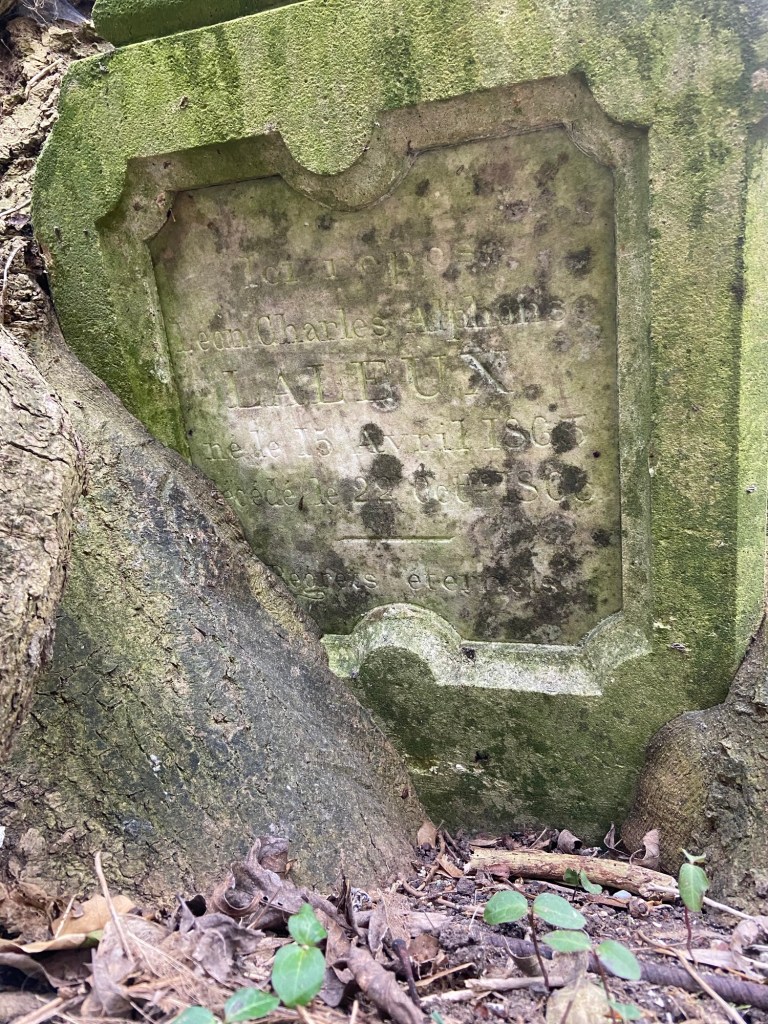
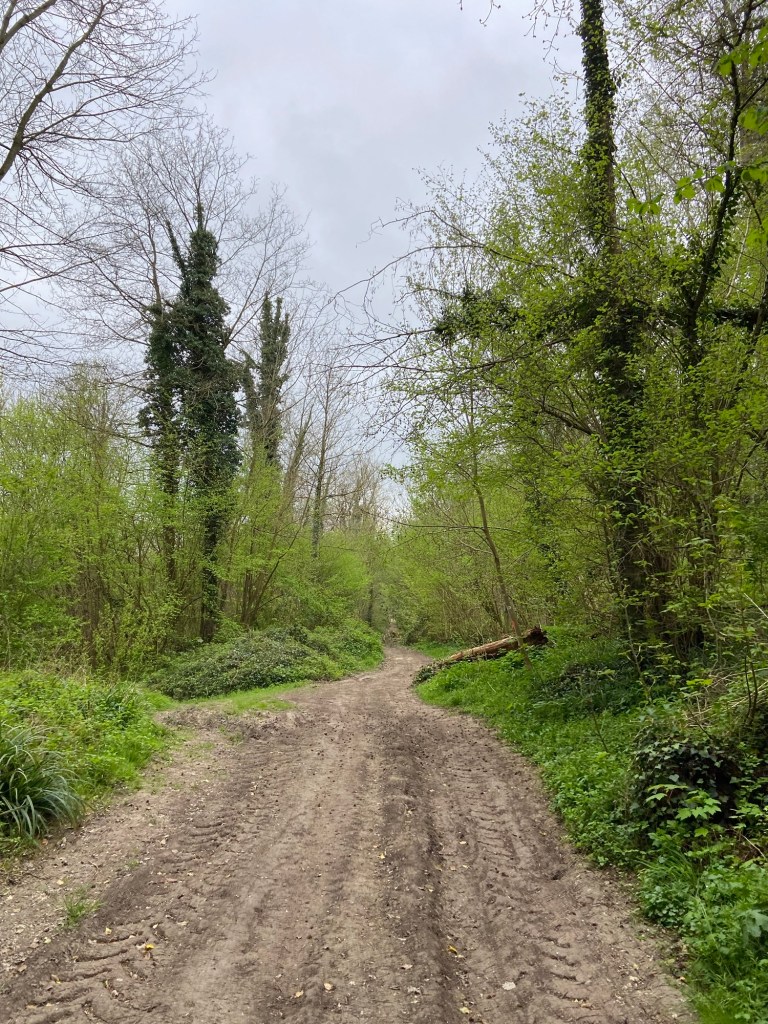
We were trespassing — literally, but also figuratively, on the slow decay and disappearance of these fathers and sons. It was a place both of memory and forgetting. We left them to their ‘regrettes éternels’, and walked on to our own place of rest through the nightingale-filled wood.
Stats for the Day
Distance: a short 18.54km
Time: a slow 3 hrs 59 mins (well, there were nightingales to listen to!)
Read about my fundraiser here!
 Walking The Landscape
Nightingale song! I’ve never heard it. How lovely that must have been! Now you need to see a kingfisher. X
LikeLiked by 1 person
I wonder whether you have and haven’t realised? You live in the right area. And they sing in the daytime too.
LikeLike
YOC dream!
LikeLike