Memory is the treasury and guardian of all things
Cicero
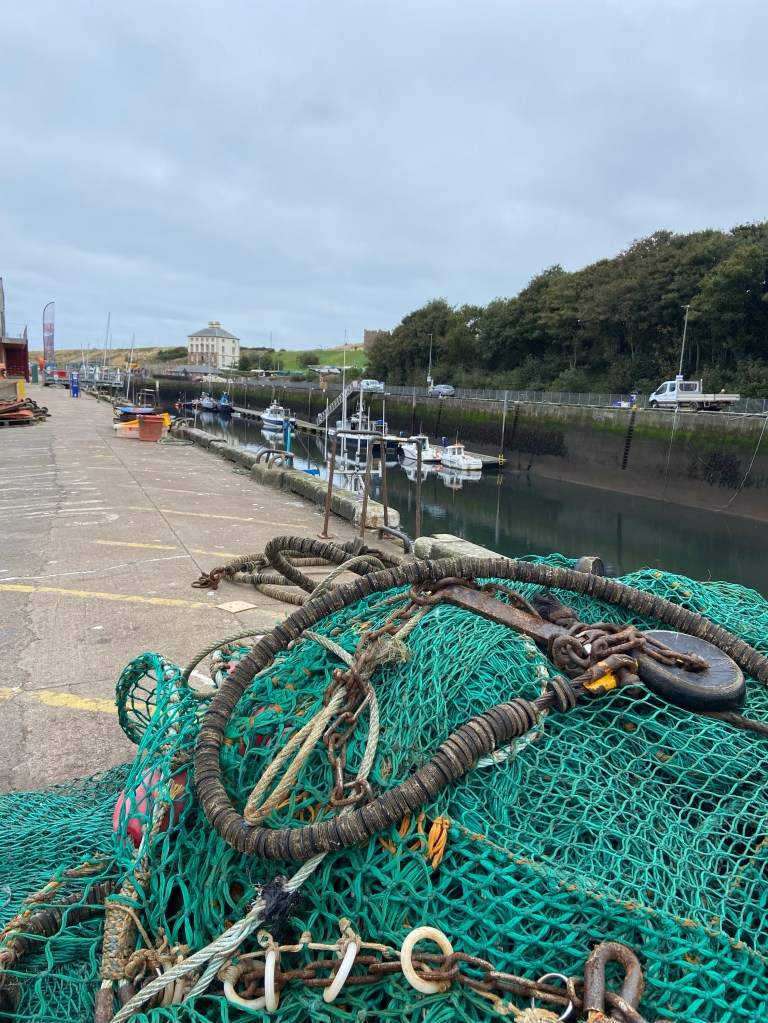
I began the processional with a walk down to join the coastal path at the harbour, water slack and grey today, uninviting and uninspiring.

I wound my way through the streets to the harbour, following the pointing finger of Willie spears, ‘King of Fish’ who ‘led a peaceful band of over 4000 demonstrators’ to protest against the paying of tithes to the church.

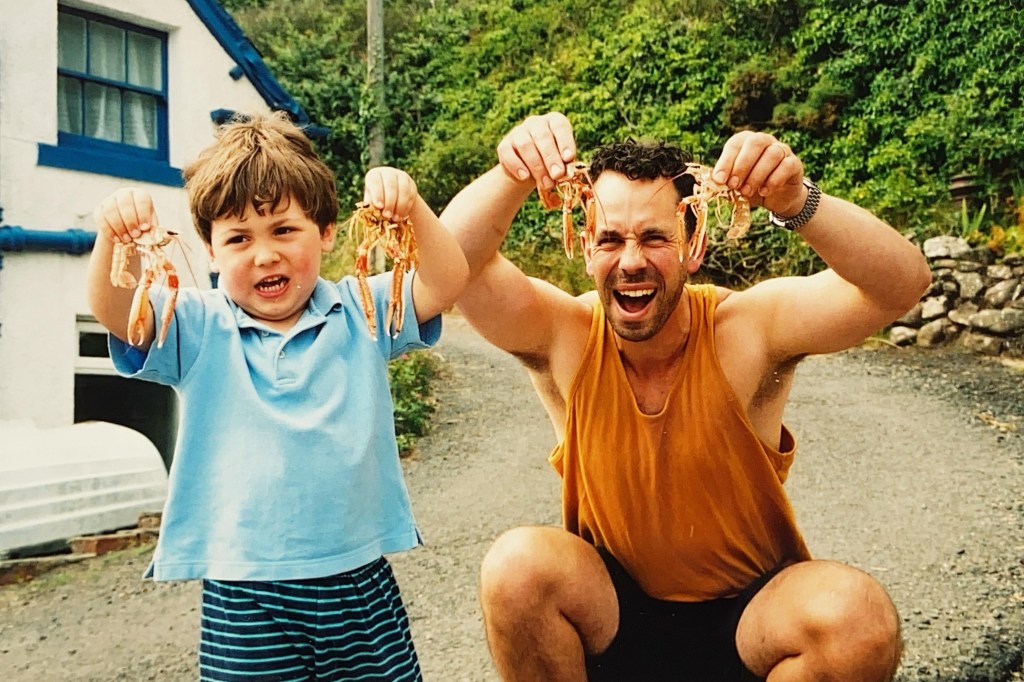
The harbour had been the scene of the world’s greatest ever shopping expedition 22 years ago, when Stephen and his mother bought an entire carrier bagful of crayfish destined for the London restaurants, right here, straight off the fishing boat, for a fiver.
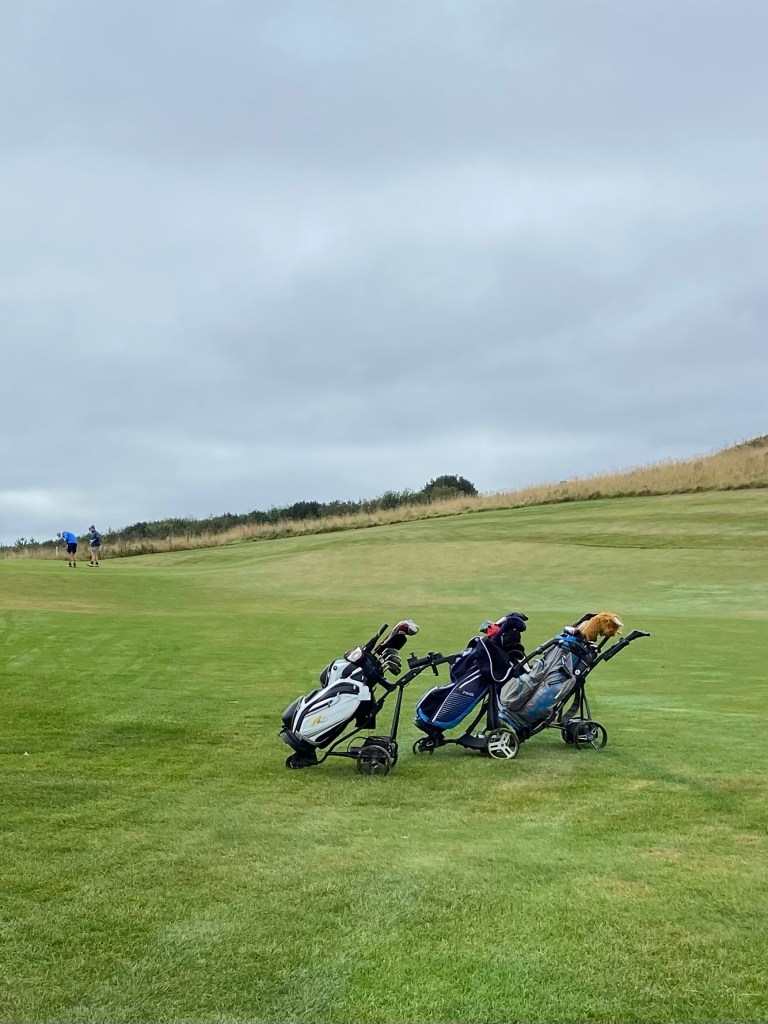
The coastal path lay between the greens and the sea on the far side of the obligatory golf course, through which I had once more to risk passage, passing golfers on one side and hedges of Rosa rugosa on the other.
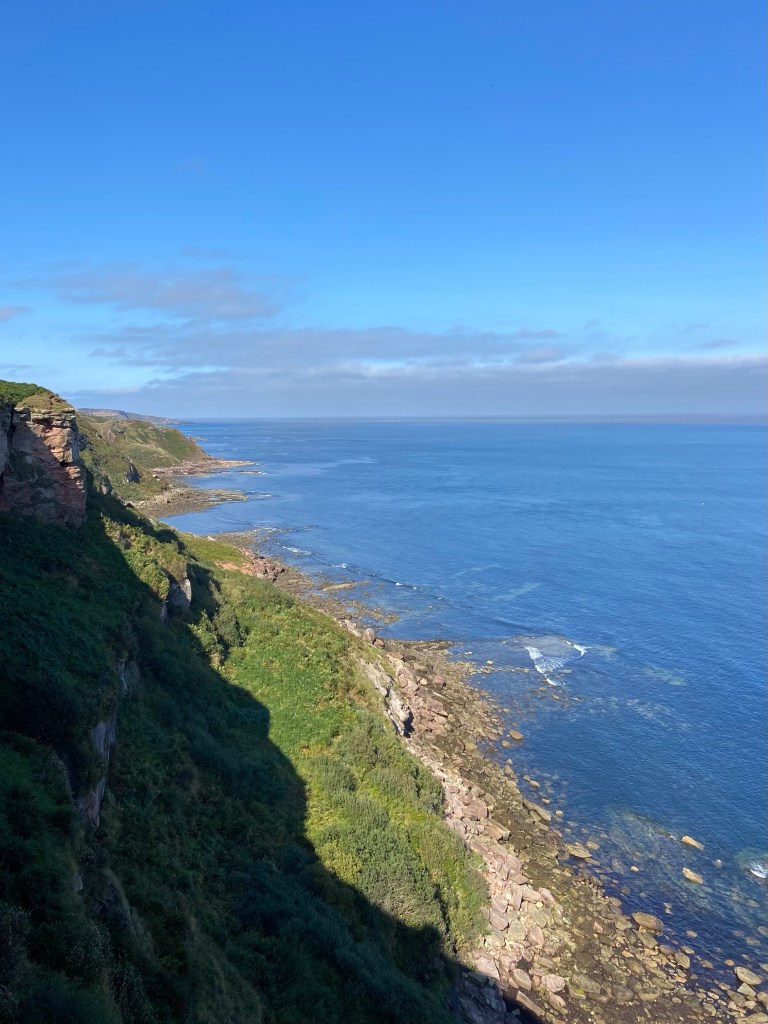
Off shore, crabbing boats were hauling up the creels or steaming back to the harbour. The rocks were terrifically interesting here, much easier to see than yesterday at Siccar Point (one could see why Hutton had had to go out in a boat for the view of the rocks from the sea). The graywacke beds were as striated and folded and forced vertical as one could wish.

In one narrow inlet, a well-camouflaged lobsterman had hauled his creek up into the rocks, emptied it, and then threw it, weighted, back into the water.
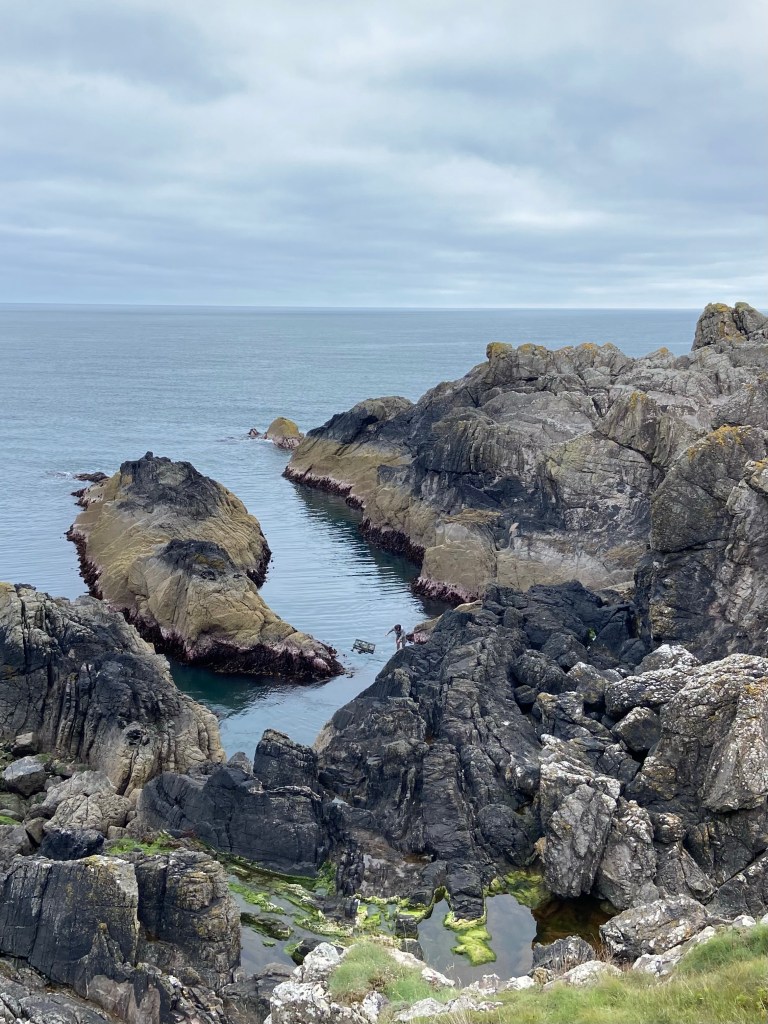
Rounding the headland, a view down the coast opened up for the first time, the mouth of the Tweed just visible in the far distance. I had left so late! And here I was dawdling. I must, as Alan advised me yesterday, crack on.
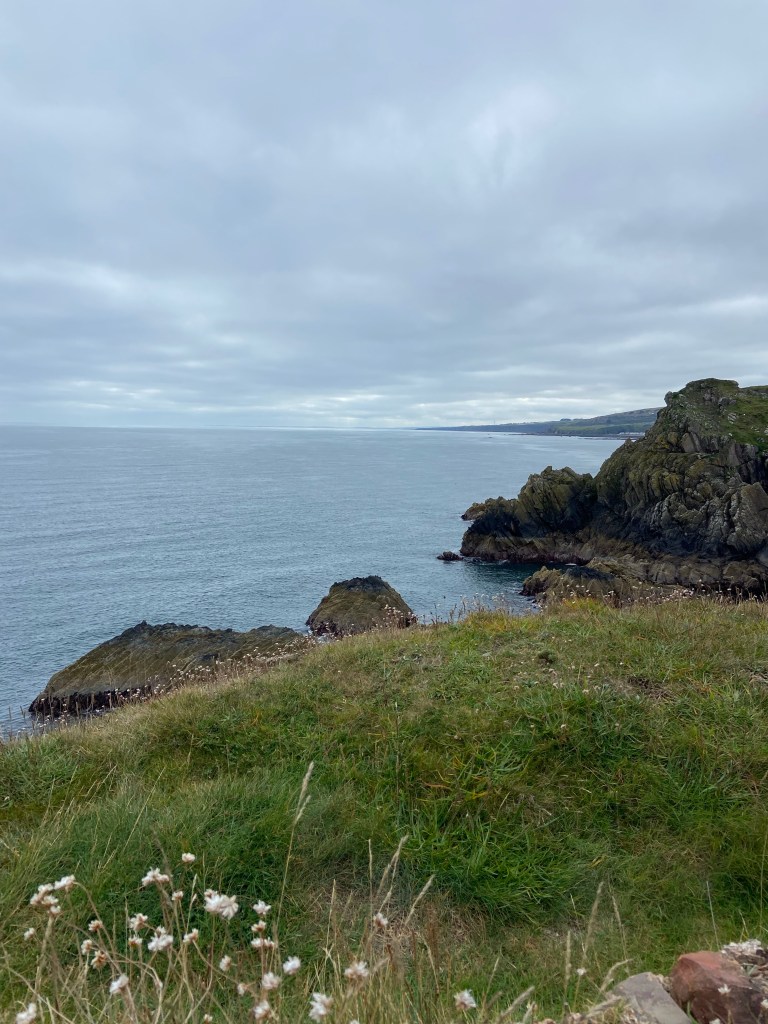
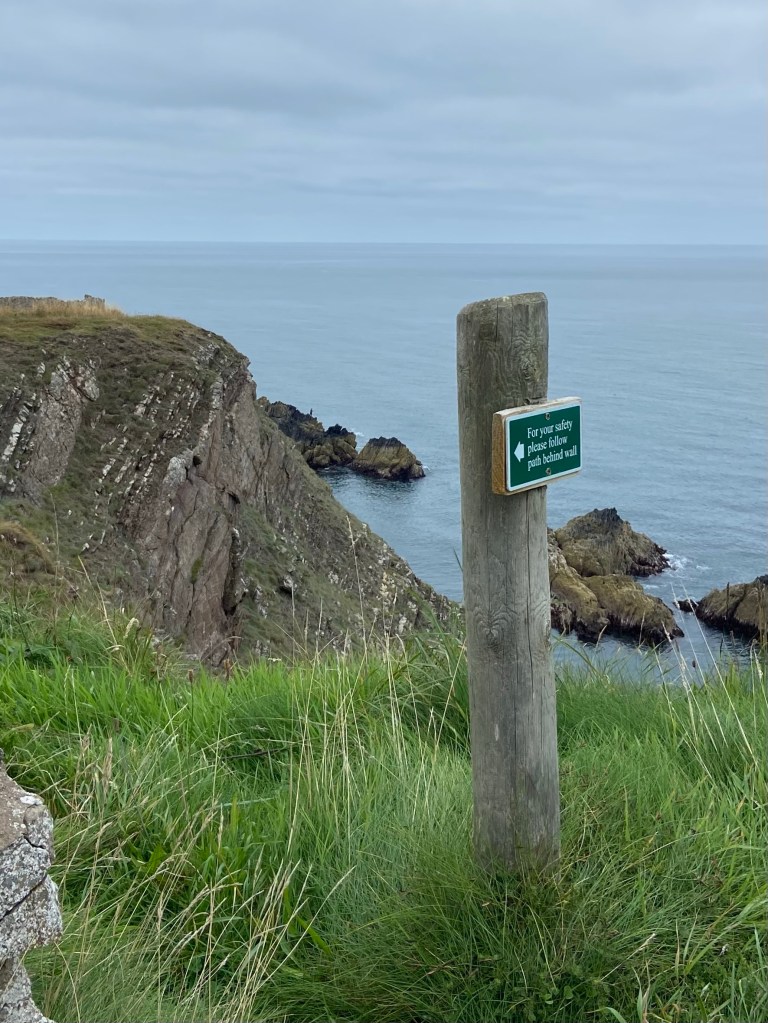
Focus on the path was made easier by the fact that I was behind a wall shielding me from the views; I mean, I was more than happy to take heed of the warning sign, here and at many points today when the path came alarmingly close to the cliff edges.
The second of today’s powerful memories struck me as yet another promontary was rounded, and the tiny lobster fishing village of Burnmouth came into view. This had been the scene of summer holidays throughout Stephen’s childhood.

It was to that same house in Burnmouth we returned for that one final family holiday, scene of the famous, once-in-a-lifetime Great Langoustine Bargain, that still echoes down the decades of family lore.
The path presented the easiest of goings, wide, firm and grassy, a windhover overhead with keen gaze fixed on the vegetation, searching for the tiny mammals cowering in the clumps of grass facing death from a 50-foot drop on one side, or from a pair of sharp talons from above.
The gentle slopes of the undulating landscape were so different to the steep pulls up and the shuddering descents of yesterday. This was not to say that sea-braes there were none: James Hutton’s folded Silurian graywacke features were much more easily seen without being cast into deep shadow, as yesterday. Here however there was no red sandstone unconformity to prompt paradigm-shifting thoughts. Only a deep awe inspired by the workings of geological time, and a bittersweet memory of my father, who would have been so interested in all of these photos, and my father-in-law John, who walked this coastal path so often over the years with his young family.
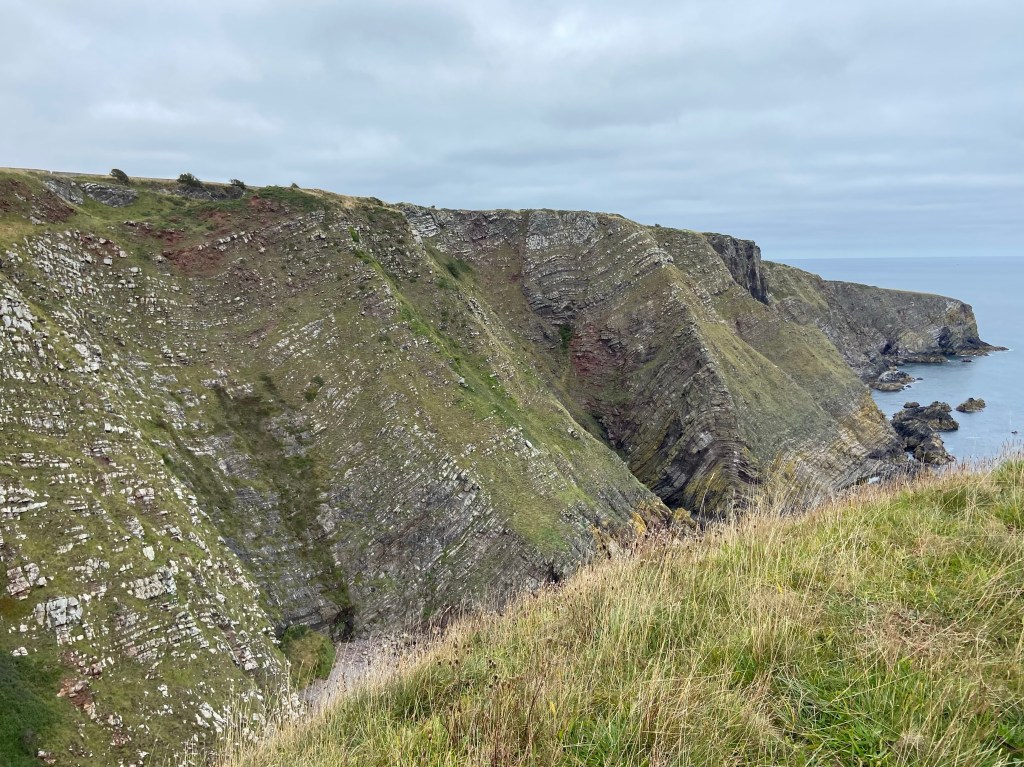
Every now and then I scanned the sea and shore for any signs of the seals of which I have not seen any over the past week. I saw none today either, but did watch through the binoculars another line of whooper swans heading south, wings beating strongly in unison and calling constantly to each other as if to synchronise the stroke. Perhaps they would rest on the tidal sandbanks and marshes around Holy Island? The castle was just visible on the very edge of the visual horizon, 25km to the south east.
For this processional I decided to stay high and not descend into Lower Burnmouth only to have to haul myself 60m vertically up the rock face by the Cowdrait path. It was a simple matter to stick to the road for a while before dropping down via a harvested cornfield (making the most of the right to roam until I cross the border later today!), and under the East Coast mainline to rejoin the coastal path on a quiet track which led below both railway line and the A1, traffic noise unnoticeable and trains whispering past. The sun was beginning to come out.
A little path had been created off the paved route, with a handmade sign saying ‘nature trail’. I startled a hen pheasant from the scrub, and picked a big handful of glossy blackberries

and when the nature trail ended and the paved path carried on, it was overgrown with soft mats of grass and covered with dried cut grass stalks and soft underfoot. Peacock butterflies, speckled wood and a baby rabbit scattered before me, and a timely stile presented itself for me to sit on to change into the shorts which I had providentially packed right at the top of my rucksack.

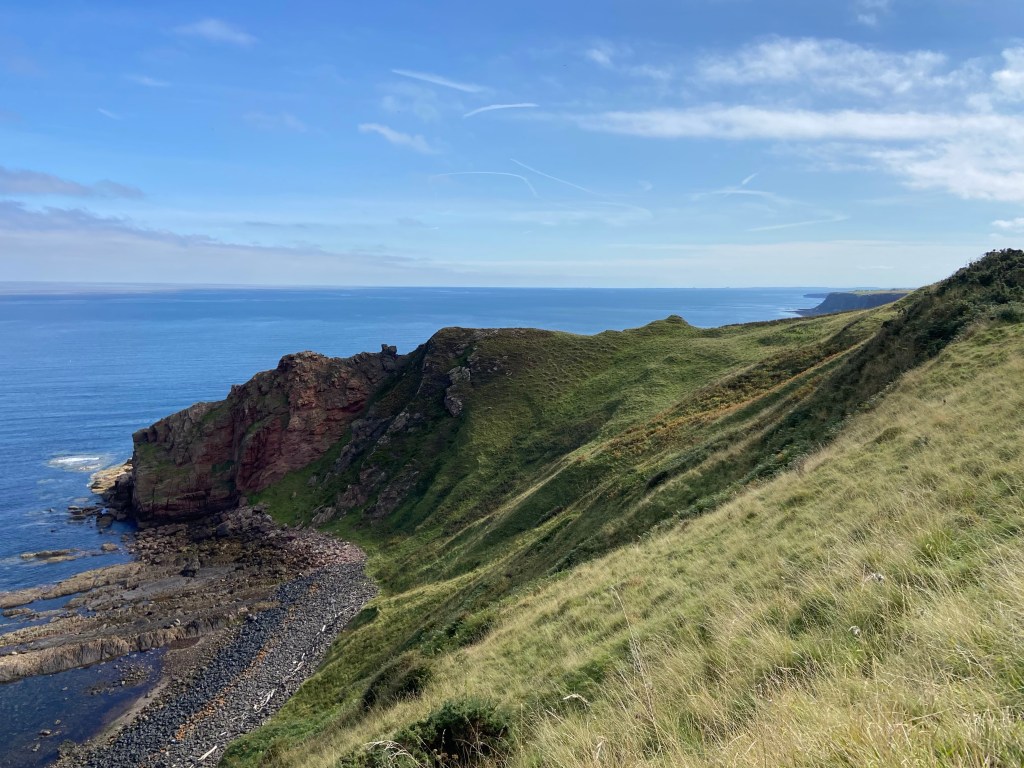
The path continued easy through sheep field after sheep field, which left me free to look out at the sea, now a decisive blue,
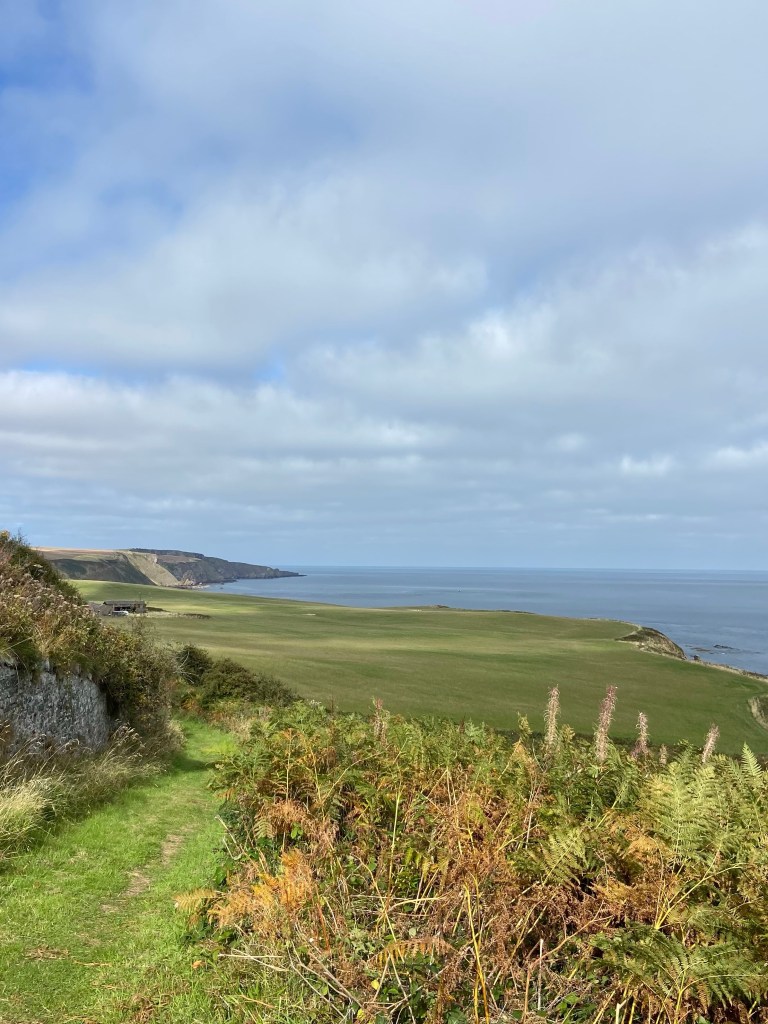
at the rock formations, here a rich sandstone red,
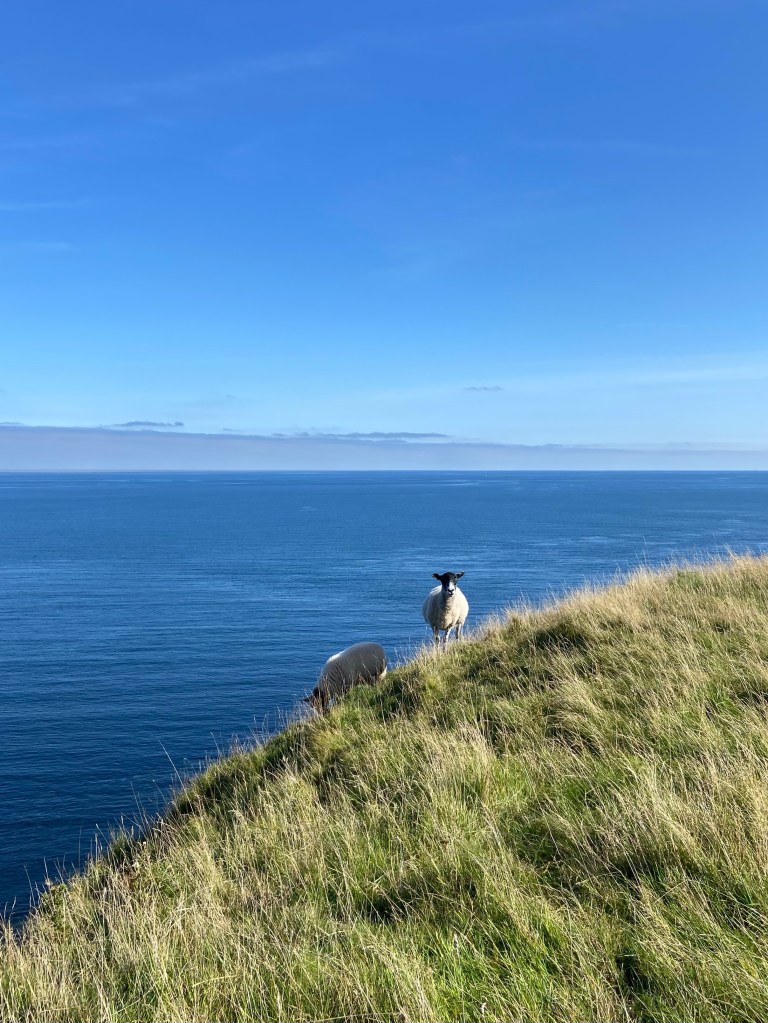
and admire the chutzpah of the daredevil sheep, grazing as close to the edge as one could possibly get.
I reached a caravan park, perched up on the clifftops offering the lucky inhabitants and holidaymakers the most extravagant of sea views.
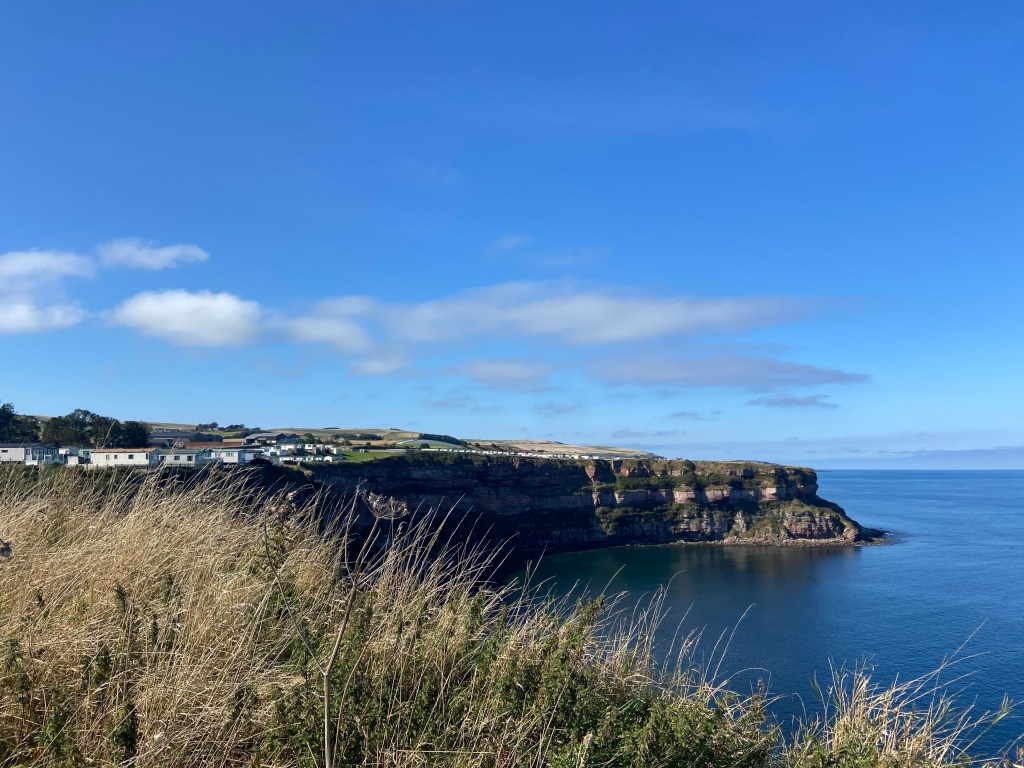
Perfectly manicured path skirted round the first part of it, completely deserted, and I took off my pack for my promised 12km break, and lay on my back for a bit, channelling that stand-up paddleboarder just outside Dunbar.
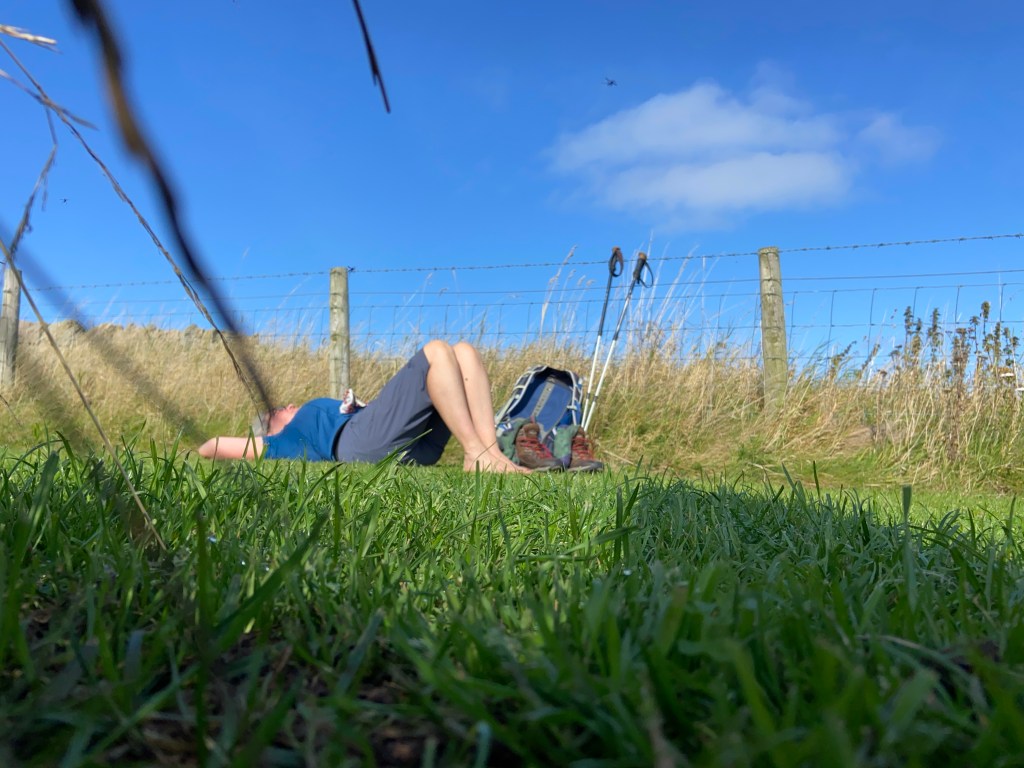
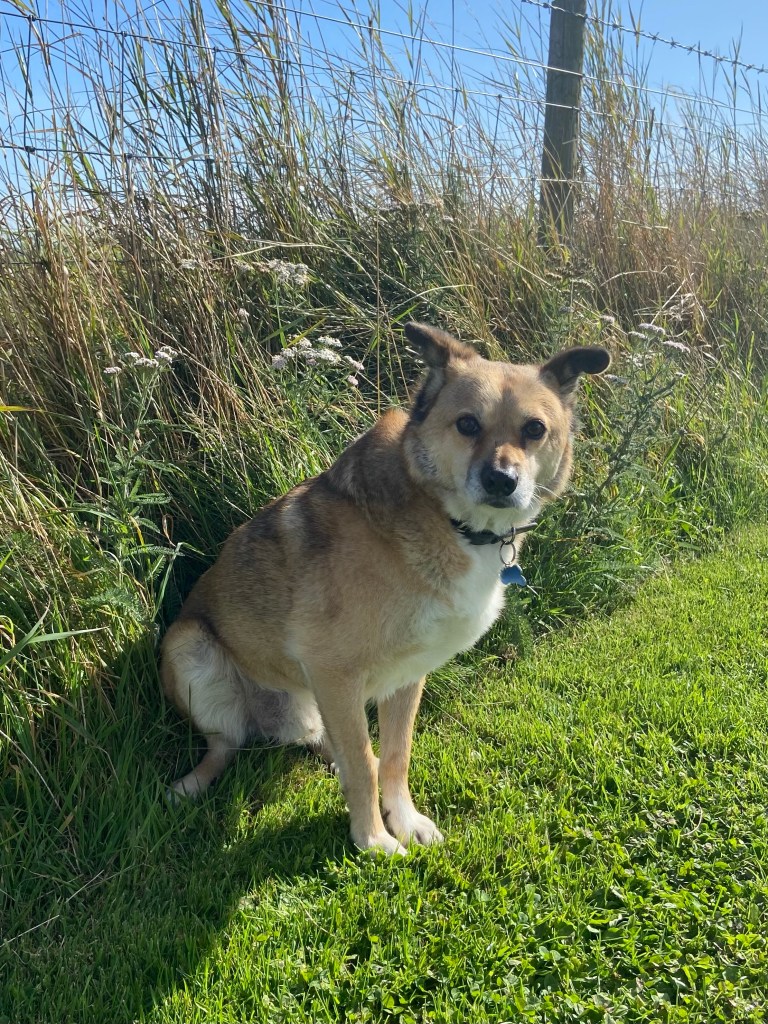
I had nearly been discovered like this by Joyce, who I met just a little further on. She was walking her Romanian rescue dog Eric. ‘He’s a Heinz 57 varieties kind of song, but my daughter had his DNA analysed and he’s mostly North American husky,’ she said. Eric was obviously very wary of me, and slunk around anxiously, pacing up and down. ‘It’s the sticks,’ said Joyce. ‘It’s been five and a half years, and he still terrified.” So sad that such a lovely creature can’t feel secure in the love that Joyce has lavished on him for so long, the abuse he’d been subjected to still so vivid in his mind that he is convinced my walking poles, laid against the fence to seem less threatening, might be used on him.
Unbeknownst to me, I had, some half a mile back, crossed the border, and I was taken unawares by the finger posts which were now signing the ‘England Coast Path’.
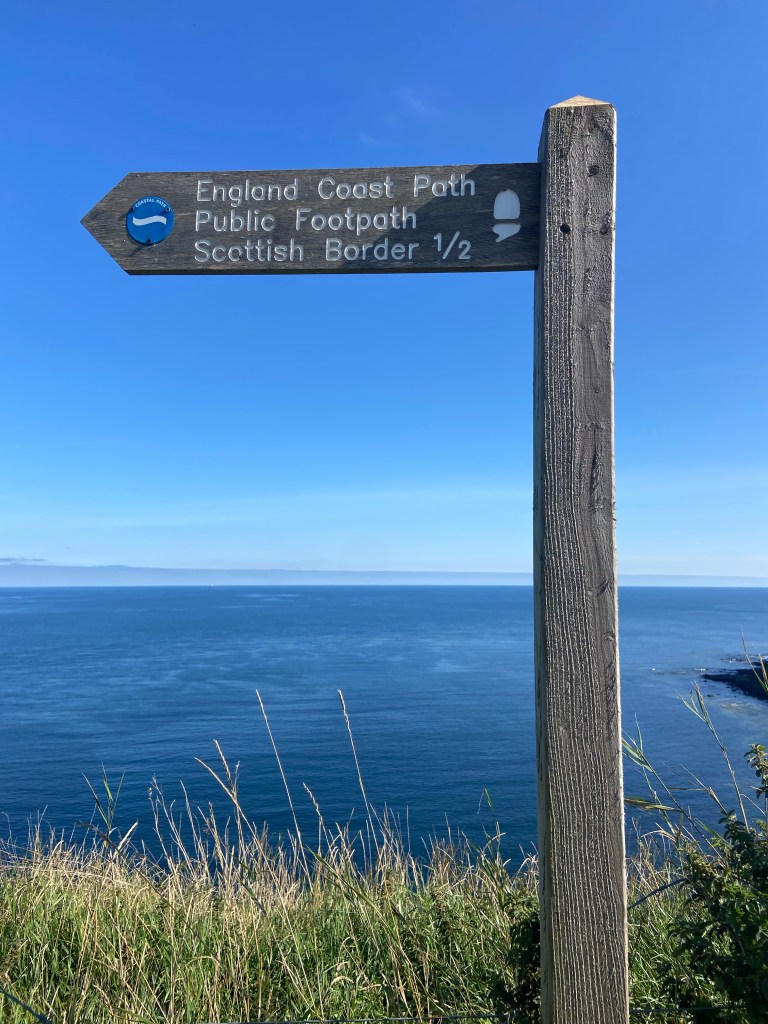
I felt a little melancholy, to tell the truth, because it means that my journey will come to an end in a couple of hours, that Burnmouth had been the last fishing village in Scotland, as well as the first, and that the high-speed trains sweeping past did not simply constitute an interesting contrast between choices of ways to cross the landscape, but were also the instrument of my swift return south tomorrow afternoon.

With a pang, I began to see these last kilometres in terms of the memories they will hold, which is also of course true of this blog. Behind me, the bulk of a grassy headland hid the northern coast from view. Each new glimpse of a beach or rocky inlet far below me was like a tiny leavetaking.
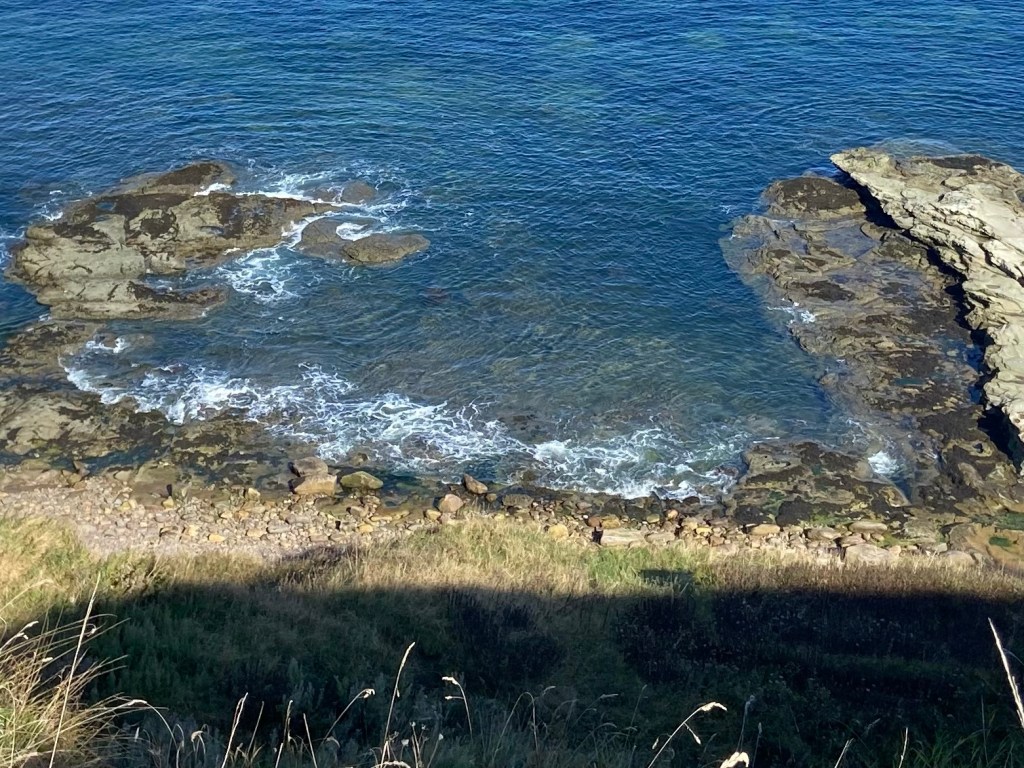
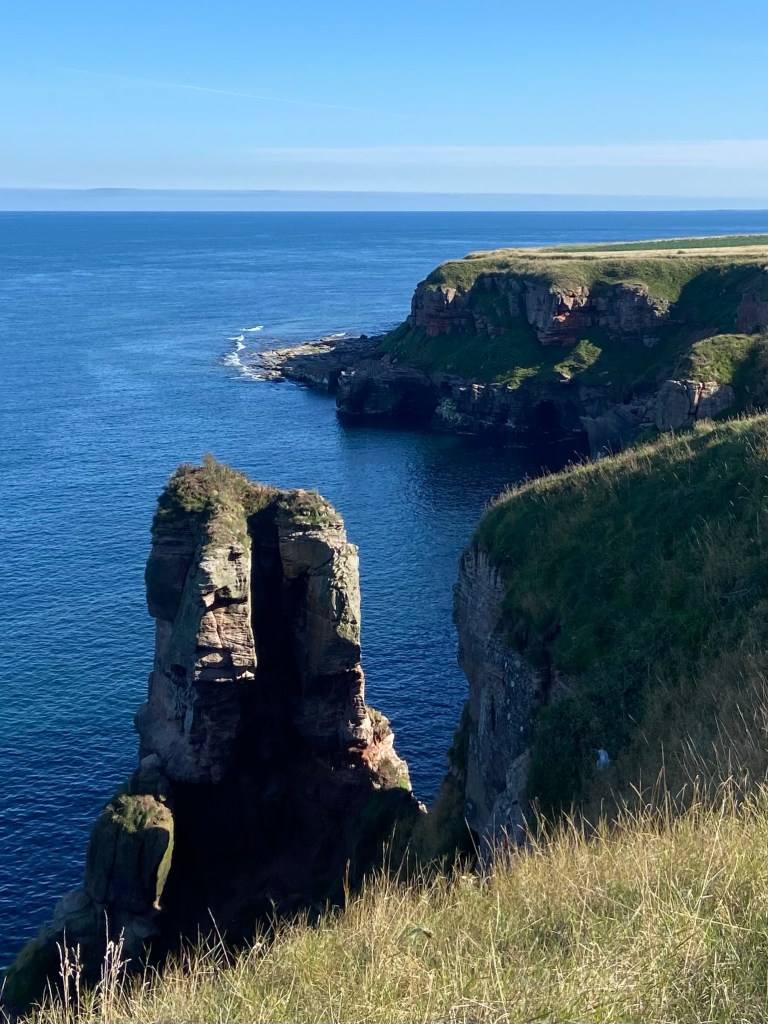
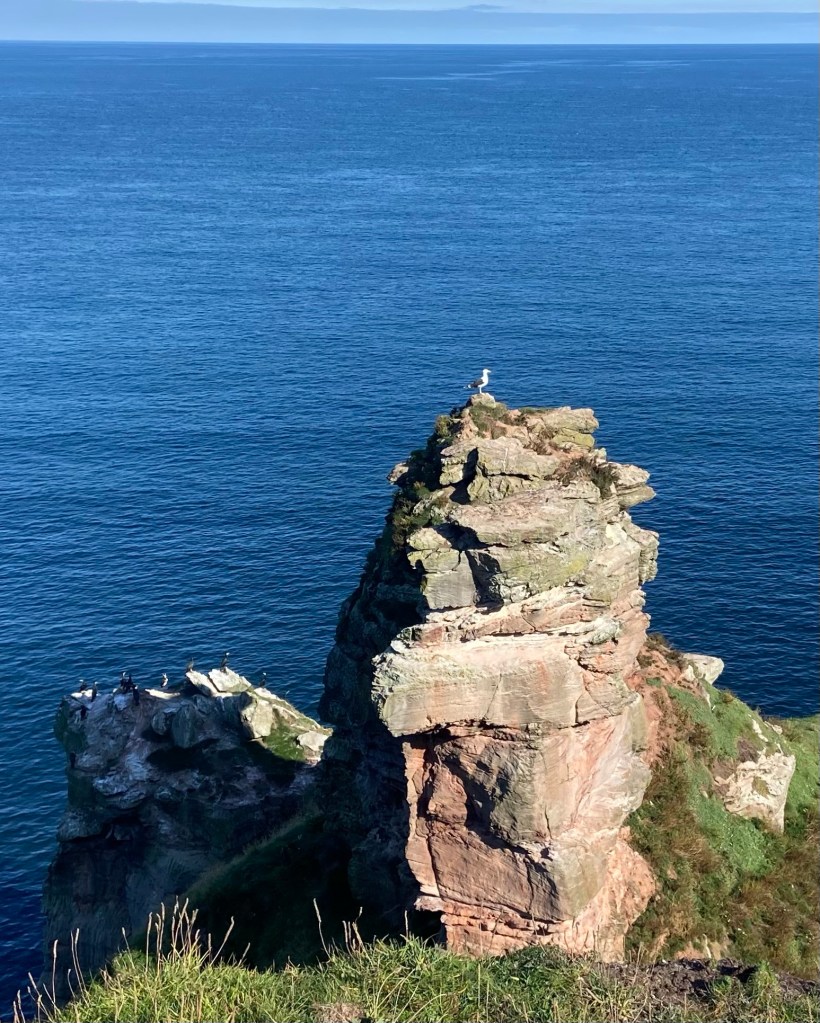
The incessant action of the sea has created fantastical shapes all along this part of the shore: sea stacks,
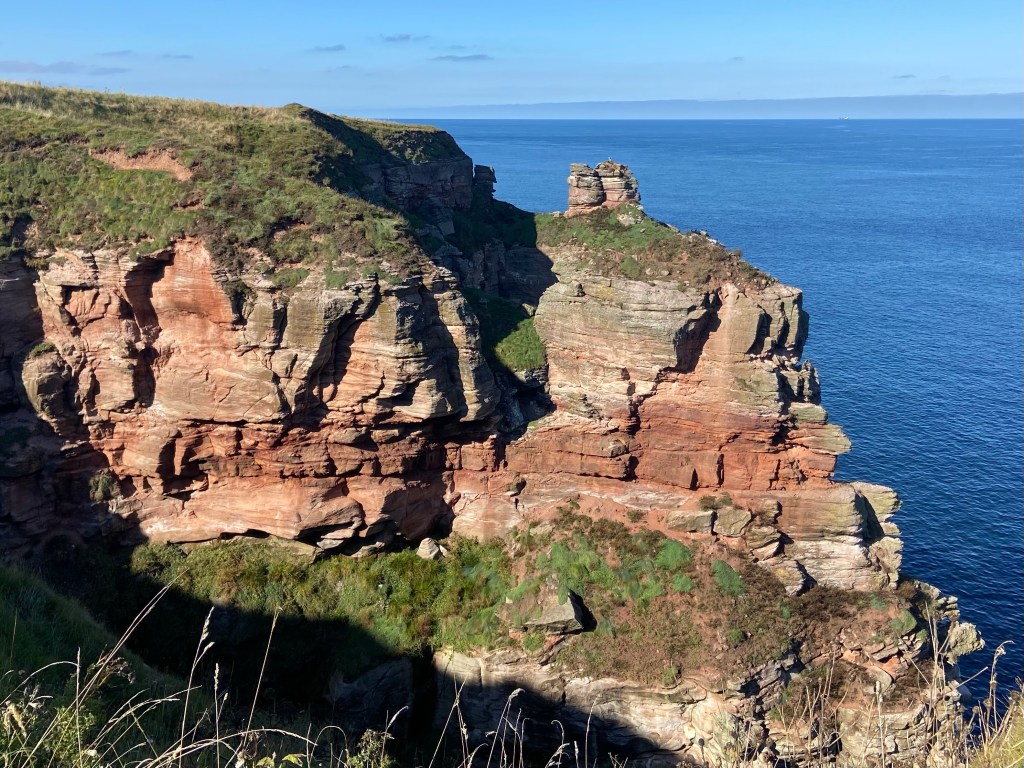
and weathered cliff faces,
And the spectacular Needle’s Eye formation,
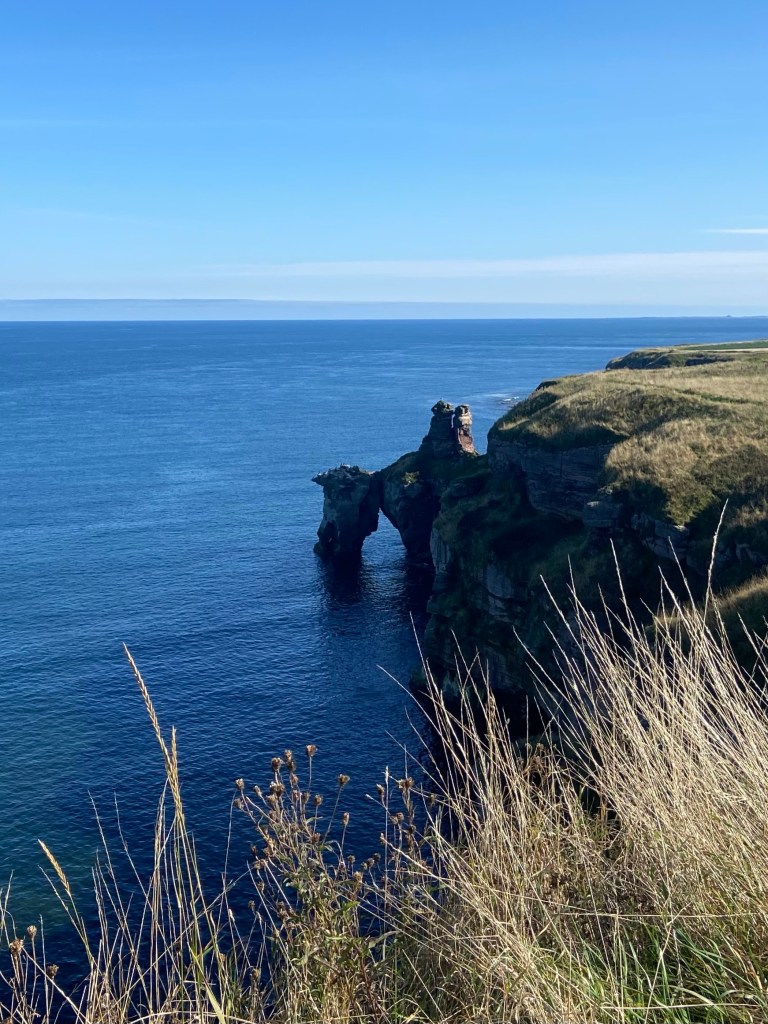
a choice spot for seabirds to rest.
The outskirts of Berwick-upon-Tweed were marked by an exhausting path so narrow one had to do a catwalk gait, putting one foot exactly in front of another onto the uneven ground and risk twisting an ankle. I peeled off the path into the field of Brussels sprouts beside it, afternoon son glowing through their thick leaves,
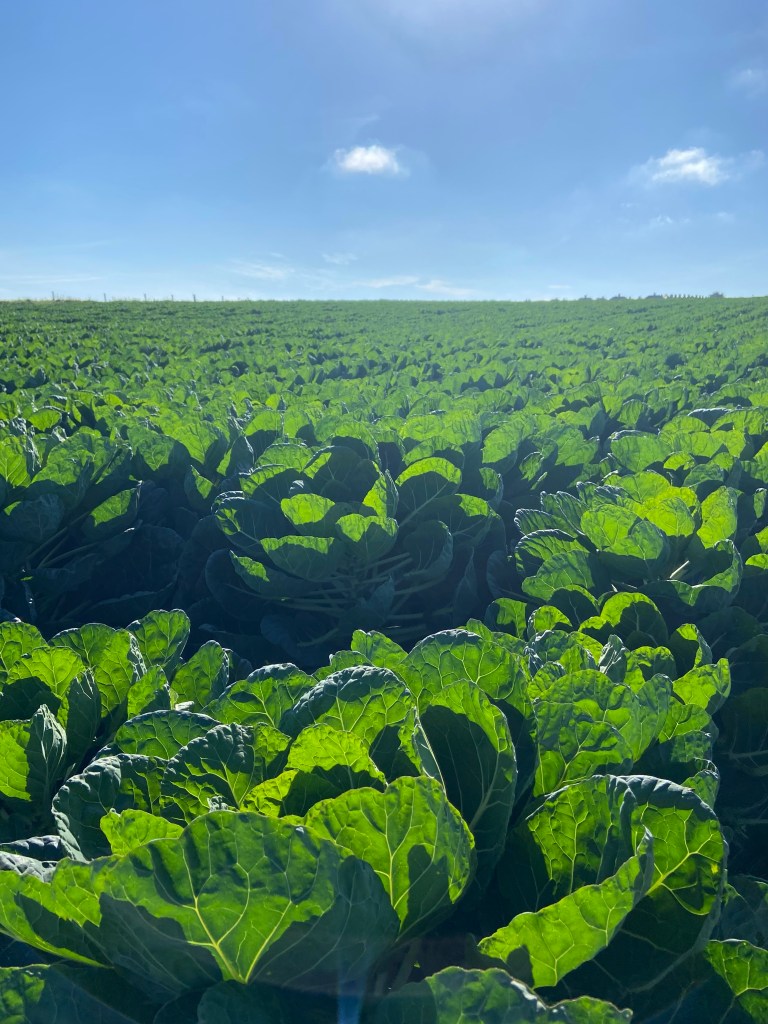
to enjoy, even if temporarily, a wide, flat, smooth surface underfoot. A charm of goldfinches blew up out of the margin of thistle heads and chicory seedpods on which they were feeding and twittered off, first down the path ahead of me and then back over my head, the gold of their wings catching in the sun.
I was now back on a golf course, but seemingly deserted with no players in sight. The green seemed to bear that undulating profile of medieval furrows — not ideal for a golf course, surely. Missing my right to roam now, I trespassed onto a tiny section of the eighth hole — because there was no one there to see, and because the coastal path veered uncomfortably close to the cliff edge at this point. I could hear beneath me the sea was taking great audible gulps out of the sandstone.

Here was another holiday park which I skirted round on the seaward side. I wondered whether I was getting high on the secondhand smoke of the spliff being smoked by the young man with an extreme fade walking a little way in front of me. He stopped at the top of the steps leading down to the beach, and texted a photograph of his joint to someone. Funny people, these English. I decided it wasn’t the smoke but was the genuine sense of exhilaration I felt at the end of my walk. It’s been North Coast 150 instead of the 130 km I had mapped — that’s a whole extra 12 miles, equivalent to an extra day’s walking shoehorned in somehow.
I begin celebrating the end of the walk in the pier car park with a waffle ice cream cone with a 99 flake. They couldn’t take cards at the van, so I paid for my prize using the £10 note I had carried with me since Edinburgh, for the purpose. The lad loaded extra on the top when he heard how far I had walked.
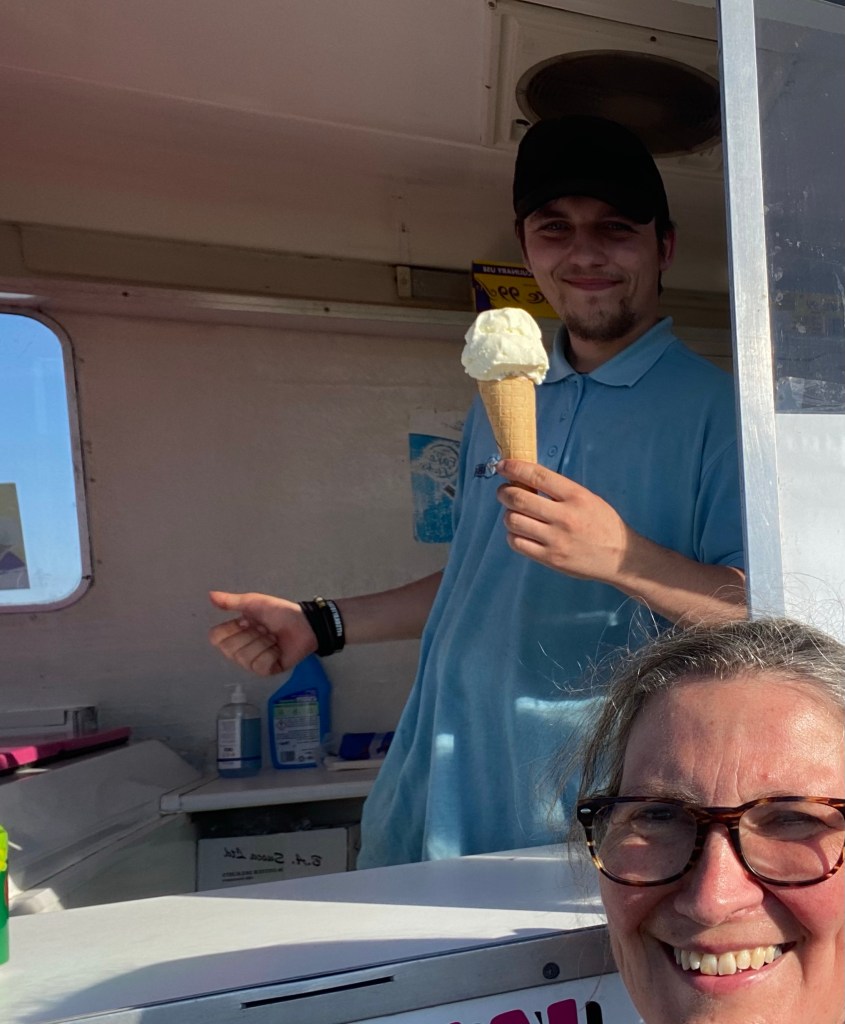
I had just finished the ice cream when suddenly, sooner than I was expecting, there before me was the river Tweed.
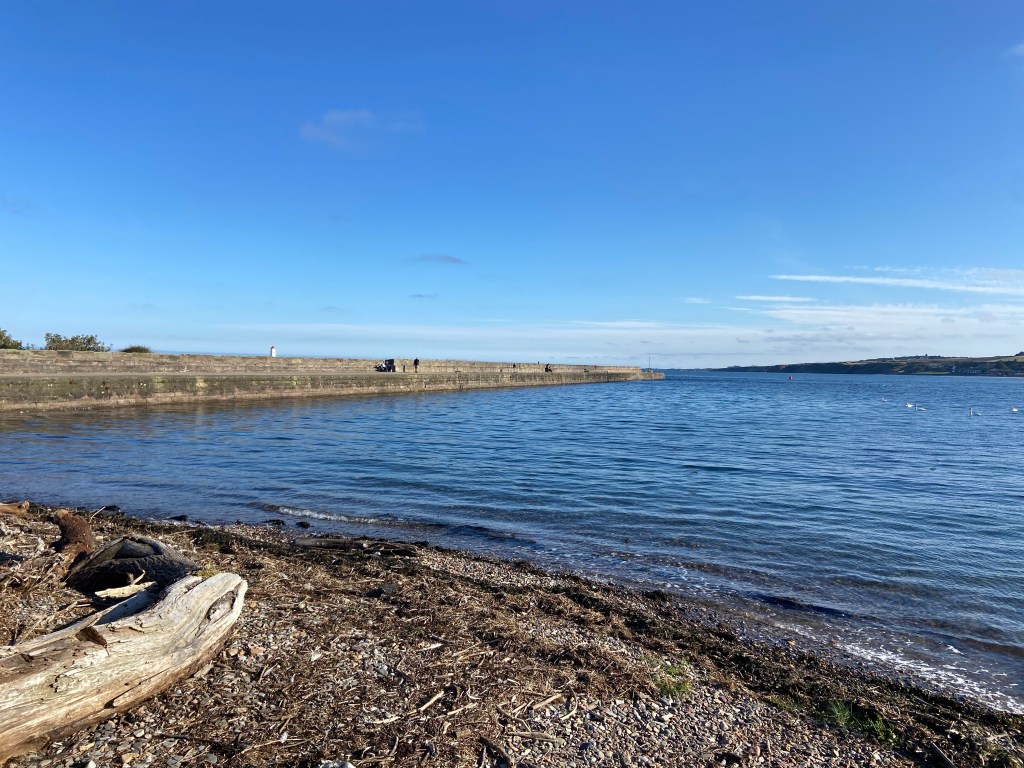
There were swans to greet me,

and also Steve and Dave, coming down to the shore having that very minute finished their 18-day Ravenber coast-to-coast walk from Ravenglass in the Lake District. We were each other’s welcoming committee, and the serendipitous meeting gave our simultaneous arrivals a festive and celebratory air.
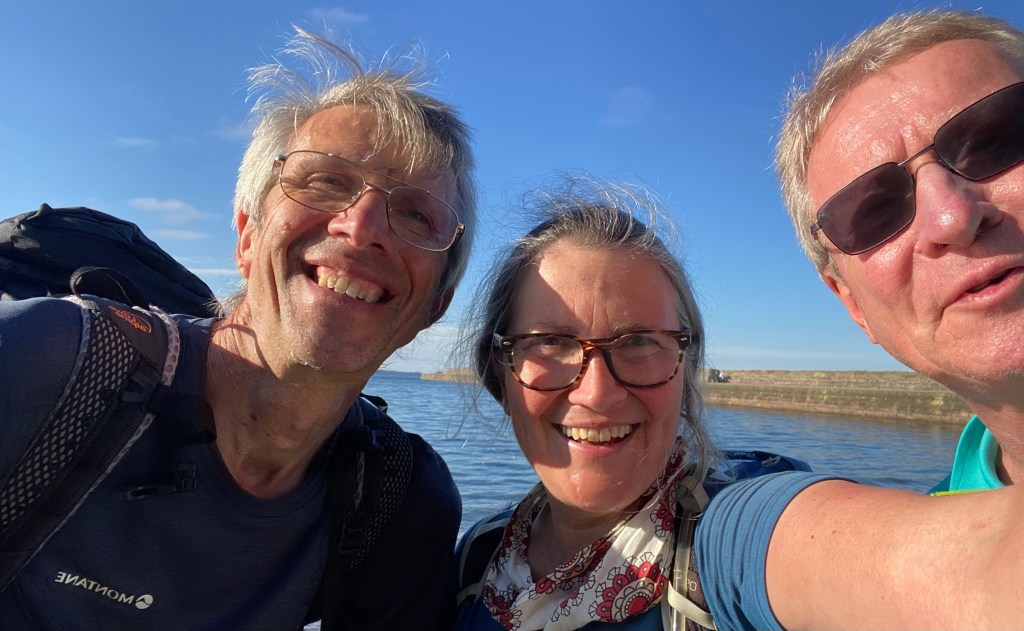
The sun glittered on the fresh water mingling here with the brine as I walked up to my AirBnB, through the Sand Gate,

and up onto the ancient city walls, warming in the sun. Tomorrow there would be time to explore this ancient Anglo-Saxon town, before my afternoon train. For now I felt I was back on a grander version of the clifftop! It felt terrifically comforting.

🏴 Finis 🏴
 Walking The Landscape
Epic journey! And epic blogging!
LikeLiked by 1 person
🤩😍🤩😍
LikeLike
I just love the happenstance in your journeys. Another wonderful blog. x
LikeLiked by 1 person