
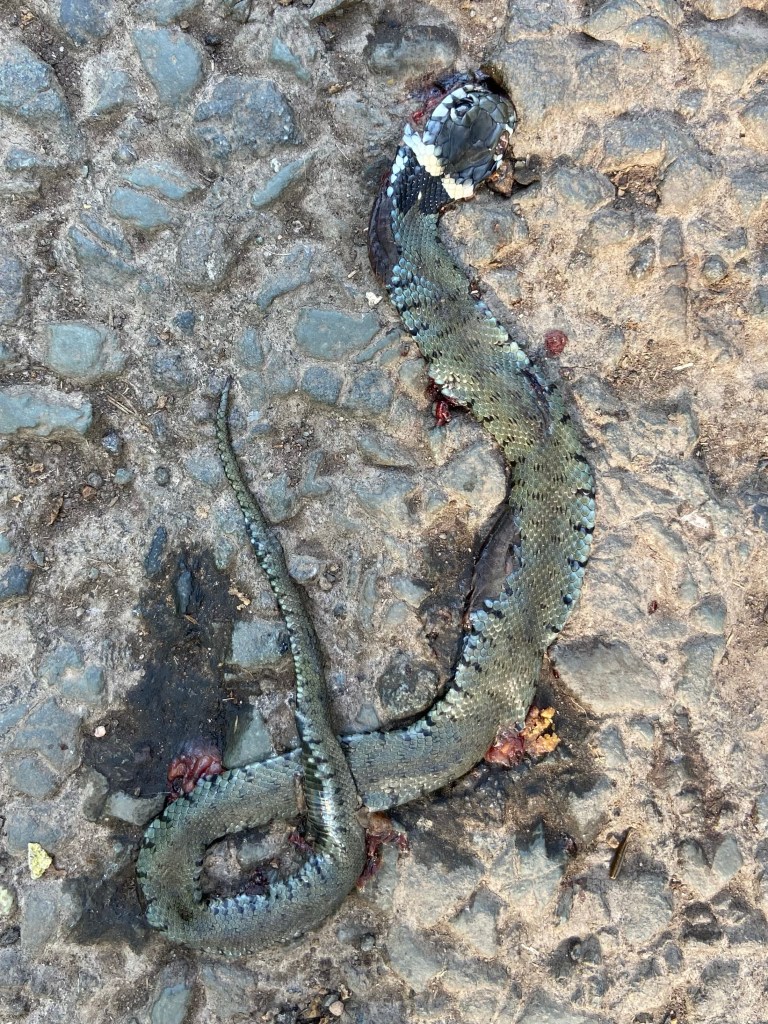
A body that as the breeze touches it glows
Ted Hughes, ‘A Casualty’
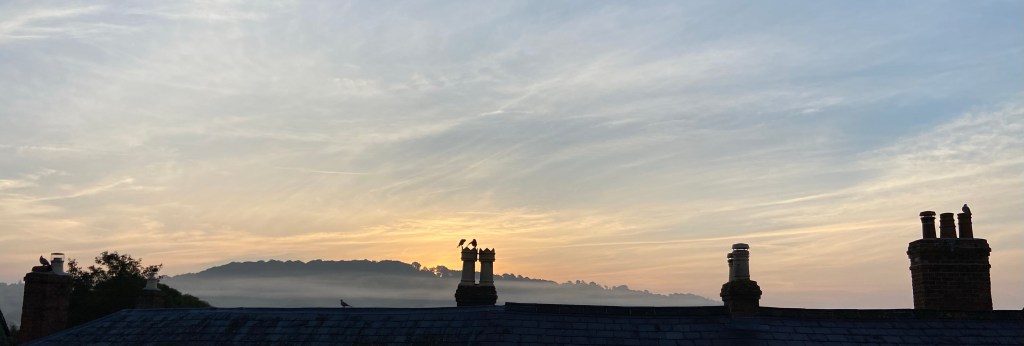
I woke at five this morning and sat up in bed to put the finishing touches to yesterday’s blog post. The sun was just coming up over the Downs, and I enjoyed the peaceful sight of the tree line rising above a thin veil of early morning September mist.
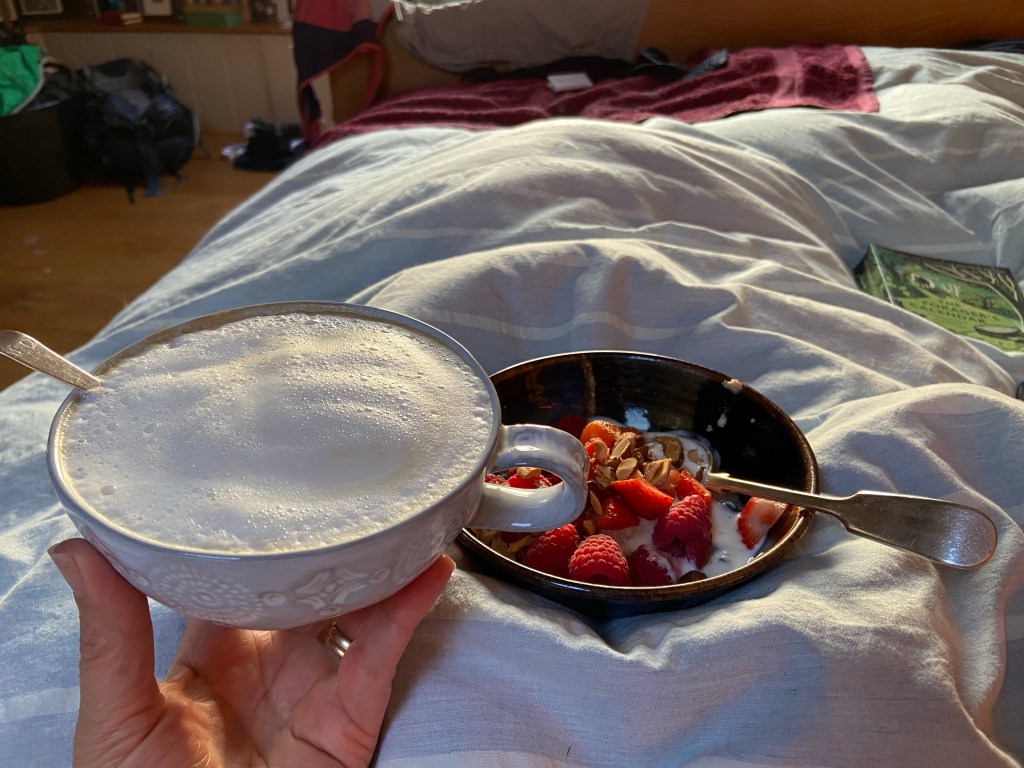
The cat joined me, and eventually Stephen woke too, and brought me my last wonderful cappuccino and breakfast bowl of overnight oats for a while. With my eye on my heavy pack, lying on the floor on the other side of the room, I really savoured them.
My departure time today was led by the fact that I need to get to a particular pub by 2.30 latest for the Sunday roast I have pre-ordered. I am considering it a very early dinner rather than a late lunch. The Welsh Marches are sparsely populated and whereas I usually feel confident about picking up food and snacks en route, this part of the world is trickier: I cannot rely on any little shops until I get to Knighton tomorrow lunchtime. So for this journey, I have had to add extra weight to my pack. It is stripped down as far as possible, but there is the additional weight of my tiny stove (pretty idiot-proof but a little gas bomb nonetheless and I have always been too scared to use one before now. I practised lighting again last night and didn’t see the house on fire) and dehydrated meal which I will be carrying for the next five days until I need it in the wilderness. I also have more water than usual because I won’t be able to pick any up. So my pack is about 2kg overweight, at about 12kg, but when I hoisted it on to my back it it felt m manageable. Time would tell! There was nothing else I could leave out of it, anyway,. and although I left about 15 minutes later than I had intended, I think doing the stretching exercises (that I failed to do yesterday and stiffened as a result) were a wise trade-off.
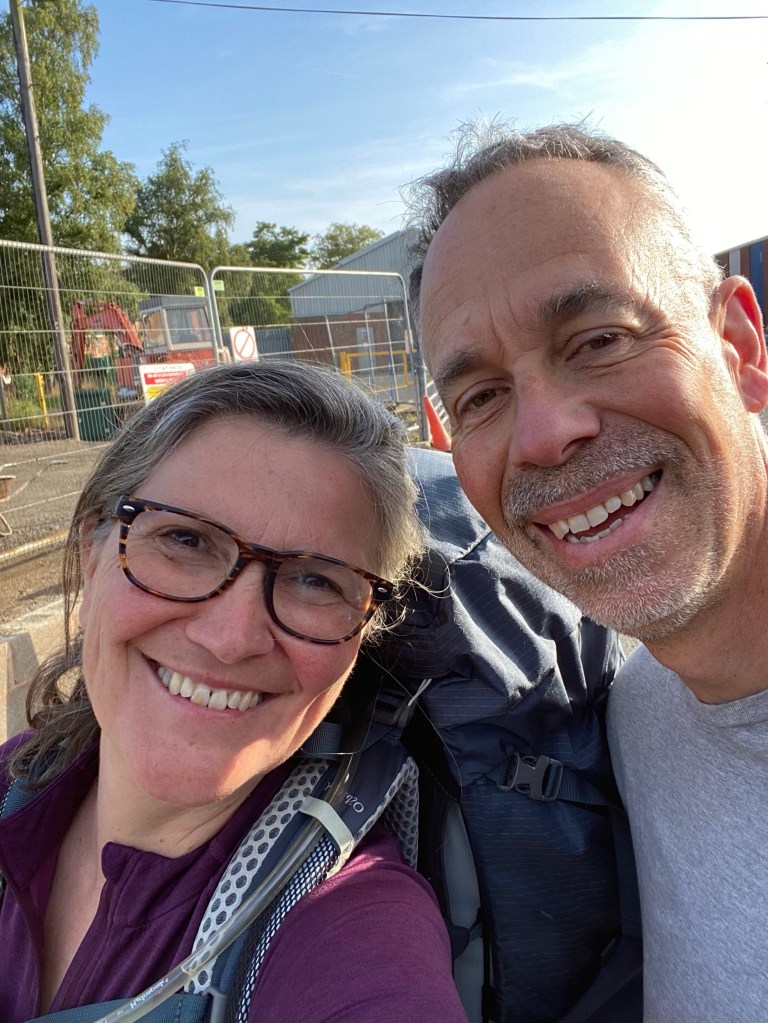
Stephen gave me a lift out to the station, driving in 20 minutes what had taken me five hours to walk yesterday. As I put my boots on and walked out to the Land Rover, I already felt the pressure on the right underside of my right heel, and my heart sank just a little bit at the thought of having to manage blisters. So before I said goodbye to Stephen, I applied a prophylactic Compeed, and hoped for the best. If all goes well I shall see him on Saturday.
I set off walking through the centre of Leominster. It is such a pretty place: a perfect example of a Herefordshire market town, with a plethora of beautiful black and white houses.

At this time on a Sunday morning, there were very few people about, and I could enjoy almost by myself the sun shining through the architectural and floral expressions of 19th and 21st century expressions of civic pride.
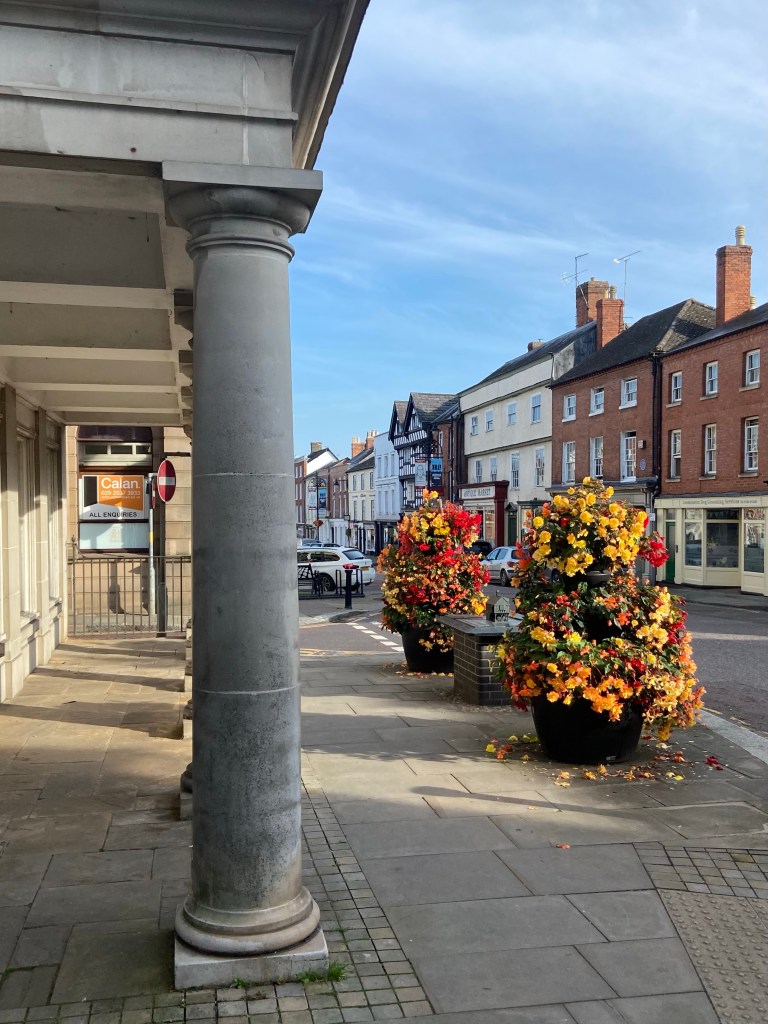
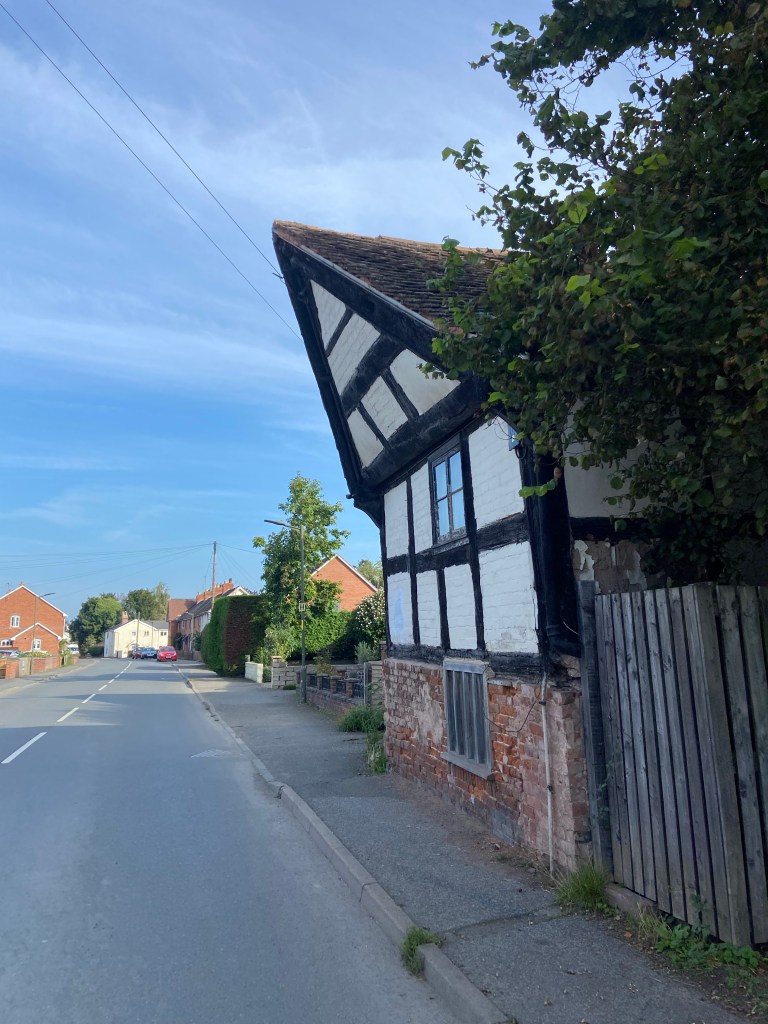
I looked longingly in the windows of antique shops and art, galleries, and through the doorway of the newsagent’s, where gleamed bags of snacks, and the Sunday papers which I would have to leave to those of you enjoying a cappuccino and a lazy Sunday brunch. Regretfully, I headed north out of the quiet early morning town — past the most extraordinary example of a black and white cottage I have ever seen.
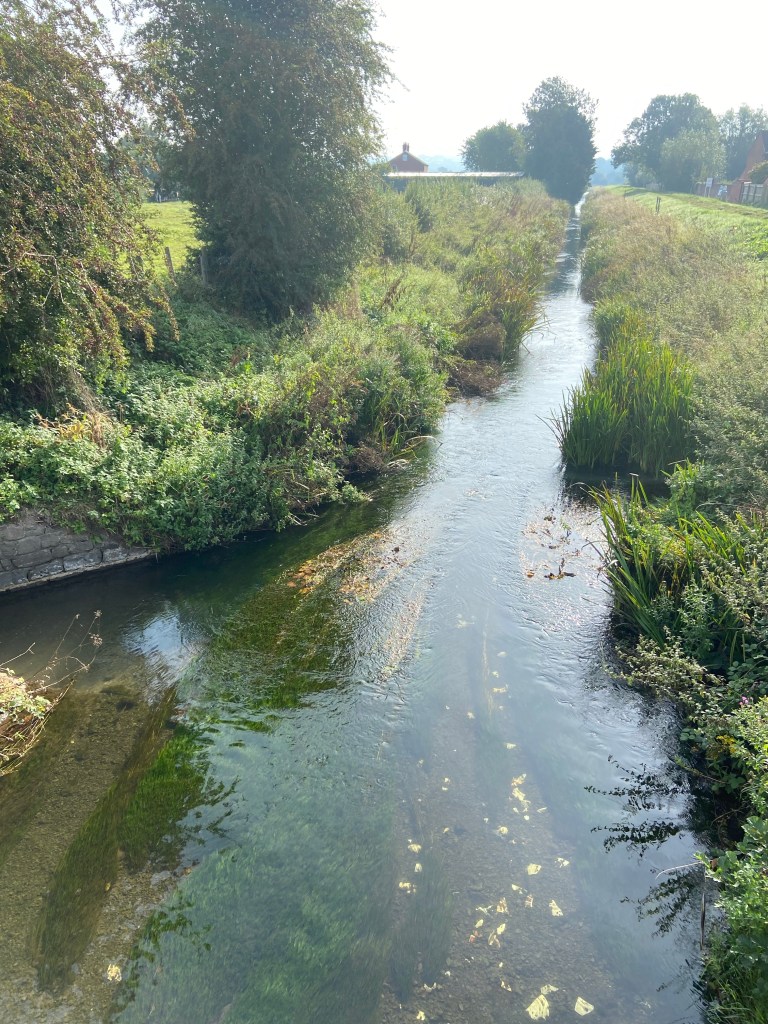
The Lugg river is crossed again just on the edge of town. The sun glinted on the water above the tresses of water crowfoot streaming out from beneath the bridge.
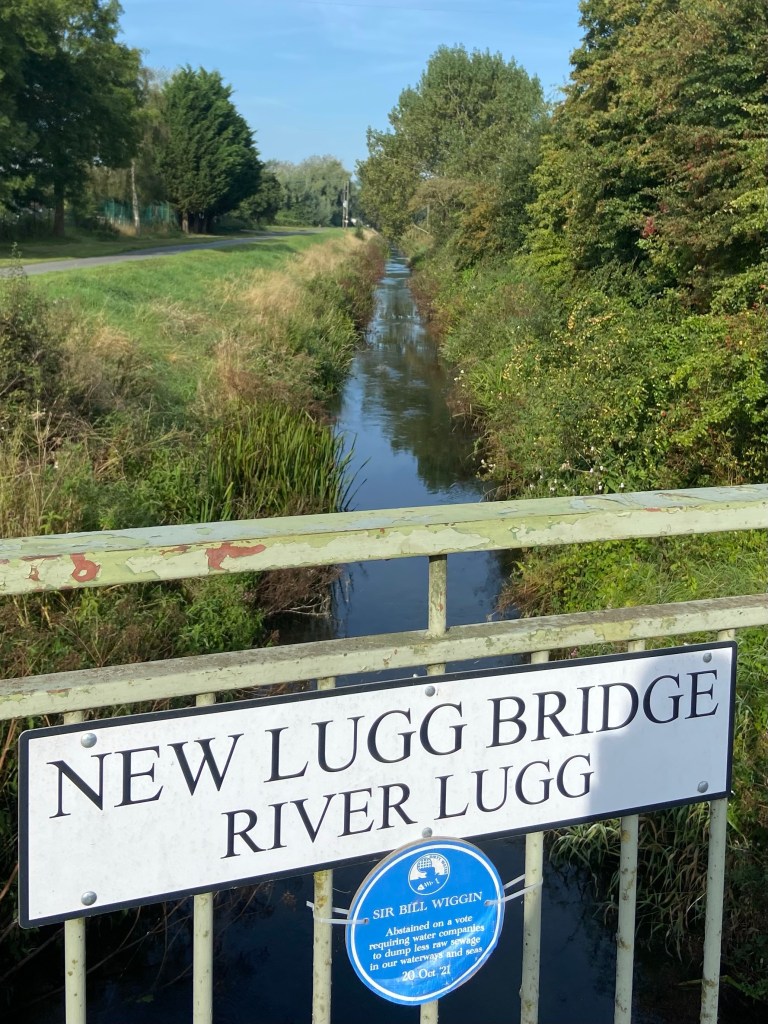
There was a well-judged parody of a blue plaque tied to the bridge, reminding readers that our honourable member of Parliament Sir Bill Wiggin had abstained from the vote in October 2021 which would have required limits to be put on the amount of sewage discharged to into our rivers and waterways. I am enraged at this man’s lack of care for the rivers that are the lifeblood of our Herefordshire landscape. The River Wye is now so polluted that it is almost dead, and I consider it a tragedy that the interests of pressure groups like the water companies outweigh such a critical matter as the death of rivers.
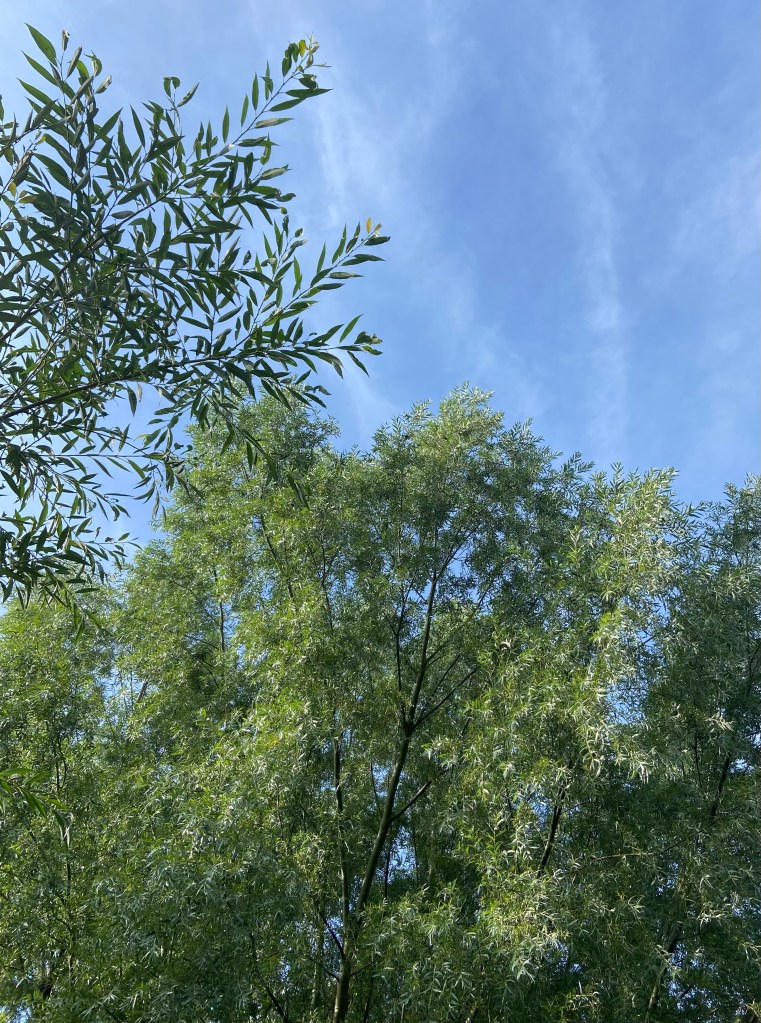
I turned off down a tiny side road, shifting my pack on my back to make sure the load was evenly distributed, getting used to the weight. I foraged an apple from a tree with branches bending over the road, and savoured its slightly unripe tartness as I walked on, neck craned back to watch the leaves of the white willows arching overhead. It felt as though I was walking through the landscape of William Morris wallpaper. Or maybe it is the other way round.
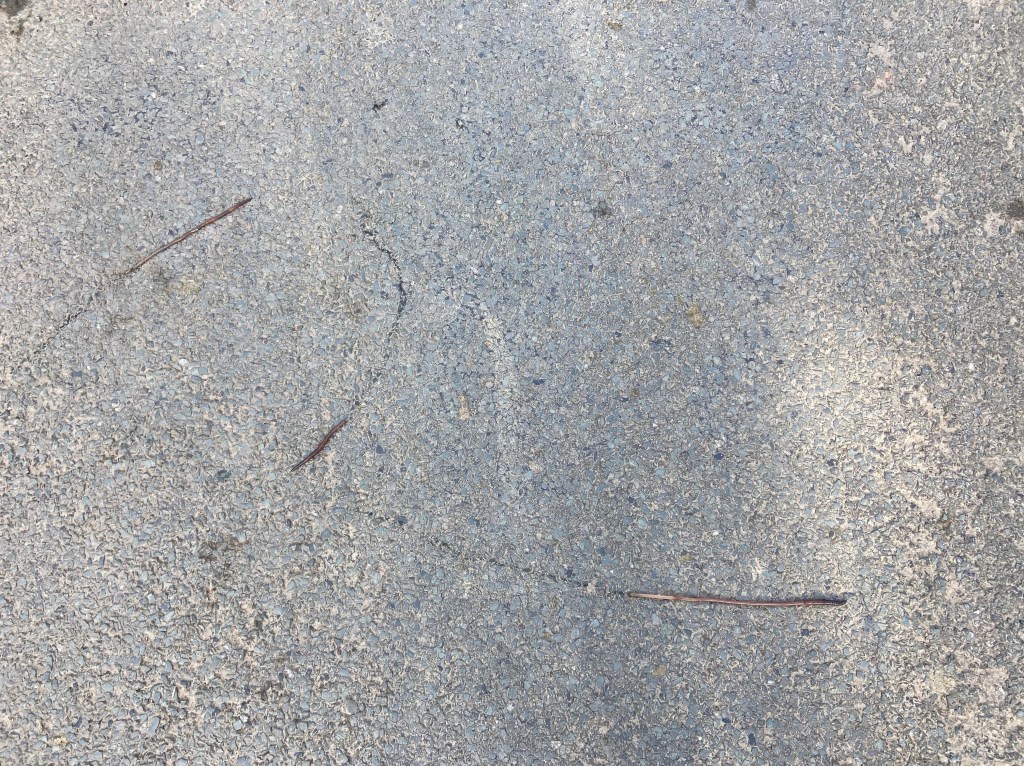
In any case, I felt very connected. My experience with the almost dead cricket yesterday, and the sight of the very beautiful but very flat grass snake memorialised as the header photograph for this day’s blog made me pause to watch worms speeding across the tarmac, hastening away from what must’ve been some strange annelid convocation. Connected enough, when I heard a car speeding down the country road towards us, to grab the worms and toss them away into the verge. I don’t know whether they were grateful for the surprise aerial escape from certain death, but I felt immense satisfaction having added ‘saviour of worms’ to my list of life accomplishments.
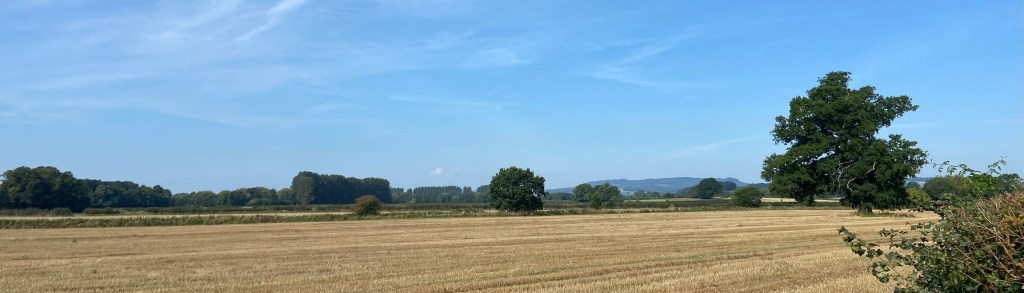
The tall growth of end-of-season hedges occasionally gave way to expansive views out over harvested cornfields, enjoyed also by the several cheery pairs of cyclists who sped past.
Away to the south, of course, is the river Lugg, tightly meandering along this section of its course
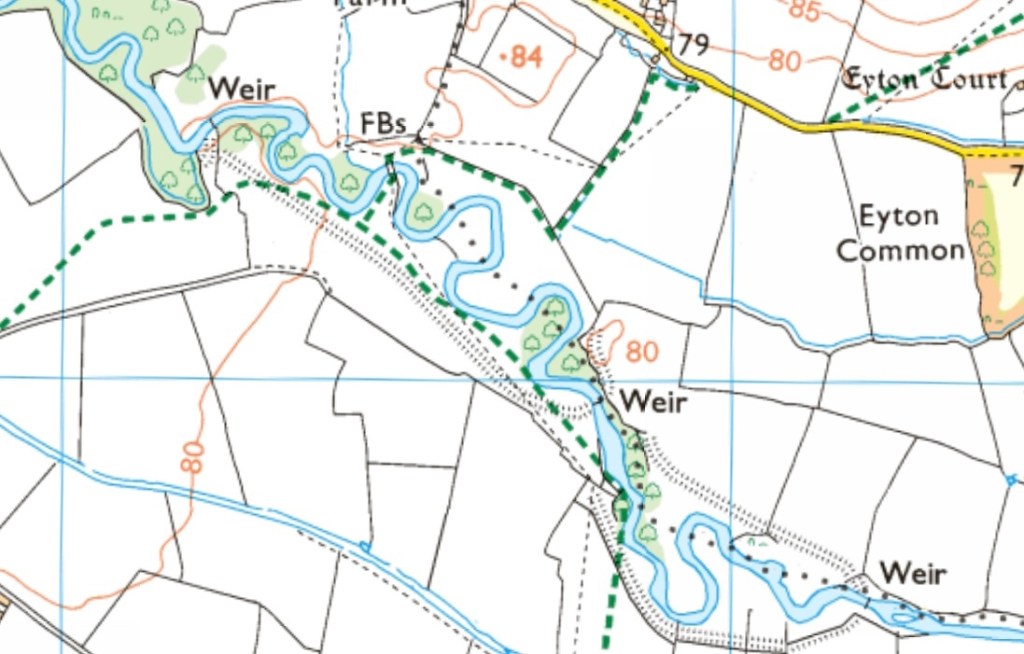
— except this map is now inaccurate, because it covers the appalling place I mentioned yesterday, where the river was reprofiled. I found a news story with a better set of photographs of the damage that was caused, if you are interested. I am so glad Price was sent to prison for his environmental crime, and I’m so glad that more than half of his fine of 1.2 million pounds is to be used in a decade-long project to repair the damage.
If there are any people to be met in this sparsely populated landscape, it will be along these tiny country lanes. Some I did not meet, but appreciated none the less, like the owners of a tiny black and white cottage, who have set up a beautiful new fence of waney-edge boards quite good enough to enter into the H.art exhibition that is currently running throughout Herefordshire. A couple of palings were cut from a single plank to emphasise the grain they had split along. It reminded me of the Water Cut sculpture, high up in Mallerstang valley in Cumbria, marking the source of the River Eden. Here today these fence posts echo the meanders of their own river in the valley it has shaped, and point me forward towards the source of the River Severn, where I will camp in a few days’ time.

Other people I did meet, however fleetingly. A friendly man waved at me from the far end of his drive, and a farmer considerately paused his flailing work to let me pass. Today, in my boots, I have no fear of a blackthorn piercing the thin soles of my trainers. But I did miss the blackberries on the neatened, shorn hedges.
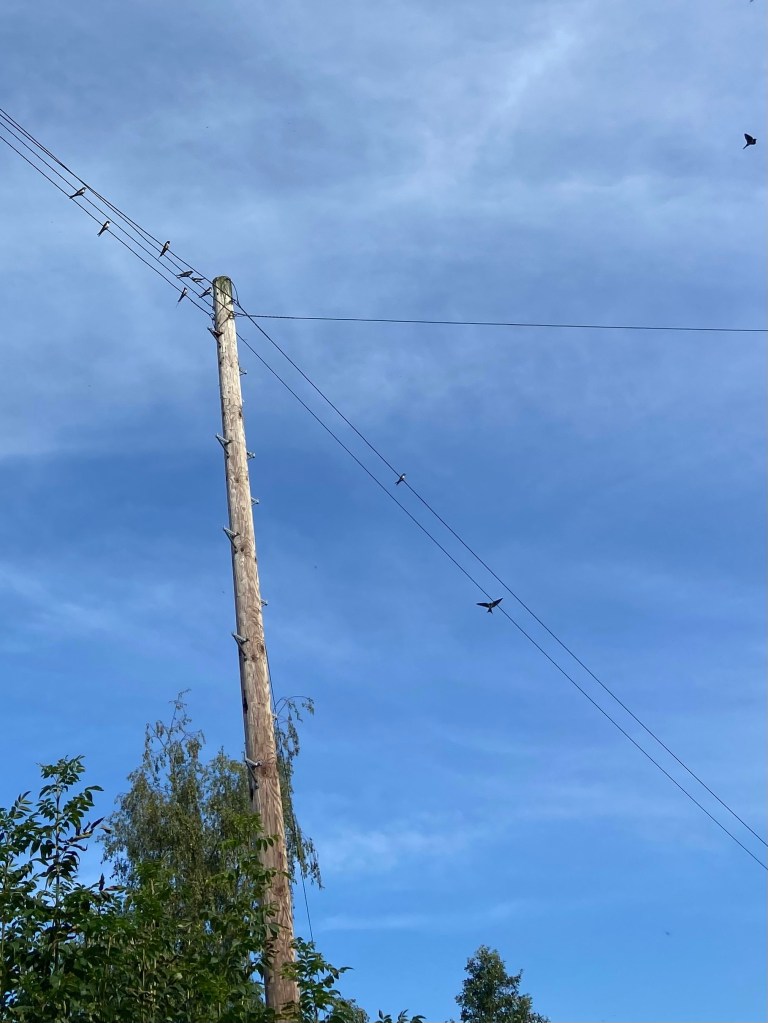
As I wound on along to Lucton, the road continued to yield tiny gifts: acorns in their cups fallen from overhead branches, the ends of the oak mast nibbled by mice; goldcrests, heard but not seen because I don’t have any time to play their song back to them and call them down onto the lower branches, owing to my roast chicken appointment. Swallows perching on telegraph wires, resting between their acrobatic aerial displays of hoovering up the early autumn gnats.
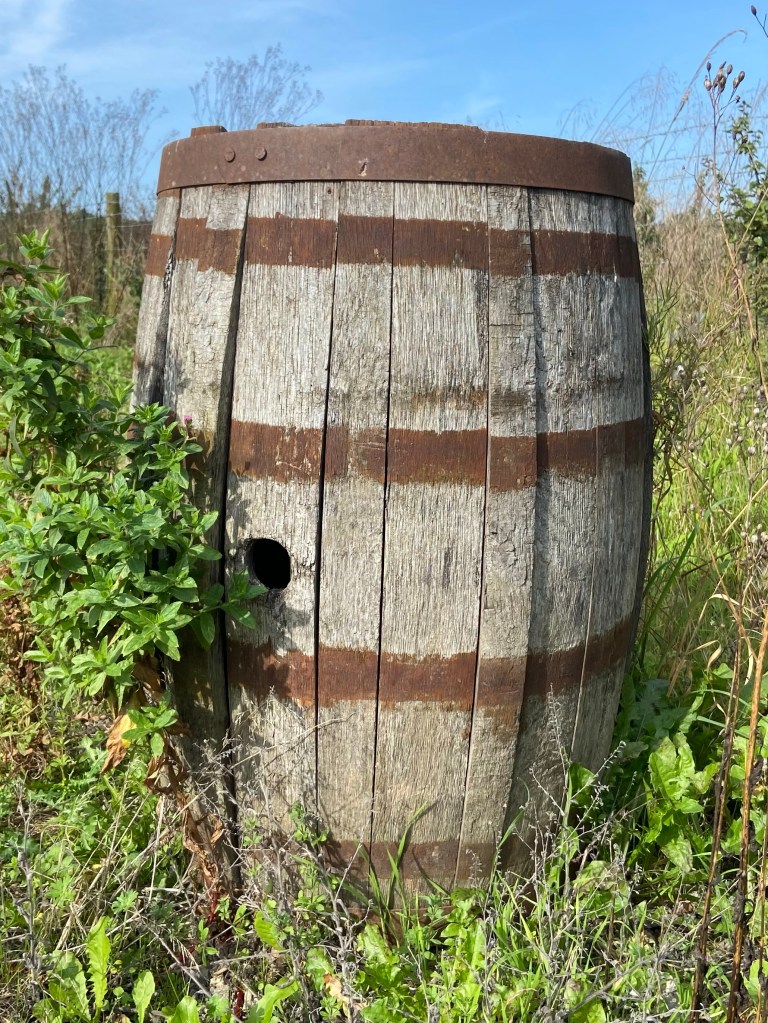
And today as yesterday there were records of human labour in this landscape, in the form of a gently decaying memorial to the work of the cooper.
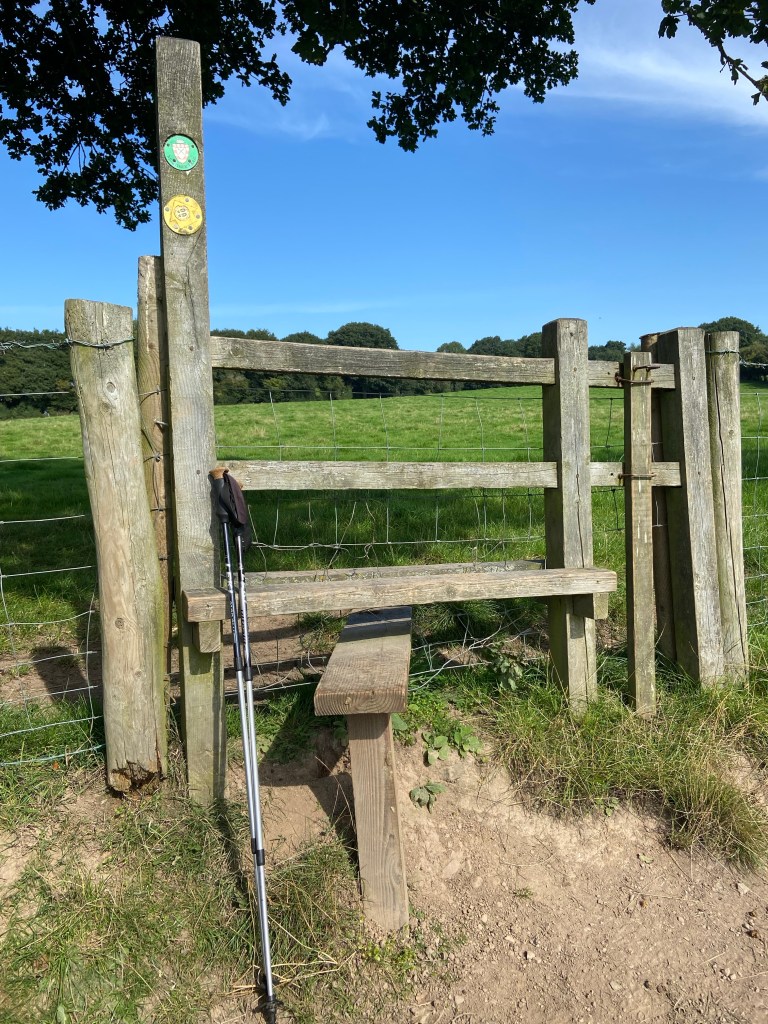
Three American women cyclists sped down the hill towards me, the lead woman calling out an energetic warning of “Walker!” to those following her. They all hailed me as they passed, glowing with enthusiasm. I was also glowing: meeting with them coincided with the first real test of my pack weight, as I had to haul myself and it gracelessly over the first stile of the day into a field just the other side of Lucton, and then climb what must’ve been a tame gradient, but felt quite steep as I toiled up it, relying on my poles. Luckily, both stile and hill were in the shade, which cannot be said of the next stile, in full sun, and with a step up to my mid thigh to negotiate.
I was now on the Mortimer Trail, a section of which Tim, Susie, Stephen and I got spectacularly lost on in 2019, when they accompanied us on our ’Guest Day’ stage from Hay to Presteigne. I was concentrating too hard to get lost here because when the path passed into National Trust-owned Pokehouse Wood, the narrow, dusty single-file trail was so precipitous that all my attention was on placing my poles and feet carefully, so as not to slip.
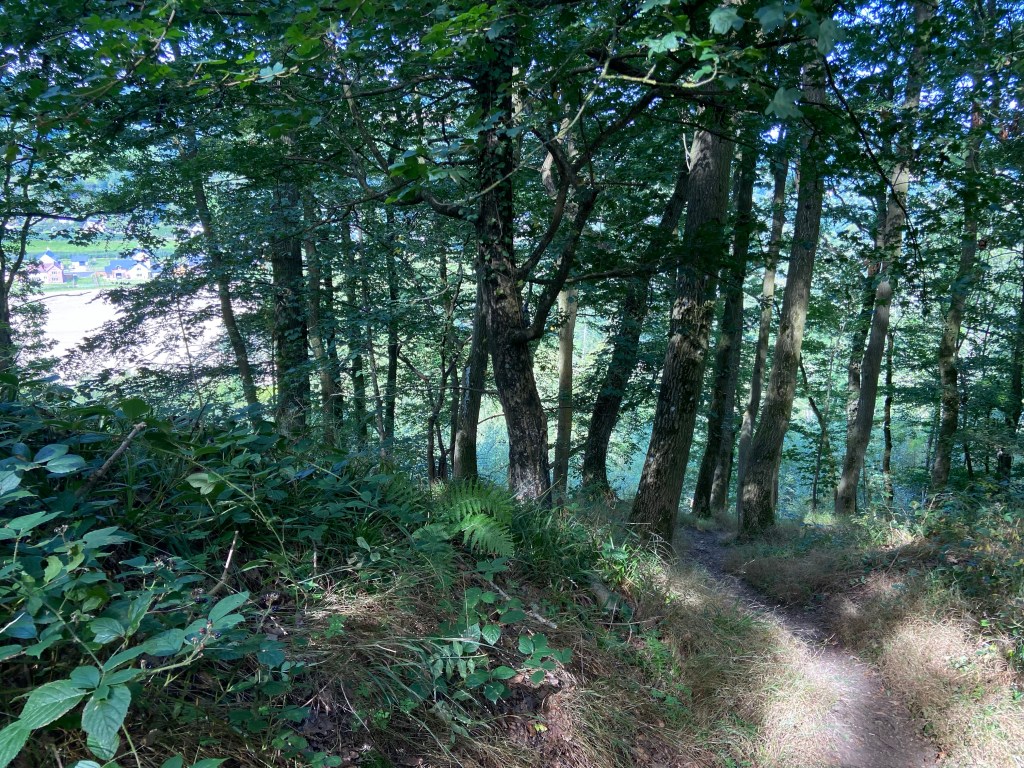
I crossed a wide, grassy track running through the wood, and suddenly realised that I had come across a snippet of a long ago walk with Stephen and our small children. It must have been around the same time of year, because what triggered my memory was the riot of rosebay willowherb autumn foliage, the last few flowers, and the silken seed heads. Not far from here is the National Trust estate of Croft Castle, and I believe this wood marks the southern end of it. The hill I had walked up earlier also overlapped with another walk, more recent, during which my back had gone into spasm. I must make jolly sure that I carry on stretching religiously, morning and night, to prevent this from happening again!
The woodland path gave out onto idyllic parkland with huge mature trees, and the last of the dew on the meadow grass, refreshing as it was kicked up onto the back of my calves as I walked. I was glad my feet were dry and snuggly in my boots and not sodden for the rest of the day in trainers. I checked the map and I thought I had enough time for a little just-over-three-hour sit-down, so I parked myself on the shady side of a style to rest a little, and enjoy the surroundings both on a grand
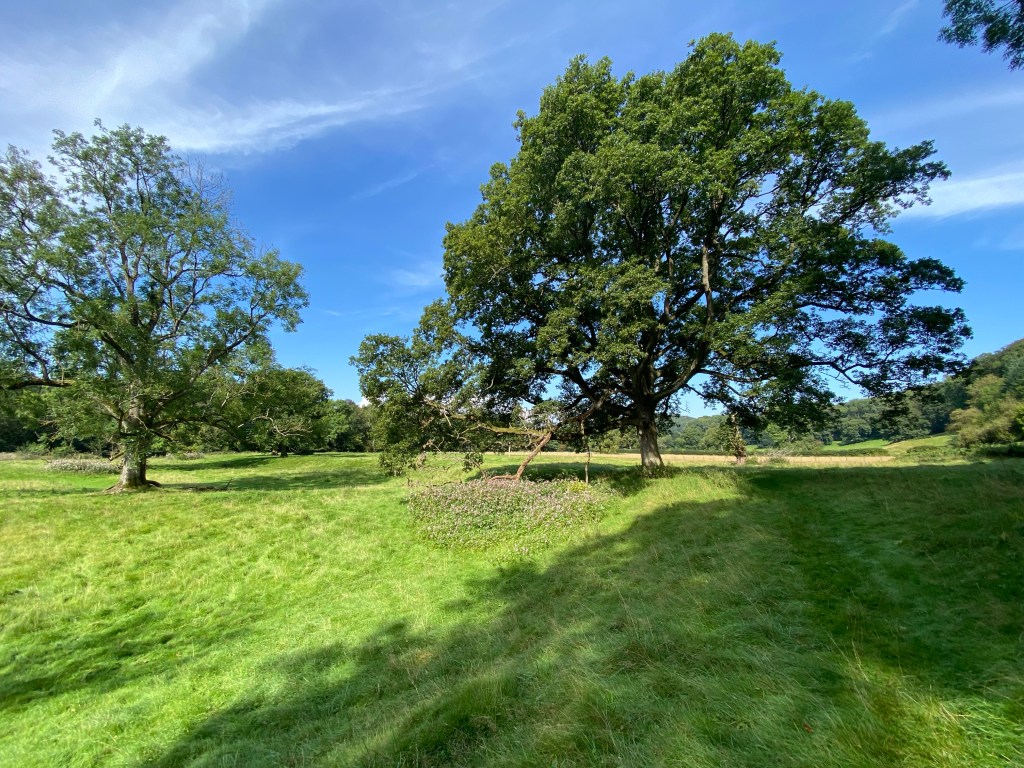
and on a small scale.
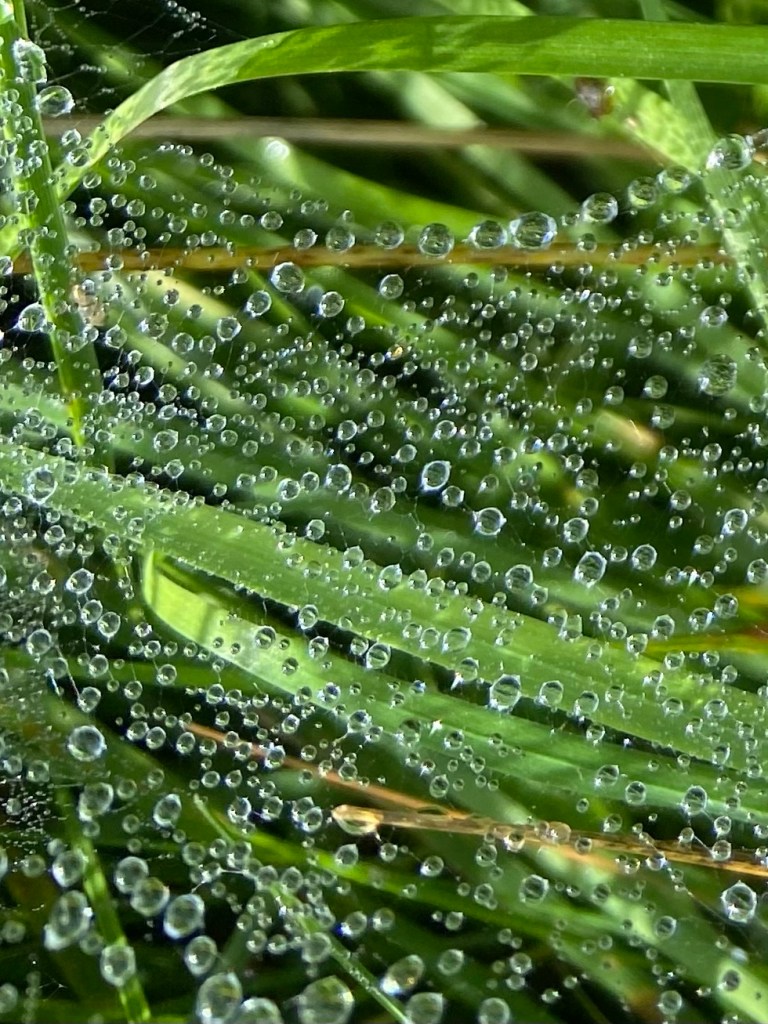
I was forced to move when a young family needed to cross over the style upon which my backside was parked. They were doing a circular 6-mile walk based around a pub in the nearby village of Aymestree. Apart from needing to move to let them cross over the fence, the mention of pub was a timely reminder to me that I need to get a wriggle on to make sure I reached Lingen in time for my roast.
A Victorian signpost pointed the way, and I set off up a very narrow country road that I remember driving along with Stephen when we parked our car near the pub I was making for today and did a circular walk in the area. I remember exclaiming over the vertiginously engineered wall of a kitchen garden built onto a steep bank on the side of the road.
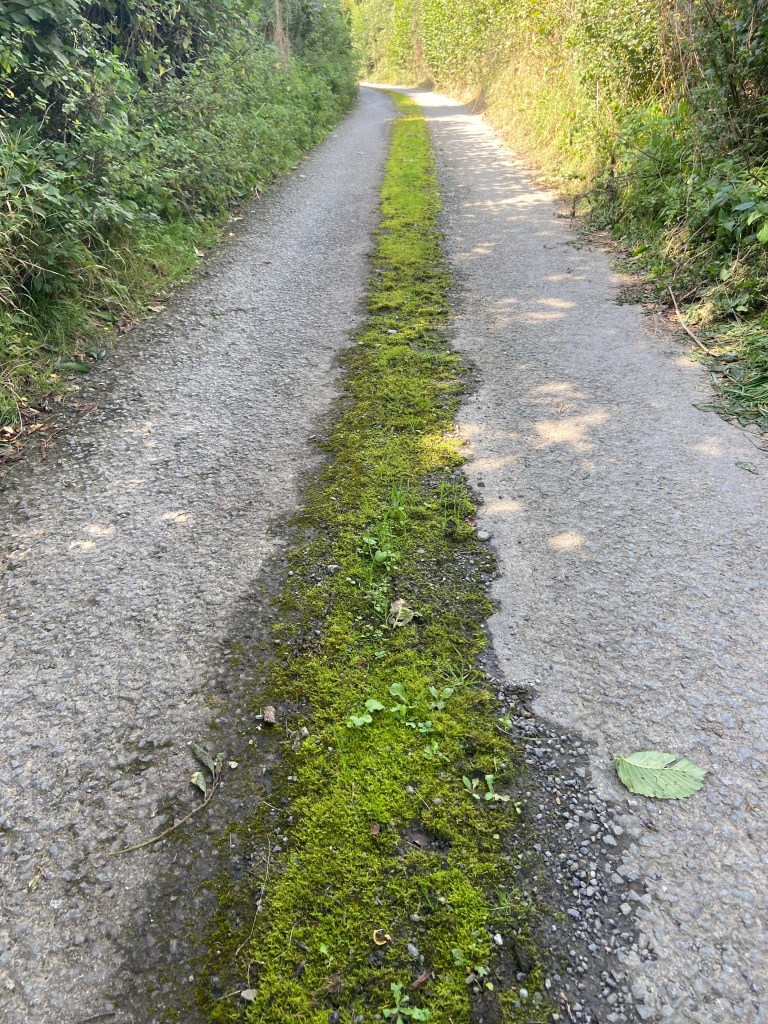
The road gradually grew more and more esoteric, with moss and grass and wildflower seedlings in the middle of the road, and as I got further into the wooded hills, the air carried with it the evocative scent of pine trees.
I nibbled on one single elderberry. I had looked at the September chapter in Stephen‘s foraging book last night, and most of the options appeared to be fungi. There was a sizable chapter on deadly and poisonous fungi as well, and I’m glad I don’t have to rely on feeding myself on potentially fatal food found by the wayside. I don’t think elderberries are poisonous raw, but I didn’t really want to risk it. I only had a tiny one. It tasted of… elderberry… but I spat out the seeds, just in case.
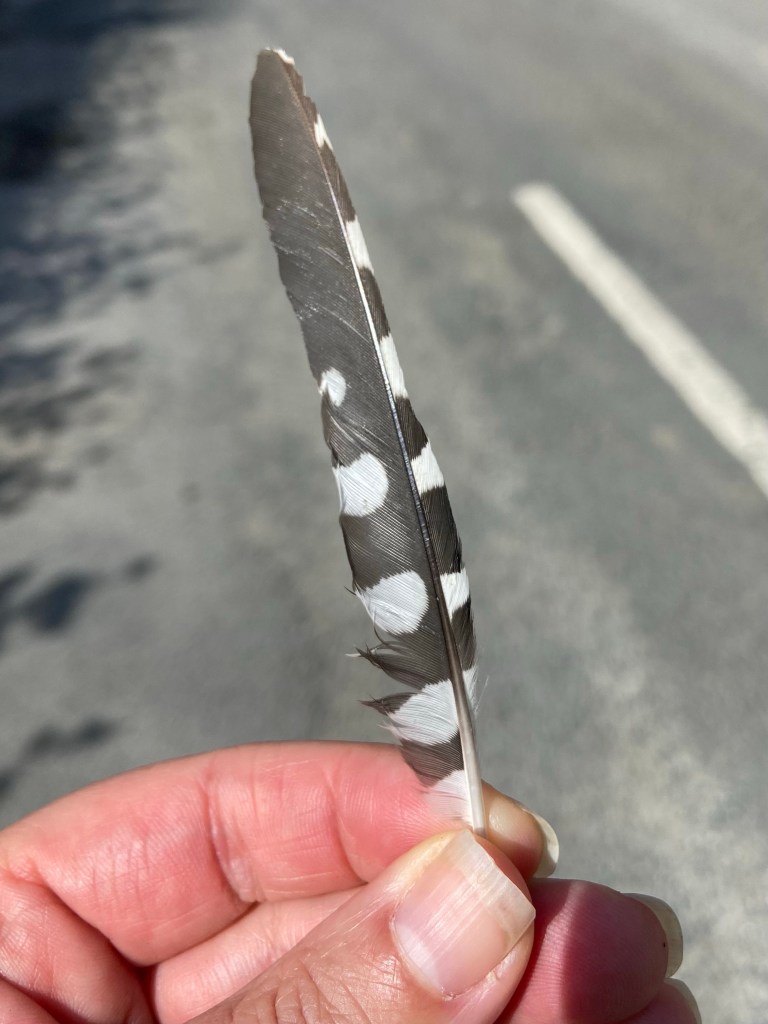
The road gifted me a squashed hornet on the tarmac, a shuddering inch and a half long, and today’s feather which I think must be a great spotted woodpecker. I kept it safe in the back of my phone case to give to mum when I get home, for her hat-band.
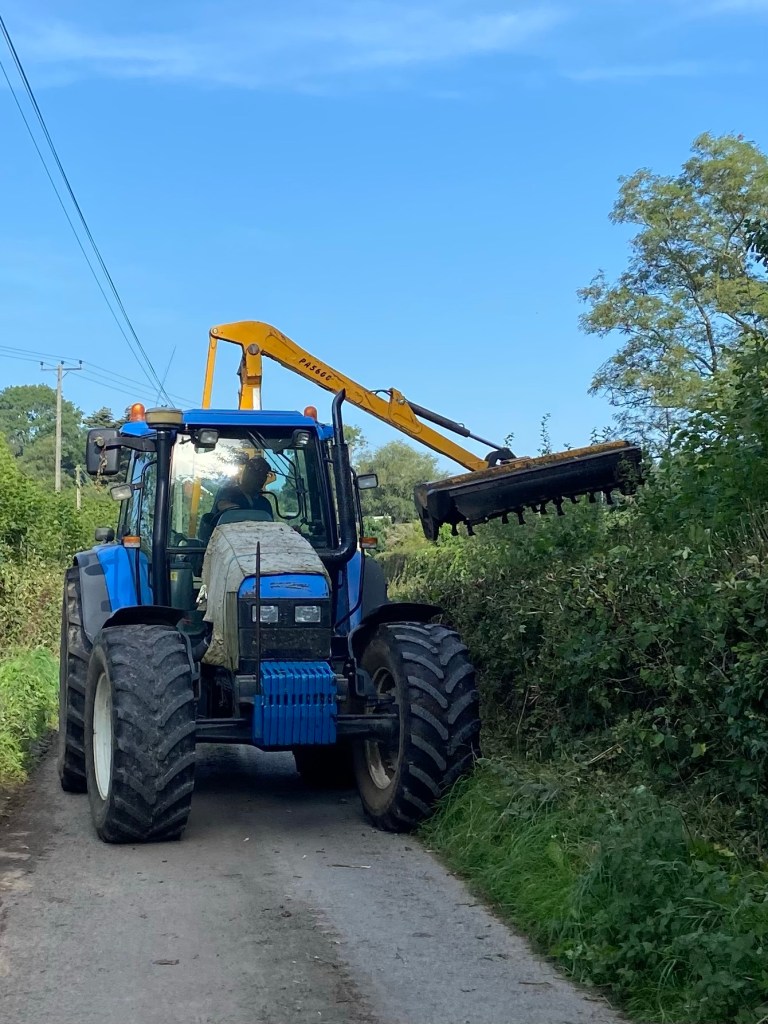
I missed a turning (I’m not sure how … I must have been completely distracted) and had to take a slightly different combination of increasingly tiny roads to get to Lingen. I discovered that I had gifted myself a punishing extra 100m climb up a road in the hottest part of the day. A tractor pulled out of a farm entrance in front of me and powered effortlessly up the hill, filling the narrow road with dust and diesel fumes. Its numberplate was something like VX66 HUH. ‘Huh,’ I huffed to myself, silently.
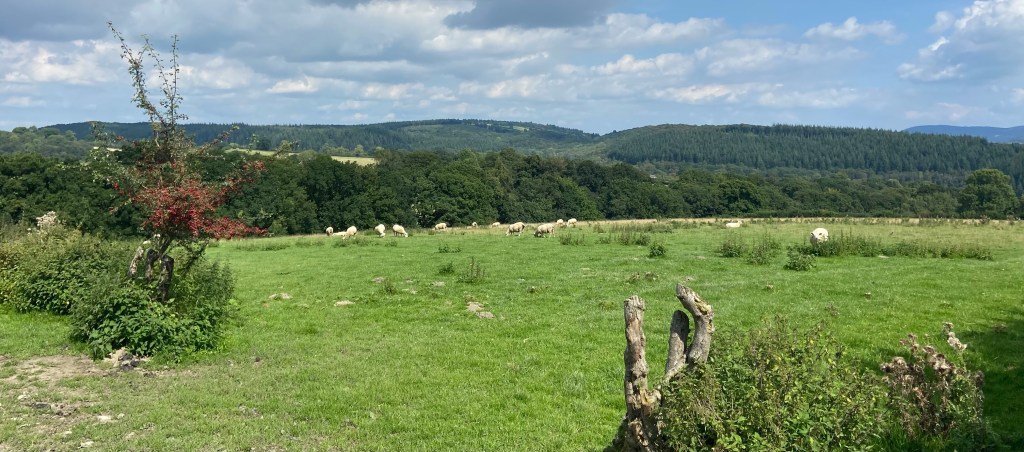
The hill climbed up and up. I could feel my heart thumping in my chest and I kept taking gulps of water to replace the liquid I was sweating out freely. But I felt energised and healthy. My breathing and heart rate returned to normal pretty quickly at the top. Hauling the pack up the hill (the weight hadn’t felt at all bad today) must be strengthening my bones. And the views from the top were terrific.
My feet were feeling it somewhat by the time I had descended the two kilometres of steep hill corresponding to the two I had slogged up. I had remembered Lingen as a pretty little village and I wasn’t disappointed: the first garden I came to had a fantastic display of uplifting sunflowers, just the sight I needed to spur me on to make it the last hundred meters or so to the pub.

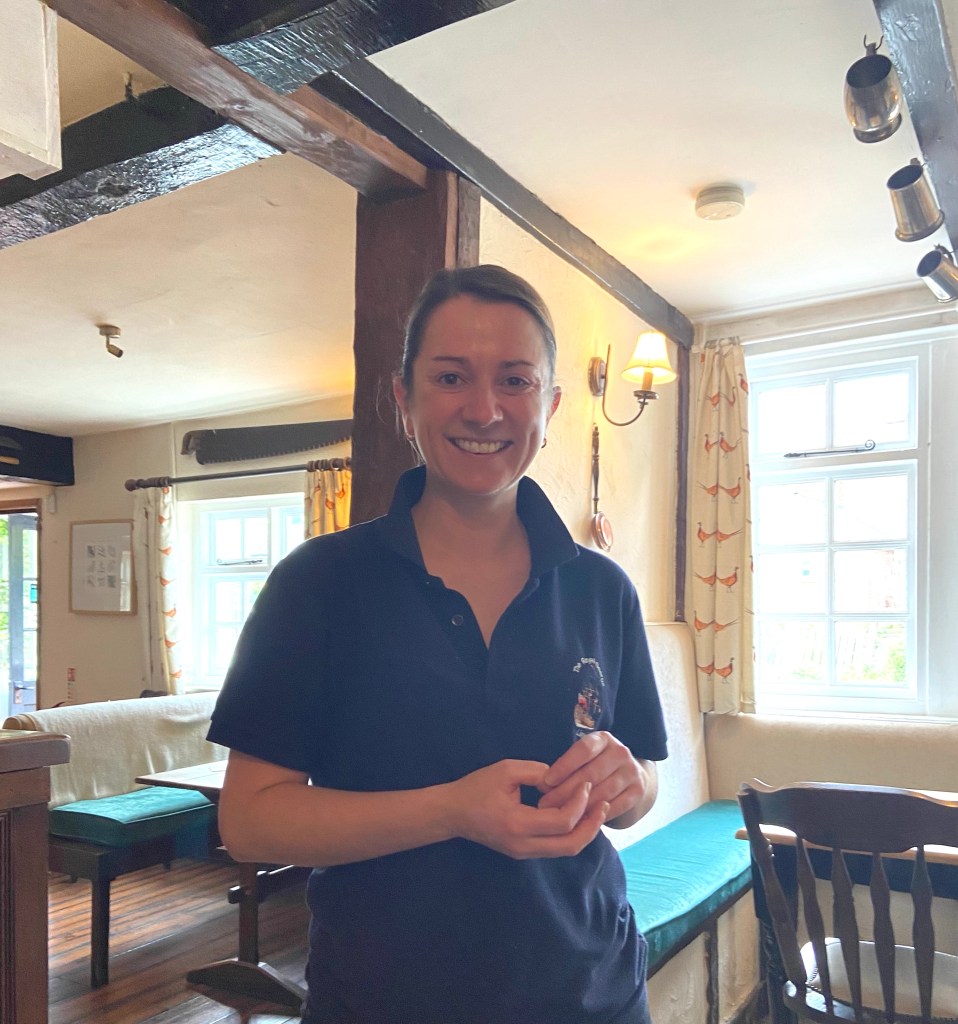
The Royal George was a gem. Full of gossiping locals, one sounding exactly like my next door neighbour Ed (I checked, but they are no relation). I sank gratefully onto a padded seat and took my boots off, rejuvenating them with the little yellow massage ball from my pack. Jo the pub landlady bought the pub 14 months ago … she had grown up in the village and promised herself twenty years ago that she would buy it. And she did!
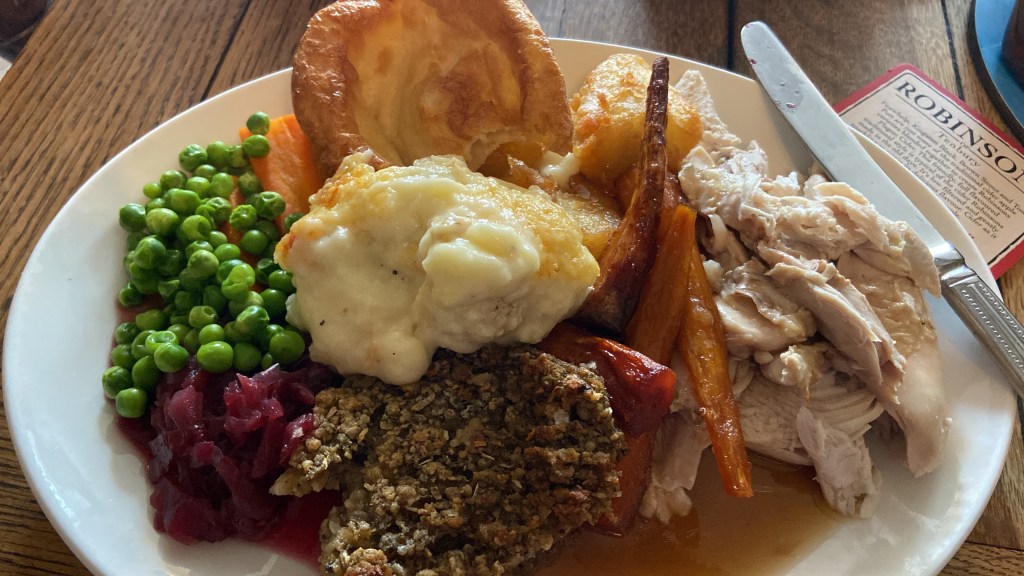
I started to get excited about her roast chicken when she put four mats on the table — and sure enough they ended up groaning with all the trimmings. I really tried to do full justice to this wonderful meal … but it bested me. Jo boxed it all up, together with the prawn ciabatta I ordered for supper/ breakfast, and I crammed it all into my pack.
I was out of drinking water now, but was well rehydrated from my 90 mins in the pub. My feet in particular felt really well rested, and I swapped my socks over and strapped my boots on again. It was under 3 km to my campsite, over a couple of sheep fields and up one final testingly long, steep hill.
Willey Lane Farm advertises a ‘camping field’, but in reality, it is a lavender farm with a tiny orchard with two beautifully appointed yurts. The whole place is immaculate. I pitched my tent at the top of the lavender field, looking eastwards over the orchard and down the valley in anticipation of a sunrise. They cut it in the last week of July, so if you would like to come and stay in their idyllic valley, June and July are your best months. Such a reward for the efforts of the day!

 Walking The Landscape
Another good read, allowing another lie in. Imagining you already on your way. Have a good Monday. X
LikeLiked by 1 person
It was H O T!!
LikeLike
Oh my! Wh
LikeLiked by 1 person
Thanks for the link to the campsite!
LikeLiked by 1 person
😘
LikeLike