
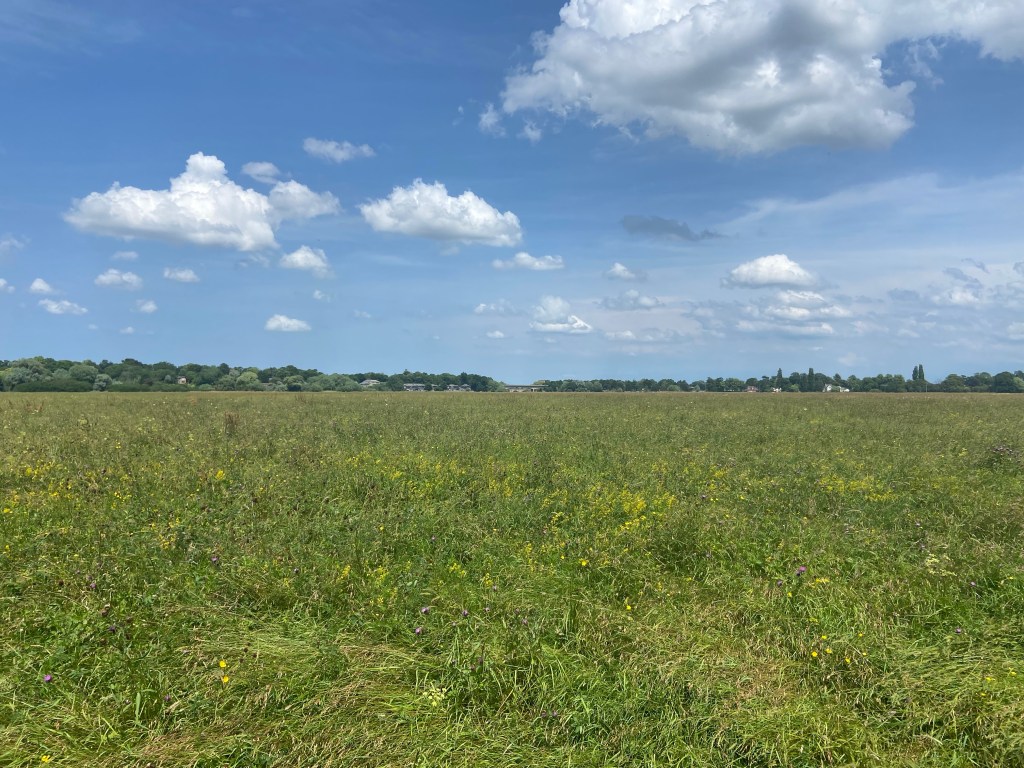
Once a hay meadow is gone, it’s gone.
Professor John Rodwell
It was to be a short day today — and with an emptied-out pack, as I am staying with Jacqueline for two nights. I just put in the necessities and added extra water, and left the tent and all my spare clothes in my bedroom when I set off. What luxury.
I didn’t realise it until I checked the map this morning, but when I got to the outskirts of St Neots last night, I had crossed over into the seventh and final county. I had started in Herefordshire, then walked through Worcestershire, Warwickshire, Northamptonshire, Buckinghamshire and Bedfordshire, and now the whole of the last three days walking were going to be in Cambridgeshire.
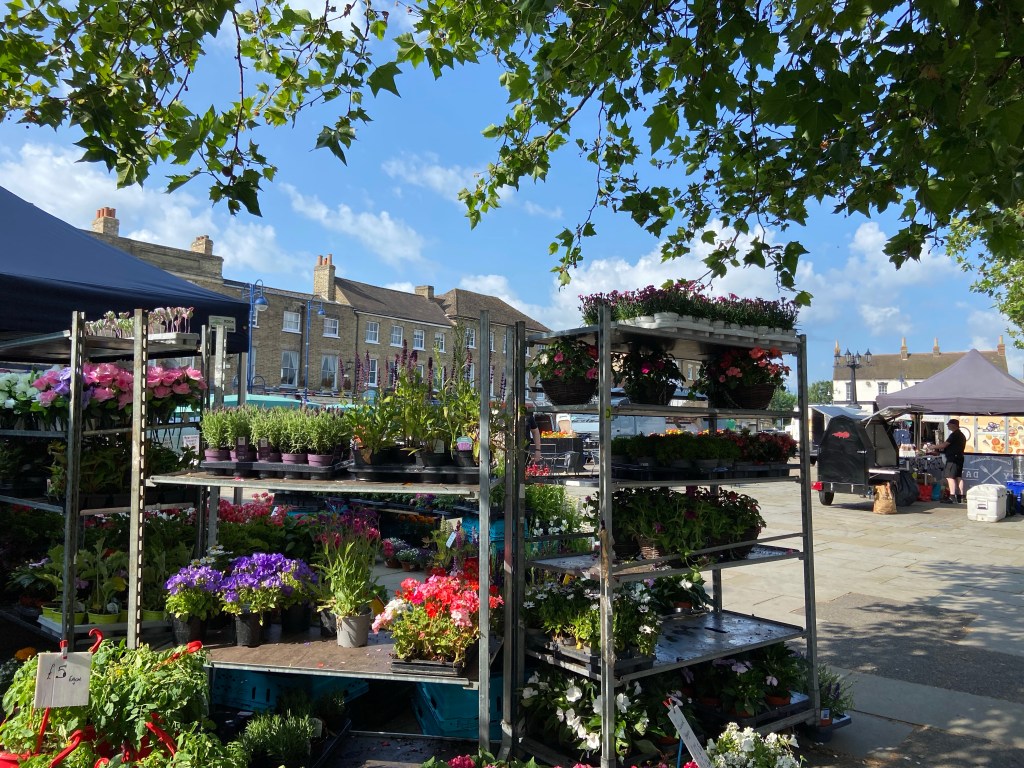
The bus worked like a charm and I arrived back in St Neots on market day, the square filled with stalls selling plants and pasties and handbags and — mobility scooters?
My route led me swiftly out of town to the north through the enticingly-named Priory (site of), which turned out to be a car park. Ah well — even the least prepossessing car park might hide the long-buried body of a king.
North of St Neots lies an important Lammas Meadow. These were traditional common meadows where grazing and hay-making was strictly controlled but shared out equally between everyone living in the parish — the ‘commoners’. The ‘Lammas’ in the name is Lady Mass, the first of August, when the hay making was over and grazing could begin. The field regularly floods so has never been ploughed, and as result is full of wildflowers and is a SSSI.
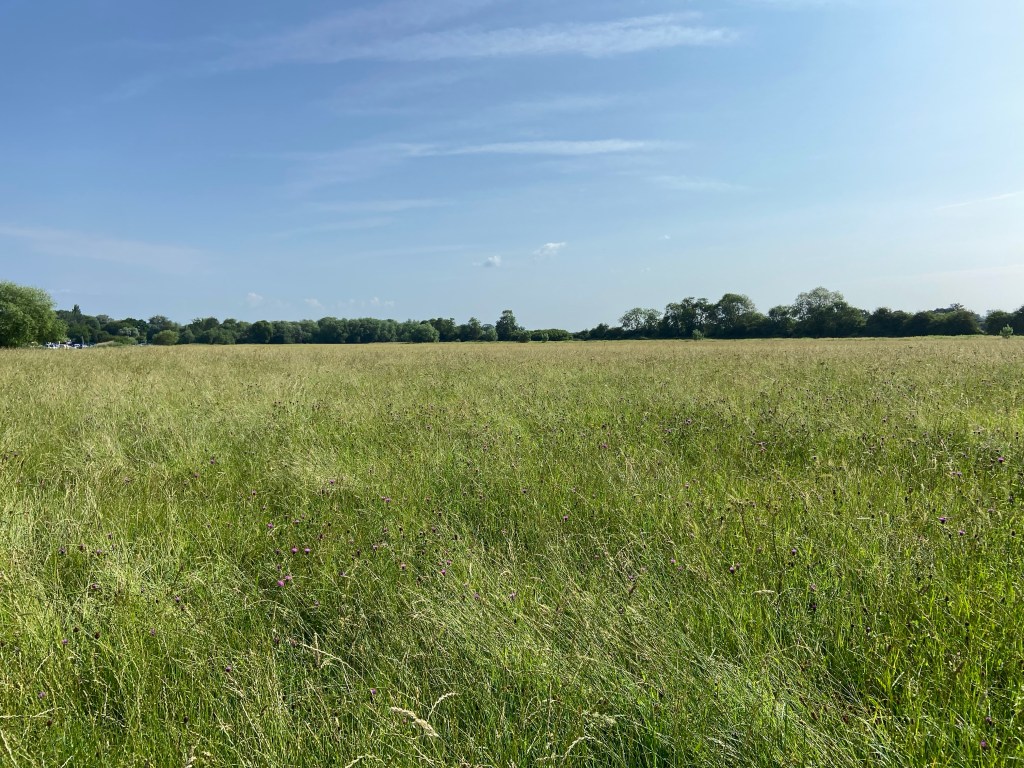
It was a huge meadow, with ryegrass and nettles at its outer edges but getting more interesting as I got deeper into it. Most of the spring flowers are well over now and the meadow wasn’t looking at its best, but the river snaked round the outside, and the Ouse definitely was putting on a fine show.
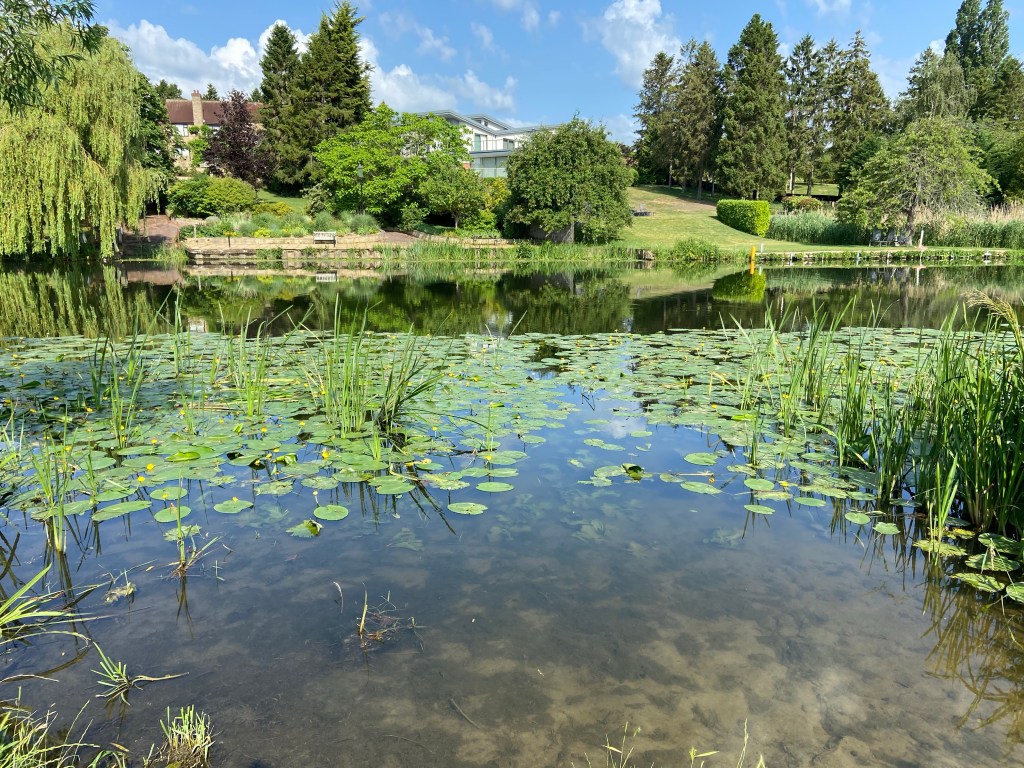
I stopped to watch the dragonflies and fish in the water — until I got bitten by a horsefly, and my romantic view of Lammas Meadow vanished in one snap of the tiny scything jaws. I hurried on, but could not stop myself pausing to take another irresistible photograph, this time of horizontal ripples on the water
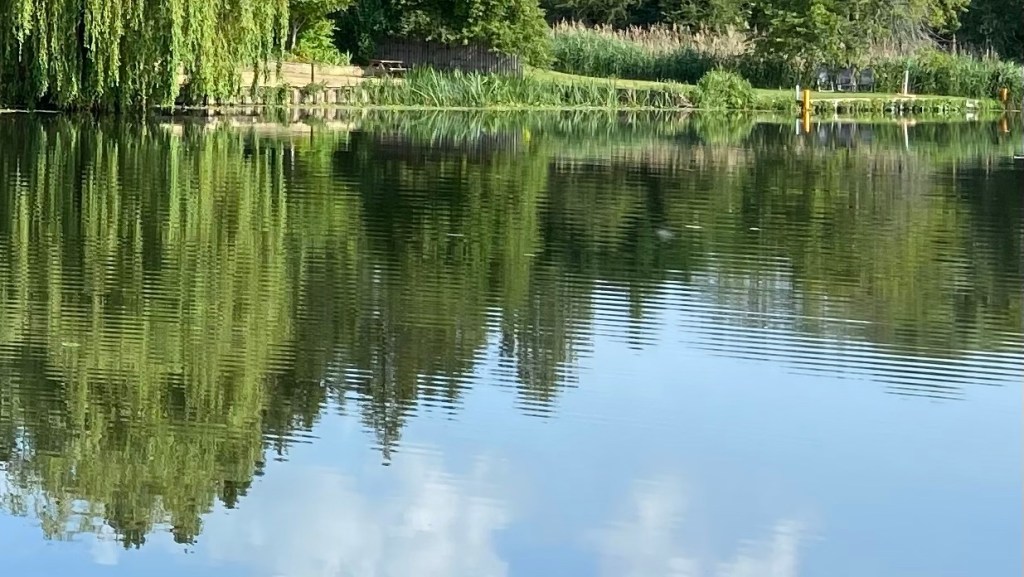
— and got bitten again. The only way to protect myself would be to put on my full body waterproofs, but then I would boil in the bag. I just stamped on through the meadow, whirling my poles like a kind aluminium fly swat and grumbling to myself. When I stopped to consult the map for the way out of the meadow, I got bitten for a third time!
On the other side of the gate outside of the blasted meadow was a huge field of very interested cows. I am so much more frightened of horseflies than I am of cows, so I just opened the gate and barged straight through the cows and their calves. One cow trotted smartly along on the other side of the drainage ditch keeping pace with me as I strode towards the road, and as soon as she found the opportunity she crossed the ditch at a dried up section, and had a go. I brandished my poles threateningly, and made repressive noises, which stopped her in her tracks. Thank God for poles. I looked back later to see that she and a tiny calf standing thigh-deep in the ryegrass were gazing at each other… so she probably considered that she had seen off a calf-rustling intruder. But in reality the horseflies had seen to that.
I needed to detour off the route and find a pharmacy to supply me with cream to put on these bites as soon as possible. There was one, in the middle of the village of Little Paxton, from where I could get back out to the Paxton Pits reserve as I had planned. While I applied the cream and swallowed a pill right there in the pharmacy, the pharmacist told me not only that there was something of a horsefly problem in the area at the moment (which fact I had independently discovered for myself), but also that there was a nasty stretch of the forward route where the ground was pretty unstable because it flooded so much, and was overgrown and weedy. This was useful intel, so I changed into the long trousers that I had (fortuitously) put into my pared-down pack today. As well as giving me some protection from the nettles, it would also deter horseflies.
From there, it was a short walk into the Paxton Pits Reserve.
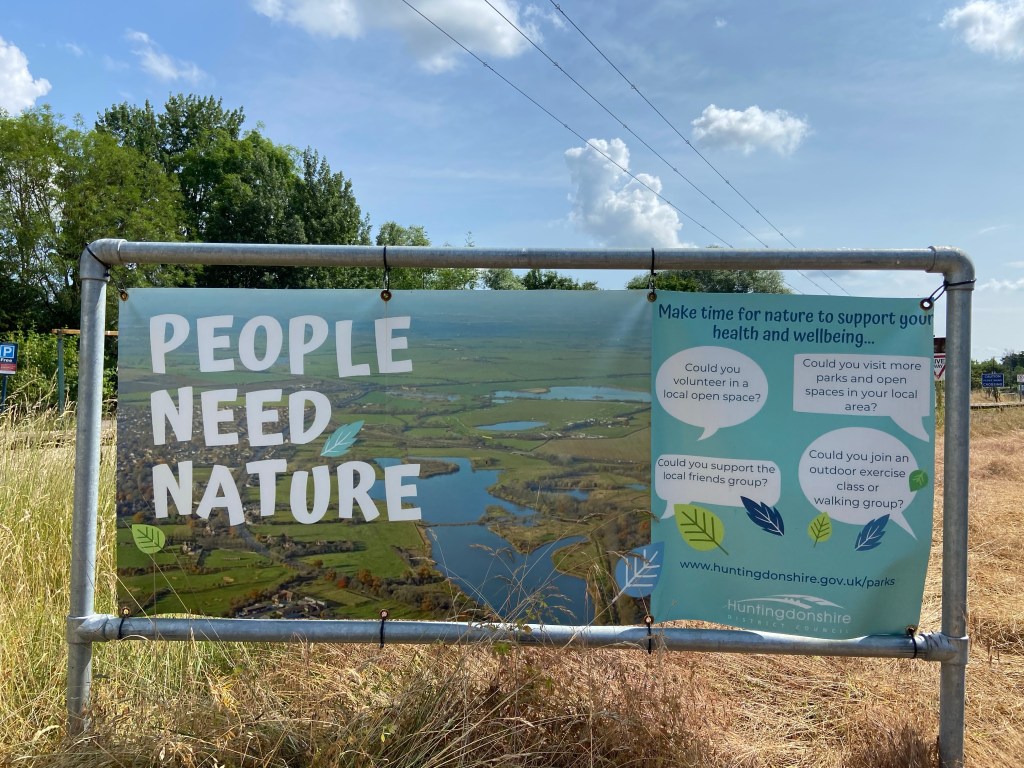
In comparison to the other reserves I have walked through in the last week, this one made visiting really easy: there was a thriving visitor centre, with knowledgeable staff who put their heads together and suggested that the most likely place for me to see a kingfisher would be the Kingfisher Hide; it lay a few tens of meters from the line of the Ouse Valley Way and I had planned to come briefly off my route there anyway, although because of the antihistamine detour, I was seeing much more of the reserve than I otherwise would have done. Walking through the reserve to get to the hide also felt a rich experience: the level of interpretation and information here is really effective and although it was late in the season, wildflower planting had been planned to last throughout the year, and screens shielded the network of lakes providing visitors with views of the water birds without disturbing them.
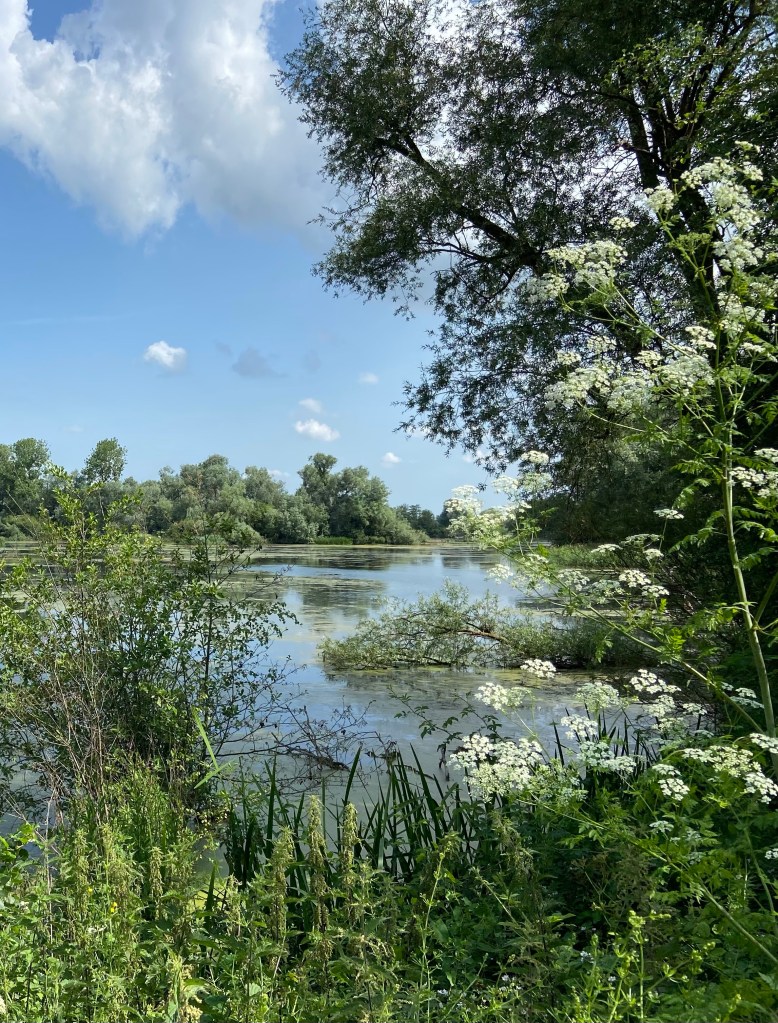
The gravel pits were excavated on the site of an old farm, and some of the original farming activities have been retained by the reserve. Crops of linseed, barley and other seed plants are sown , but are left unharvested to provide food for yellowhammers and other field birds come the autumn.
Other habitats are still being constructed. Nightingales are heard at the north end of the reserve but their preferred scrub habitat had been largely lost over time to agriculture and gravel extraction, and it is now hoped that in restoring their preferred habitat, nightingales will once again spread throughout the reserve.
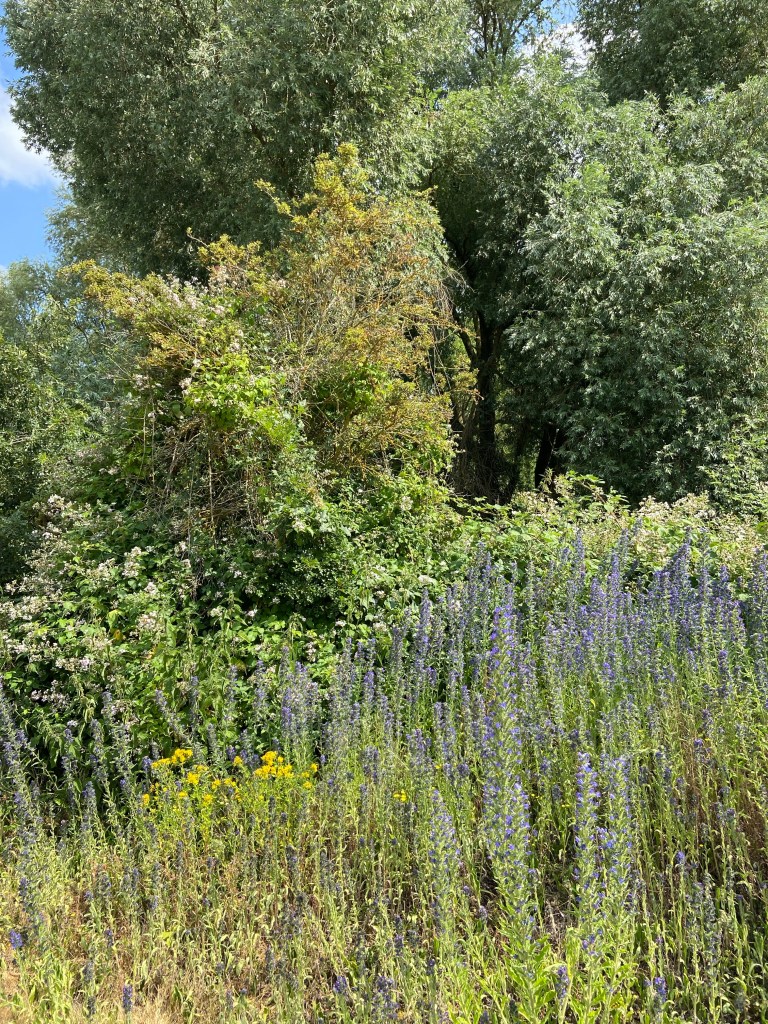
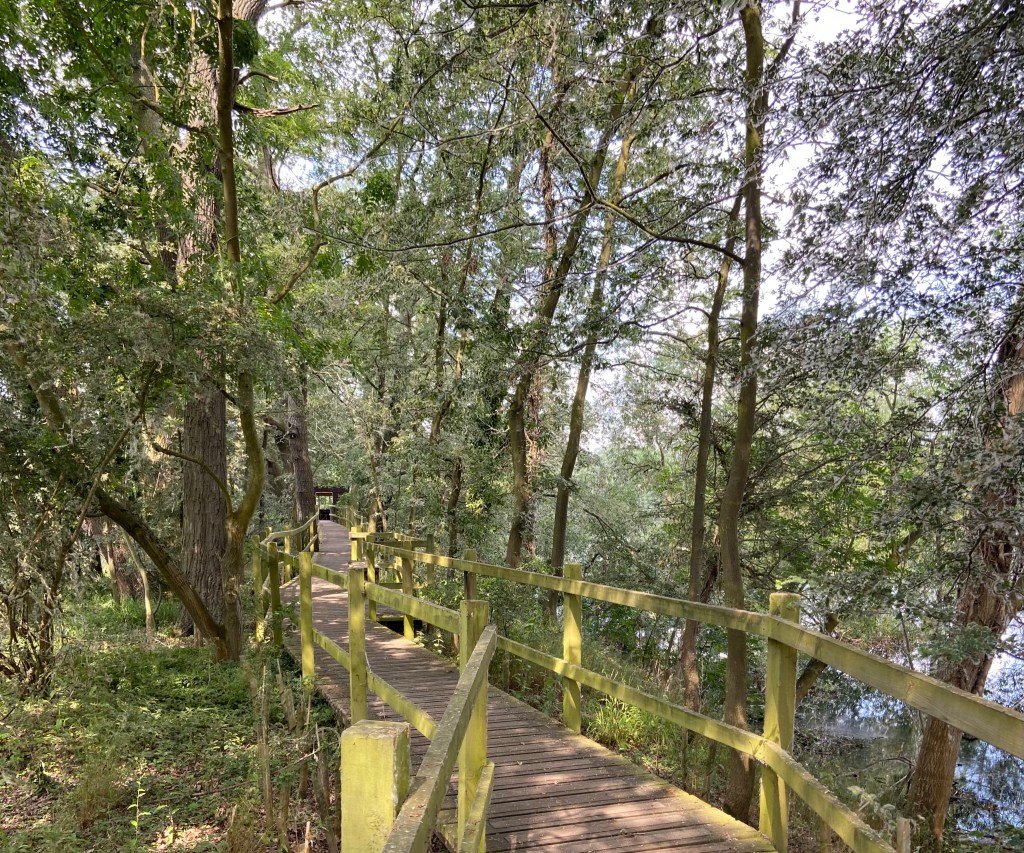
To get to Kingfisher Hide I wound my way along a walkway over marshy land now cracked and dry, past oak trees covered with the silky fluff from willows so that everything was grey.
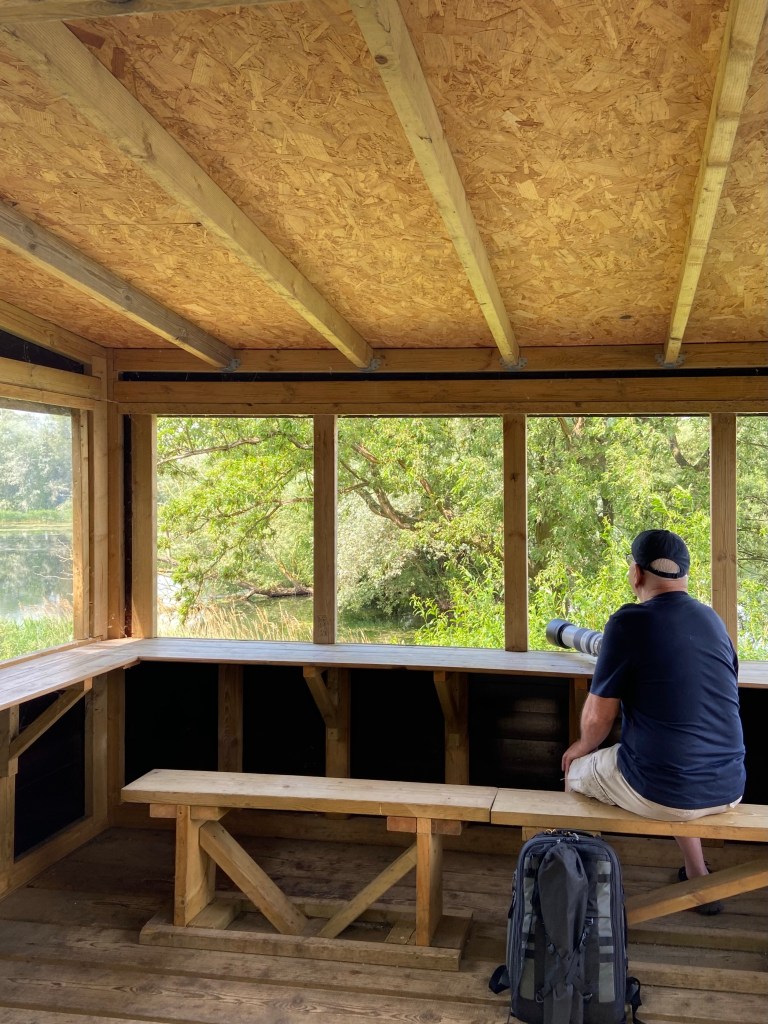
Kingfisher Hide lay at the far end by the water, facing a little island, where I found Dave with his long lens camera pointed at a willow lying in the water. He had seen a kingfisher there not ten minutes before, so we waited, chatting quietly, enjoying what would be peace were it not for a gang of raucous black-headed gulls squabbling noisily. Resident cormorants flew over regularly, and a tiny wren dashed across the channel in front of the hide to the little island, where it set up an excited peeping. We waited.
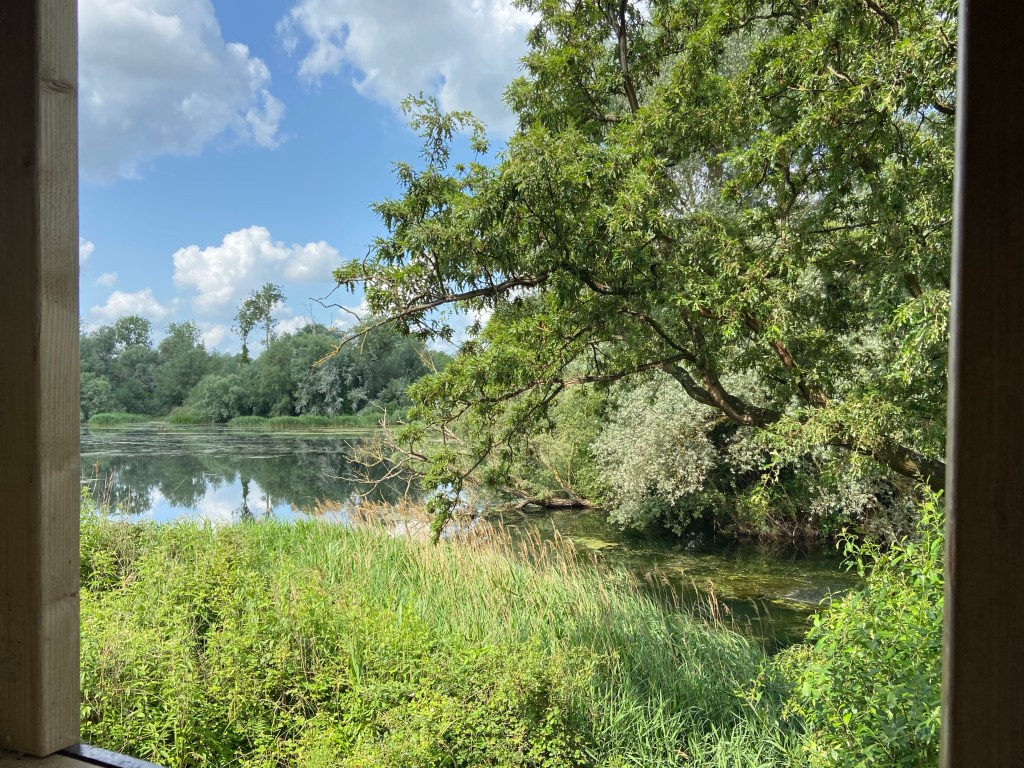
Suddenly, Dave said urgently “it’s back!” He scrambled to focus his camera, and I watched as the kingfisher flew up out of the ripples it had created to dive into the water to catch its fish. I just caught a flash of blue. And Dave caught a flash of blue similarly on his camera.
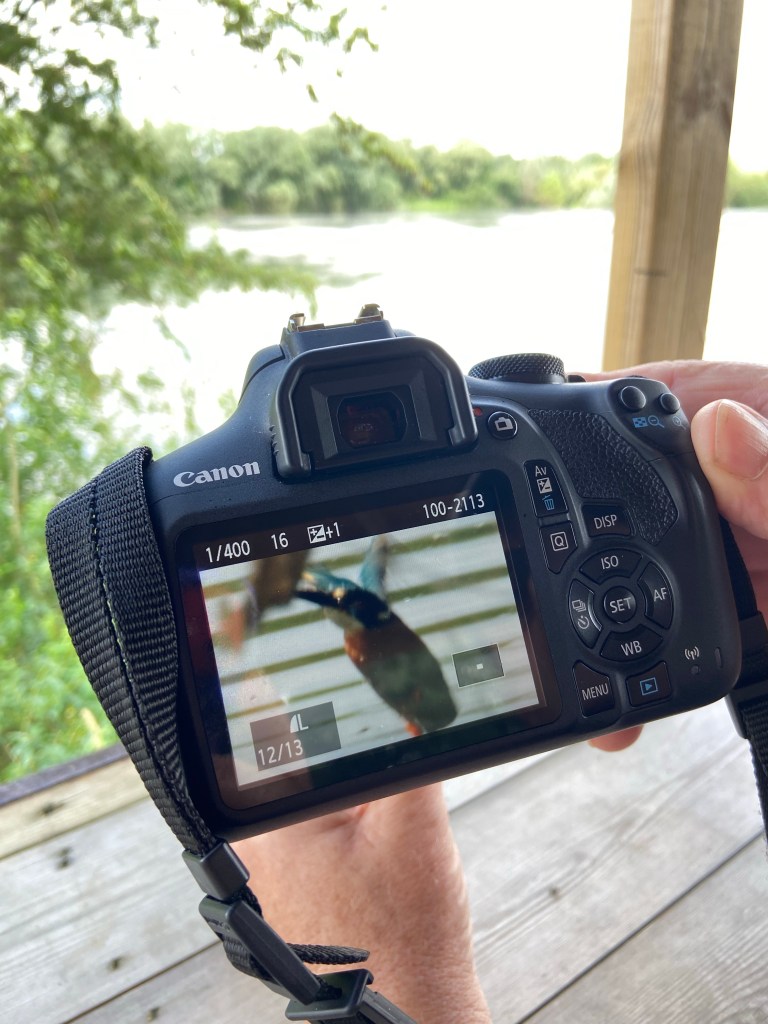
I had walked two weeks to see a kingfisher without luck. I know it takes a lot of patient sitting and waiting, and that walking a river or canal, sometimes with attention of necessity paid to the path rather than the water, is not conducive to wildlife spotting, but I had hoped. I would have loved to have stayed at the hide for longer, and to have seen the flash of blue again, but I had a way to go, so I regretfully left Dave, looking towards the kingfisher’s tree, and moved on.
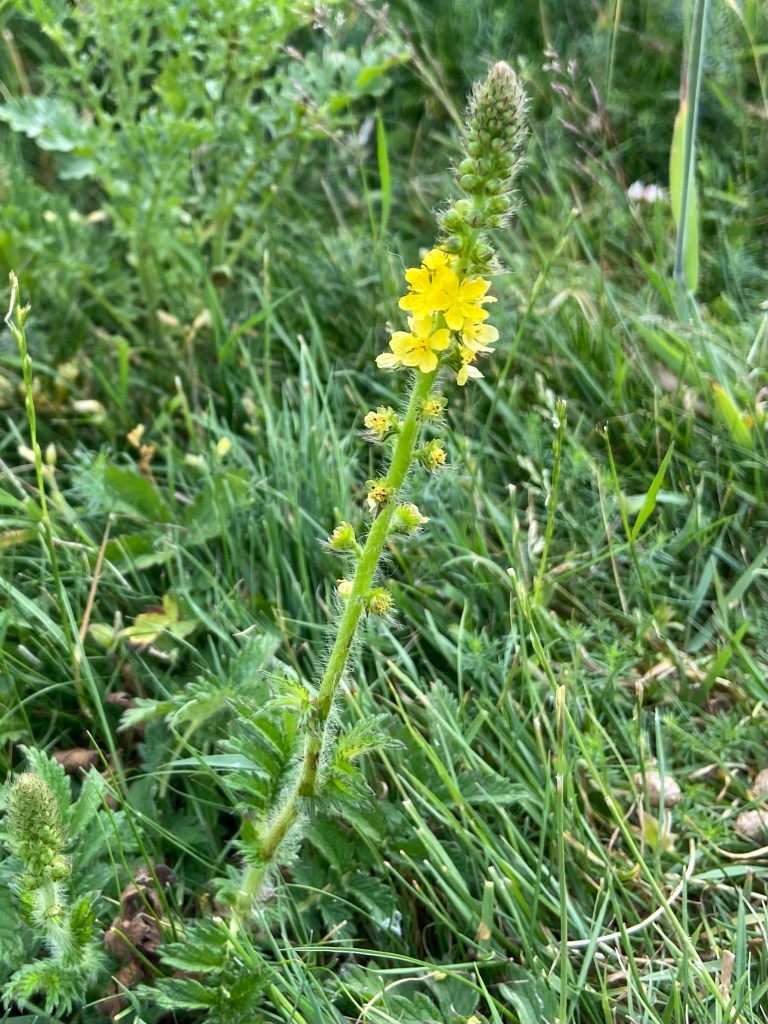
To get out of the reserve I walked through its meadow, full of agrimony,
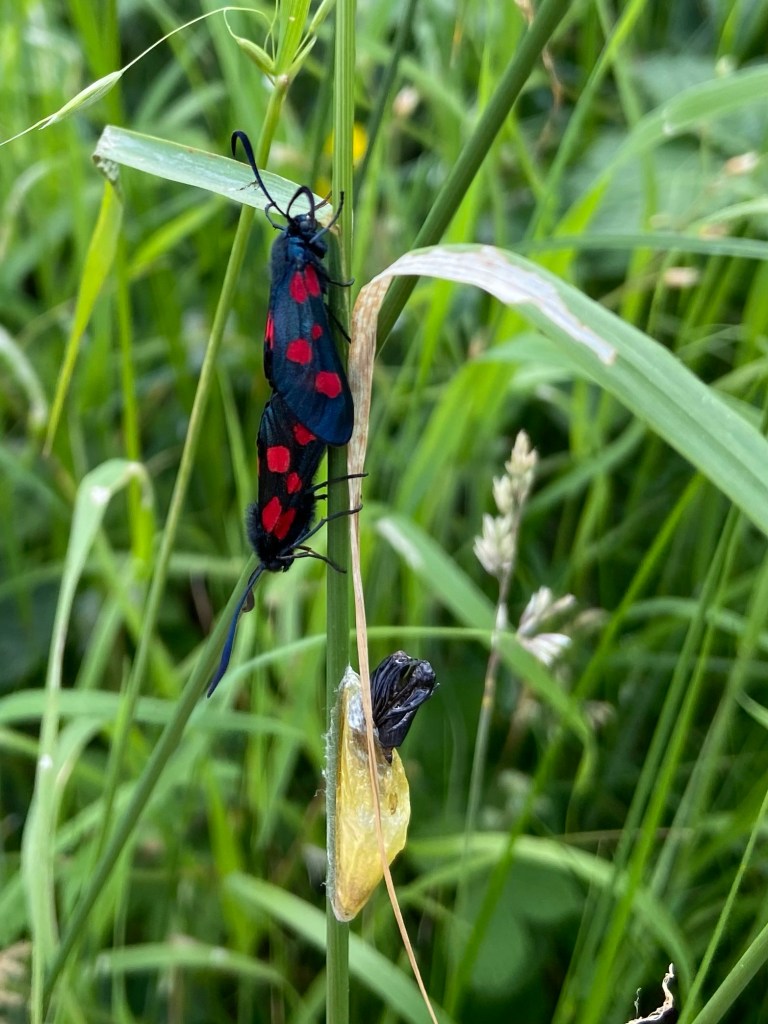
and six-spot burnet moths feeding on knapweed nectar and engaged in other activities.
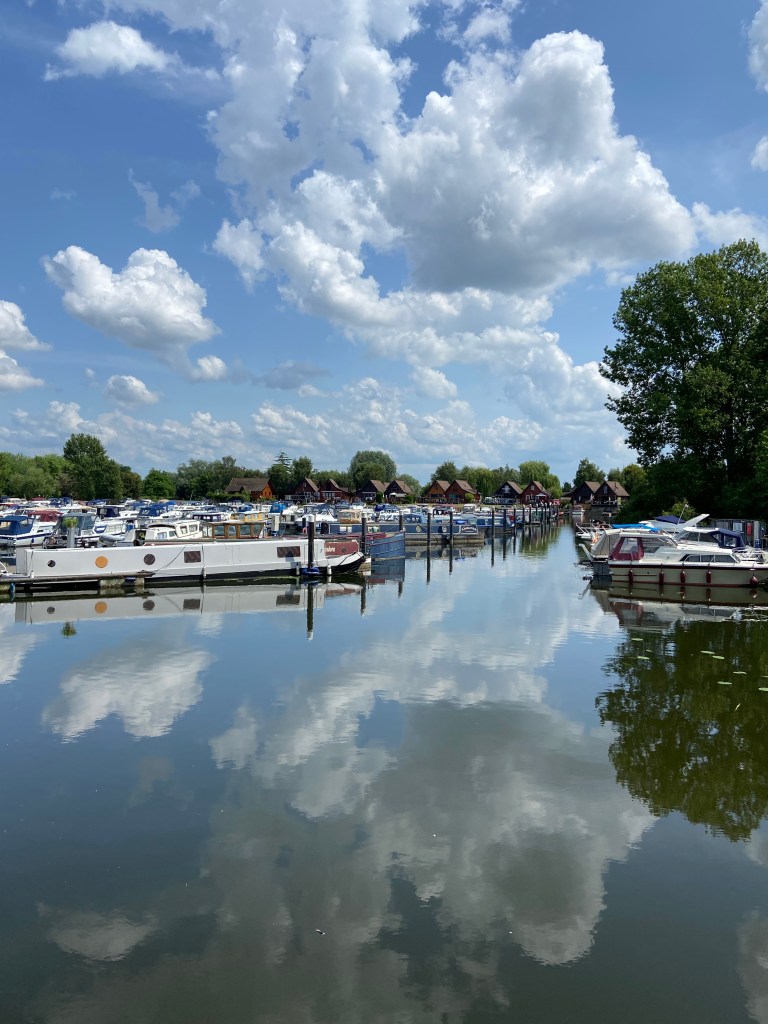
When I reached it the riverbank path was, as the pharmacist had warned, very overgrown. By the time I got to Buckden Marina I was extremely hot and sweaty and in need of a short break, so I asked at the Marina office to use their bathroom. It turned out to be a loo with a view and a half.
I walked on. There was no one on the path but me and the only person I met all day by the river was a man just back from Iraq, who was walking home from the train station along the river, ‘to enjoy a bit of fresh air’.
And so it was just me to see the living things and the growing things along the bank. It continued to be something of a fight through patches; there was a good deal of ducking,
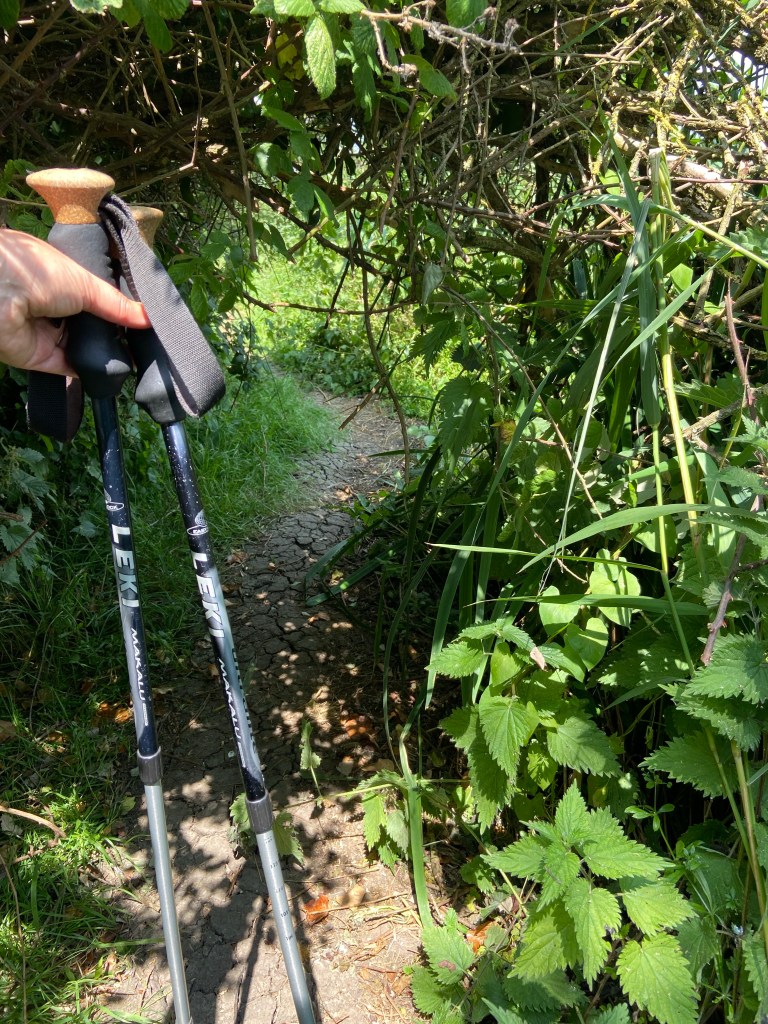
and once I had to get down on my hands and knees and crawl, but there was much of interest. A family of geese had set up home under the A421 viaduct
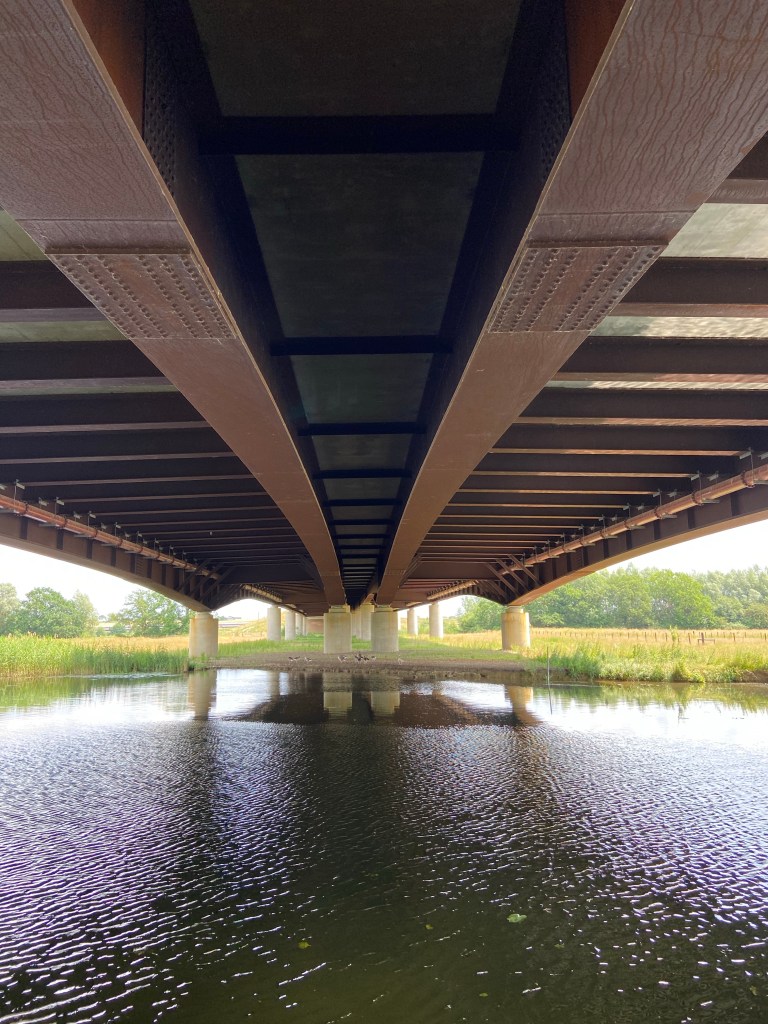
and the reeds were full of chattering buntings.
A pair of cormorants heaved themselves noisily into the air at my approach, the splashes of their take-off punctuating the water like skimming stones in reverse. A goose floated in an almost perfectly reflected sky,
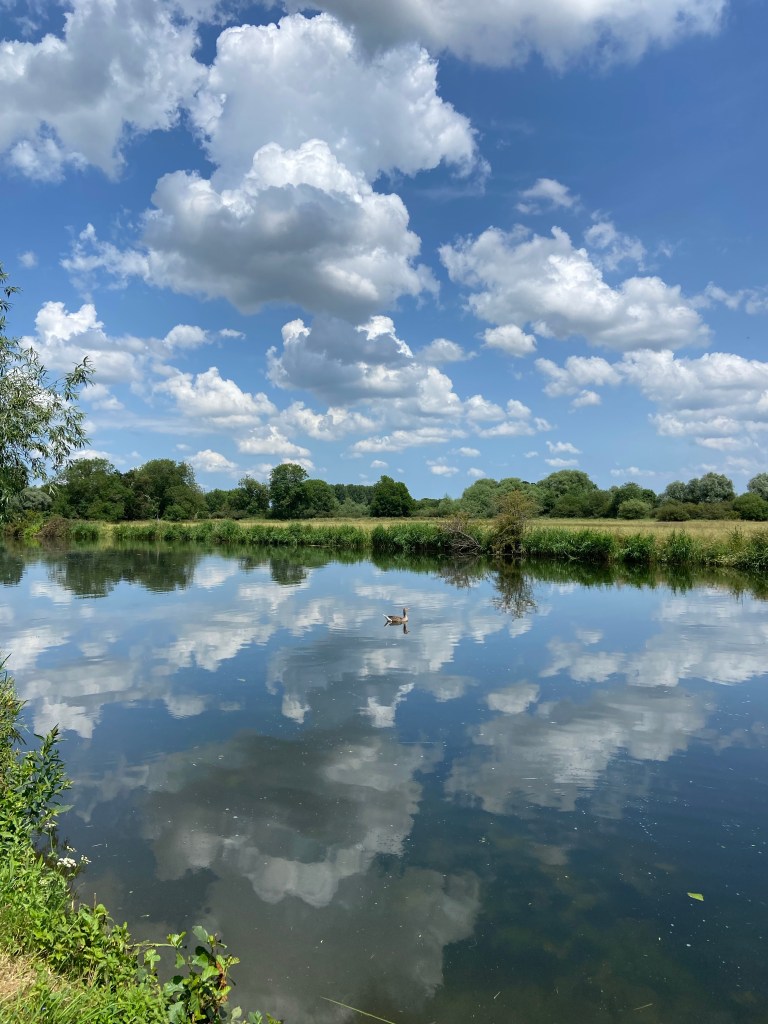
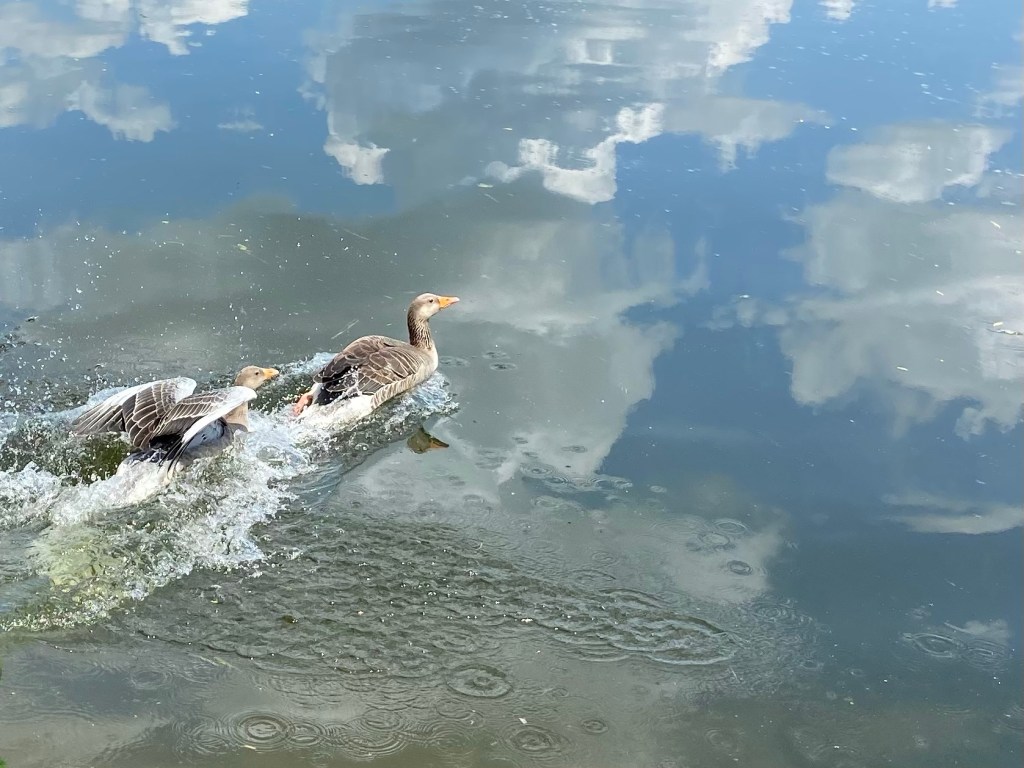
and the family followed it into the water as I walked past.
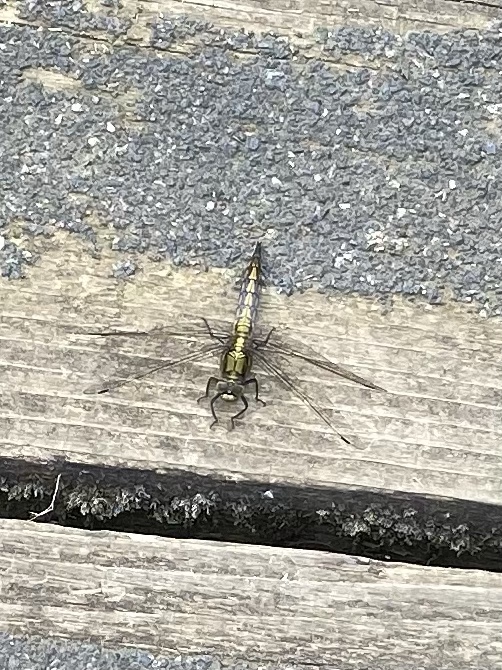
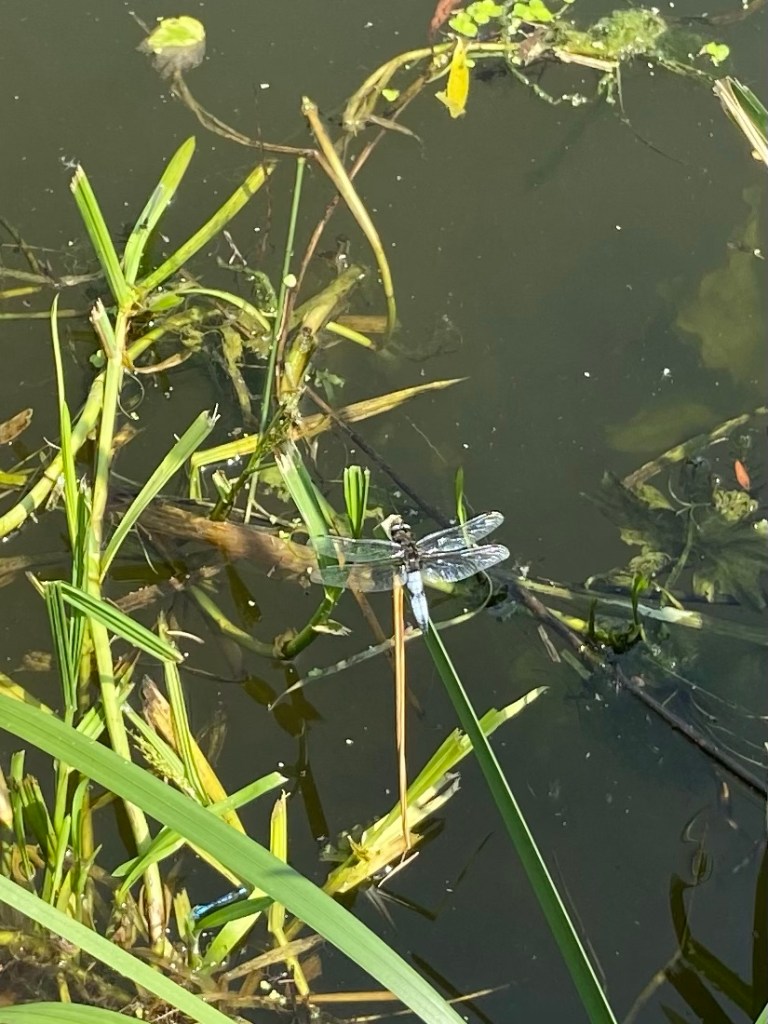
The reeds and bankside vegetation were full as usual of dragonflies, mostly broad-bodied and scarce chasers, as hard as ever to photograph with just a phone, although I had a go.
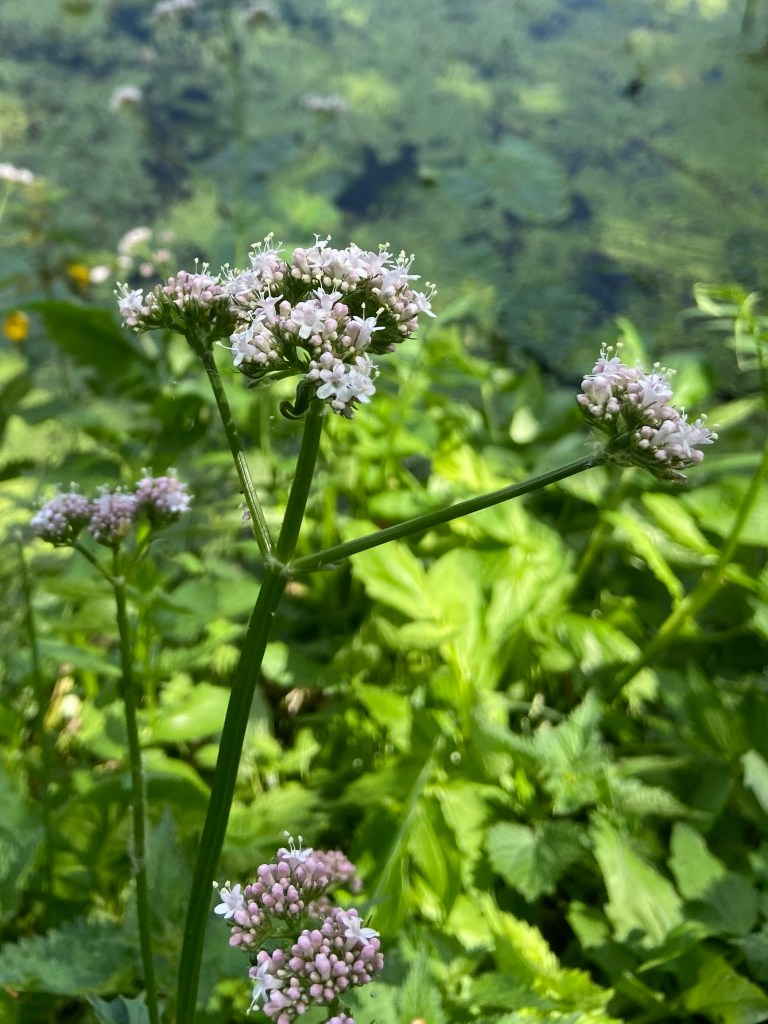
At one point I was stopped in my tracks by a delicious but unfamiliar smell and tracked it to a plant growing in the water margin. This was common valerian — very different to the red valerian that feels like an eradicable weed in Malvern gardens.
While I was smelling the scent my attention was taken by an insistent peeping sound from the tree above my head; I looked up and caught movement along the trunk. It was a group of three baby tree-creepers working their way along the wood, their mottled downy plumage camouflaging them against the bark.
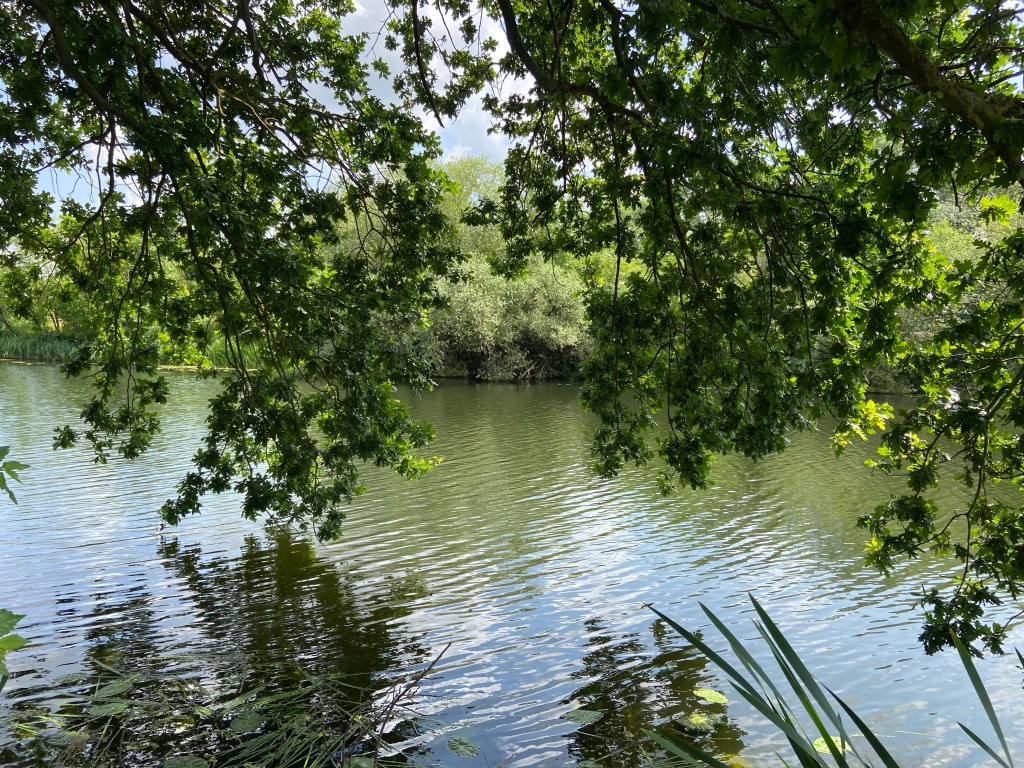
The trees in general were a beautiful feature, oak branches bending down to graze the water,
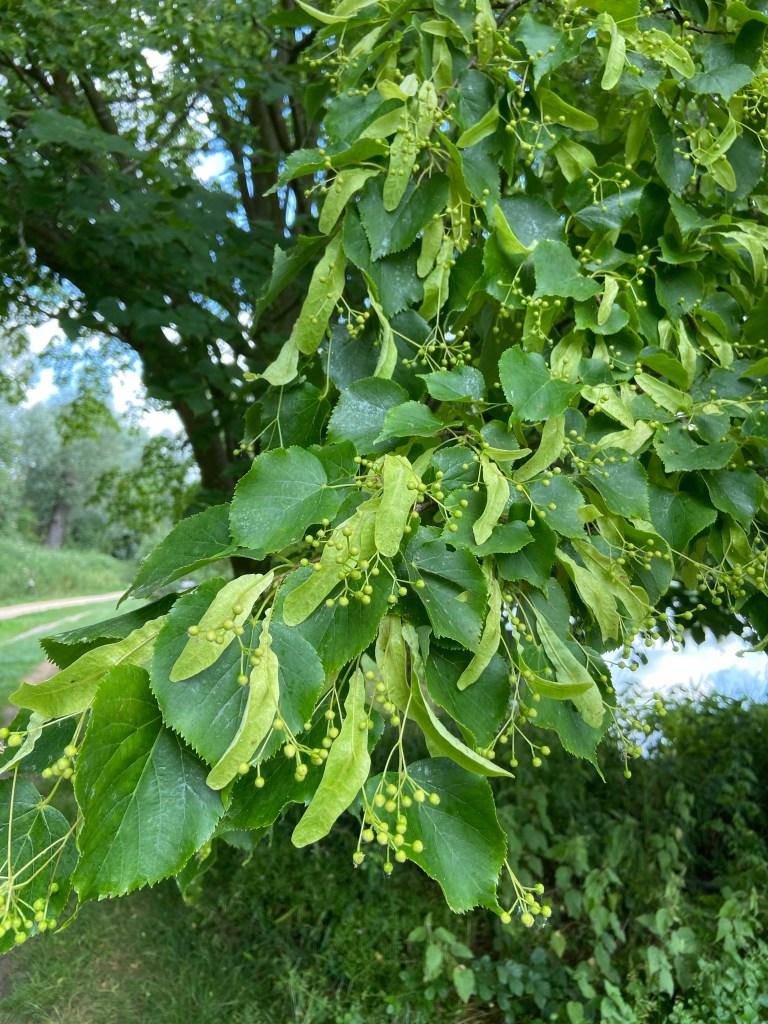
small-leaved lime providing attractive contrasts of shape, texture and colour in the leaves and seedheads,
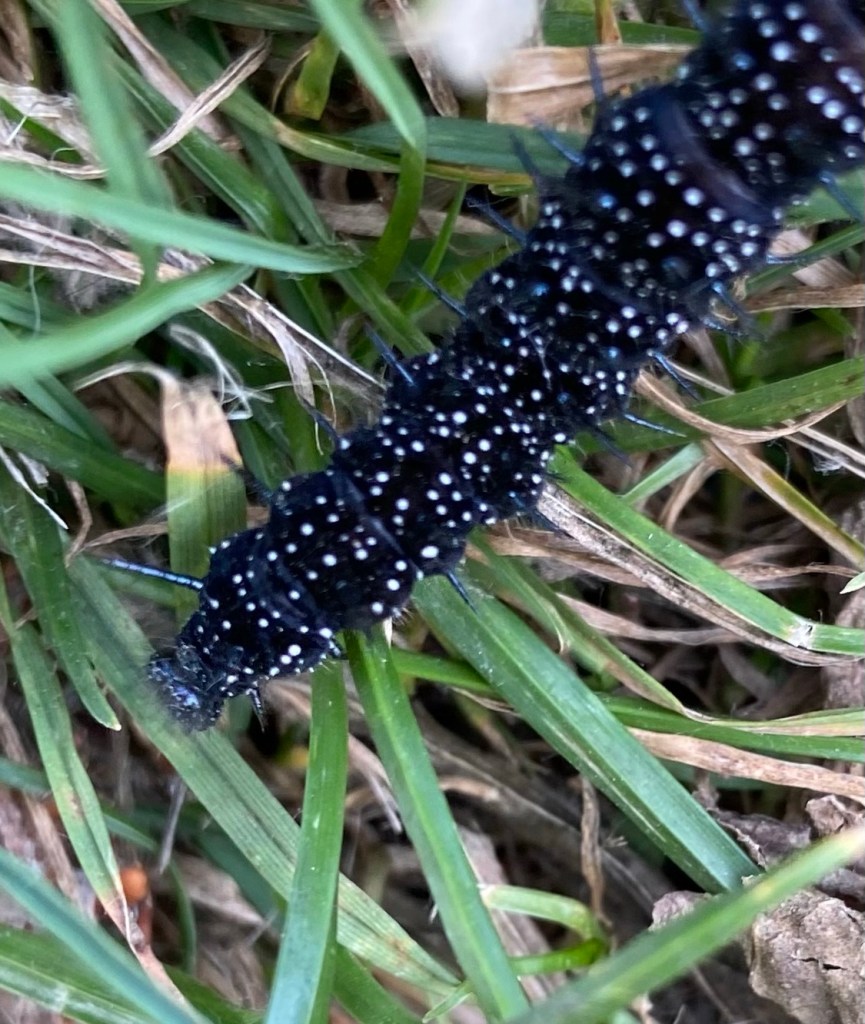
The caterpillars of red admiral butterflies had obviously been appreciating the nettles that I had not, as several of the butterflies were freshly hatched and in their brightest colours. I came across a peacock caterpillar, a striking spiked black and white body working its way energetically through the grass,
and a small tortoiseshell showing the lower border of blue arches on its wings as it paused on some nettles, perhaps assessing them for egg-depositing suitability.

Aside from these encounters the river, although beautiful, was exhausting.
I was grateful to stumble off-route briefly to discover a pub at Bromholme bridge, just as the river bent towards Godmanchester. I was certainly more dishevelled and disreputable-looking than most of their customers. A quick lunch and a welcome sit-down fortified me for the last couple of kilometres.
These took me across the vast expanse of Portholme Meadow — the largest floodplain wildflower haymeadow in the country. Its management has remained unchanged for thousands of years, haymaking and grazing preventing alder saplings from growing in the meadow grasses and turning it into a wood. Portholme floods every winter and the mineral salts from the river fertilise the soil and keep it aerated. It is full of rare and extremely rare flowers and plants and as a result, as well as being a SSSI, the meadow is also an SAC, a Special Area of Conservation.
I had missed the sight of the snakes-head fritillaries that stretch for the meadow’s 257 acres in late spring, and the flocks of wintering lapwings are four or five months away as yet, but there were bedstraws, burnets (including presumably the great burnet which is now very rare and is found in this meadow), knapweed, buttercup, meadowsweet, vetches, oxeye daisies, trefoils, sheep sorrel, cranesbill, yellow rattle (now rattling, after the long spell of dry weather) and dozens of different kinds of grasses. Crickets chirped — the first I have heard on this walk — and the meadow was full of ground-nesting birds, hidden amongst the flowers and grasses. There are corn buntings too, although I didn’t hear any.
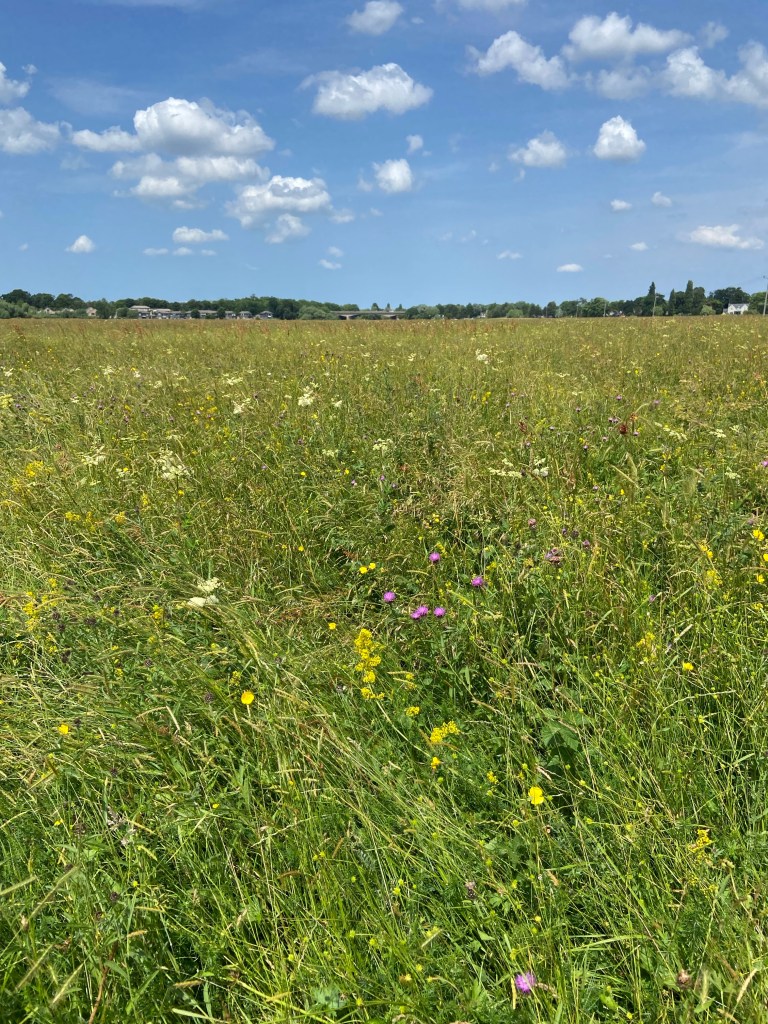
And so I arrived at Godmanchester. It certainly had pulled out all the stops in terms of making the most of the natural beauty of the river, passing from full bucolic
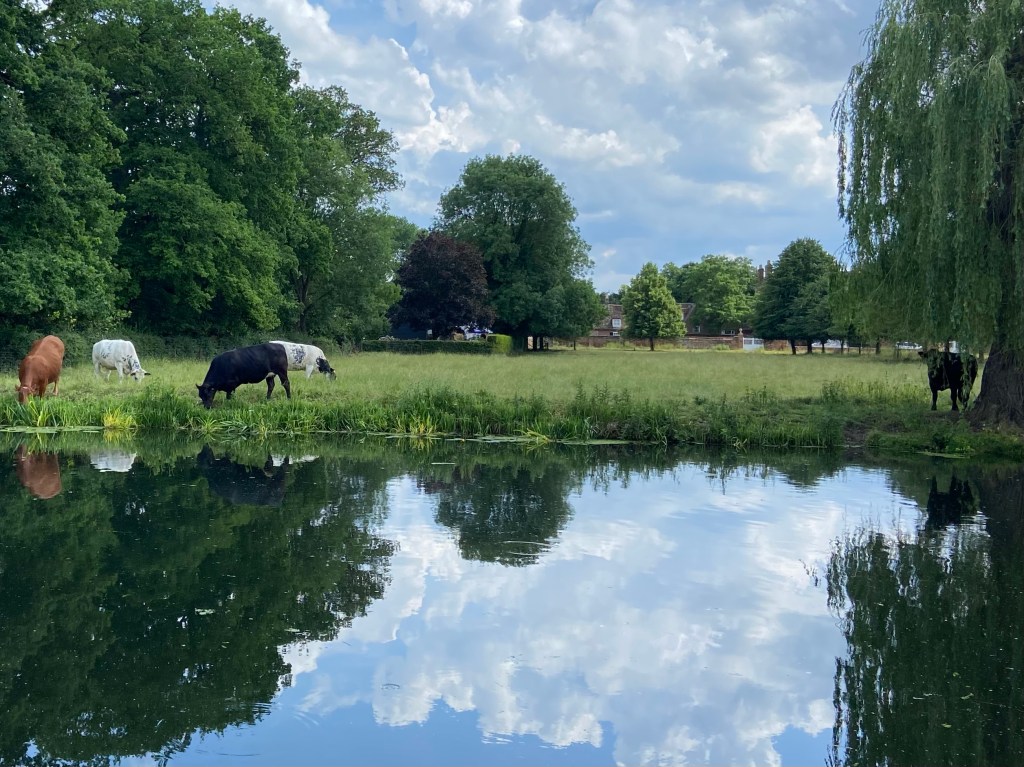
to urban idyll, seemingly without effort, within a matter of meters.
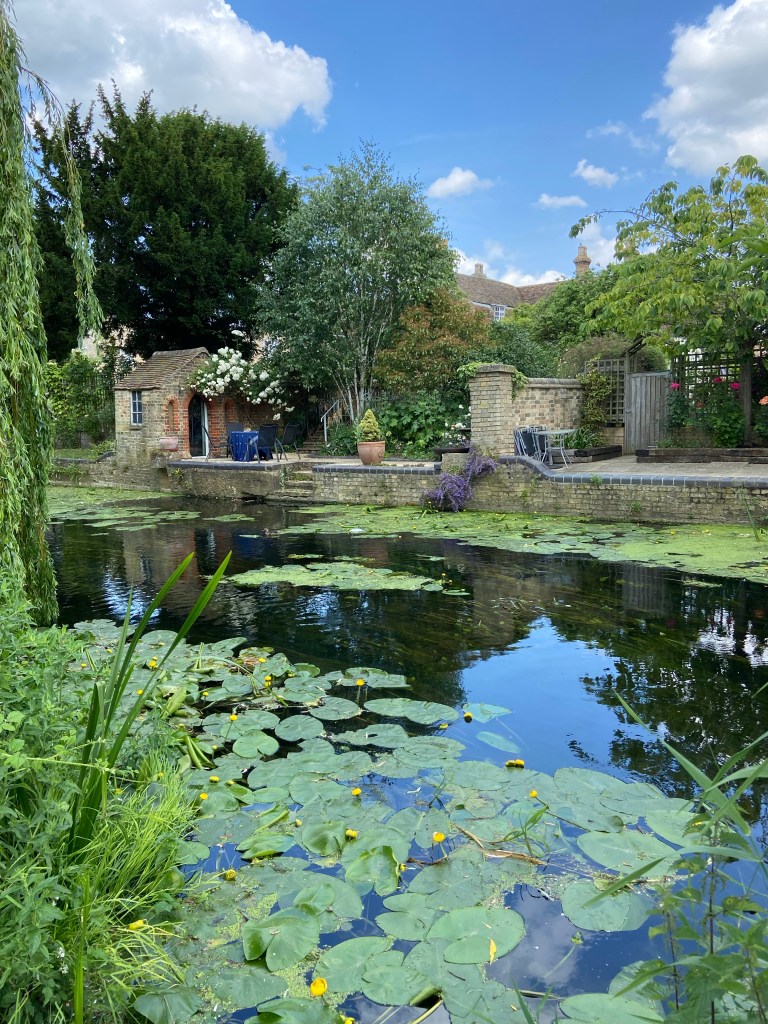
I felt unreasonably exhausted at the end of this 18km shortish day — perhaps it was the heat and the thrashing through the undergrowth. Or perhaps it was the bites and the antihistamine pill? In any case I had to fight off sleep on the bus. I was anxious not to miss my stop and get to Cambridge the easy way!
 Walking The Landscape
Almost here!
LikeLiked by 1 person
Tomorrow! Hottest day forecast…. 30 degrees!
LikeLike
Today I had the joy of reading this entry in the shade of the garden after lunch. Fridays are a bit of a rest day, so I just sat and relished your account and let my eyes feast on the photos. A blue flash!!!! A fleeting but real life, in the flesh, blue flash!!! However brief an encounter, it still must have been exciting. Let’s hope it sits still for you next time! Xxx
LikeLiked by 1 person
I am so glad you are enjoying it, Gill!
LikeLike
Loving this Sophie! Such a ramble through nature – you take me straight there! Only one more week in the Middle East and I can swap being bitten by mosquitos for being munched by horseflies..
Seriously, looking forward to seeing the delectable countryside again- and catching up with you again of course! 💕
LikeLiked by 1 person
Cannot wait to see you!
LikeLike