‘Not a mile visually unrewarding or painful’
Nikolaus Pevsner, The Buildings of Herefordshire
When last summer I started thinking about walking routes to do this year, heading eastwards to visit my friend Ros in Cambridge was the first journey that came to mind. It’s 188km due east of us. But it wasn’t until friends Sam and Cathy set a date for their belated wedding party/housewarming by the banks of the river Great Ouse in Holywell, a day’s walk this side of Cambridge, that the idea of a route began to crystallise in my mind: a winding 288km which would tie together Shakespeare’s Avon Way through Worcestershire and Warwickshire, a stretch of the Grand Union Canal through Northamptonshire, and the Ouse Valley Way through Bedfordshire and Cambridgeshire. More rivers! All my walks thus far have been organised in some way around water: first the Anglesey Coastal Path, the rivers Teifi and Itchen source to sea, that esoteric route from Weybridge down the Navigation and then the Wey and Arun Canal… The waterways are some of our most ancient transport routes and I seem to have been gravitating towards them this year.
To get to the Avon two days are needed, the first from my home in Bromyard in Herefordshire over the hills to Malvern, and the second from Malvern to Eckington over the M5 and the River Severn, into which the Avon eventually debouches at Tewkesbury to the south. I should have set off today but there were some exams to invigilate at school and so I walked the first segment from home to school yesterday afternoon, worked today (a species of rest day if you like!), and I am picking up on Saturday morning where I finished yesterday.
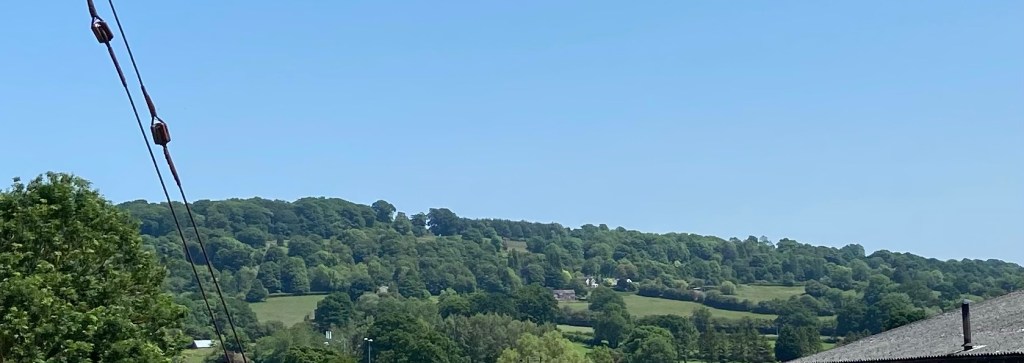
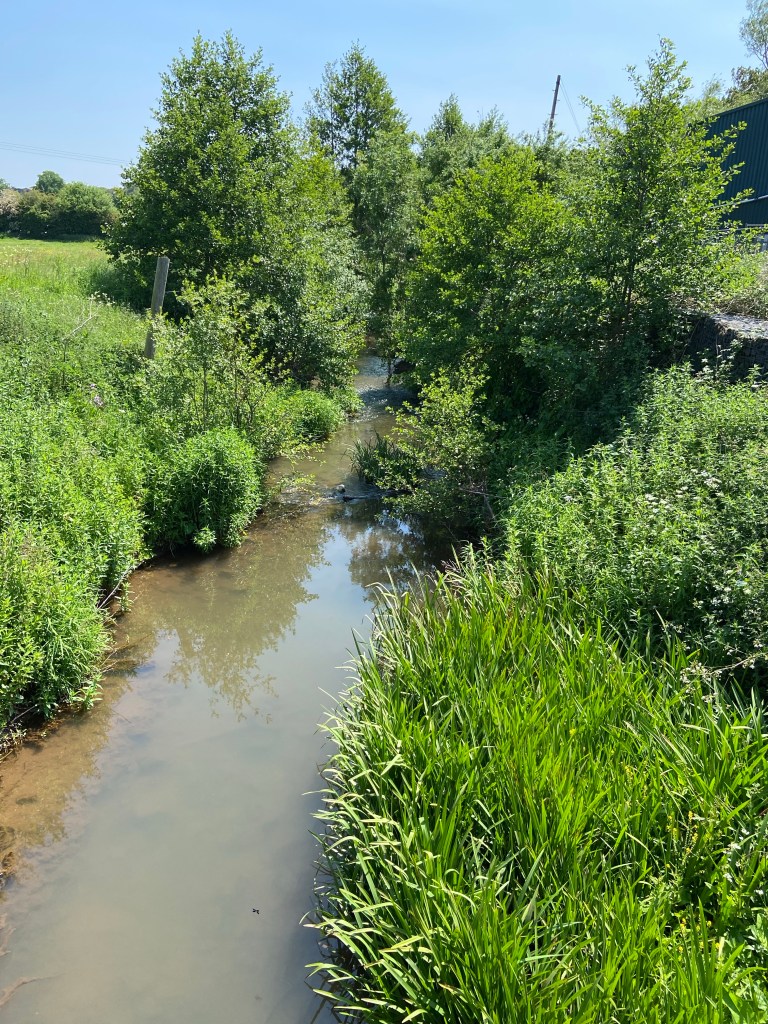
Which of the very many routes to Malvern should I pick? In the event, I decided to go up over the Bromyard Downs, the view from our bedroom window and the first familiar geological hurdle to get over. At first I followed the route of my 4km ‘default walk’. Down our road, each step taking me further away from home although imperceptibly closer Cambridge. I crossed the river Frome: not more than a stream at the moment because of how dry it has been. I was so happy to see three beautiful demoiselles fluttering about patrolling the stretch of the riverbank, or perhaps courting. They are a new arrival this year.
To get up onto the Downs, the road climbs steeply, one of the characteristics which makes this such a good constitutional walk. This is Burying Lane, so called because victims of the Black Death were carried up here to be interred all together in a field on the side of the hill. A sad history, but a lovely walk seven hundred years later, with hedgerow interest for aficionados throughout the year. Usually I race up it trying to get my heart rate up and improve my cardiovascular fitness. No such thoughts today! I’m in it for the long haul. Today I was paying more attention to my feet.
For this walk, I am wearing shoes rather than boots, having successfully trialled the lighter and more ventilated option last week when Stephen and I walked the beautiful 55-mile Coleridge Way in Somerset and Devon over his half term holiday. The science of sports footwear is dull beyond belief; suffice it to say that these fell-running shoes (fear not, gentle reader, there will be no running over the next two weeks) have a very flat profile to them so that you can ‘feel the terrain’. I told you it was dull. I am not that kind of princess and don’t particularly want to sense every bit of pea gravel underfoot, so I have swapped in my orthotic footbeds and complimenting them with my trusty gel ball-of-foot cushions. The hope is that these shoes will enable my feet not to tire so easily as they would in inflexible boots. It is a pretty flat route from here to the Fens, getting flatter as I go, and in my imagination I won’t need the ankle support that proper boots afford.
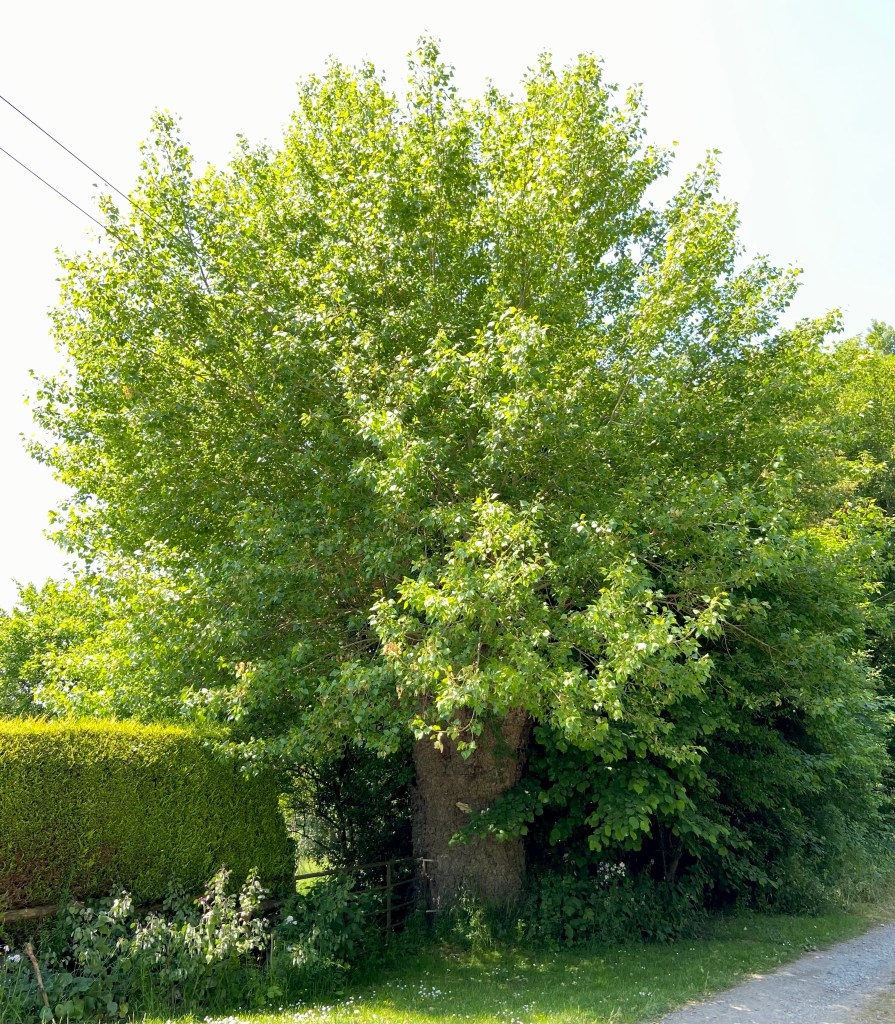
Such ruminations took me to the turning off my default walk, opposite a handsome black poplar, one of the UK’s rarest trees. Once a culturally important tree with many uses including cartwheels (now hybrid timber is apparently used for artificial limbs), the black poplar suffered from agricultural drainage which dried out the wet ground it needs for seeds to germinate. It is now so rare that fertilisation of the seeds is a problem: of the 7000 known black poplars in the UK, only 600 are females, and they need close proximity to reproduce.
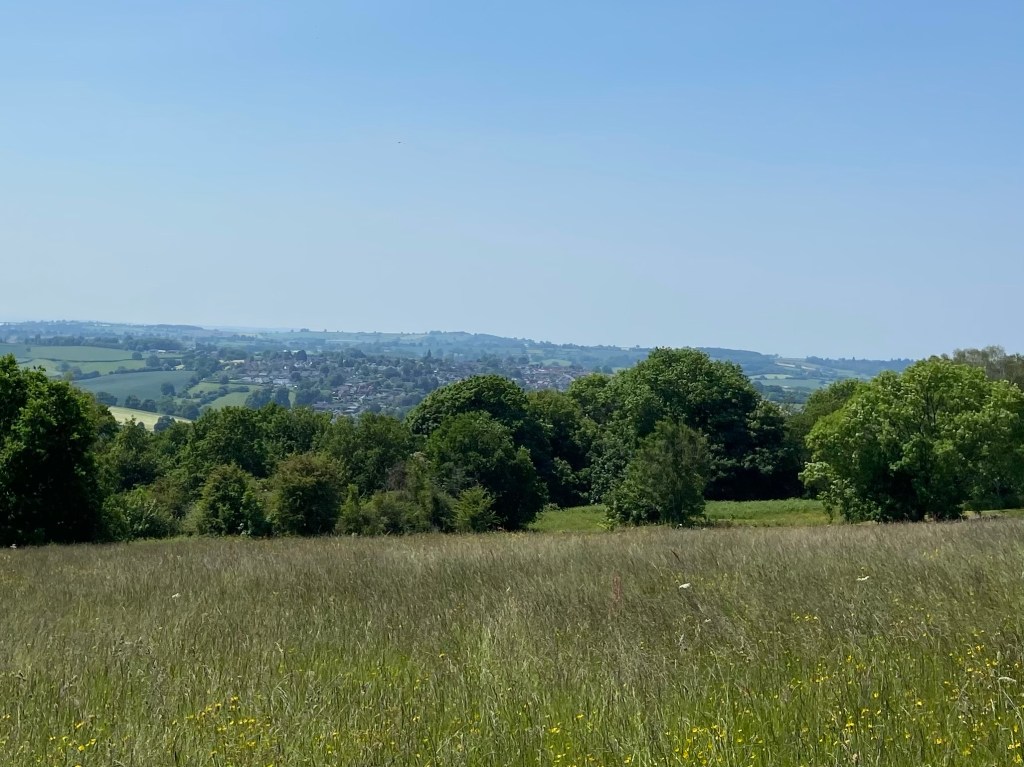
I could have contoured around the hills, avoiding the climb, but I decided to take a path to the top for a number of reasons. Firstly, because it gives wonderful views back over the little market town of Bromyard, stretched out below me, windows flashing in the afternoon sun. A sort of farewell, despite the fact that I was returning that night.
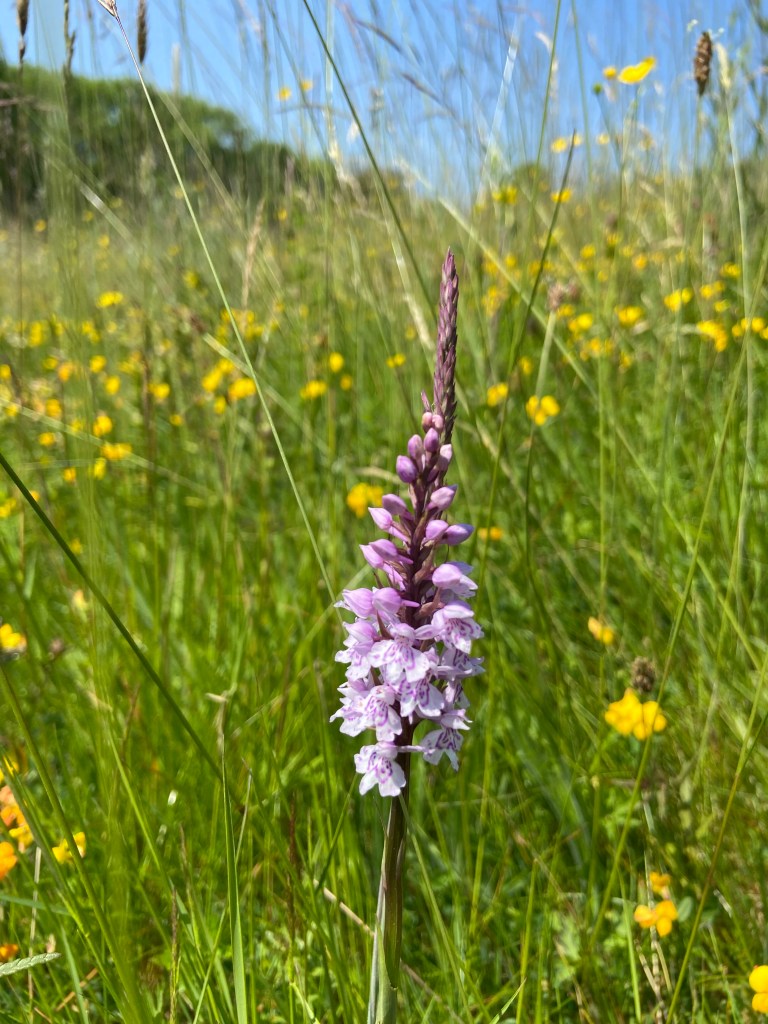
Secondly, because I could climb up through the west-facing wildflower-rich grassland, thick with buttercups and a glorious show of orchids. Much better this year than last, when early spring had been too dry for their foliage growth to get going. I remember what a rare sight orchids were when I was a child. Vanishingly rare, in fact. And I didn’t see a cowslip until I was 14. It’s encouraging to think we have made some progress at least.
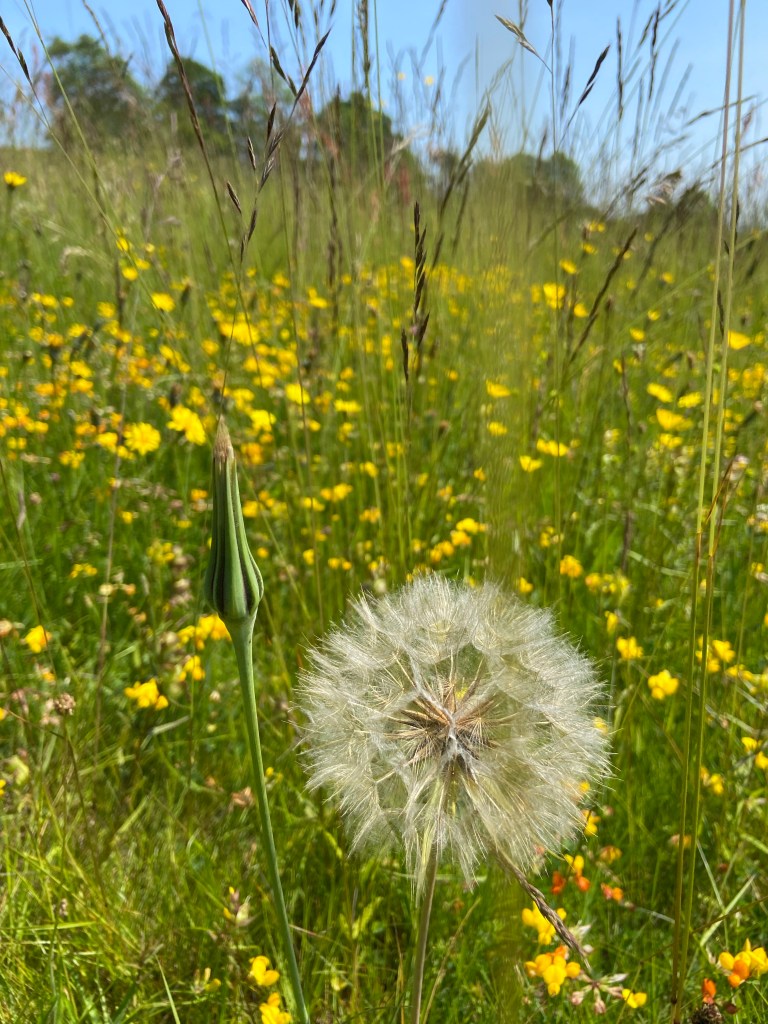
Here was a goat’s beard clock, the older brother of the dandelion. They remind me of my friend Carrie, with whom I went botanising over the Downs on many occasion. She taught me how to recognise grass species. Most recently we spotted striking purple goat’s beard variety down on the Kent marshes (a spectacular walk which deserved a blog. Perhaps I shall turn it into a huge photo essay when I get back from Cambridge, alongside finishing the Five Counties Three Paths blog, now I have upgraded my subscription to include more storage).
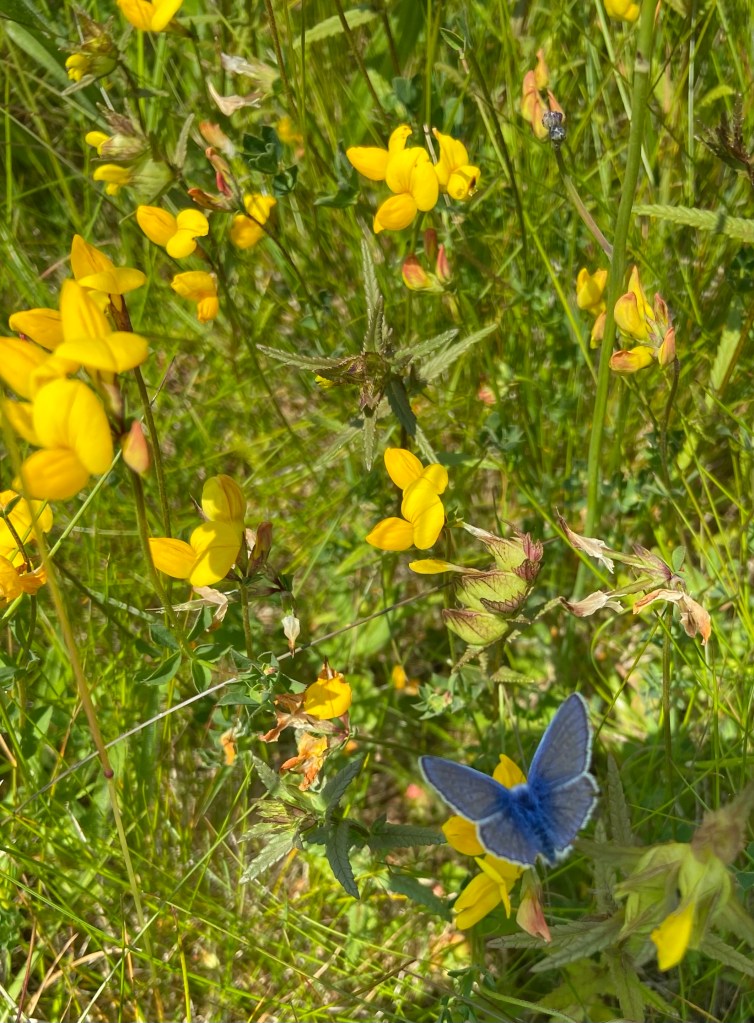
There, small blue butterflies drank from the birdsfoot trefoil, or flew upwards together in a fluttering spiral over the softly waving grasses. June is a lovely month on the Downs.
At the top of the hill was a well-known bench. I didn’t stop, but reflected as I passed that this bench has ghosts sitting on it: it was the furthest point my father could walk in his declining months, and I hold fond memories too of a friend pausing there, my erstwhile colleague Peter with whom I shared the responsibility and pleasure of running the practical conservation group at school. We used to come onto the Downs with groups of pupils to help survey trees, create clearings and build bug hotels.

Once over the Downs the footpath directs itself towards the Suckley and Malvern Hills, still almost twenty kilometres away in the hazy blue distance. It took me across the best of the Herefordshire countryside, arable fields stretching away on either side, the first cut of silage taken off in places, glossy green improved grass for the stock, or haymeadows sown with wildflower seed mix. Hedgerows were past their May glory but headily filled with the first dinner-plate-sized elderflower blooms. It will be time to make cordial soon.
The aerial antics of feeding martins were a delight. They had failed to nest on our street for the first time last year, and this year didn’t return. Perhaps another casualty of the lack of insects in last year’s dry spring. Other martins and swallows swept up into the eaves of extraordinary Herefordshire farmhouses, centuries old and half-timbered.
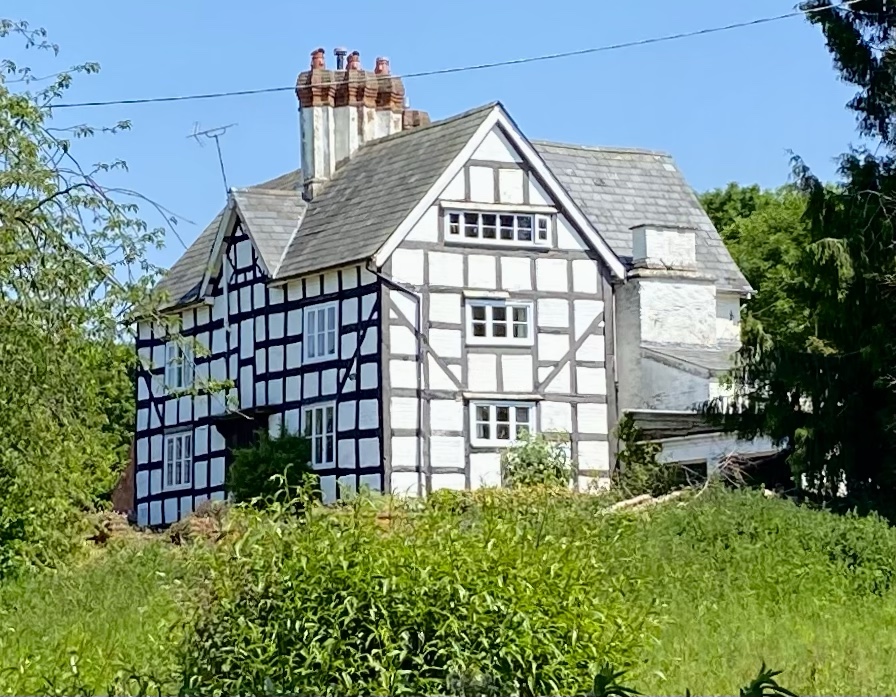
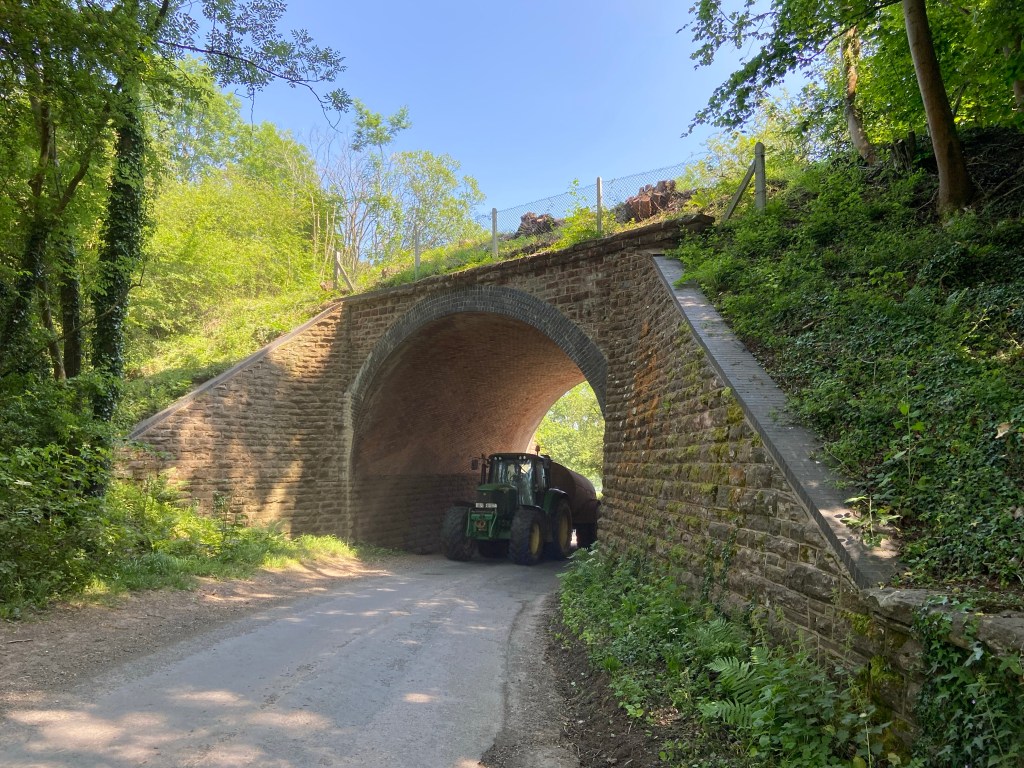
Some of these farms are small-scale single-family concerns – hobby farms. Most are larger and more mechanised: tractors tag-teamed each other up and down the road to Suckley taking slurry from the tanks in the farmyards to the fields, and passing under the old railway bridge which once carried the loss-making Bromyard branch line connecting all these little villages with Worcester and Leominster. The branchline closed in 1964, a casualty of the Beeching Cuts. There are various plans to create a Greenway along the old line, currently stymied through lack of funds much like the original faltering plans to raise money for the establishment of the branch line in the 19th century
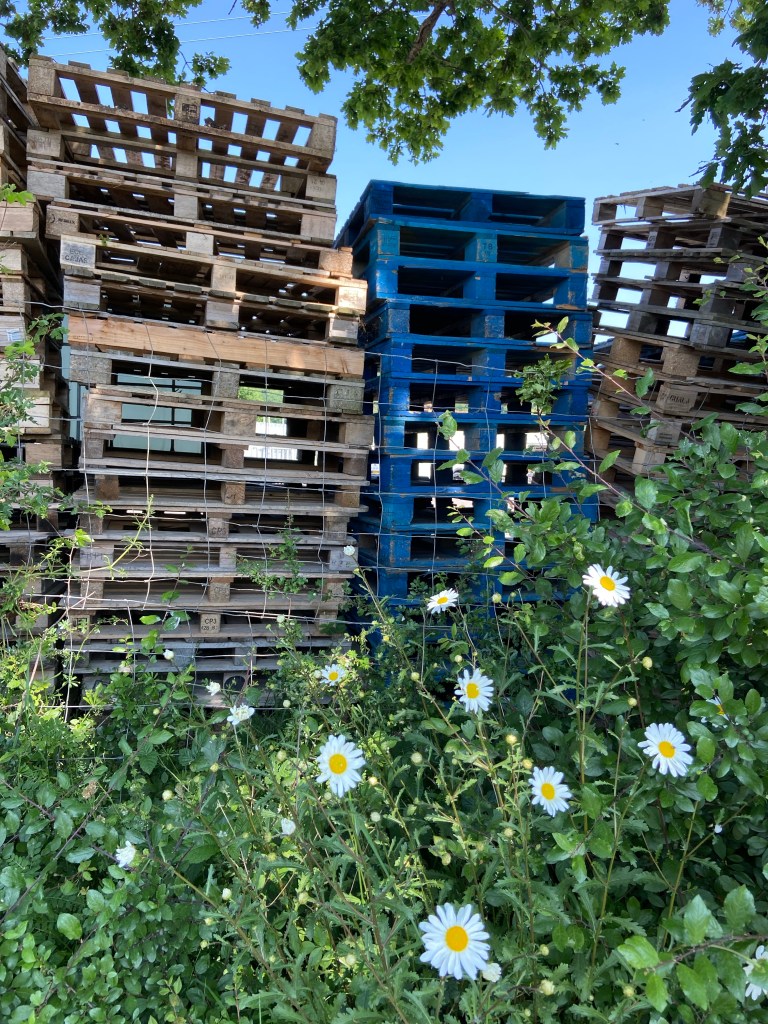
Other farms in this valley operate on an industrial scale: I passed some of the hopyards for which Herefordshire is famous, and orchards full of apple and pear trees. Farmyards full of processing and shipping equipment.
This was a landscape full of memories for me. I was retreading this path, but branching off it were countless other intersecting ways, a quarter of a century of walks which Stephen and I have done together, firstly carrying our babies, then walking excruciatingly slowly with toddlers, later playing wordgames to coax our young children along. There were still later occasional walks with teens, and latterly, many walks as a couple or, now, most usually, solo. Footpaths branch off from my route, dividing and subdividing like the limbs and twigs of a tree or like neurons in the brain. Visual images are re-created in my mind one after the other, throwing up snatches of conversations, memories of the way the changing seasons manifest, walking in all weathers, varying conditions underfoot. This part of the journey at least feels elegiac.
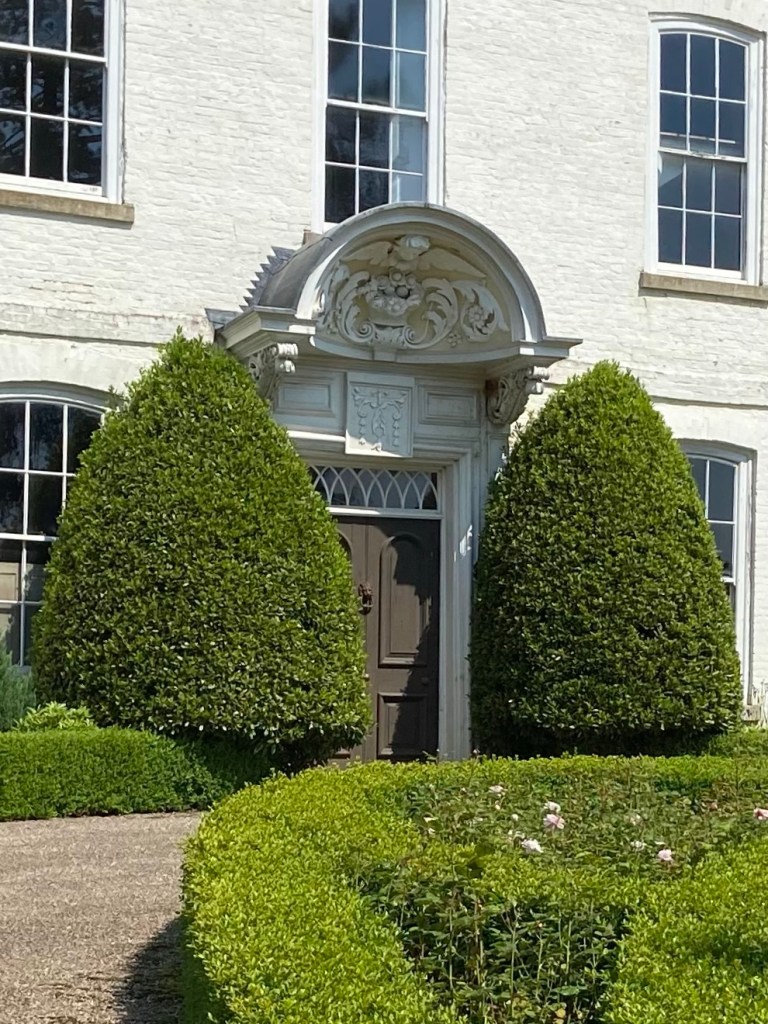
For today’s walk to Malvern I had decided to walk a decent chunk along the road, partly to test out how my shoes coped with long stretches of tarmac (which is melting in parts; it is hot) and partly because it was quicker. There will be time enough to slog through fields, and the field edges I walked on today were baked hard and uneven underfoot. The road winds through the parishes of Linley Green, Suckley Knowl and Suckley, past one of my all-time favourite houses, about which Sir Nikolaus Pevsner bizarrely has nothing to say.
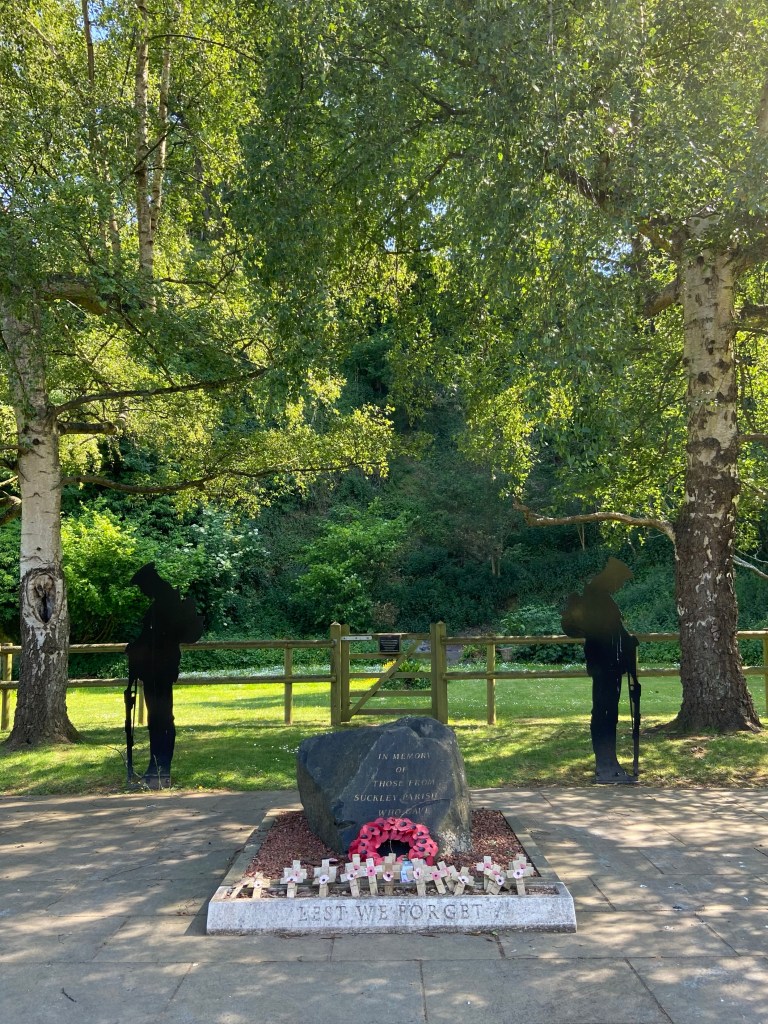
The three-hour mark coincided with Linley Green, a village of which I am excessively fond: it has lovely views of the Suckley Hills, interesting cottages and gardens, a poignant war memorial in an old quarry and a general air of community and neighbourliness.
And also a village shop. Every time I have passed it it has been closed, but today I arrived five minutes before its four o’clock closing time, and opened the freezer to discover to my delight that it sells Rachel’s icecream in minitubs. In the spirit of ‘buy local and support Herefordshire businesses’, I availed myself of – ahem – two of the pots, reasoning that I needed the lemon swirl because it was such a hot day, and that I generally deserved the damson and sloe gin (also, two local hedgerow crops, so practically foraging). I read the tagline on the tubs: ‘hand poured, totally irresistible’. Well, there you go. Justification.
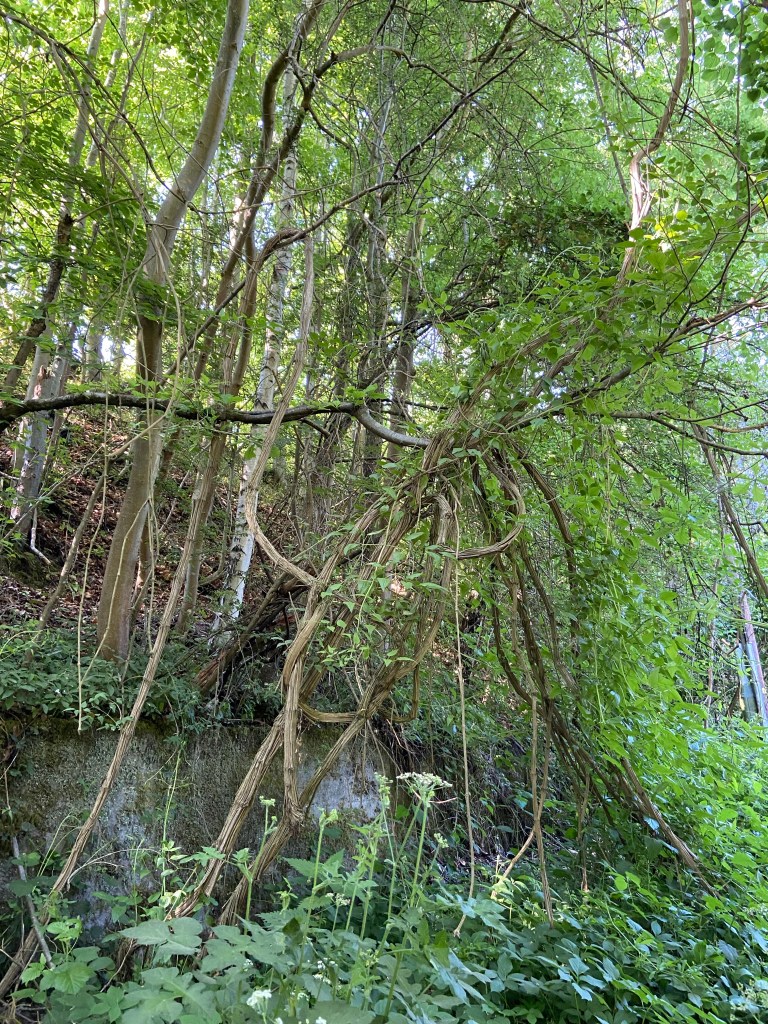
The Suckley Hills are a line of low sandstone hills which connect to the north with Ankerdine Hill and the Abberley Hills, rising steeply out of the alluvial Vale of Evesham and marking the boundary between Herefordshire and Worcestershire. Along the top of this long line of hills runs the Worcestershire Way, 32 miles of which I once walked in a day with a dear tutee on the sixth form charity walk. As the unclassified back road begins to climb, the trees start to be obscured by thick, climbing ropes of old man’s beard, the native wild clematis, a sure indication that a thin line of limestone runs along the side of the hill. On the far side of the hill the map records old limekilns.
The footpath turns off the road by the side of an immaculate black and white cottage and proceeds briefly through the cool, damp wood where last year in early April I found a broomrape growing – an unsettling chlorophyll-less parasitic plant which puts out underground suckers to feed off the roots of other plants. And then the path gives out into the open air again, and becomes a sunlit strait laid with the limestone. The hedge on the left-hand side was thick with dog-roses, a solid wall of humming bees. Mindful of the fact that my shoes are of the more porous variety, I negotiated the spring which seems to rise right in the middle of the path and in which I have unwarily caked my feet before in liquid mud.

Batchcombe nestles at the foot of Birchwood Common — a secret hamlet hidden from the main roads — upon which you happen unexpectedly. The path goes over the top of the old millrace, and the millpond today was framed with highly-scented white wisteria.
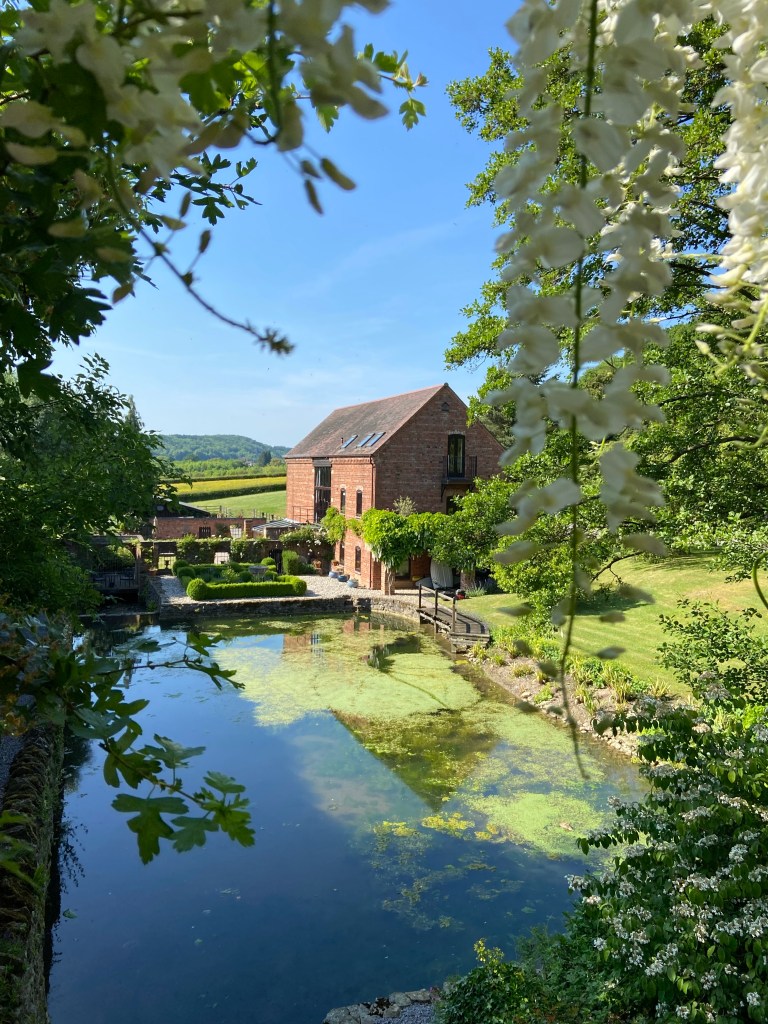
The whole place feels like a labour of love. Even the sheds are lovely.
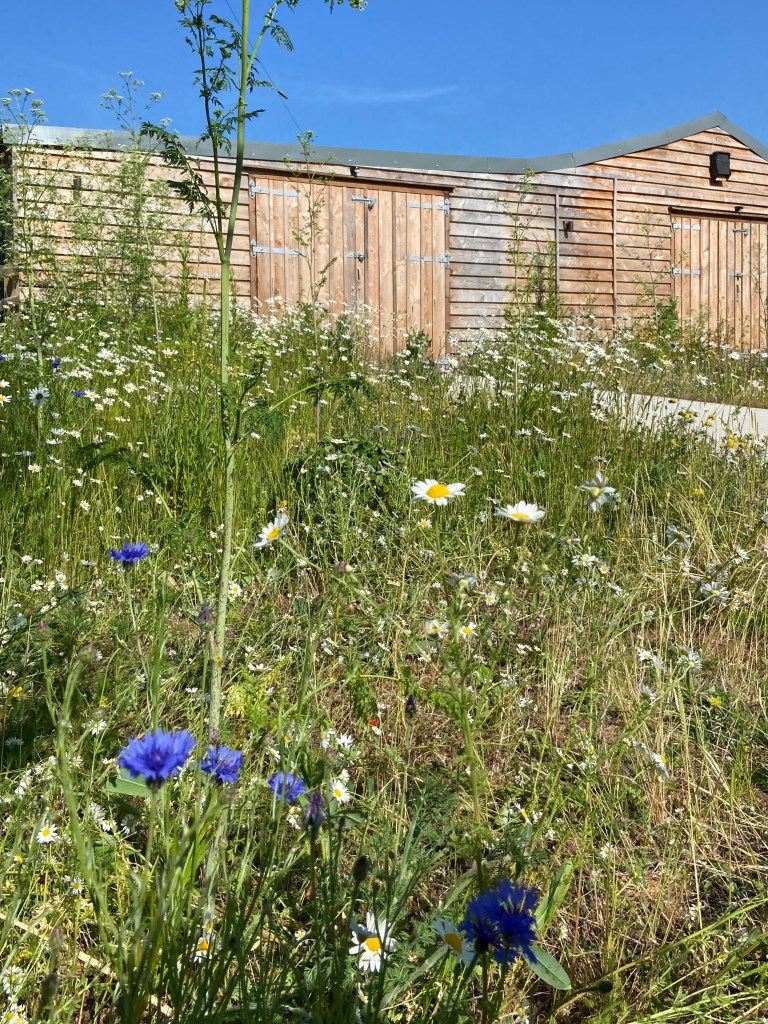
Distressingly, the wildflower meadow that rises above the hamlet had been mown. Perhaps for hay, but such a shame; I remember it as the most beautiful wildflower-rich habitat for butterflies and bees and other invertebrates. Tiny salad burnett, tormentil and eyebright were still visible on the trodden turf, and in a small unmown patch the knapweed had been allowed to grow tall and fatten up its buds. The top of the steeply-sloping bank led into the even steeper and eroded woodland path up onto the ridge of the hills, thick ropes of bryony twining around the gate and turning its glossy, heart-shaped leaves to the sun. Tiny sprays of faded white flowers are a promise of berries for the autumn.
That was the last of the climbs for the day. The reward was the view out over the Vale of Evesham – a tremendous prospect over which I will walk over the next two days.
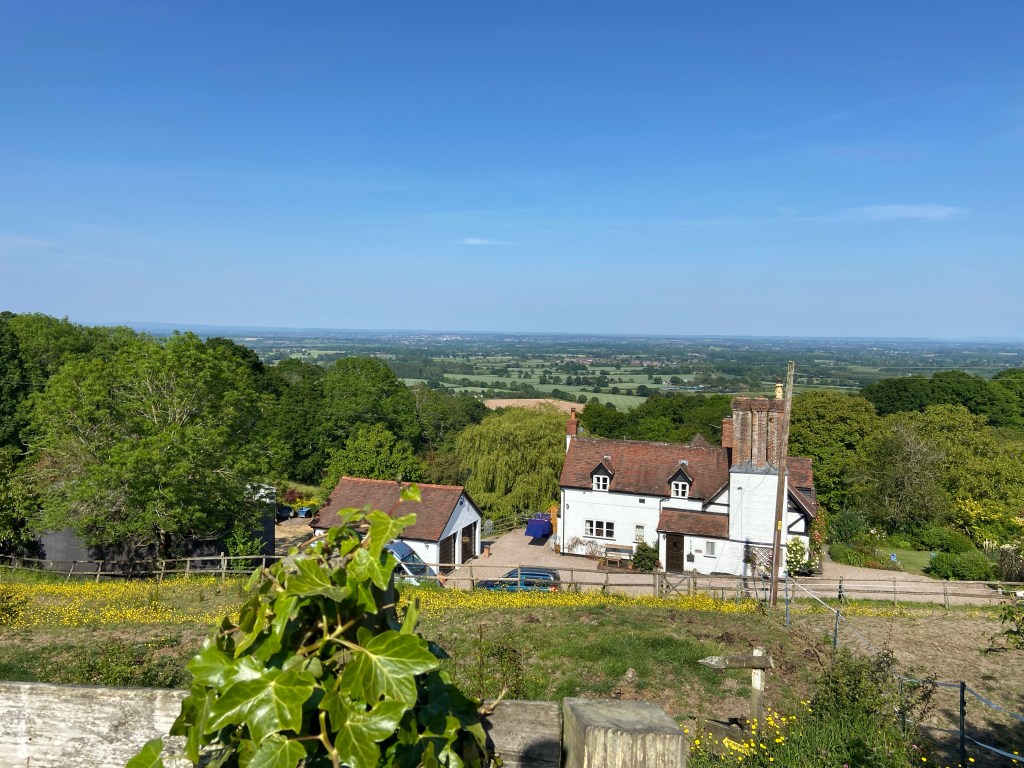
I shuddered down through a paddock where hoof prints had baked treacherously into cement-hard mud, following officious signs directing me to keep strictly to the permissive path. The signage gives a totally wrong impression of the friendly householders, however: a field shelter has been decorated with laminated photographs of the wealth of wildlife that has been seen in the garden from slow-worms to ferrets, foxes, badgers and muntjac, complete with stories of the sightings, and an exhortation to the passer-by to take with you some windfall apples, later in the year.
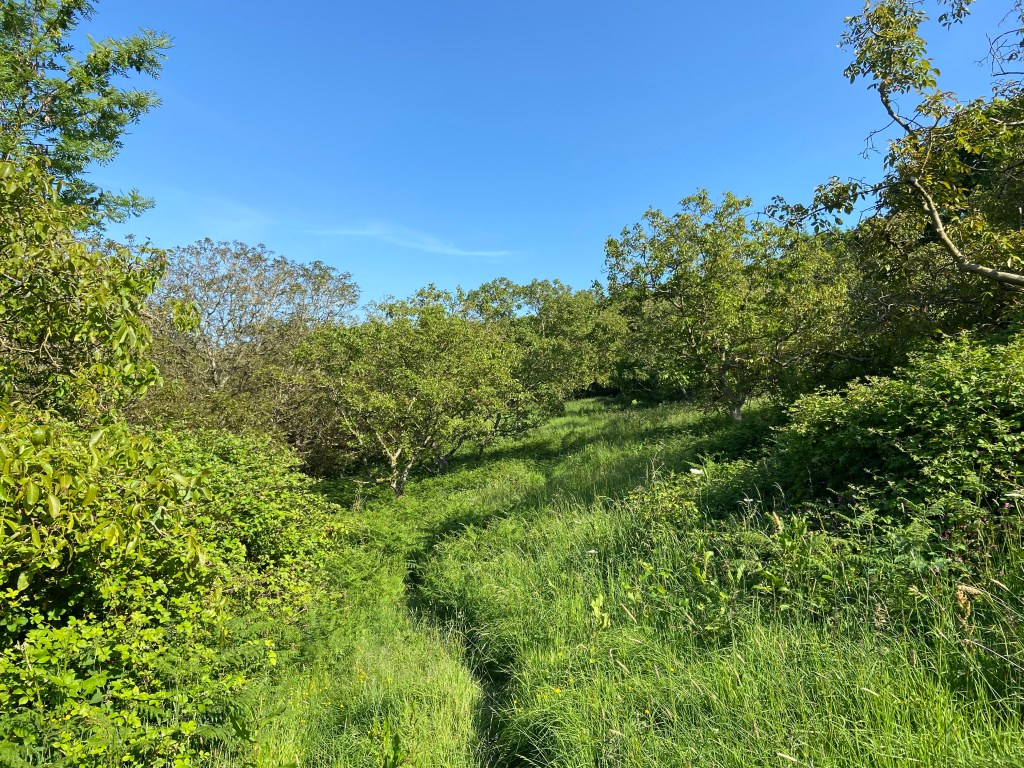
A hand-drawn map in the field shelter helpfully indicates where the path passes south through an orchard of ancient walnut trees, overgrown at the best of times and disappearing into the bracken and brambles. I fought my way down an underused path, somewhat regretting my choice of shorts over long trousers. Fortunately the nettles seemed only to grow on one side of the path or the other, so by weaving through the neck-high bracken, I managed to avoid getting stung.
Almost the last section of my walk today took me through familiar orchards, the late afternoon sun shining through immaculate row after immaculate row.
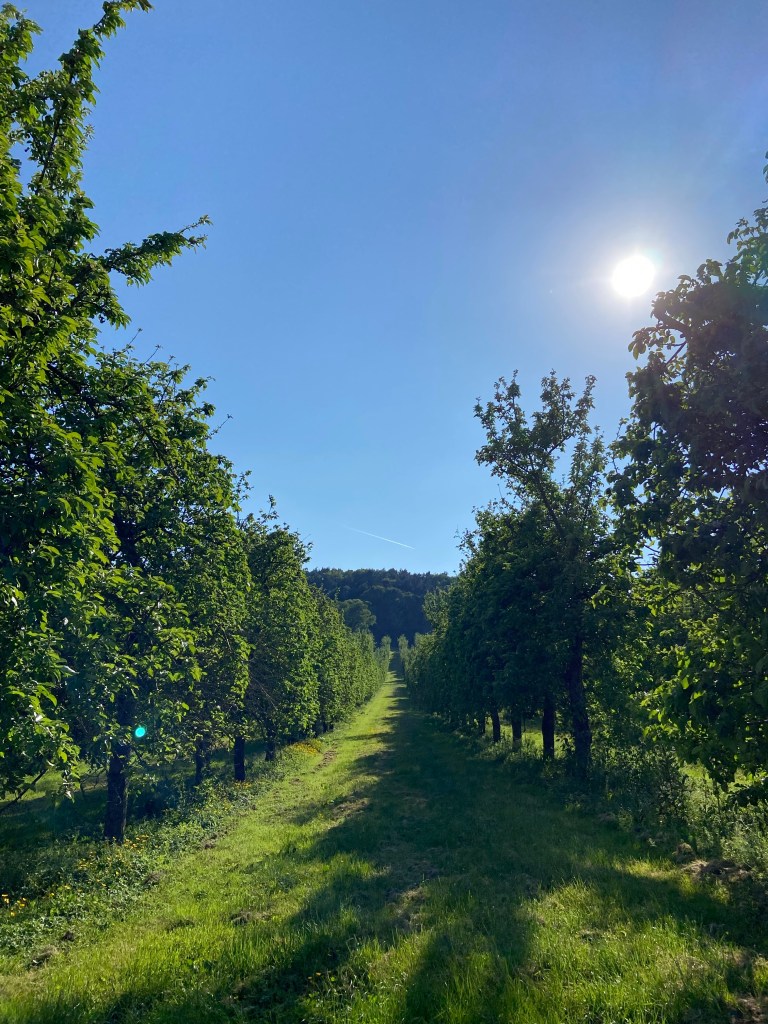
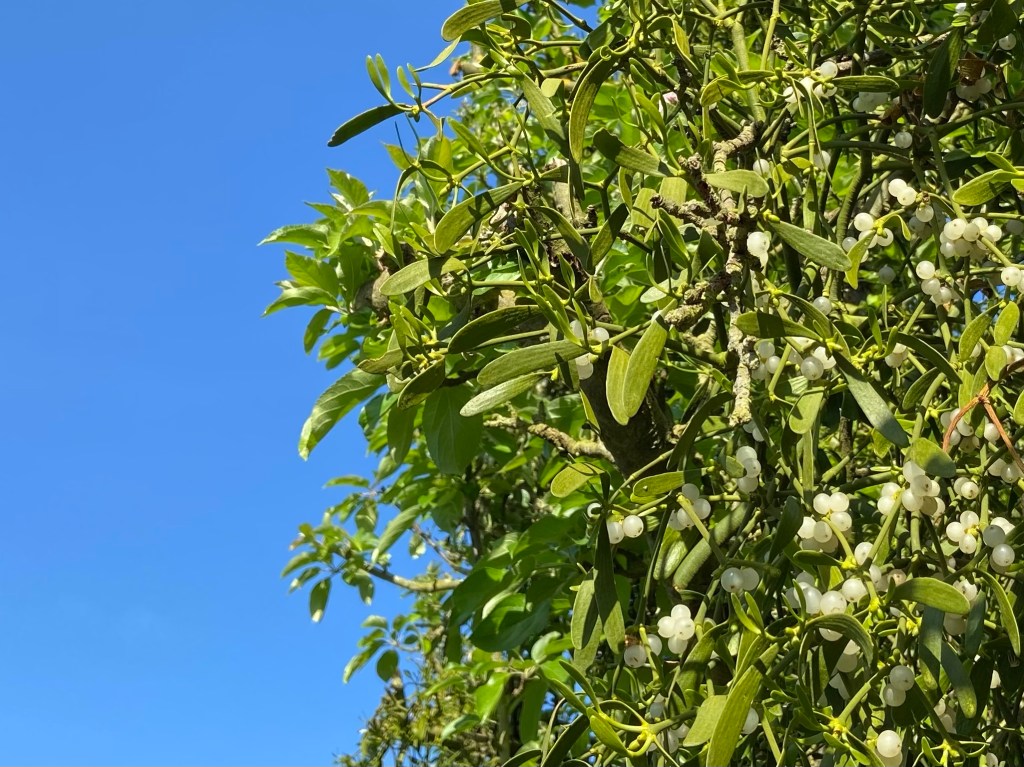
There were a few last fading apple blossoms, but most of the trees had already set their fruit. The first time I walked through the orchards after moving to Bromyard from Malvern 24 years ago was after the first lockdown, when we were finally allowed to go walking and were allowed socially-distanced visits. It was peak blossom and a vision of beauty. Since then I have walked through these orchards many times on my walks home from Malvern, seeing the trees in all seasons of their cycle, from bare twigs in February right through to heavily-laden branches at harvest time. The seasons seem a little strange this year: there was mistletoe positively laden with berries growing from more than one tree.
The Malvern Hills had been hidden by lines of windbreak aspens but now suddenly came into view, startlingly near. I had joined the Worcestershire Way which would take me all the way into the town. The hills seem so close here: the gigantic scar of the north northern quarry is clearly visible, seemingly just at the end of the rows of trees.
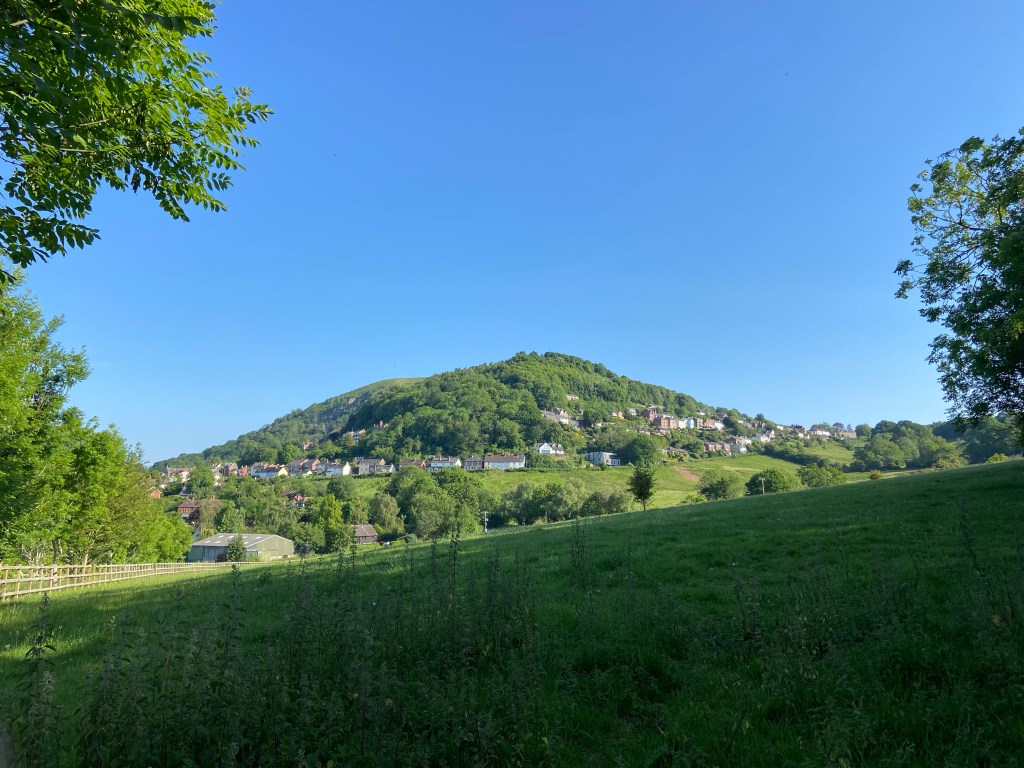
They made me stride out with renewed purpose, giving me energy at the end of this long, hot day, past the first of the very many wells which made Malvern a famous Victorian spa town, past the clinic of the podiatrist who had fitted me with my miraculous orthotics, past the statue of Elgar in the centre of town, and through the Abbey gateway.
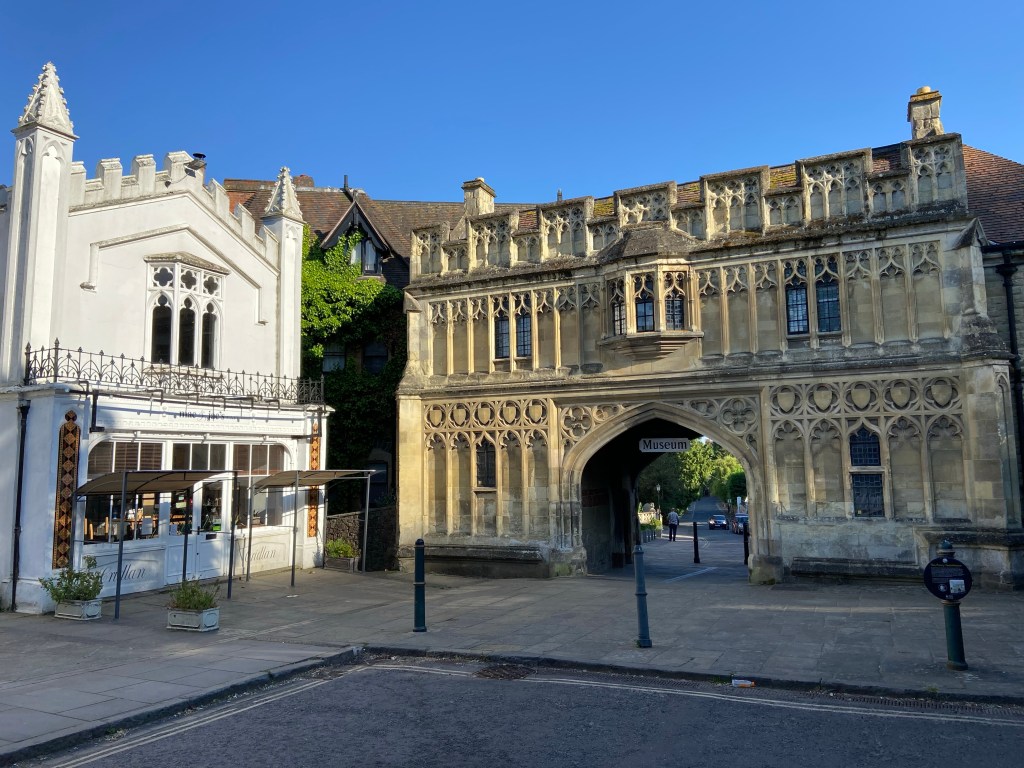
My walk ended in front of the school buildings where the next stage will begin, and where I will feel the route proper will begin. Today’s walk, although very beautiful, has felt literally and figuratively like business as usual! For now it’s home (in a car! Feels like cheating) to pack my rucksack.

 Walking The Landscape
Ahhh! What a delightful read! I too would’ve chosen two of those delicious sounding ice creams, but my excuse would’ve been that I was getting reading to support Word Gin Day, which is today!! 👏👏xx
LikeLiked by 1 person
Hahaha!! Thanks for walking with me again, Gill. Xxx
LikeLike
I think you won the ice cream prize – that’ll be hard to beat! So glad you’re on the move again.
LikeLiked by 1 person
I’m a few days behind but thank you for sharing your journey x
LikeLiked by 1 person
My pleasure!
LikeLike