
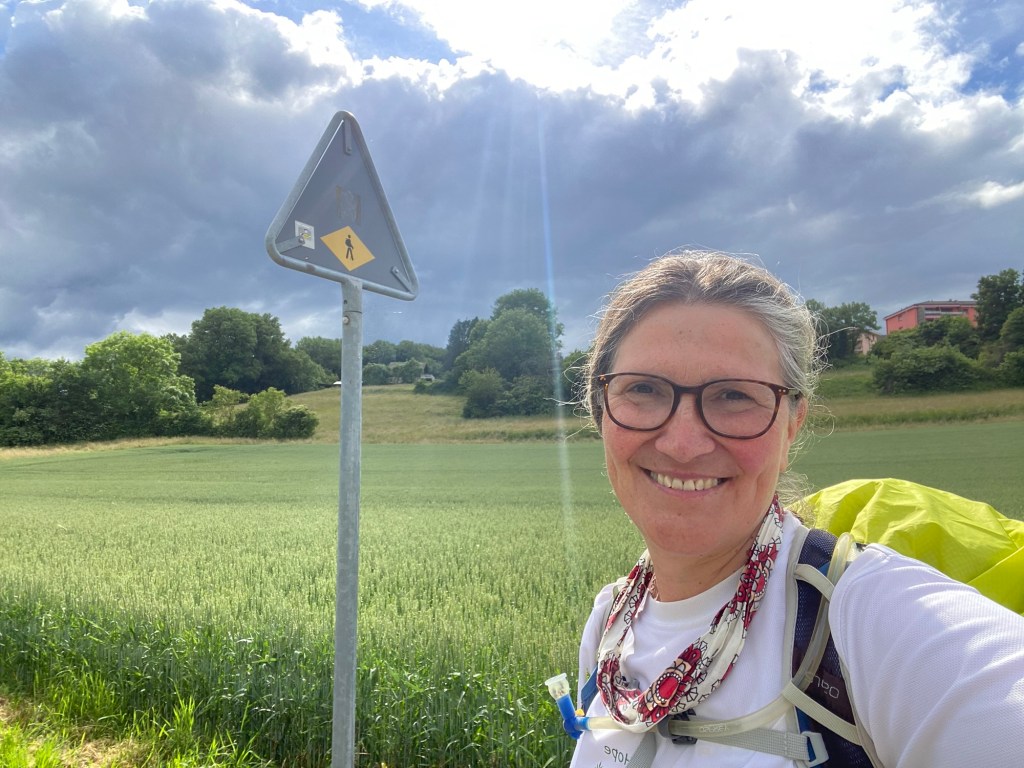
Sur la piste, vita
A sign I saw today as I came out of the final forest, and which I understood to mean ‘on the path, life’
After yesterday’s calorifically-restricted hardly-breaking-the-fast-so’s-you’d-notice breakfast, Pascale and Antonio Campanile treated me to the most festive of processional breakfasts to see me on my way. We chatted over two superb cups of coffee about their wedding in Romainmôtier, about the other pilgrims who had stayed with them, about Pascale’s journalistic broadcasts, and I made a note of the link to her programme about the Via Francigena to watch later.

It’s been so restful spending two nights in their AirBnB, and they provided me with the warmest of welcomes, as did super-soft and friendly Pixel, when she wasn’t stalking the windowsills two floors up, squeaking at the swifts and house martins.
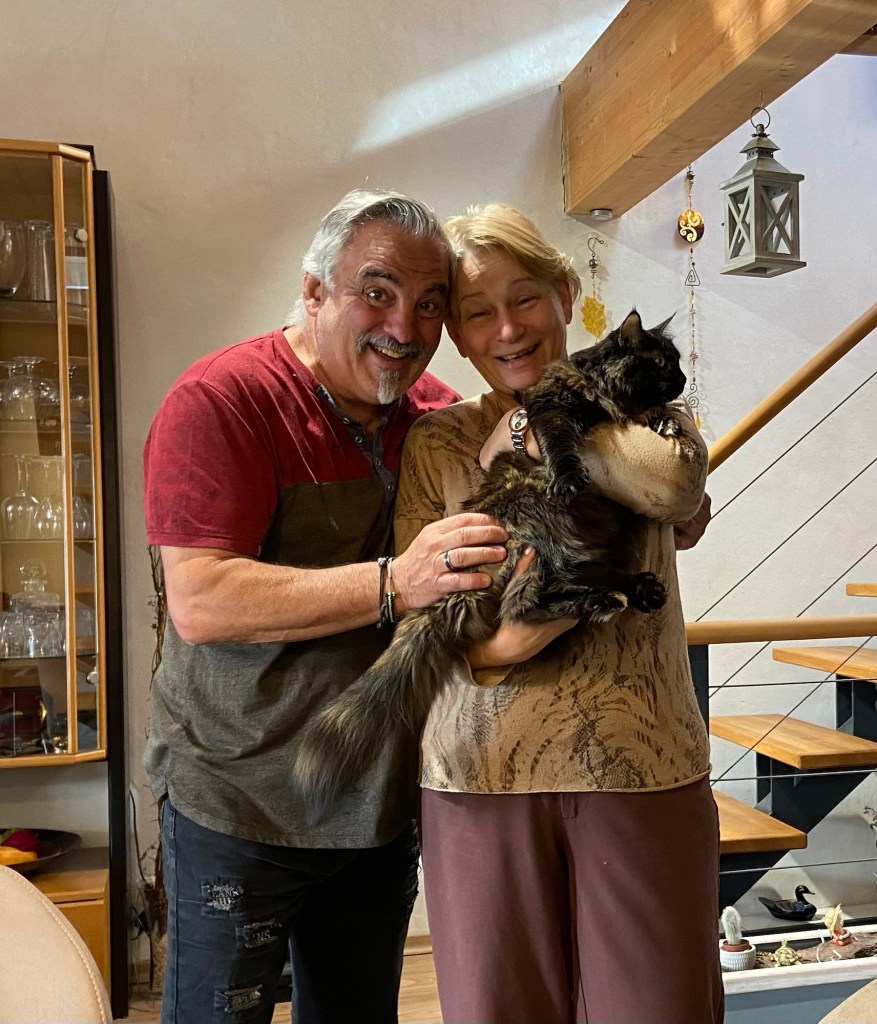
I packed up for the final time, almost on autopilot now. Pascale tried on my rucksack in the hallway as I was putting on my shoes and fell about laughing at seeing herself in the mirror: ‘I look like a turtle!’ she snorted. ‘It’s the House of Snails!’ Whilst I undoubtedly look like a turtle with the rain cover on my rucksack, I do like to think of myself as the Teenage Mutant Ninja variety — or perhaps a tortoise winning a very long race, indeed, on this last of days.
Sadly there were to be no Roman mosaics today as I found out last night that they are only open at the weekend. Pascale had told me this but I hadn’t understood. Mince! Well, it’s just another reason to come back, perhaps on a magnificent road trip rather than walking.
So instead I made straight for the bus stop, and made the journey in reverse to Cossonay to resume the route, my stage 47. I picked up a stamp at a bakery by the station, and I clearly wasn’t the first pilgrim to ask for one. The clouds were threatening: would I get wet today?
I was following a river path for the first section of the day’s walk, and I paid special attention to the pungent odour of the wild garlic going over, and the songs of the blackcaps and glittering serins, trying to imprint everything on my mind whilst consciously avoiding brushing against any undergrowth that might house a tick all ready to drop upon me. In the middle of the night I had found another infuriating tick, so I do need to keep an eye on that bite long after I get home.
The path seemed determined to remind me of all the beauties I have enjoyed over the past two months, the air filled with the perfume of false acacia, and the meadows full of a triumphant display of wild scabious.

The river Venoge brought to mind all the very many which I have followed since picking up the Hem river weeks ago near the start of my journey, in Audenfort.

I was incredulous it hadn’t rained yet, considering lowering cloudscape. I had followed a woman off the train down the exit ramp and out of the station and her trainers were squelching and leaving wet footprints all the way. Clearly she had been caught out in a colossal downpour, and looking back at the Jura mountains from the station, they were all now obscured by curtains of rain.
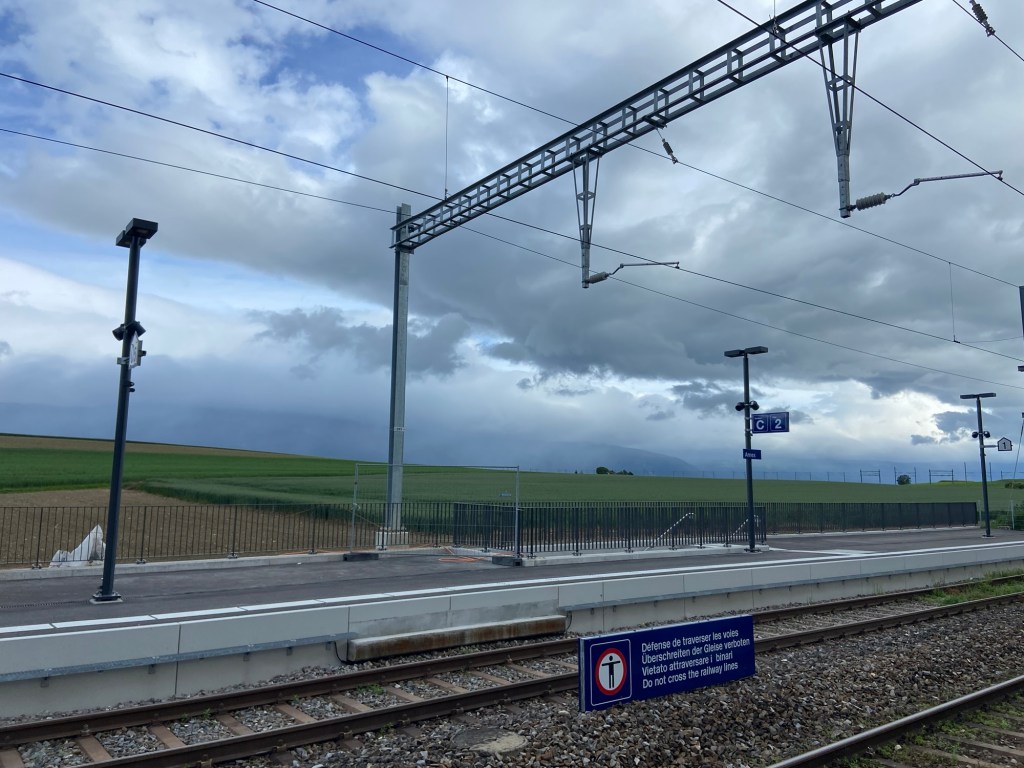
but I was walking in the sun, at least for now.
The sun attended me all the way as I walked the top of a ridge to a village rejoicing in the name of Vufflens-le-Valle. As I walked I looked ahead to the closest of the alpine ranges, the tops obscured with curtains of rain or perhaps snow. Below me on the slopes cowbells were rung by the grazing animals, and the leaves of walnut trees soaked up the sun to convert it to nuts for later in the season, like the ones Pascale had arranged on a board with local cheeses for my breakfast.

I was walking tremendously fast, not because I wanted it to be over but because I was revelling in the way my body worked, especially after yesterday’s debacle of walking underfuelled. I looked at the app to see how fast I was going and realised to my horror that it had not recorded anything for the past 52 minutes because I had somehow closed the app. So aggravating! I reset it.
More memories: a cornfield thick with poppies, recalling those fields of French Flanders and beyond, and those hundreds of thousands of men of so many nations whose memorials Stephen and I had walked past.

The thoughtfulness of anyone who has placed a bench anywhere for a weary pilgrim to sit and rest their feet. This one was really rather splendid.

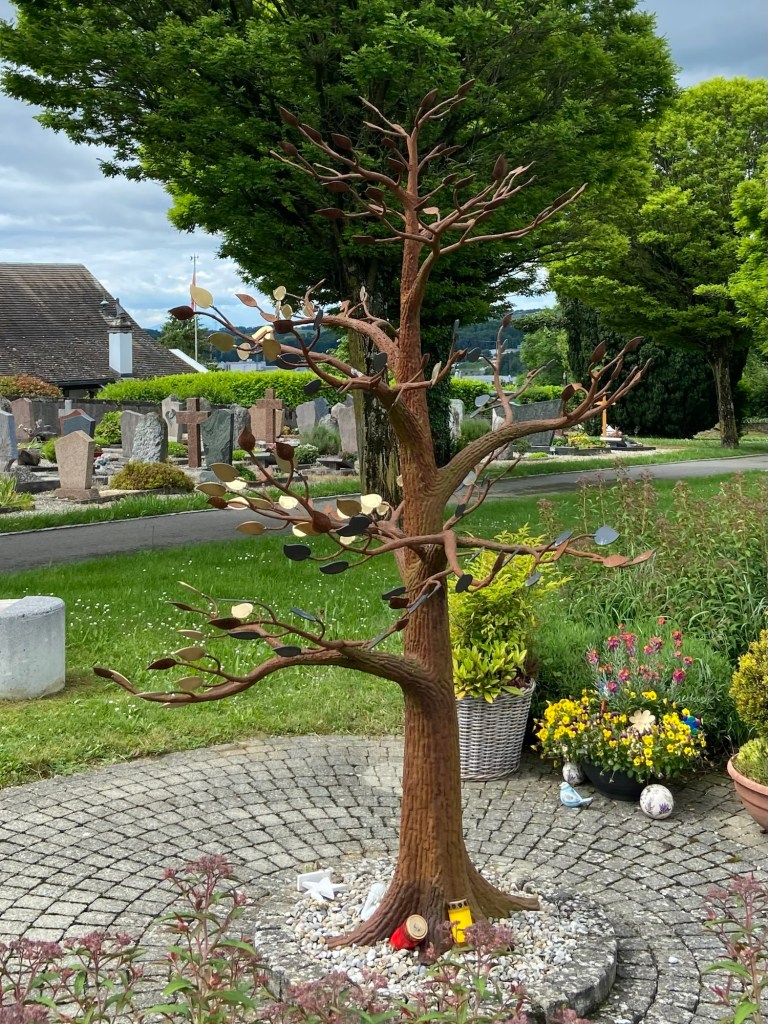
And a sculpture in a cemetery, representing the very many sculptures I have seen on this journey, memorialising events and individuals, encouraging devotion, exploring concepts such as sacrifice and heroism, from the Burghers of Calais on the first French stage all the way down through France and beyond. So much artistic endeavour. I liked the way that this one united the works of men with the works of nature in its burnished metal leaves.
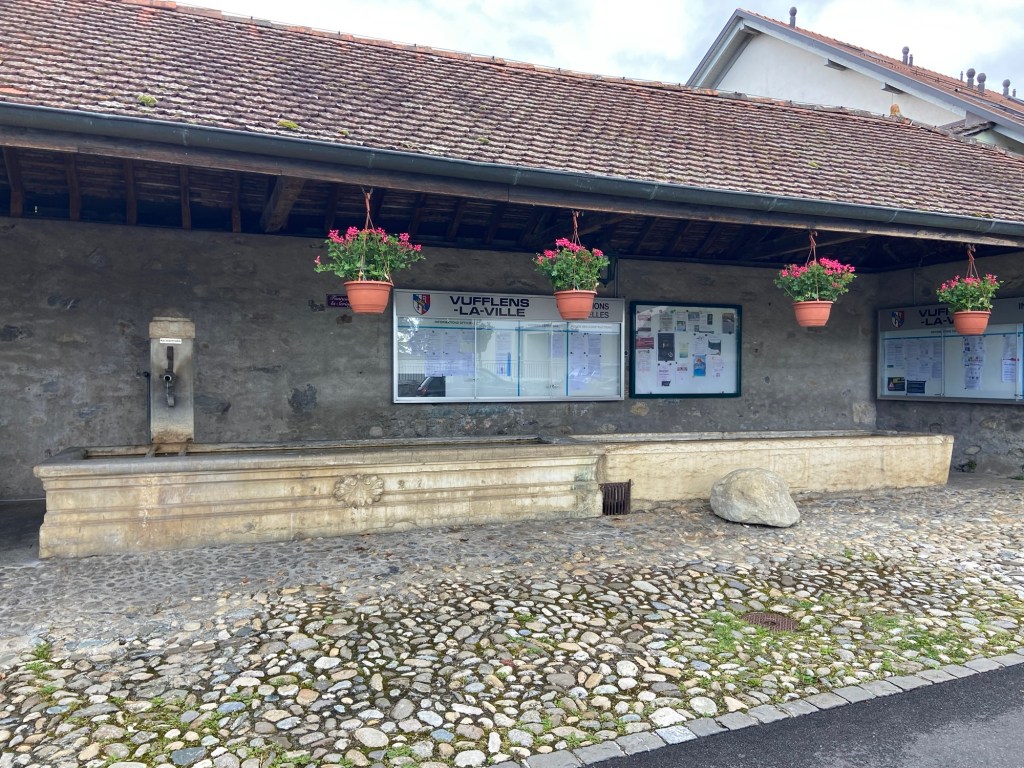
Another lavoir, here a matter of civic pride just as much as those very many grander and more historic ones in the foothill villages of the limestone Jura.
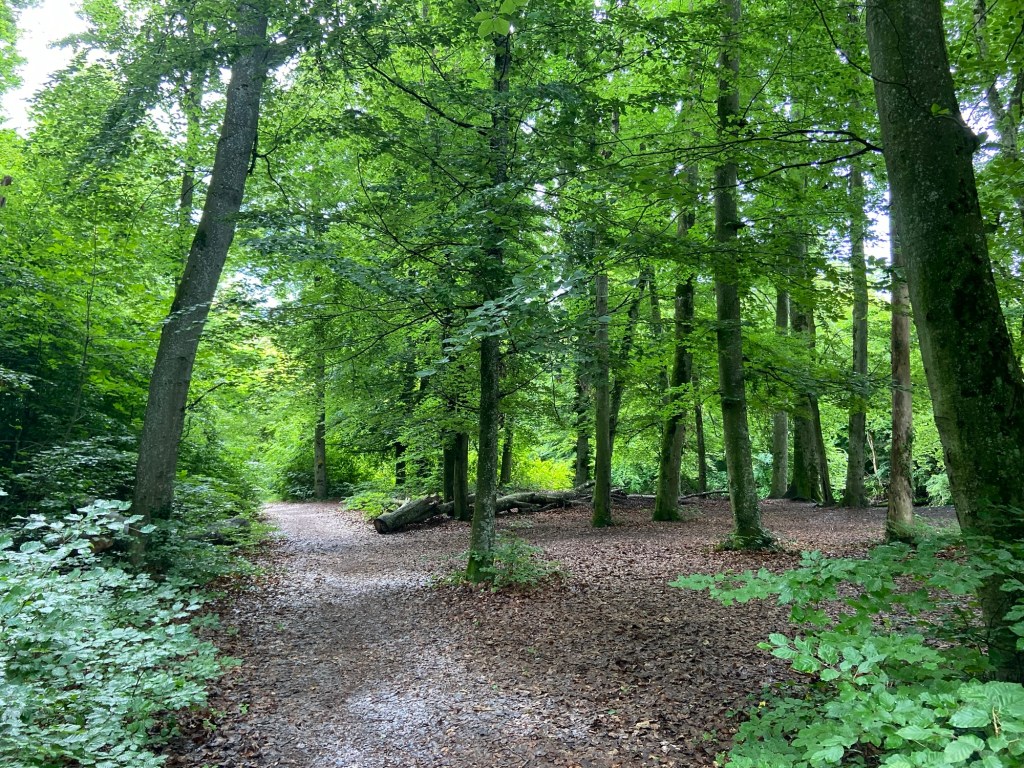
And now I was walking through my last forest.
Miles and miles of trees across England, France and Switzerland, two months ago with bare branches, gradually budding forth and greening as I walked south through the spring.
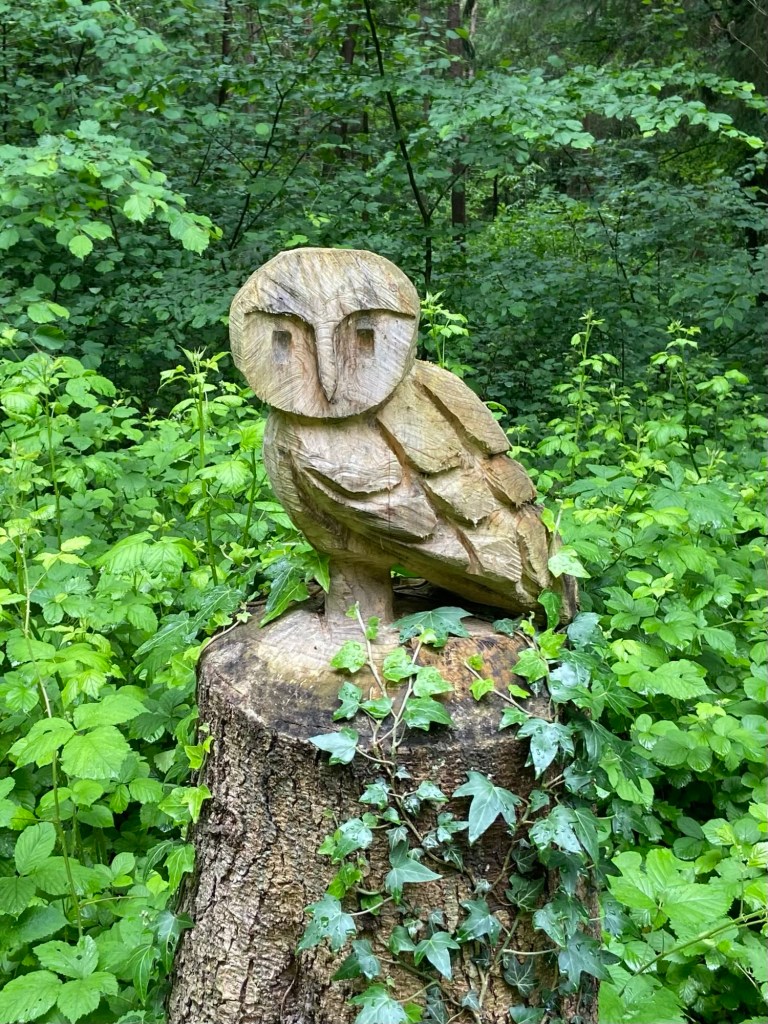
I felt strong kinship with the Saint Francis I had seen depicted yesterday in Romainmôtier, in my gratitude for the company of the birds, faithful companions through each day and sometimes nights. Bringers of joy.
I don’t mind admitting tears were rolling down my face as I walked out from under the eaves of the forest and into the start of the urban conurbation that now spread the kilometres that remained between me and Lausanne.
The Frangicena here felt vestigial, slipping away from me. It led swiftly through the dormitory suburb of Bussigny, and I tried to hold onto the countryside, focusing on the borders of wildflowers running alongside the road and in between the condos,
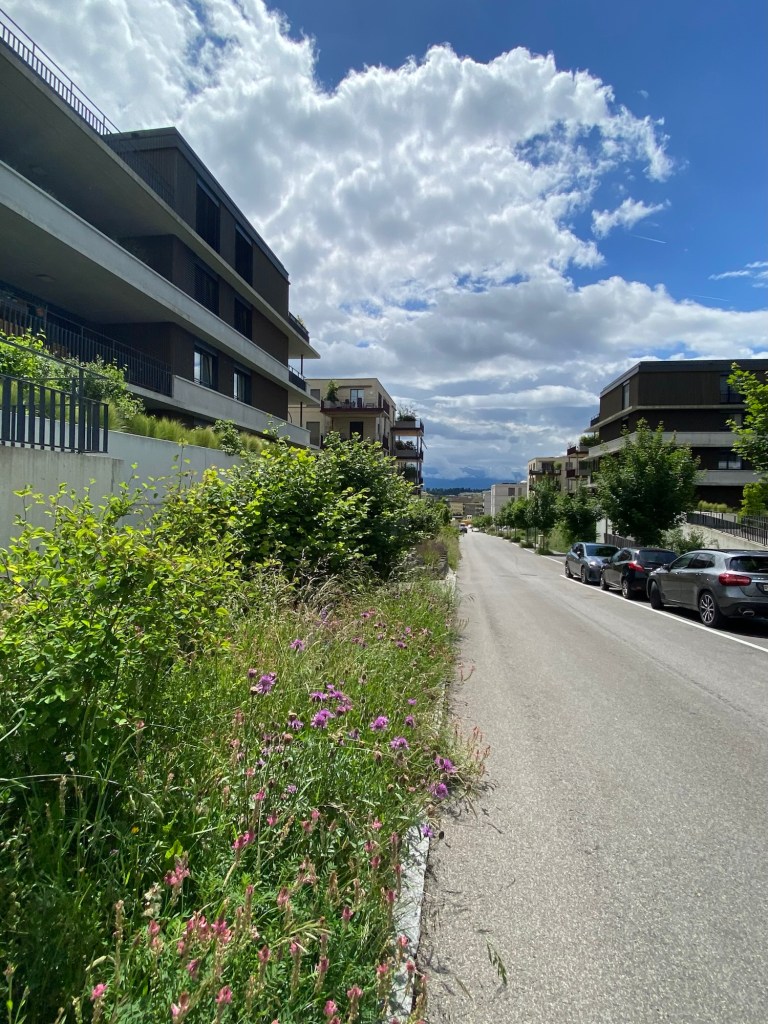
on a handkerchief of garden, planted with marigolds, roses and riotous fennel.

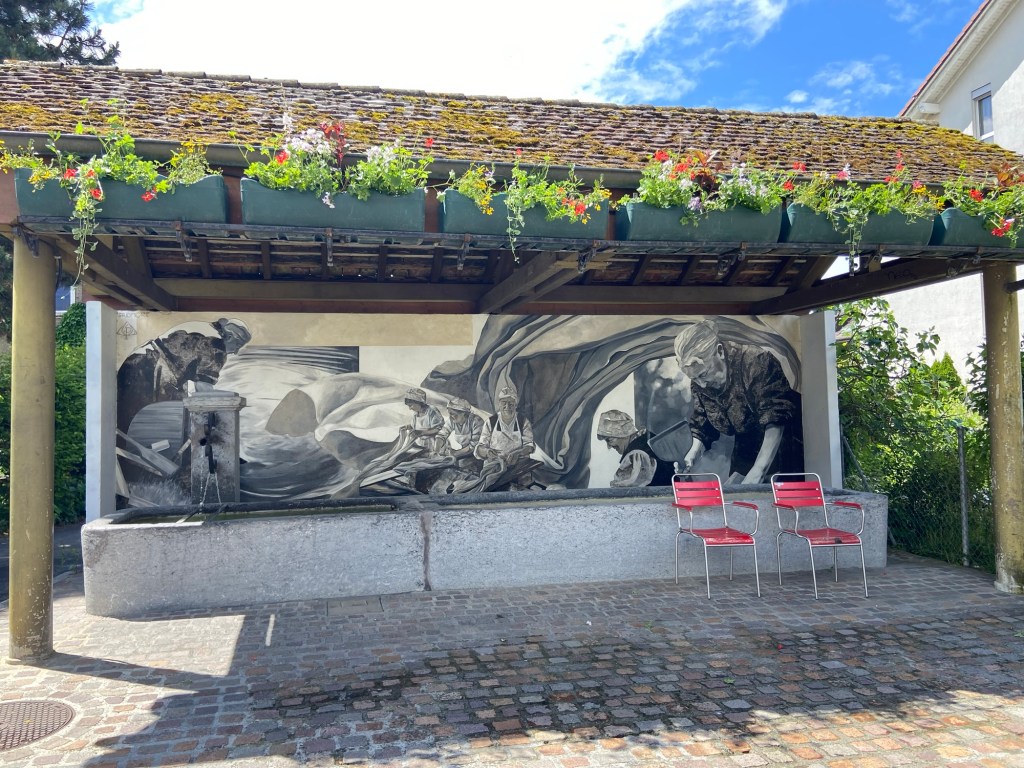
and a mural in the town’s lavoir which recalled the unavoidable burden of women, here as much as in the countryside, before the invention of the washing machine.
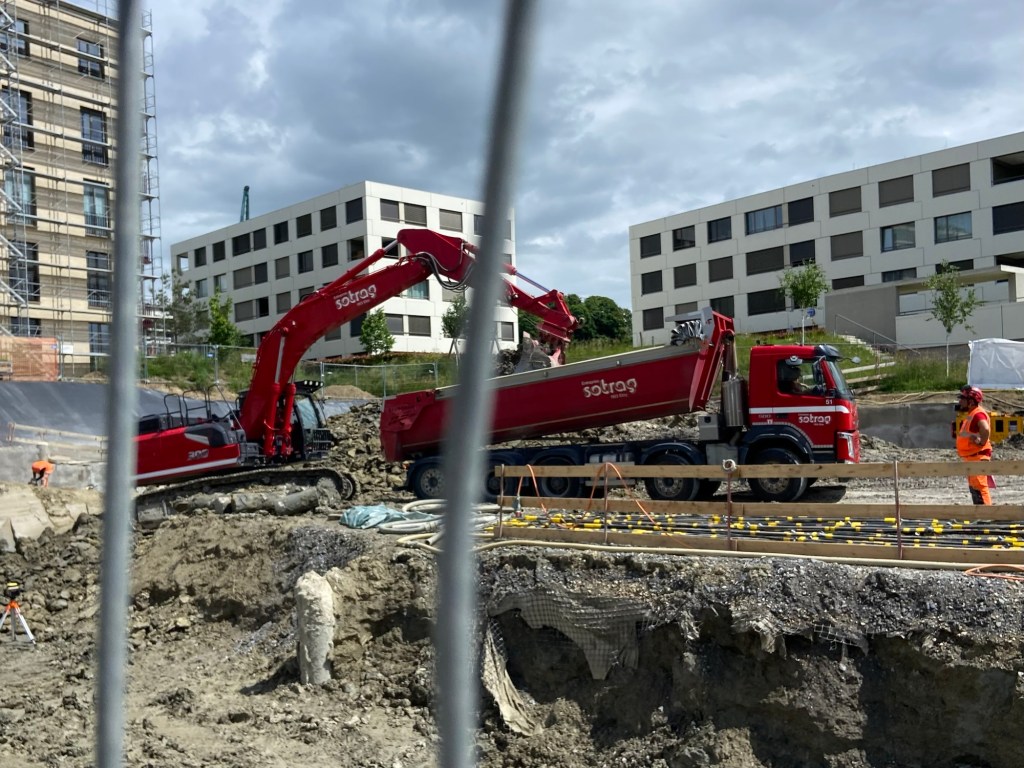
But there was much building work going on, huge earth movers scooping out giant pits for sewerage and underground garages.
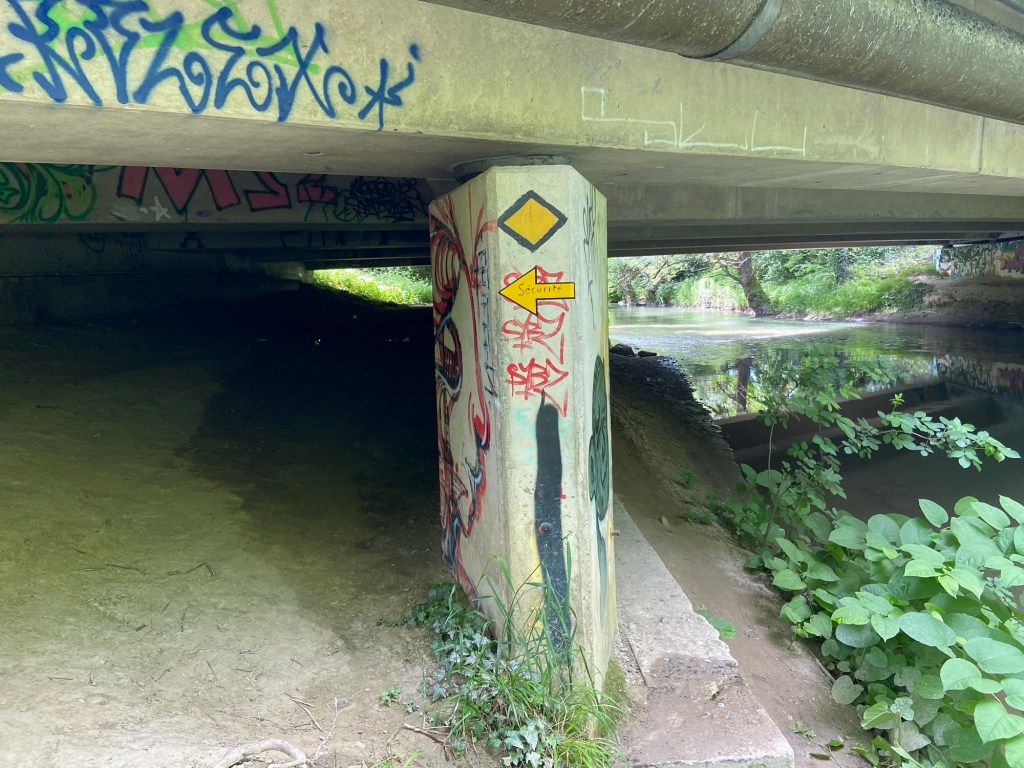
And there was also a number of unpleasant underpasses, unseen except by ‘touristes piétons’ like me, who wished to cross over the network of duel carriageways which serve Lausanne. One in particular indicated we should pass on the left hand side rather than the river side ‘for safety’ — but it was a crawl space over damp mud. What do pilgrims do when the river is high and it really isn’t safe to cross next to it?
I felt somewhat despondent. I had twelve kilometres to go in this wilderness. But the Via Francigena had a surprise for me: it now merged with the Venoge river path. I’d crossed this river twice now: once yesterday below Ferreyres and again this morning below Cossonay/Penhaltz, but now the river was in its final few kilometres of life before it flowed into Lake Geneva (Lac Léman), from where it had been born high up in the Jura in the valley south of Jougne, the Mont d’Or and the Orbe.
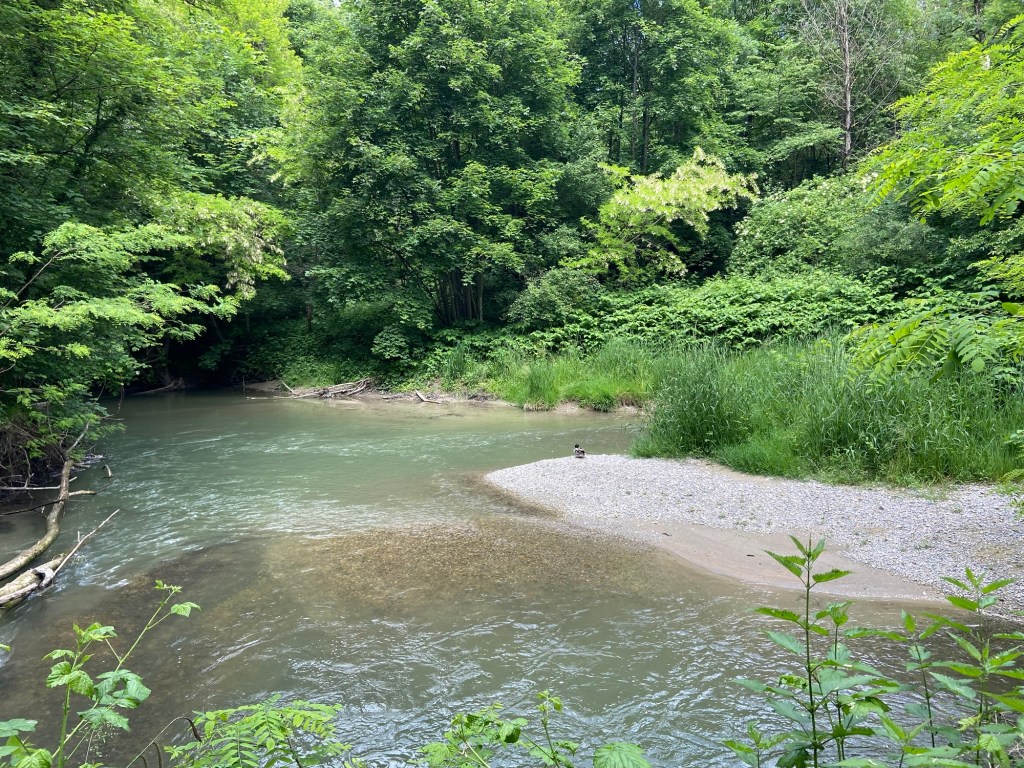
These four kilometres took an hour and a half, pretty slow going in places owing to occasional muddy conditions underfoot, and places where the path had almost been washed or torn away by fallen trees whose root system lay in Switzerland and whose canopy now lay in France, over the border which runs down the middle of the river.

Perhaps a disagreement over whose rubbish it was is the reason the plastic litter accumulated behind this natural boom had not been dealt with,

but by and large it was a pretty ribbon of woodland running now through conurbation on both banks, and now along the edge of what must be increasingly pressured farmland.

How much longer would it be before this field became astronomically more valuable being zoned for building than for growing carrots?

But mostly the path stuck uncomplicatedly to the riverbank,
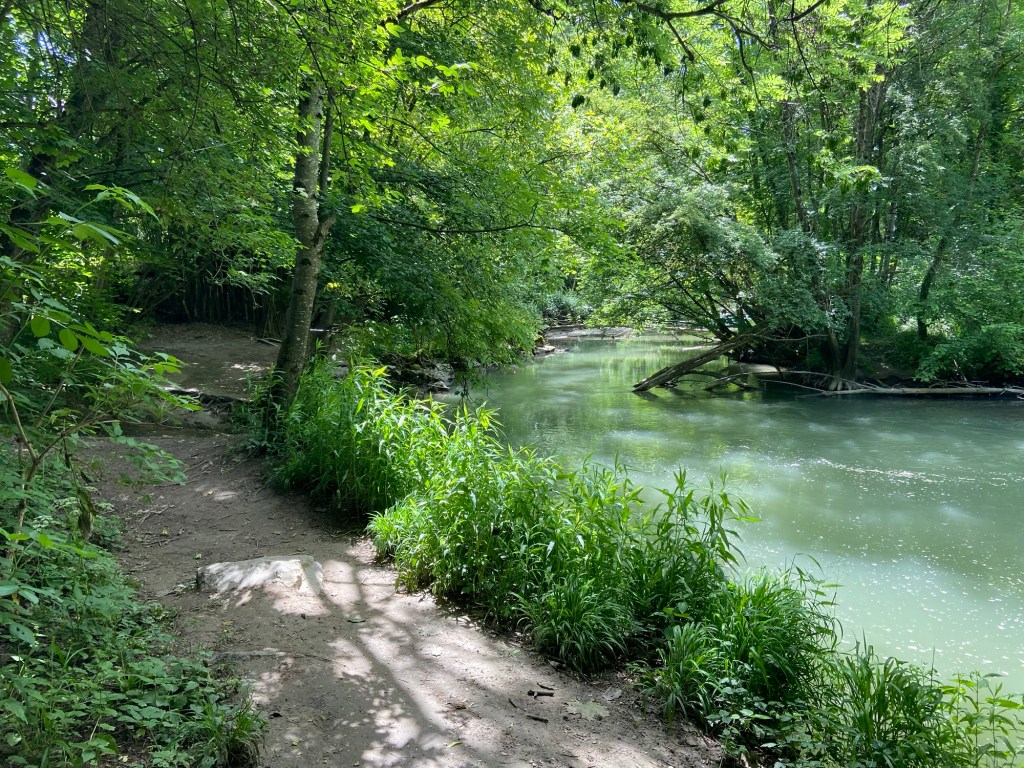
flanked also by the occasional drying-out pond full of the last of the flag iris. One final unseen oriole sang its falling phrase, hidden as usual somewhere in the highest branches, foraging for insects and building its nest to raise a brood before flying south again for its long migration to central and southern Africa. There were no dragonflies.

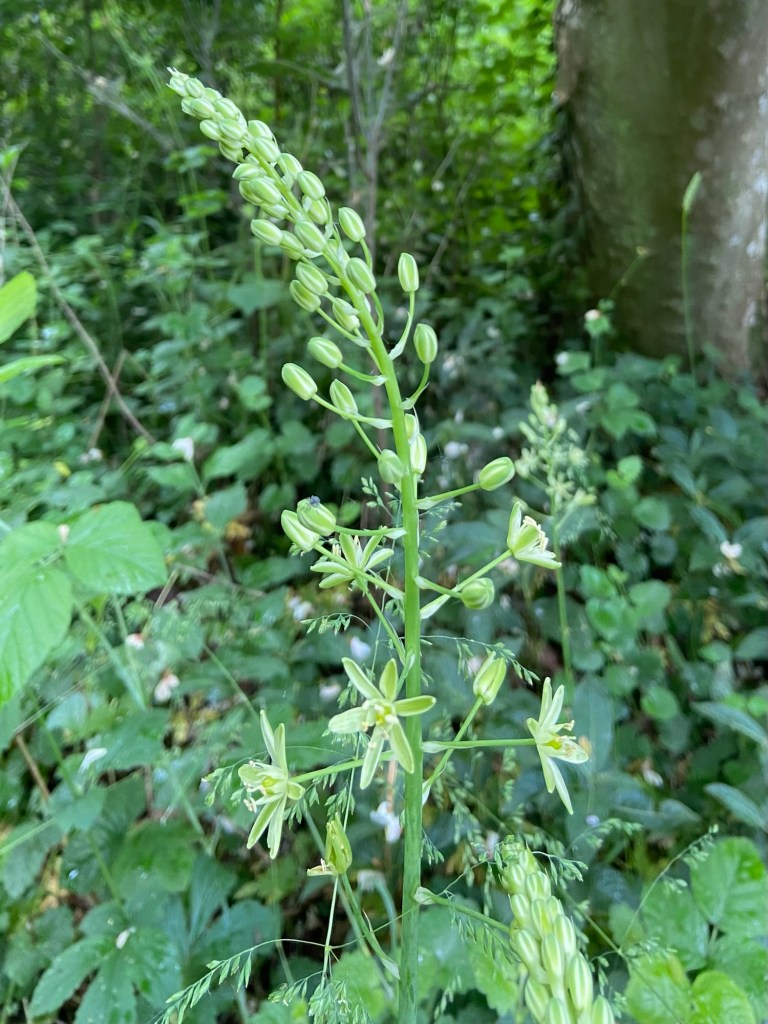
In this damp woodland mildly toxic water parsnip was king, raising its head above the disintegrating wild garlic and successfully competing for late spring space with the less common spiked star of Bethlehem, the wild asparagus which Cato the Elder had recommended growing as a vegetable more than two thousand years ago.
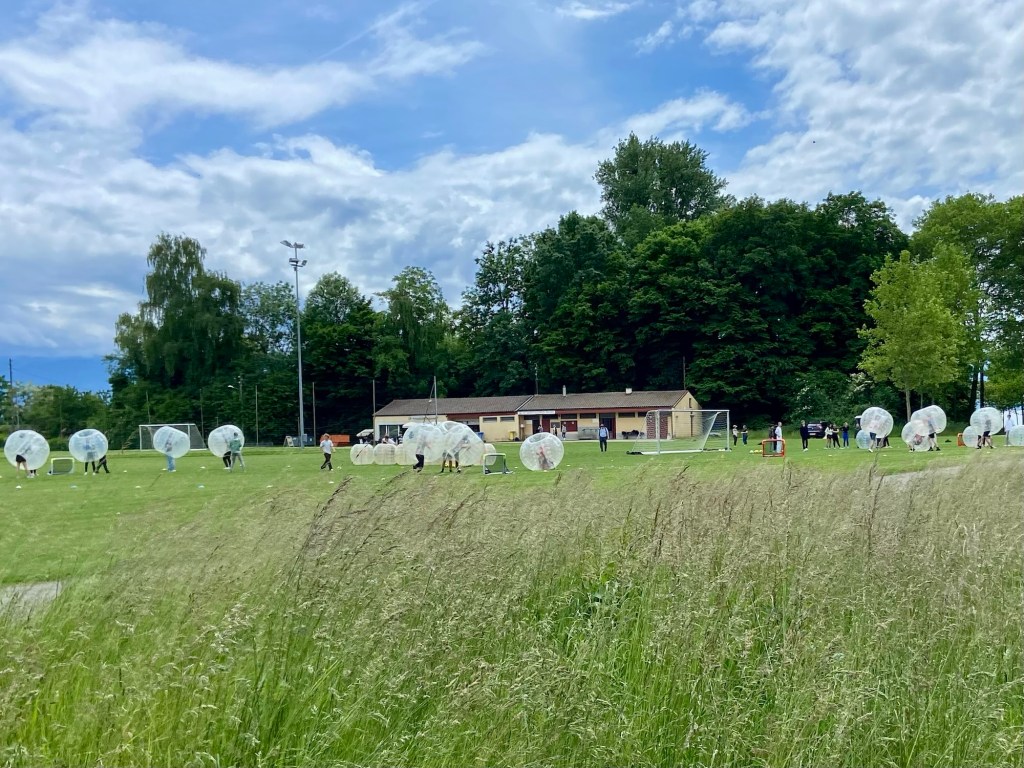
And then abruptly, this ribbon of woodland ended. I was out into playing fields where a class of schoolchildren were enjoying a PE lesson to end all PE lessons, playing a game of trying to knock each other over whilst wearing giant inflatable beachballs.
I had not had a single glimpse of the lake until I reached it — there had been no forward views at all — so it had remained hidden until the big reveal right on the shoreline. I took a photo from the middle of the pedestrian bridge, where I briefly crossed back into France; I would not have known, if my phone provider had not texted to welcome me to the country.
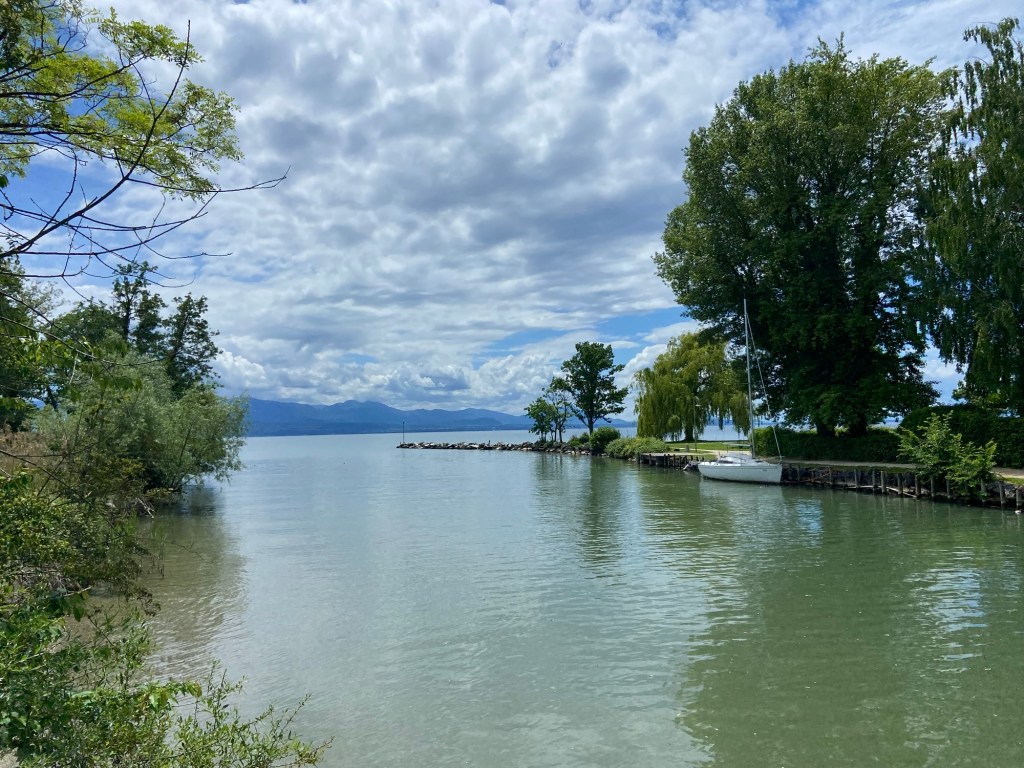
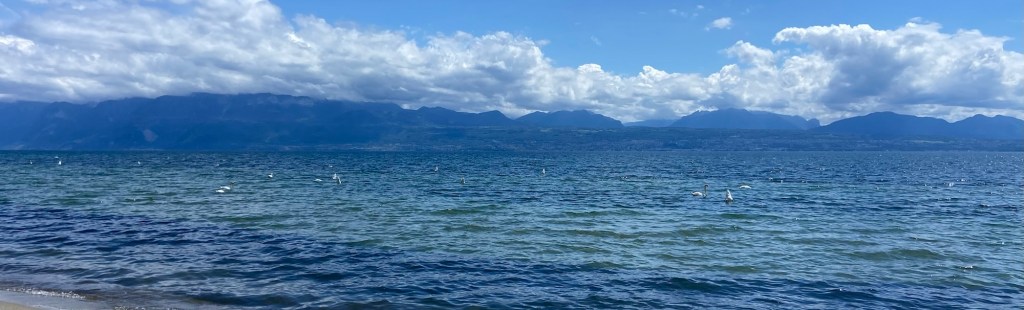
I stood on the shore and gazed for a while. There was a couple on a bench drinking tea but we were peacefully separate in the presence of the view, and did not speak. Here the mountains seemed extremely close in front of me and impossibly high. They would wait. For now I could just enjoy the water gently lapping at the lake shore.
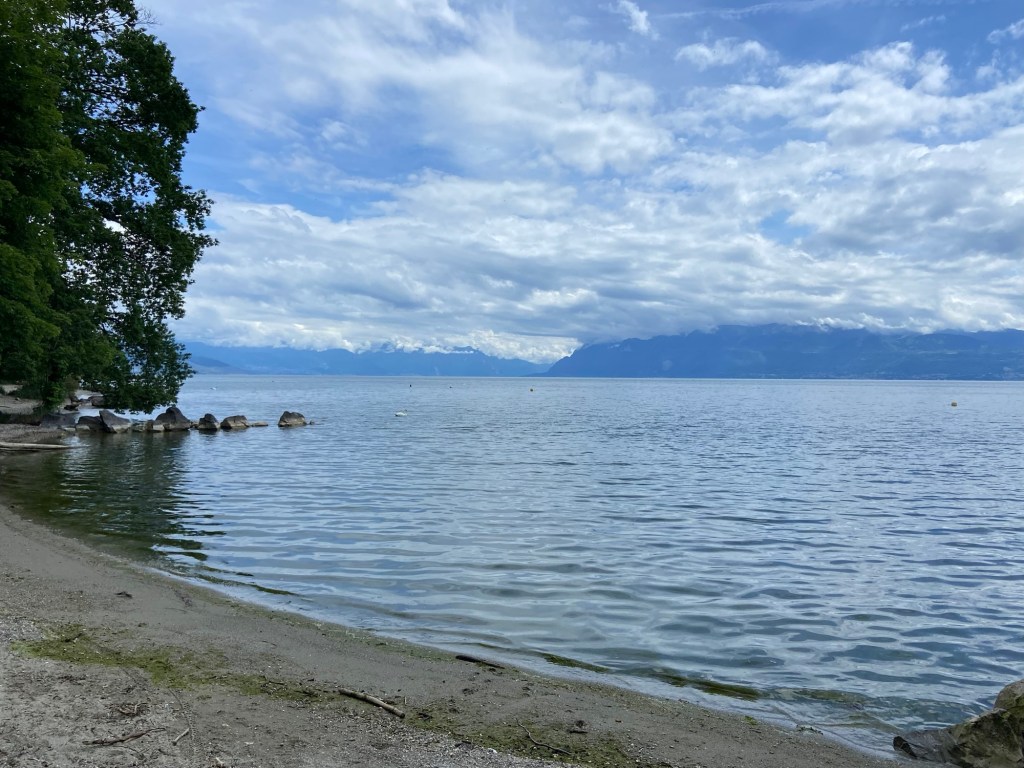
Instead of the grey water I had been expecting at the start of the day, the sun had turned the lake a mesmerising, smokey blue.
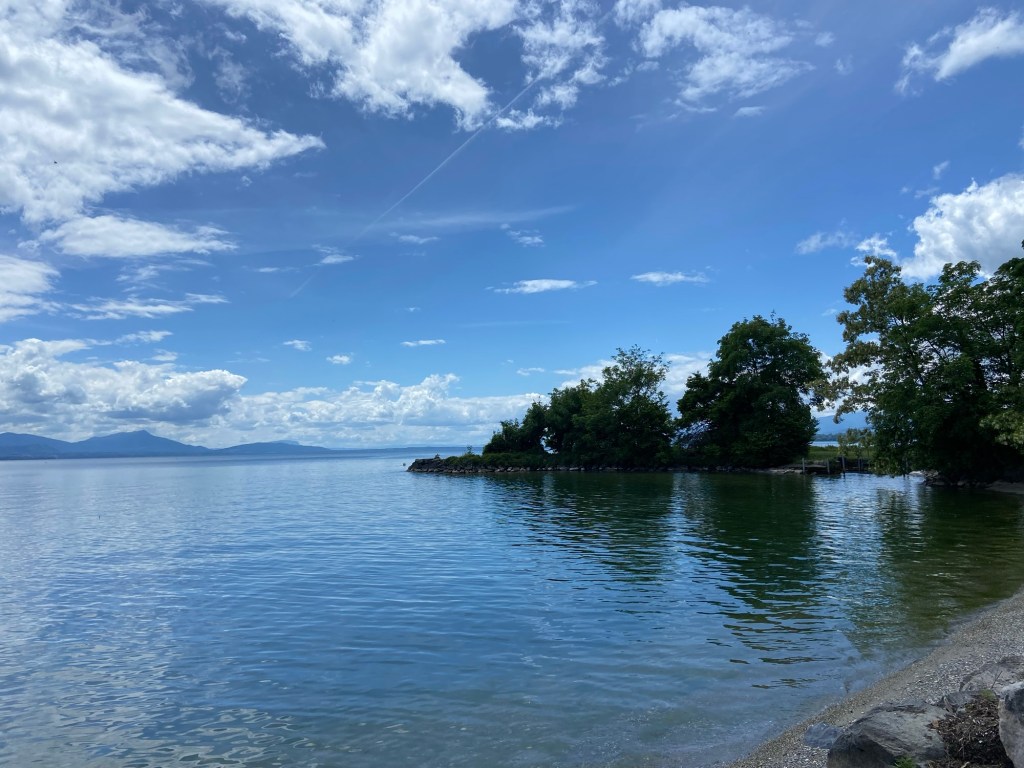
I had eight more kilometres to go now, since the Via Francigena reached the lake at this point and now turned east to run along the shore to Lausanne through its suburbs. St Sulpice was the first of these municipalities, where some of the inhabitants had bagged the views for themselves.

In other places the view was free.

A gentleman with impressive moustaches was touring two friends round the sights. This church was Roman, he told us. This is not in fact true — the Swiss Protestant church of St Mary Magdalen, originally dedicated to St Sulpice, had been built between 1090 and 1097.
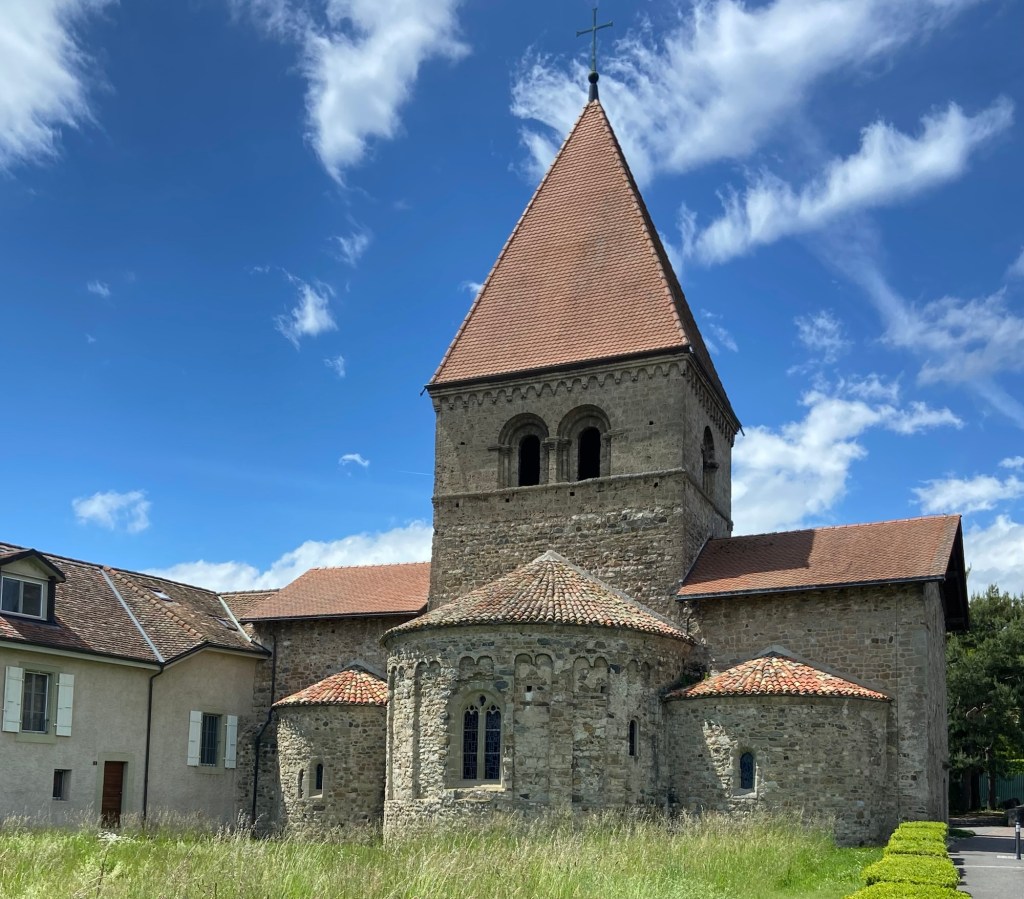
I smiled and carried on. It was too, too warm and relaxing to take issue. Much of the lakeshore had been dedicated to public enjoyment, but there was enough space for everyone to enjoy it without feeling crowded. The order of the day was strolling, or sitting reading a book — or giving up reading a book and lying instead face down asleep on a towel.

I, however, had to press on. From Pelican Park I could now see further round the bay, to where pleasure beaches were interspersed with parks and marinas.
At Dorigny a lakeshore project was underway to stabilise the lakeshore and create habitats for flora and fauna. It seemed to be working: beyond a wildflower margin coots and pochards swam about, foraging, amongst the little lagoons created by wooden booms and plantations of rush.

Out on the water an occasional windsurfer was pitting their skills against the strong breeze, although the twenty-nine swans preening and feeding from the lake bottom in a loosely dispersed group didn’t seem bothered either by the human beings sharing their water or by the wind.
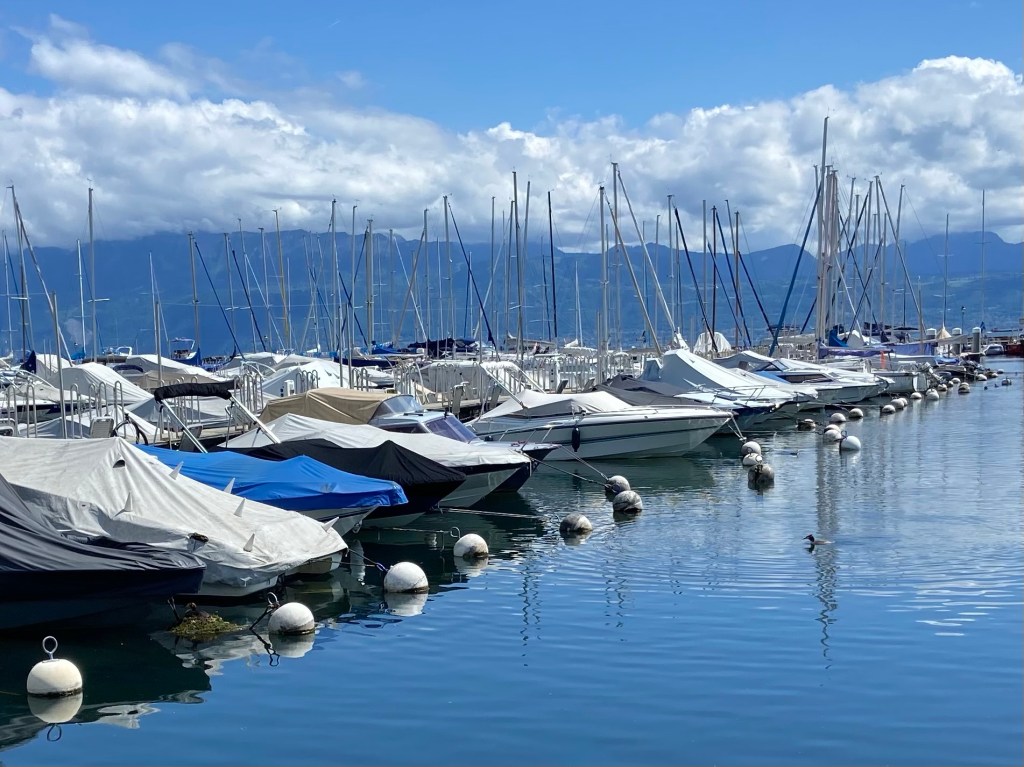
Similarly, grebes nested amongst the boats, covered up in the marina until the season starts, males bringing more nesting material and food to the females. I wondered what the owner of the boat bottom left would do when they want to take their boat out and find a grebe sitting on its reedy, weedy nest on their mooring.
I was so happy. The elegiac private moment of loss and passing away that I had felt earlier on the edge of the forests of Bussigny has made way to an excitement and a sense of achievement. Every now and then it seemed that Lausanne was offering me a comment to that effect.
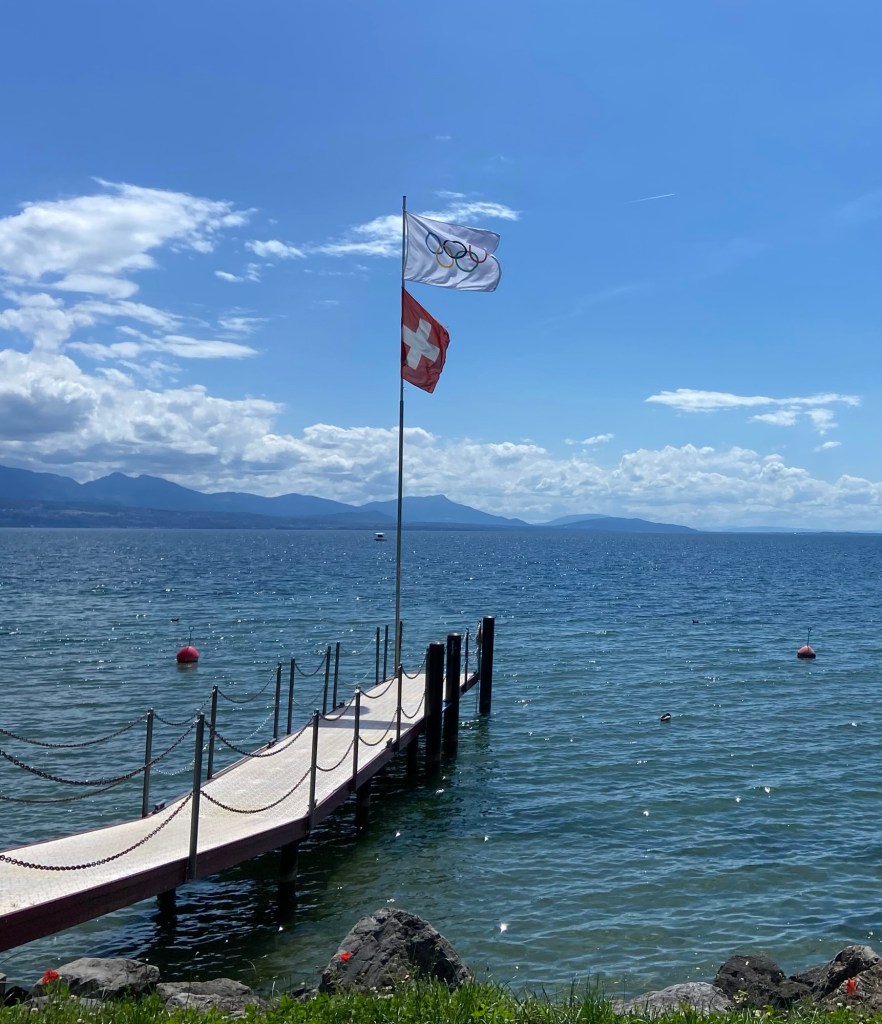
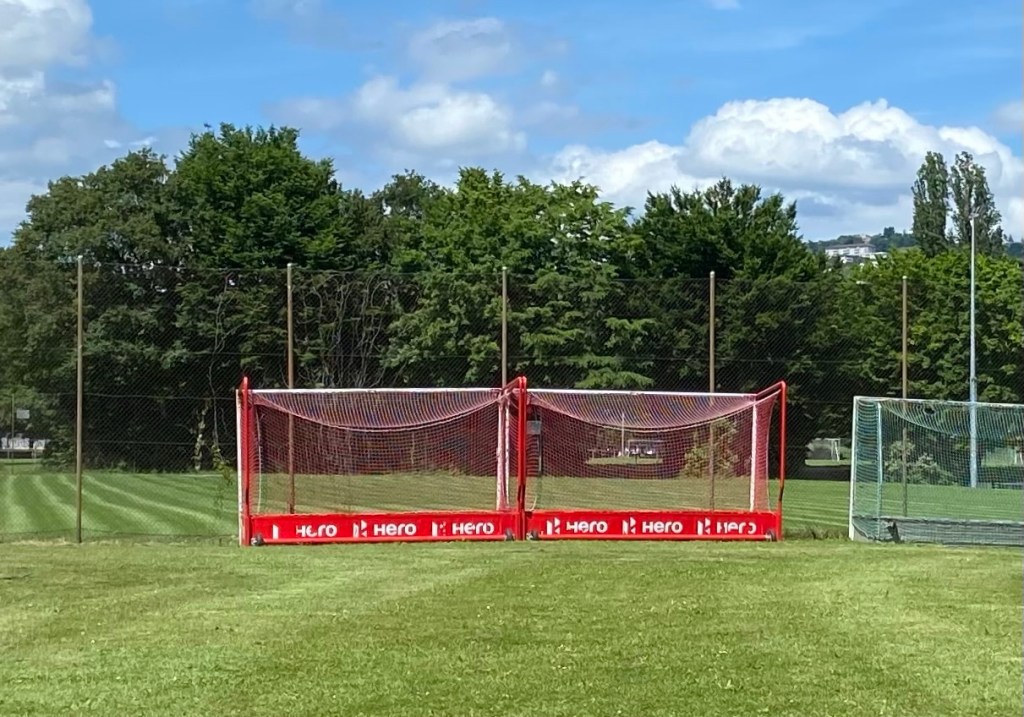
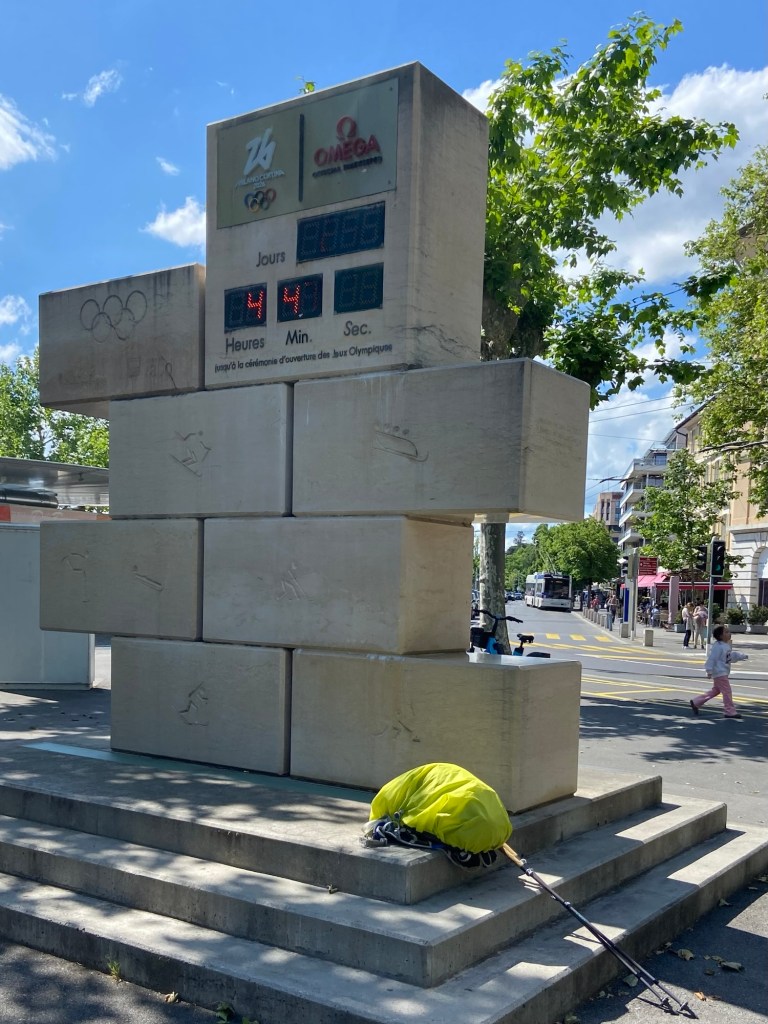
I found myself speeding up for last kilometre, past the Olympic clock counting down to the start of the next games as I brought my own Olympian journey to an end.
The Via Francigena ends the stage in Lausanne at the Château d’Ouchy, now an upmarket hotel.

The young man on reception congratulated me as he provided the last stamp for this year in my credential — he so smart and clean and me so ragged and smelly!
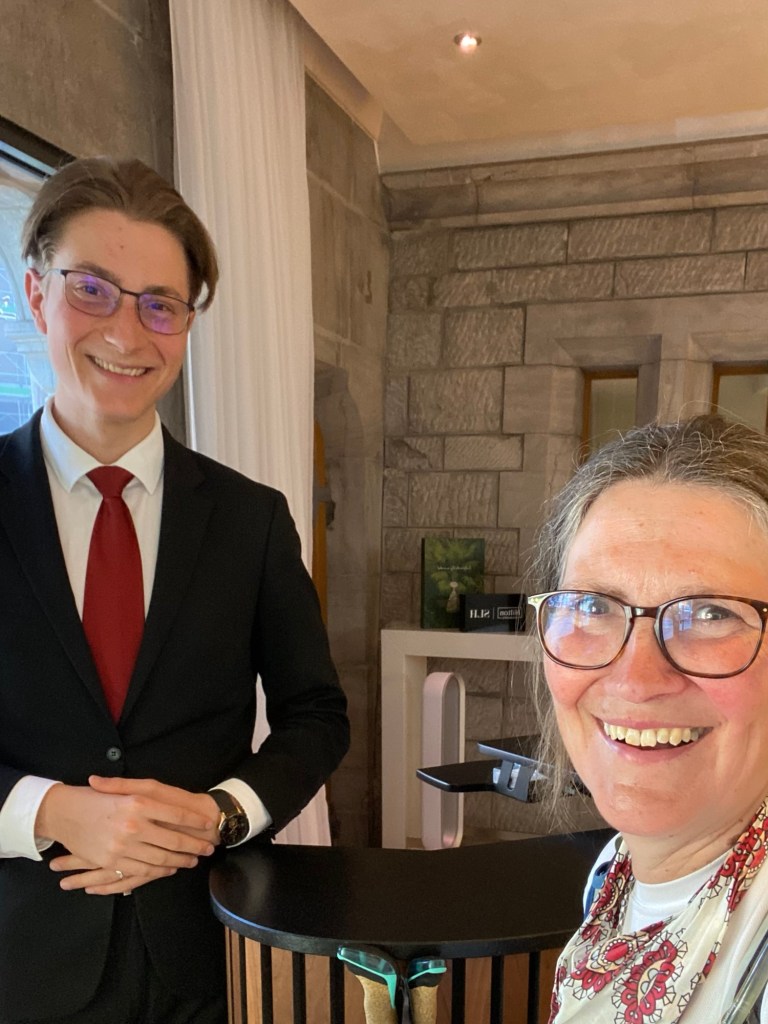
I asked for a drink from the very beautiful cooler by the desk, a moment of acknowledgement of the tradition of giving water to pilgrims and prompting a private memory of the day so long ago in the Haute Marne when I had taken the shortcut out of the forest, scared of wild boar, when Yvette had given me water when I was having problems with my feet and had run out of water on that hot day, and when we watched the swallows in her garage space together.

And I felt too that the bowl of orchids was a sophisticated nod to the extraordinary variety of their wild cousins from which I have derived so much pleasure, over the past many weeks.
The many weeks. Setting out on a cool day in Canterbury on 29th March with Stephen and Frances, to finish here, a shade under eleven hundred kilometres later, strong and healthy. Forty-seven days of walking, an average of a half marathon distance a day. Across the vast agricultural fields of northern France, impacted by contemplating the history of the great wars of the twentieth century, through simple hamlets and wealthy champagne vineyards. Feeling renewed and anxious by turns in the many woodlands and forests. Sometimes crossing and sometimes following the course of some of the mighty landscape-shaping rivers of France. Passing over two borders, one watery and one mountainous, as I made my way from Britain, across the length of France and into Switzerland.
The astounding biodiversity. The habitats filled to the brim with the spring succession of plant and wildflower species, with the insects, and the birds that feed on them. The uplifting soundscape and chorus; being stopped in my tracks by the nightingales. Being stunned by the number of them.
The people I have met. Those I have walked with — Ian, and Matt and Aphra, and the other pilgrims met more fleetingly but still now companions of my journey and I of theirs. Regine from Belgium. Kate and Bryce from New Zealand. All the hosts — some humblingly generous like Micheline Peacock (whose gift of the small plastic box with our slices of cake is still going strong, and now packed with snacks for my journey home), Monique in Chalons (I have been so grateful for the two bin bags she gave me which have kept my belongings dry. I have wrapped my pack in them now to check into the hold for my flight home); sweet, gentle Annie, with whom Stephen bonded about watching competitive cycling. All of them now live somewhere in my heart. I have loved the encounters. The conversations enabled by my increasingly confident French — except even now when I’m tired, my grammar and vocabulary breaks right down. So many people have been kind enough to help me communicate, wait for me to be able to find the words to express myself. This is the spirit in which the Francigena was conceived — to connect people across borders.
For now I must leave this route. But only for now. When I left home I didn’t know if this vast journey was a thing I might accomplish.
But now I know.
All is possible.
~ Fin ~
Stats for the day
Distance: 25.93km
Pace 4.9 (but I think actually faster as the river section was slow and I didn’t record the faster first 52 mins.
TOTALISER: 1097 kilometres, from Canterbury to Lausanne.
💚 Please, if you have enjoyed accompanying me on my journey and you are able, support my fundraising endeavour at https://www.justgiving.com/page/sophieholroyd
Thank you 🥾 🗺️
Next year… the Alps and beyond, to Rome.
 Walking The Landscape
What a wonderful account of the final day of a wonderful walk. I have loved walking alongside you, and David and I will miss reading the blog every morning. For now, safe travels home, and I look forward to next year!! Xxx
LikeLiked by 1 person
Love you, Jane! Thank you for reading. It’s now my turn to follow YOU!
LikeLike
I agree with Jane, such a wonderful last account! …with so many emotions. I too, will really miss the daily blogs. To be honest, at one point they were a bit of a lifeline. I had a hip replaced on the 23rd April, but within a couple of days, had a horrid reaction to the pain meds that I was sent home with. But then your blog appeared and being able to follow your journey of courage and discovery was perfect. So now dear Sophie, I hope you have a good journey back home and are able to enjoy your inevitable shorter walks with Stephen until you return to your pilgrimage next year. Much love ❤️ xx
LikeLiked by 1 person
Oh I’m so sorry to hear that — what a trial. I do hope they have you on a regime that can help you recover quickly. Sending love for that. And thank you so very much — and for being such a stalwart supporter. I have a ‘Kent Visiting Trail route mapped… I hope to be able to drop in and maybe make you a cup of coffee so you don’t have to get up!
LikeLike
Woohoo!!!! Kent!!! Well, we do have a guest en suite so if you need overnight, you would be very welcome!! The gut is healed, yey for kefir, and the hip is doing absolutely fine, I’m already gardening and walking without the crutch!
LikeLiked by 1 person
Yikes! Sounds dangerousL’ 💚
LikeLike
brilliant and beautiful — La piste et la femme qui la prend
LikeLiked by 1 person
🥲
LikeLike
Brava Sophie!
What an amazing achievement and a wonderful account of your final day. I will look forward to the continuation next year
LikeLiked by 1 person
Thank you! Xxx
LikeLike
i hope and expect you’ve had a wonderful homecoming with a well deserved great fanfare.
LikeLiked by 1 person
Ah well — my mountain bike expert is away for the week! So it’s me peacefully easing myself back into the complexities of normal life on my own with the cat
LikeLike
Happy settling in.
LikeLiked by 1 person