I need not tell you that I love you dearly, and am very, very sorry in my heart to part with you. But this life is half made up of partings, and these pains must be borne. It is my comfort and my sincere conviction that you are going to try the life for which you are best fitted. I think its freedom and wildness more suited to you than any experiment in a study or office would ever have been
Charles Dickens, letter to his youngest son, 1868
When we had come off the Lorette Ridge last night, we had briefly gone to look the ruined 16th century gothic church of Ablain-St-Nazaire before heading to our bed and breakfast. What was left of the graceful arches was stark against the evening sky,
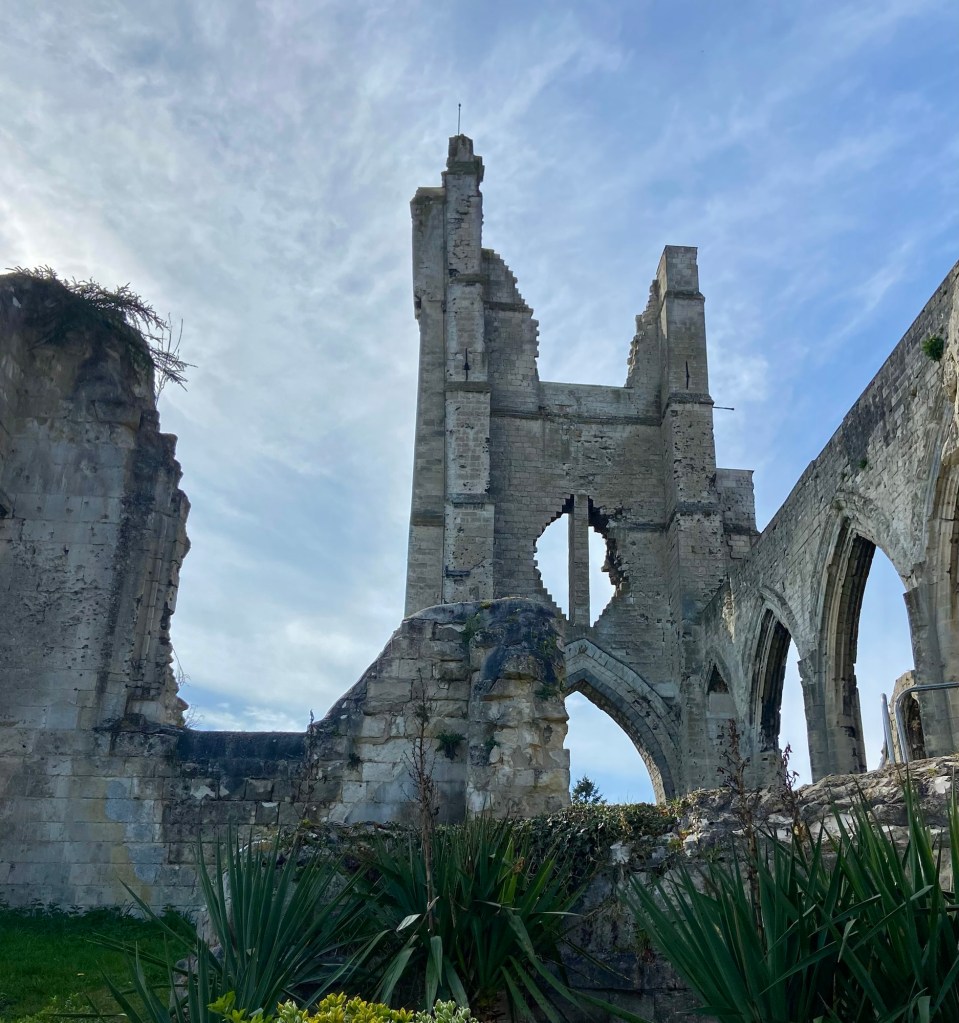
and the evidence of the shelling on the stonework was still a chilling reminder, after our visit to the cemetery, of the awful damage inflicted on the town — which had pretty much been flattened.

Claire and Marc received us with real warmth and kindness and we shared a delicious meal with them (with their huge English setter Jagger licking the salt off our skin under the table). It was just a shame that I managed to snap the shower-head clean off in the bathroom. Because it was a most convivial evening and we had a wonderfully comfortable night and both slept well. Thank you, both!
There was lots to talk about this morning. We pretty soon got back out into the fields again, and so the topic of conversation was what this landscape would have looked like when the front was up on the Lorette and Vimy Ridges. We thought we were behind the lines here, so Stephen was using the wood up ahead as a theoretical example of a place one might use as a potential artillery bases or as part of your supply lines for provisioning the Front.
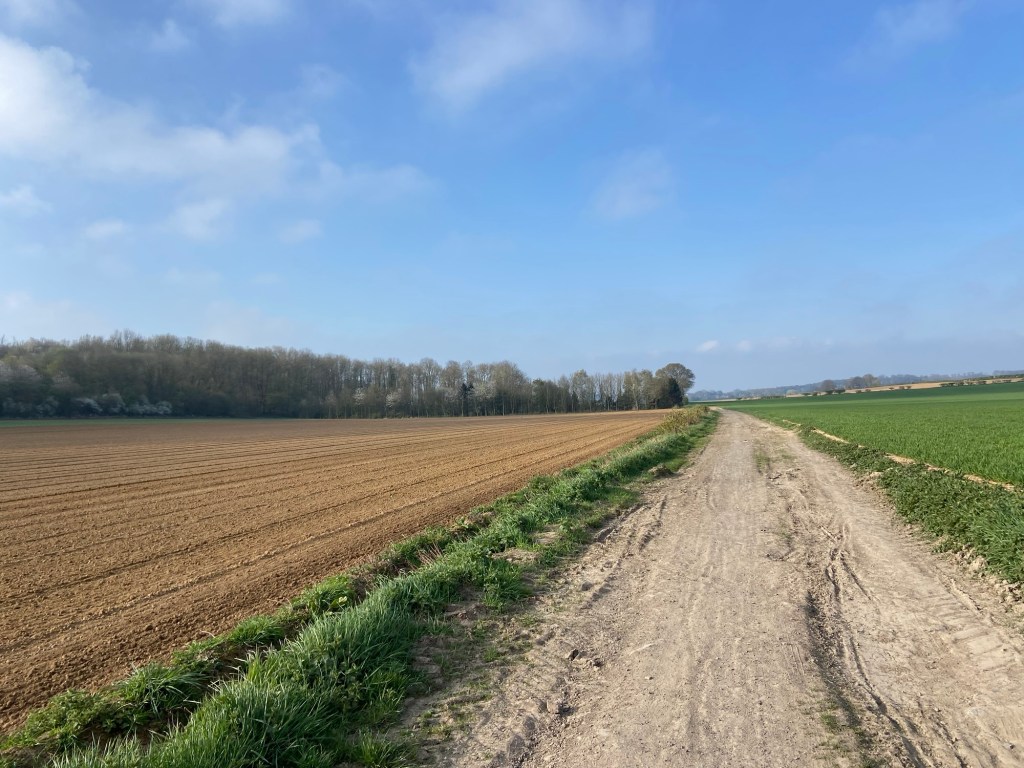
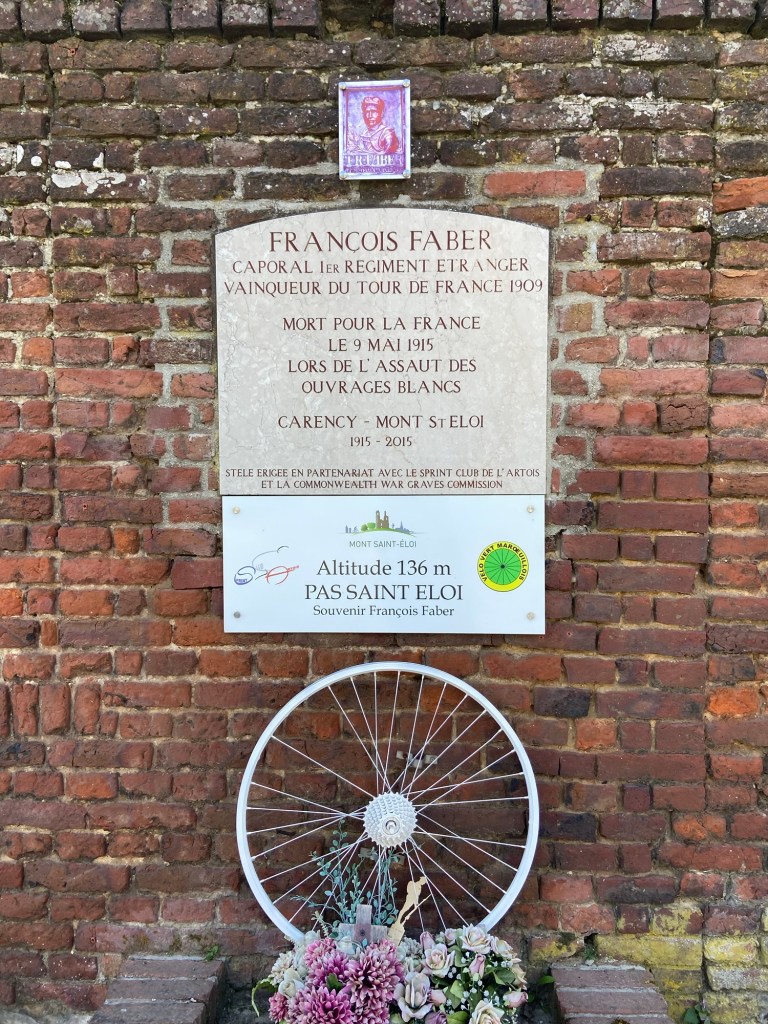
It turns out that the front line (cut into the chalk, the ‘white works‘ trench system) had run behind the wood, and the wood really was used as a rear base for Allied troops during assaults on the hills of Lorette and Vimy. Many died here, including François Faber, a Luxembourg racing cyclist and winner of the 1909 Tour de France. There was a memorial to him in the town.
And during a reconnaissance mission carried out by the squadron of Captain Antoine de Saint-Exupéry, the aviator-writer was forced to turn back with a hole in his aircraft’s fuel tank. But for us here, now, as we passed the wood here at Berthonval, quiet except for birdsong, a stag bounded out of the wheatfield and away into the trees and out of sight.
The path did not go in a straight line today, but rather twisted and curved to take in several large villages. The first of these was Mont Sant-Éloi, a hilltop village in which the remains of an abbey in the form two enormous ruined towers were the stand-out feature of the valley that we had seen from the humpbacked Lorette Ridge yesterday. Unlike the church in Ablain, it was not a casualty of the 20th century war, but rather of the 18th century revolutionaries, who had smashed the vast Abbey all to smithereens except for the colossal towers of its west end.
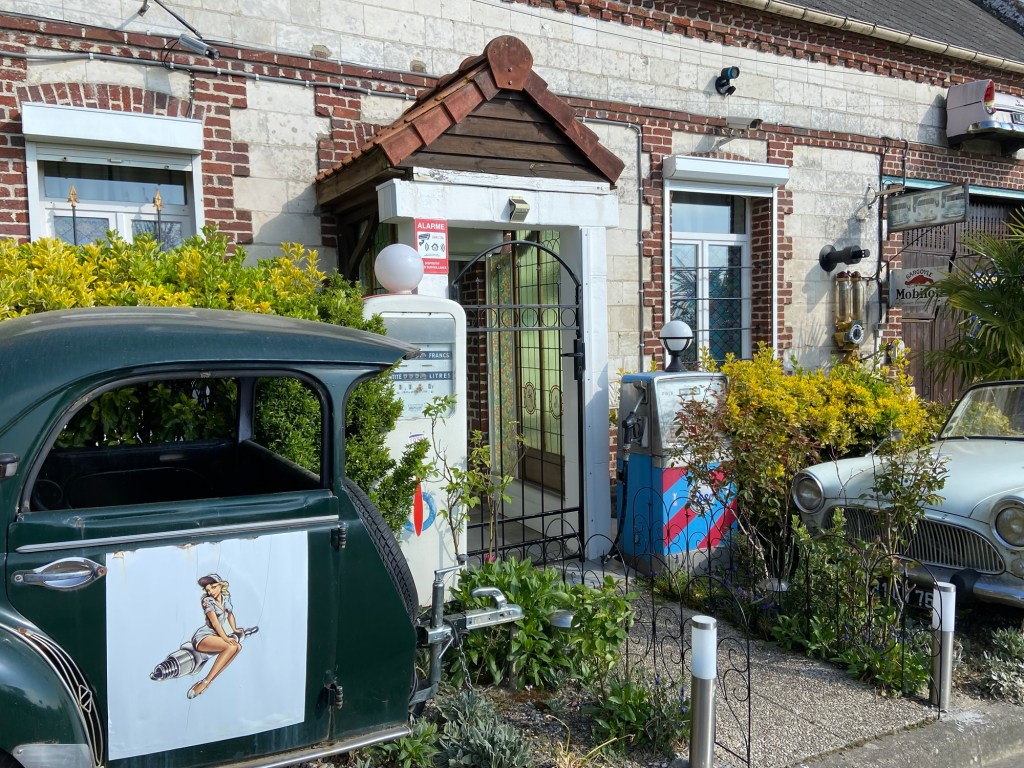
The town was full of whimsy, from the people who run the local motoring club
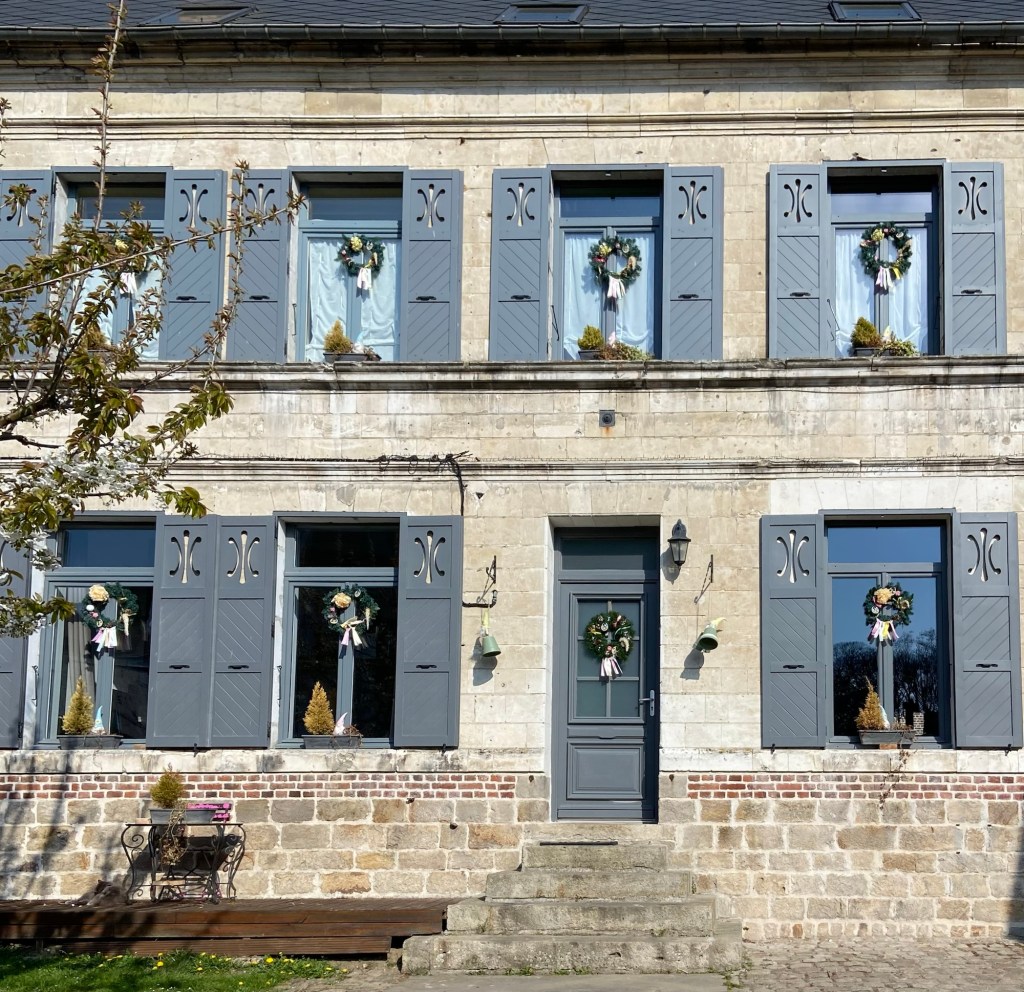
to a Maison advertising prêt-a-porter where all the front windows with little Easter wreaths
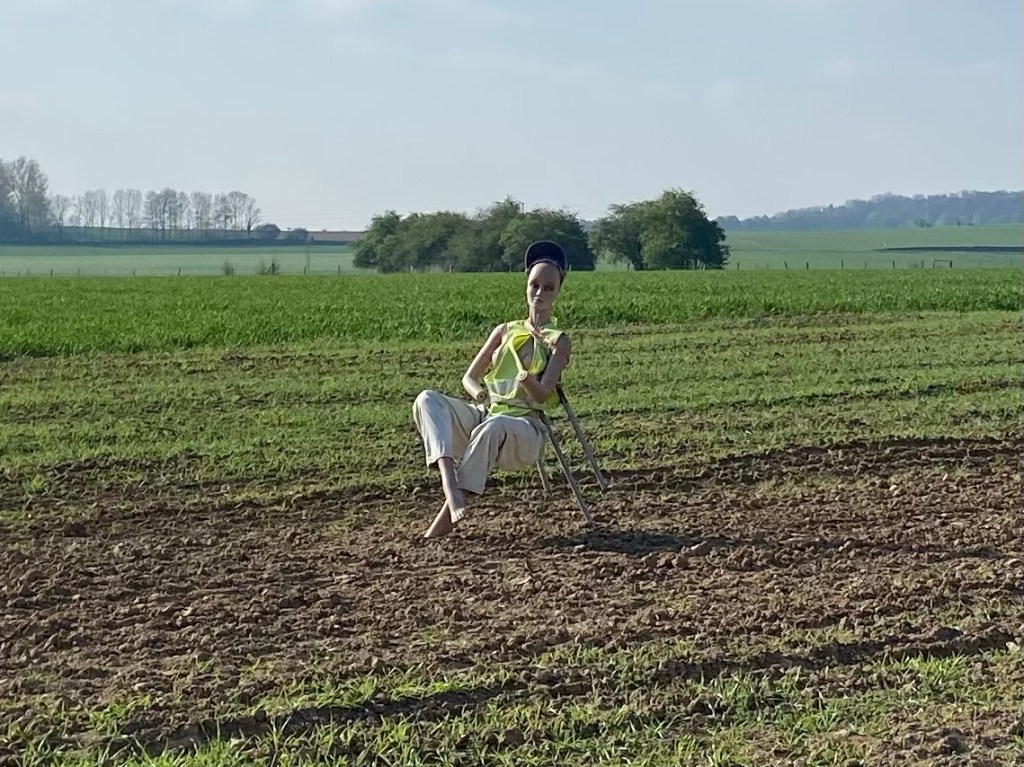
not to speak of the very strange half-naked scarecrow out in the fields who looked like she was hovering over the crop.
The people of the town seemed remarkably flighty for a place with such an insistently solid stone ruin. The scale of the two remaining towers of the abbey was hard to take in, and it was difficult to imagine how big the original abbey would have been. The detailing of the columns high up in the air made us think of the stonemasons on shaky wooden gantries hauling up the impossibly heavy stone to put in place.
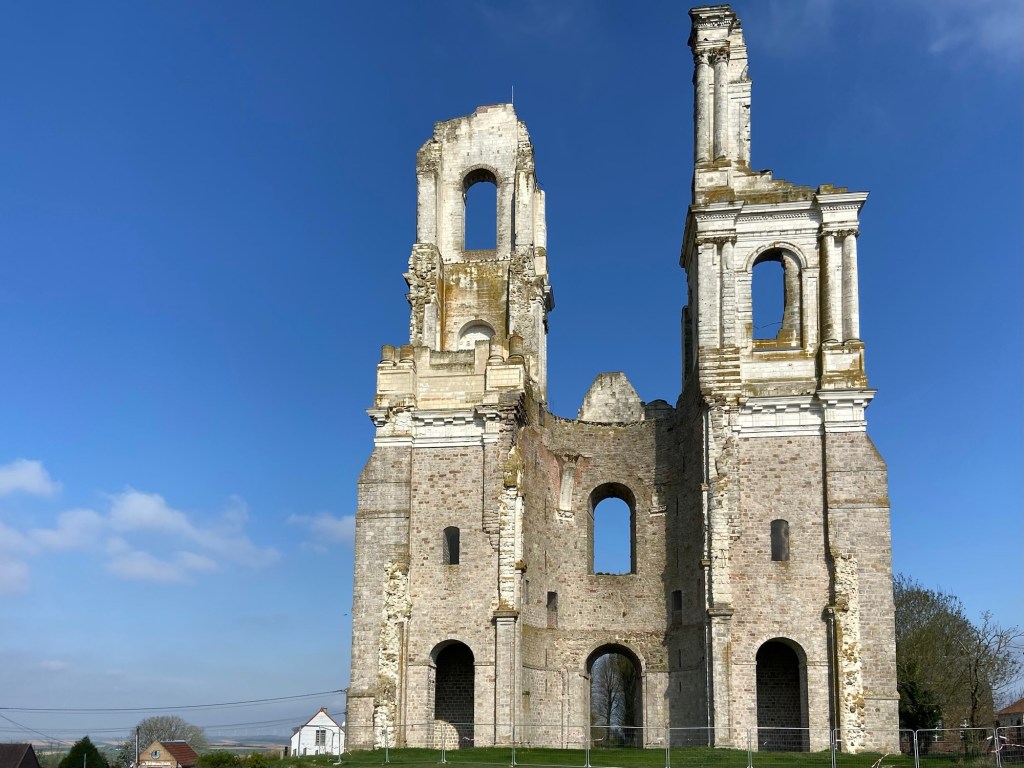
Now it was only the pigeons up there, taking off all at once in a noisy, wheeling flock.
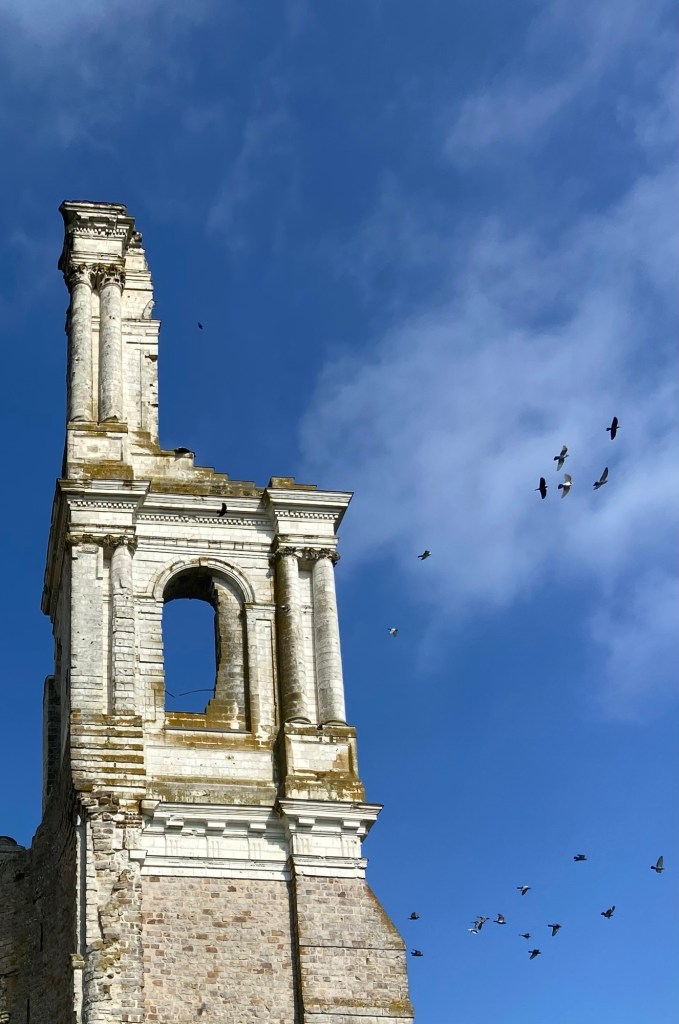
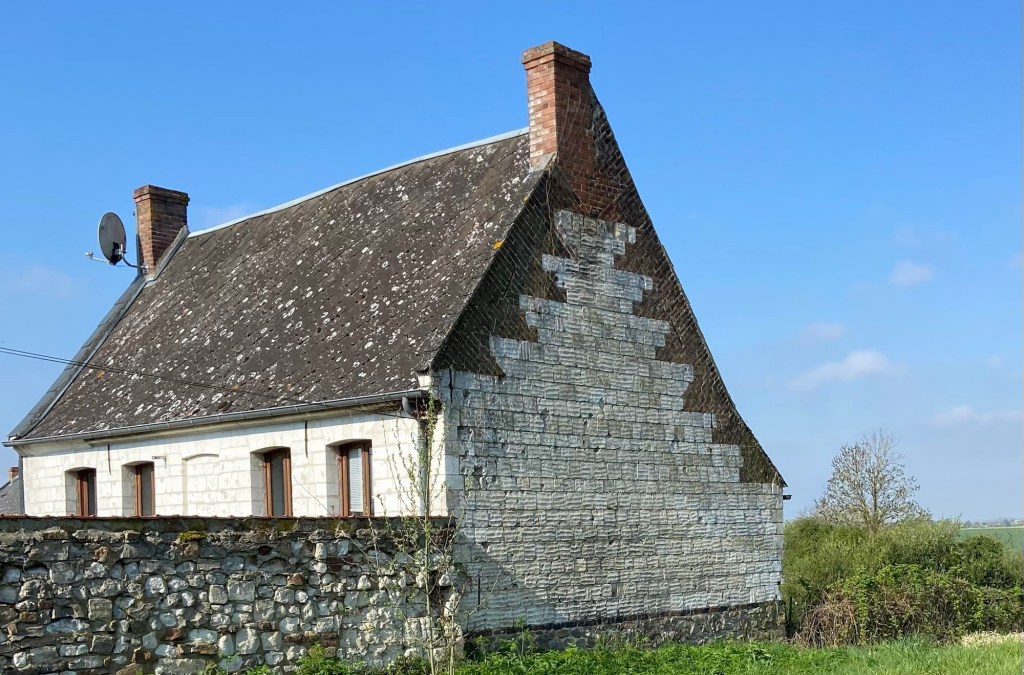
But when you start to look around you suddenly see that the ghost of the abbey is still there, its stone recycled in houses and barns all round the village.
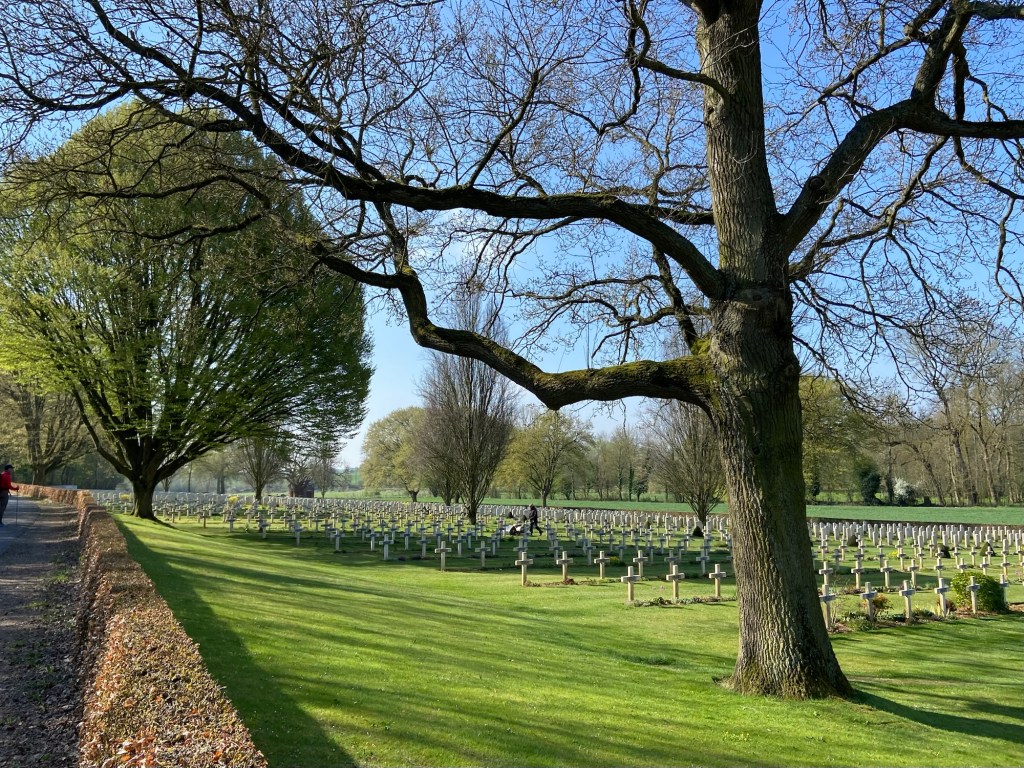
Back down in the valley there was yet another military cemetery, a Canadian one this time with the headstones all marked with a maple leaf symbol.
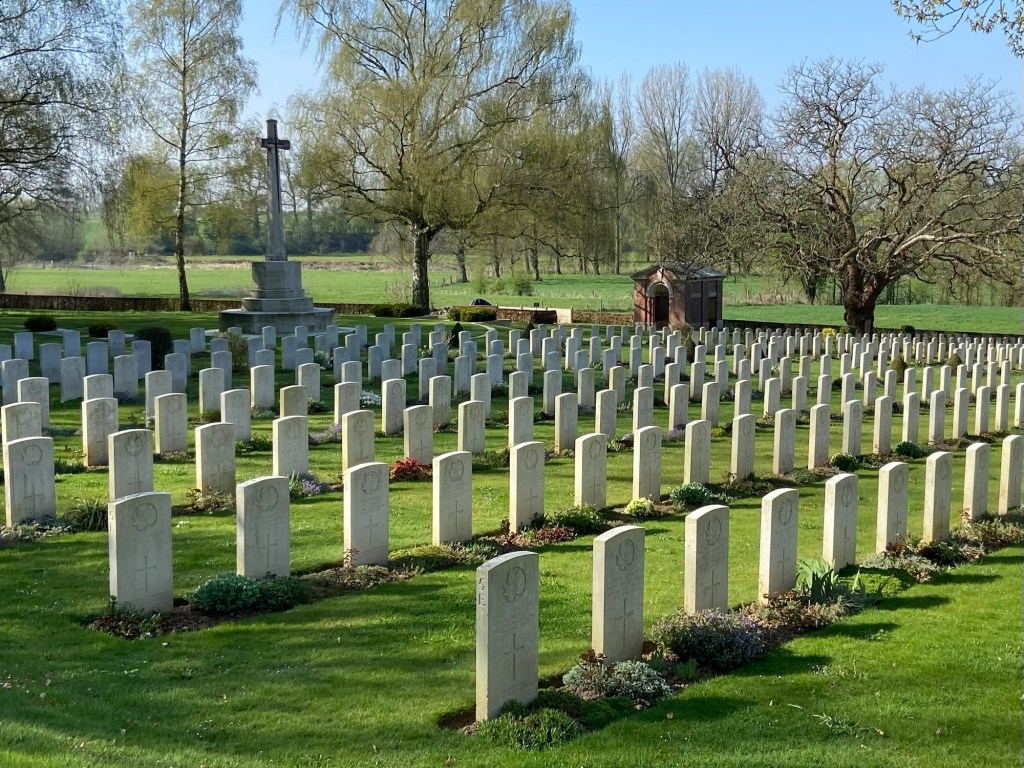
Marc had said last night that a big difference between the British and the French is that the French repatriated the bodies of the fallen soldiers, whereas the British bury their dead where they fall. We stopped to chat to the Commonwealth War Graves Commission groundsman who was mowing the grass in between the headstones, and we complimented him on the beautiful planting and the way everything was tended so respectfully.
As we left the village, Stephen held up his hand for me to stop talking and listen: a cuckoo! We wondered whether it was stopping here in the woods, or heading further north.
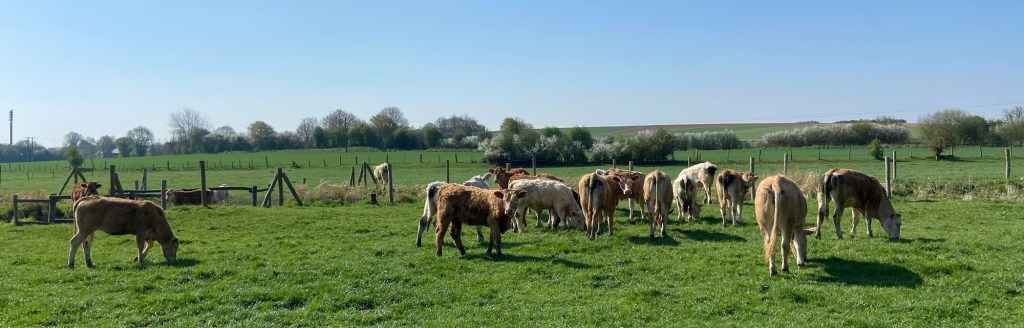
If the cuckoos are here it is time the farmers are starting to put their cows out, and given my past experiences, I was very grateful that these ones were m safely behind a fence. They all looked up as we passed, but most soon lost interest. It was easy to identify the ring leader who would be a real troublemaker if one had to pass through the field.
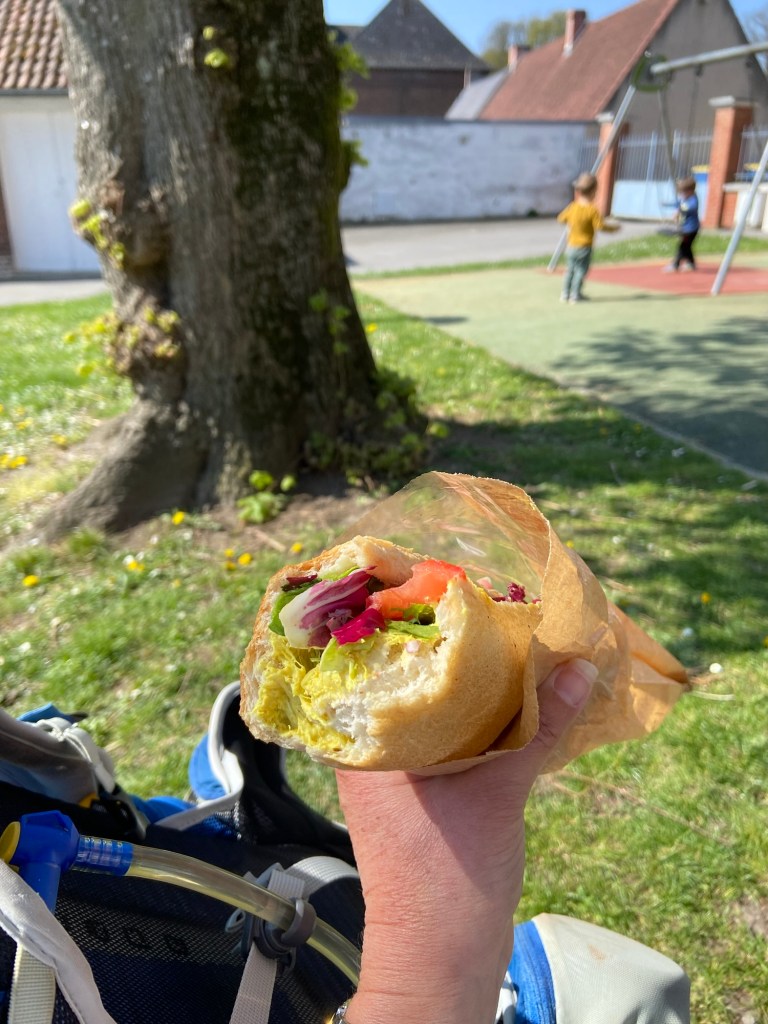
By now we were unaccountably hungry. We stopped in Marœuil (pronounce that how you will) to buy a filled baguette that was so huge we could comfortably cut it in half and feed both of us. Curried chicken! Although not, in this revolutionary country, ‘Coronation chicken’. As we ate we watched two little preschool boys playing absolutely beautifully together with a red car, a blue car and various little sticks, stones and shells. They were so cooperative with each other. Such good friends.
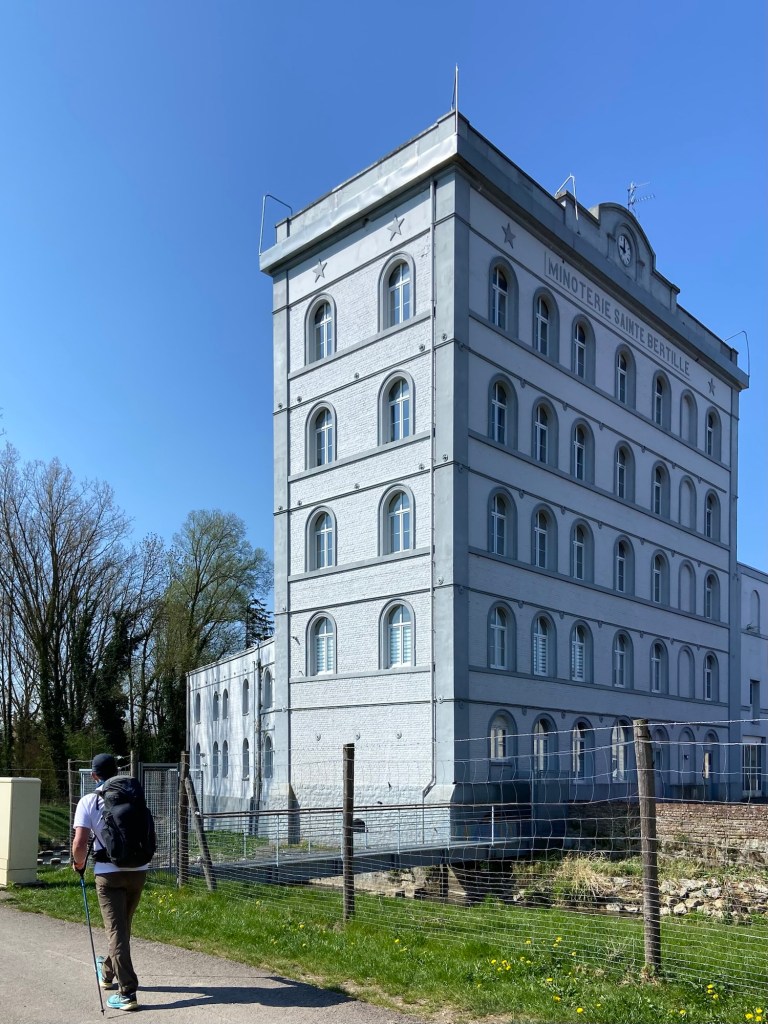
The Via Francigena now joined the river Scarpe which we would be following more or less until the end of the day in Arras. The old 1932 bustling Bertille flour mill in its banks was now a pristine set of chichi apartments
with a restored fish ladder on the river below it, to help brown trout make their way upstream to spawn in the shingle.
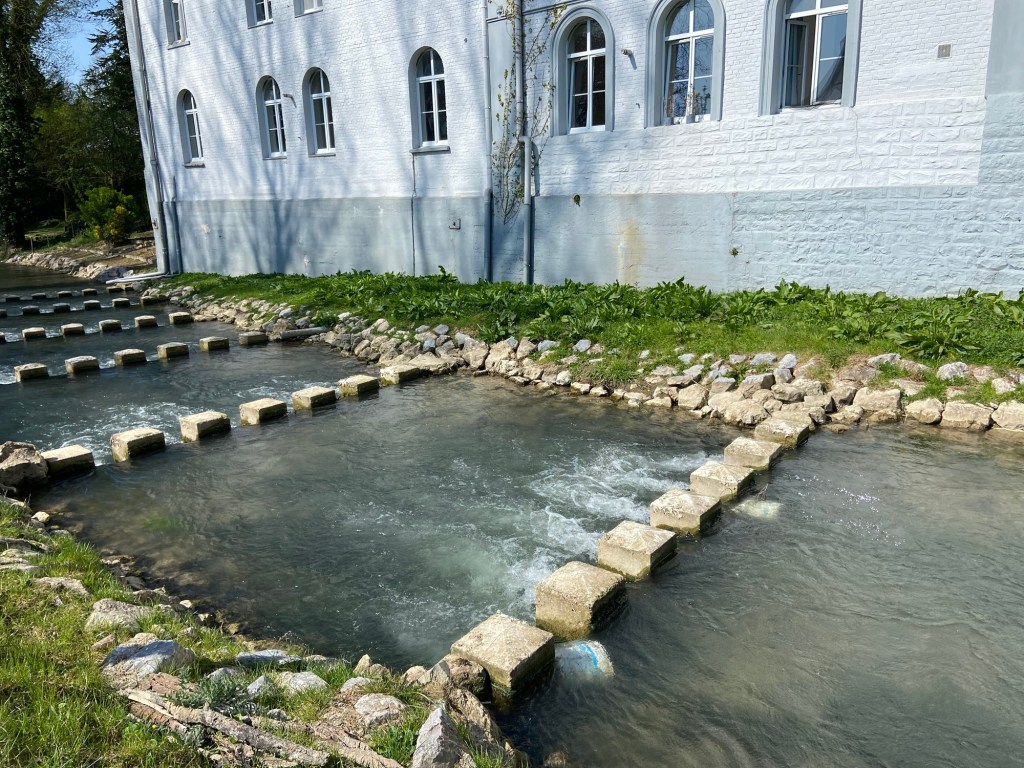
We followed the river through an ecological park as it snaked its lazy way in perfect peace down the valley to where the river Gy flowed into it. A lady walking her red setter said she had seen some roe deer on the opposite bank, but although we were very quiet, we didn’t see any. It didn’t really matter though, because the riverbank was just idyllic as it was.
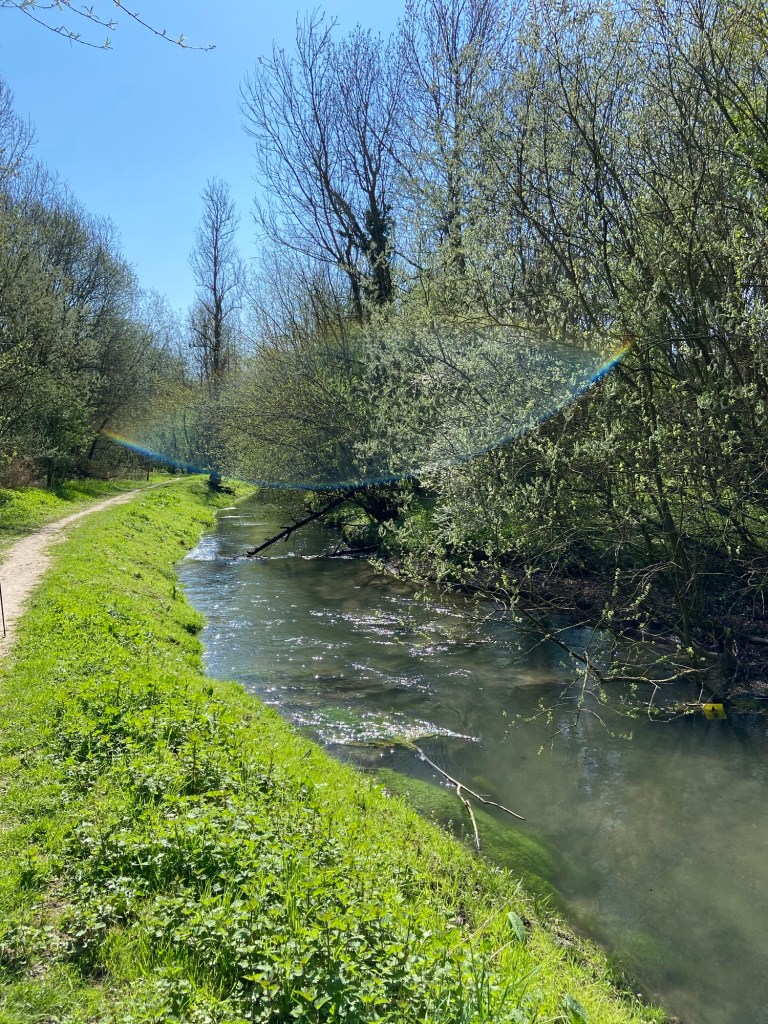
This part of the path was completely characterised by the river, as its tributaries flowed into it and mills were built to use the power of its flow to drive the huge mill-wheels.
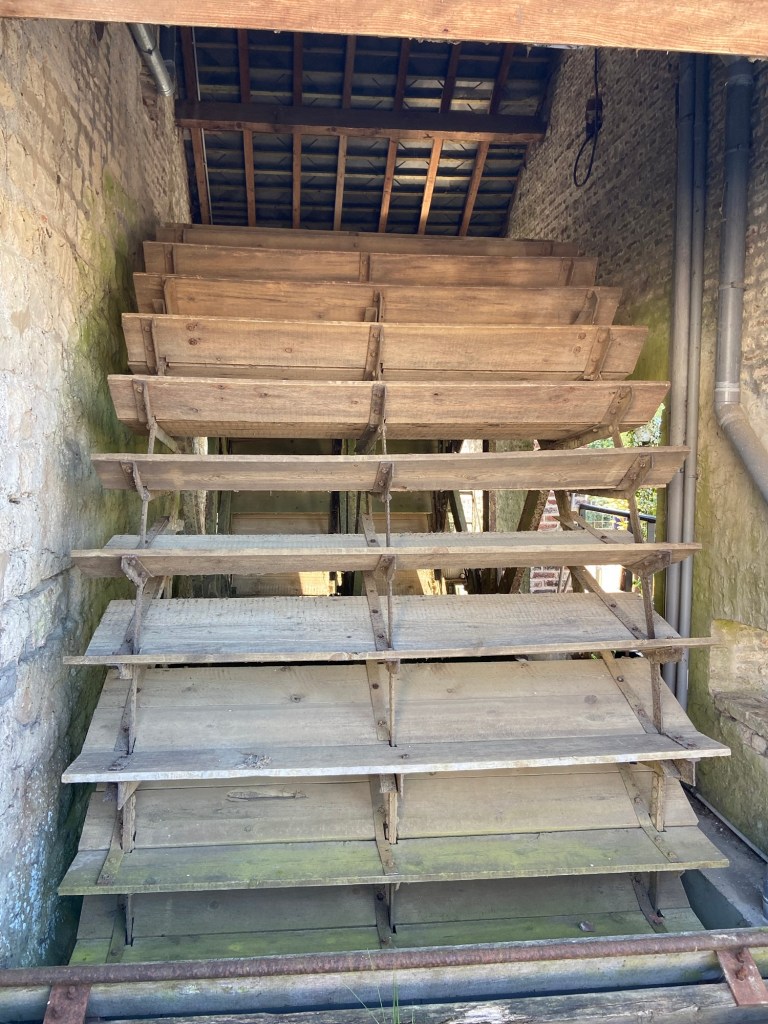
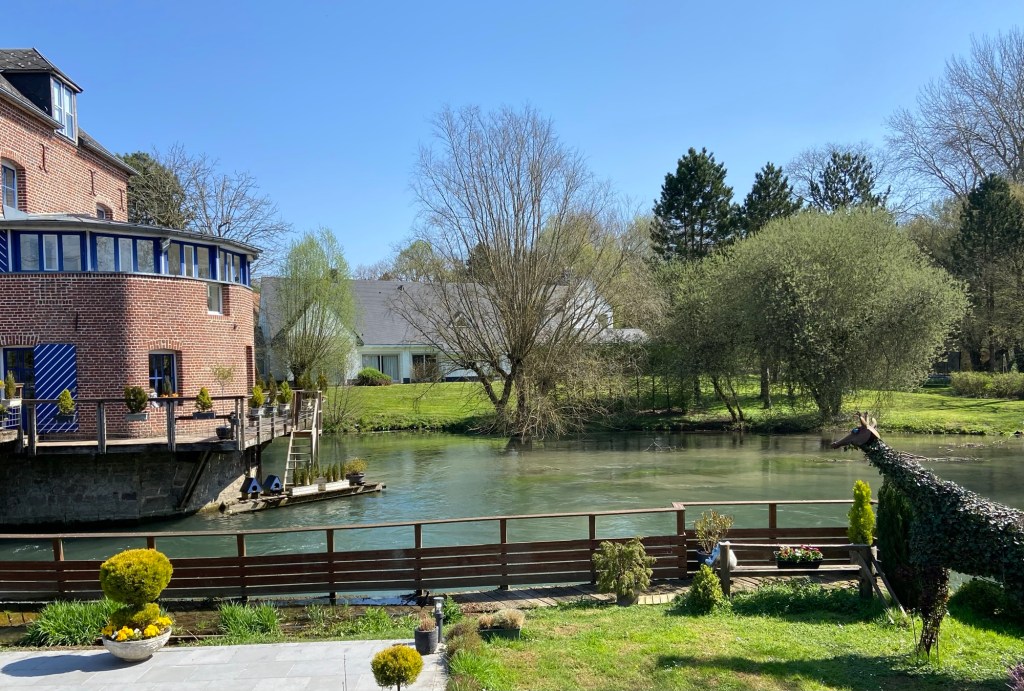
The ones at Louez and St-Auban had been , beautifully restored.
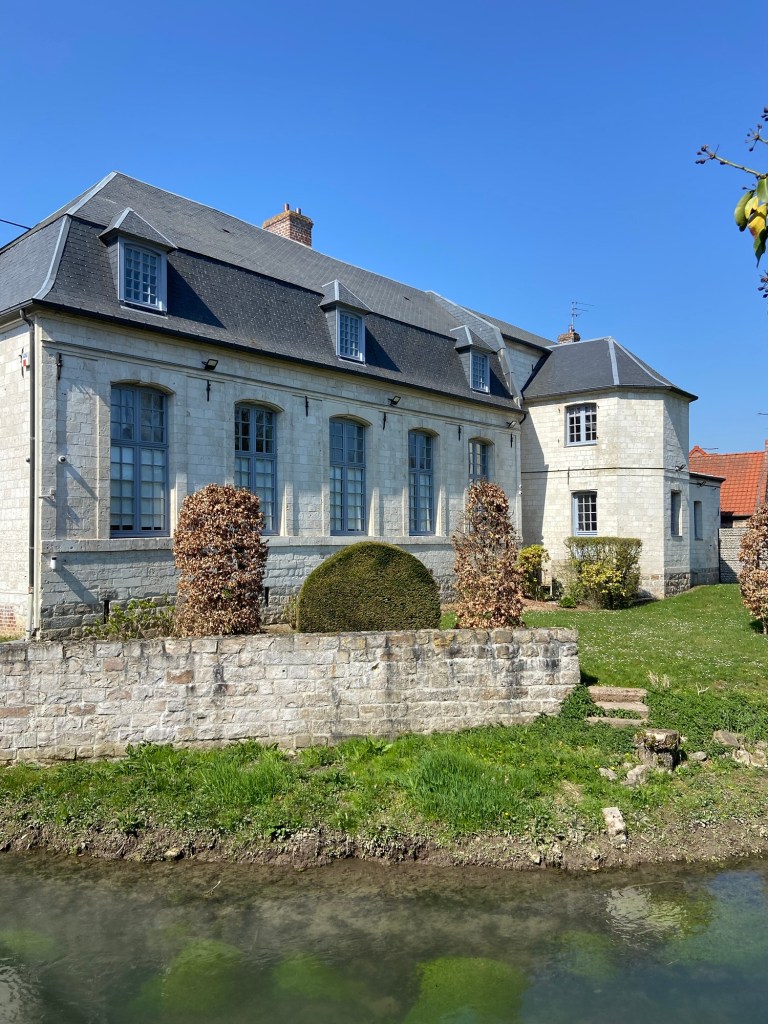
(‘That’s the kind of pond you want’, said Stephen).
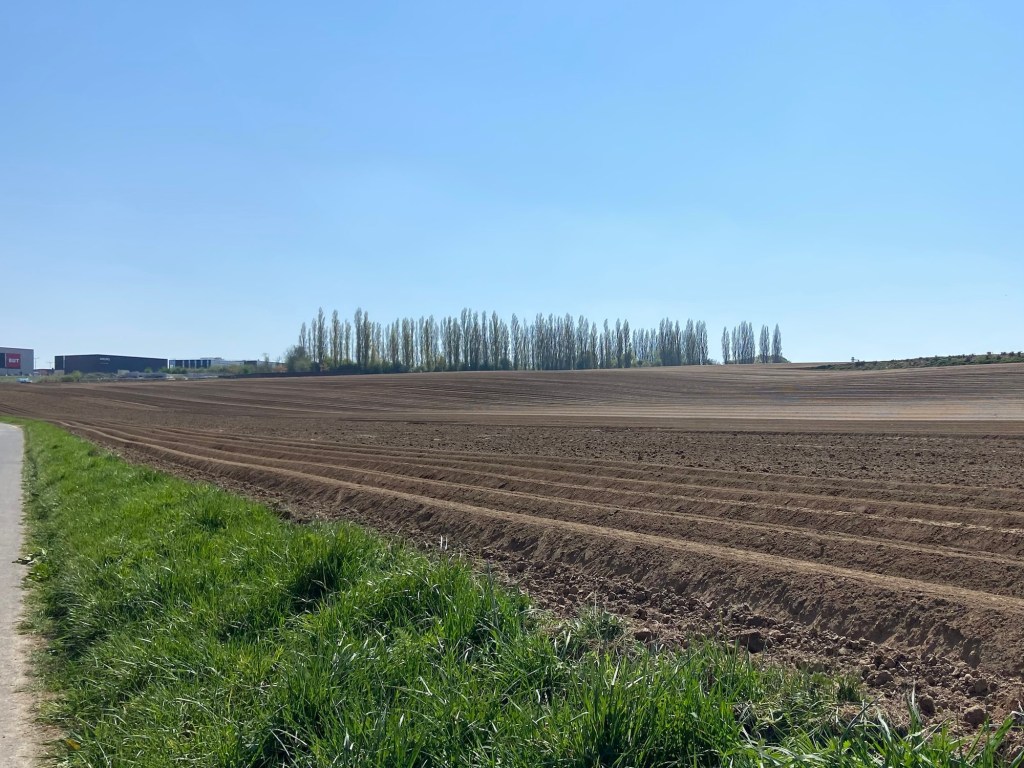
This was almost the last of the idyll for the day. The path turned into the Francigena equivalent of a motorway, past gigantic warehouses in the distance which loomed in size as we neared and then passed them, including one with the word BUT in giant letters on the side. But what?
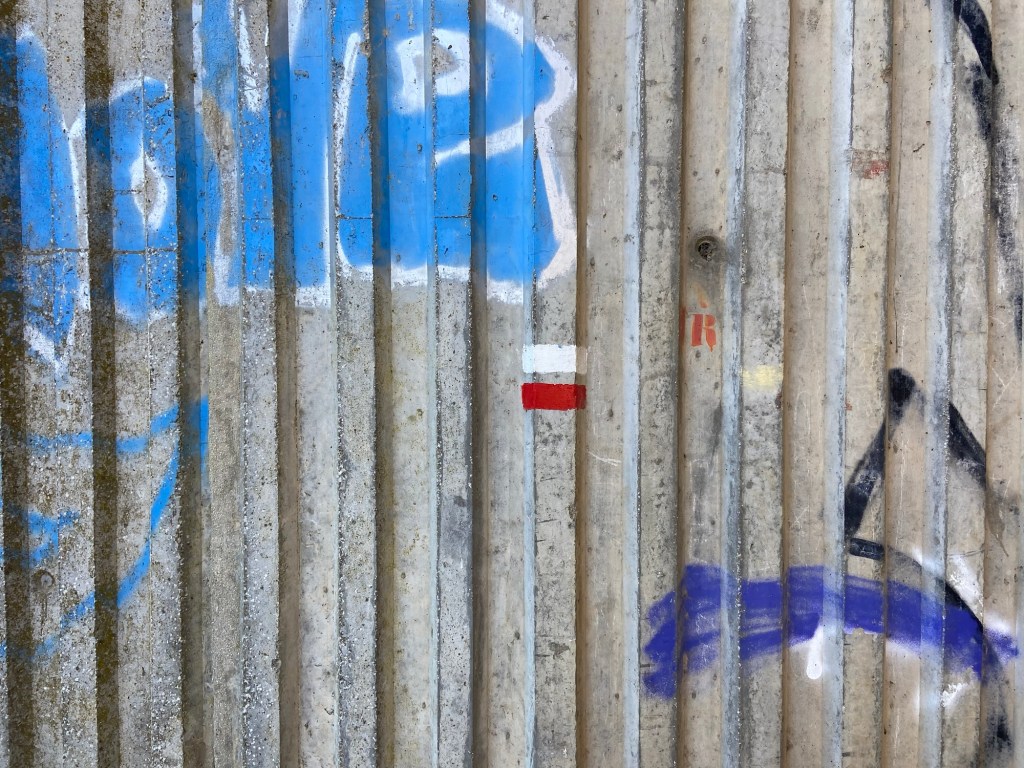
Under the motorway bridge was the usual load of graffiti — here rather unimaginative compared to some of the work I have seen on my walks. And there was also one of the little GR white and red rectangle signs which we have been following and which are the indication we are on the route. We find them painted on trees and as stickers on road signs, mostly. Here in the context of the motorway underpass it made me think of all the little signs as nothing more than graffiti.
Our motorway path continued. It was shaping up to be a pretty good greenway into the city.
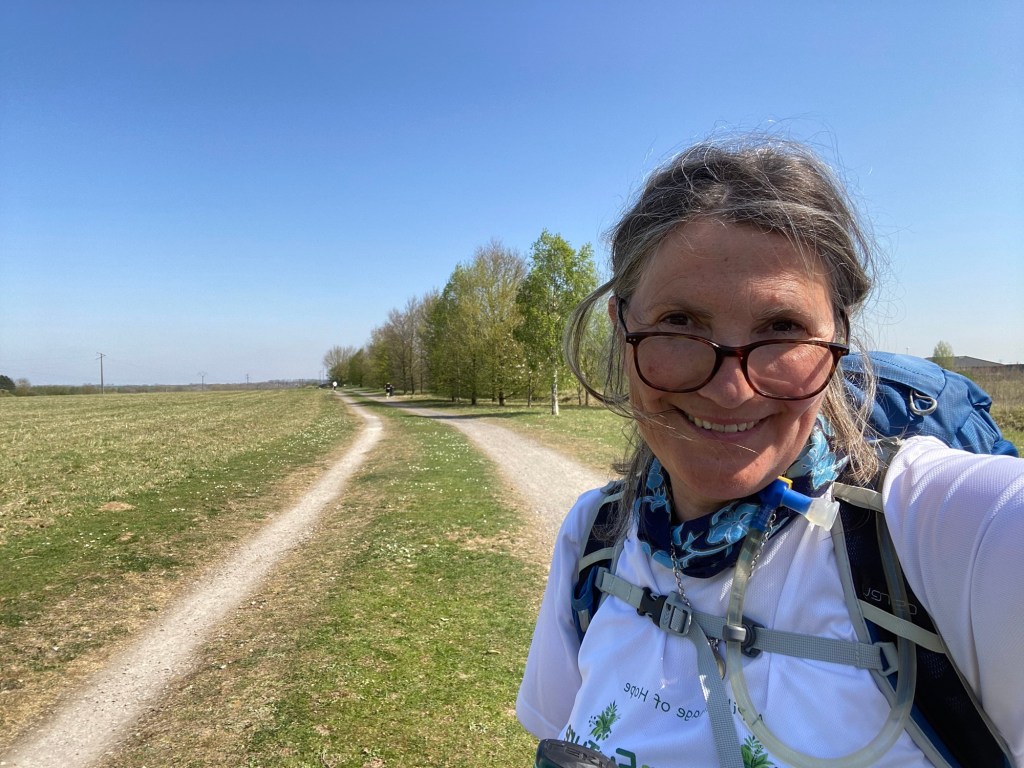
It was being well used by people exercising, and had been planted up well in parts.

We were now getting pretty close to the city, so it was really no surprise that the designers of the Via Francigena had to route us along one or two main roads on the way. This one had a set of baffling pedestrian/cyclist lane markings. It was anybody’s guess what one was supposed to do here.
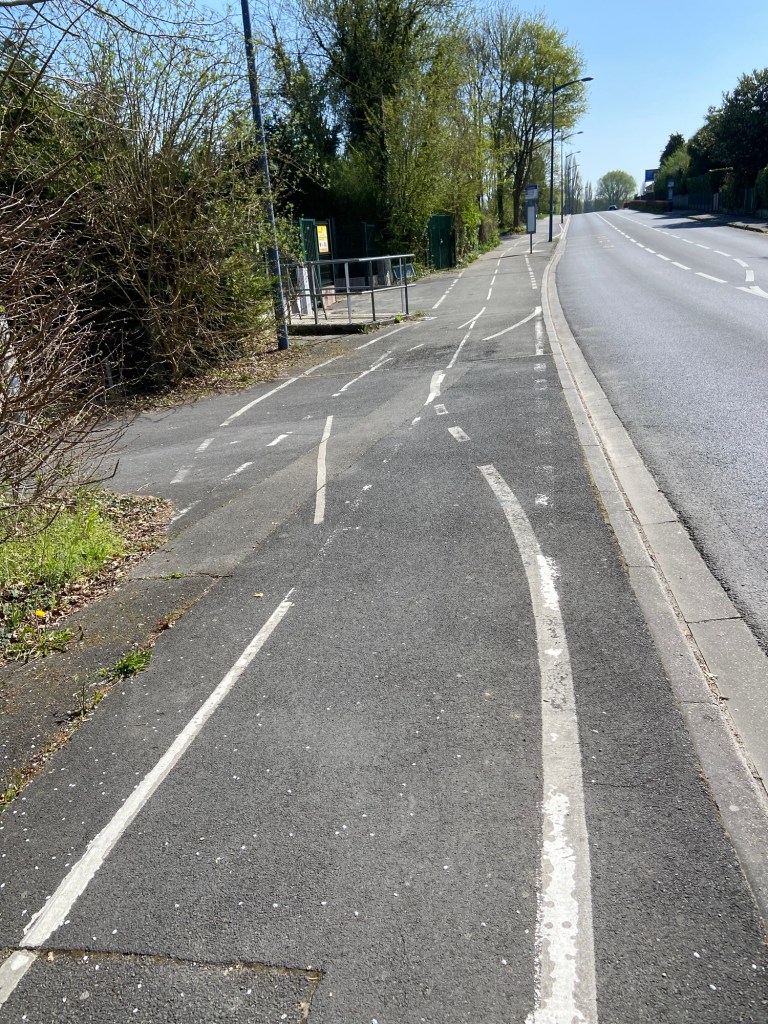
On one side of the road was a housing estate, but on the other were allotments, and the river, poplars and willows hiding it from view. We tried to focus on that rather than the traffic. We had been so long without seeing roads like this. Dover! Another time, and another country away.
With a sigh of relief we ducked into Les Grandes Prairies country park, where we decided to sit on one of the many benches and rest our feet. We were quite tired and hot — but still very happy to have actually arrived on the outskirts of the city.
We were even happier when Stephen spotted an unbelievable site: a red squirrel, throwing himself into the air between the branches to cross from tree to tree.
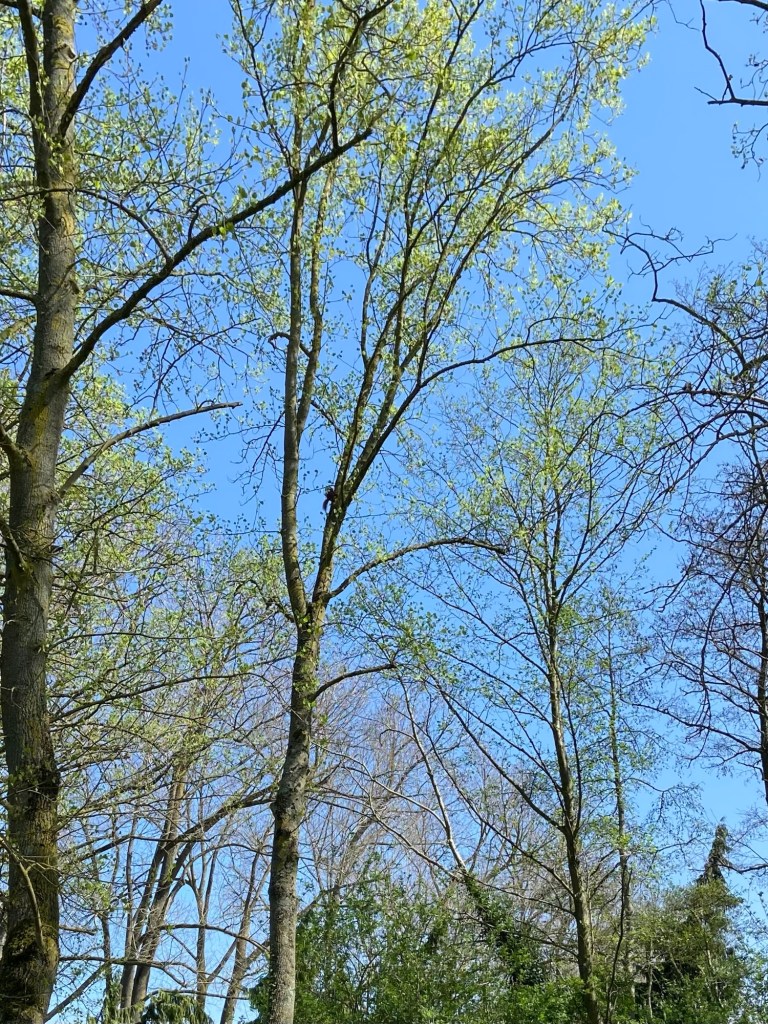
The quality of the water in the river Scarpe seemed extraordinarily high for such an urban environment.
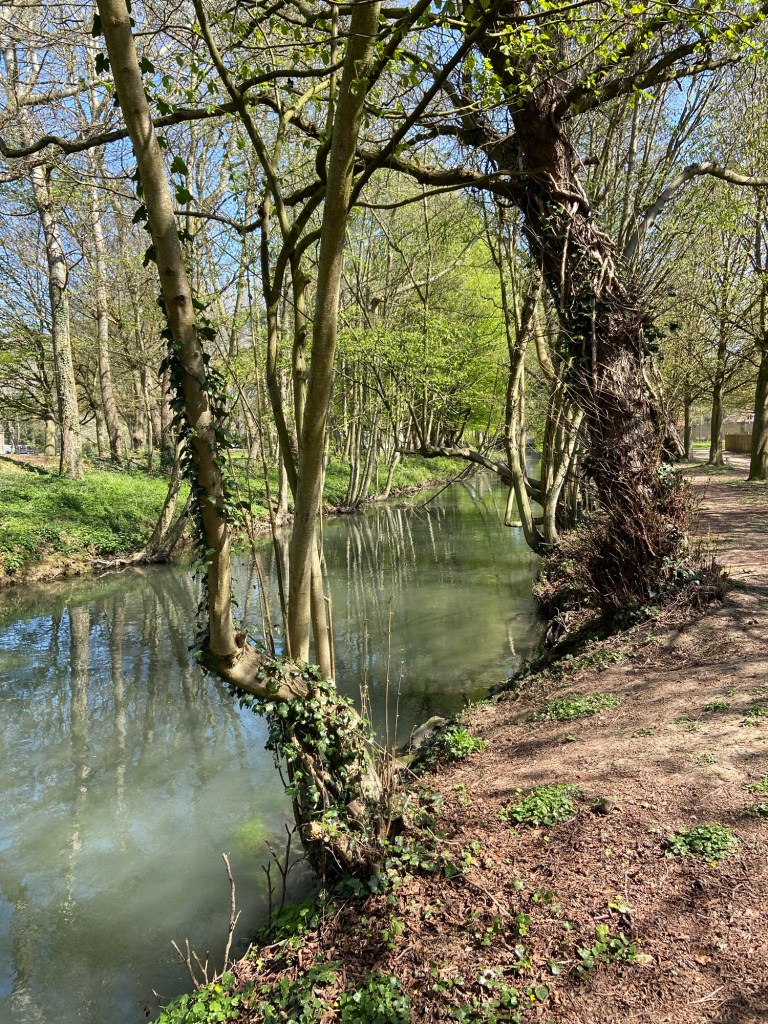
In many places it was absolutely crystal clear.
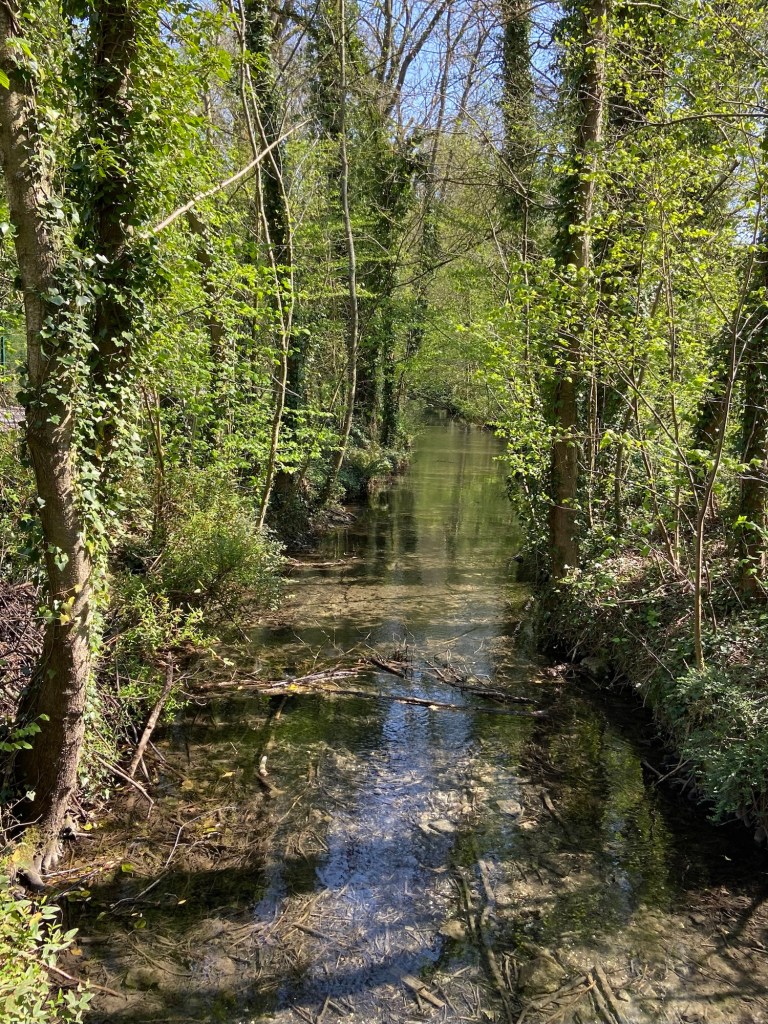
But — that was the last of it. From here on now it was cityscape. Once more we had to keep our wits about us to make sure we were looking in the right direction as we crossed roads.
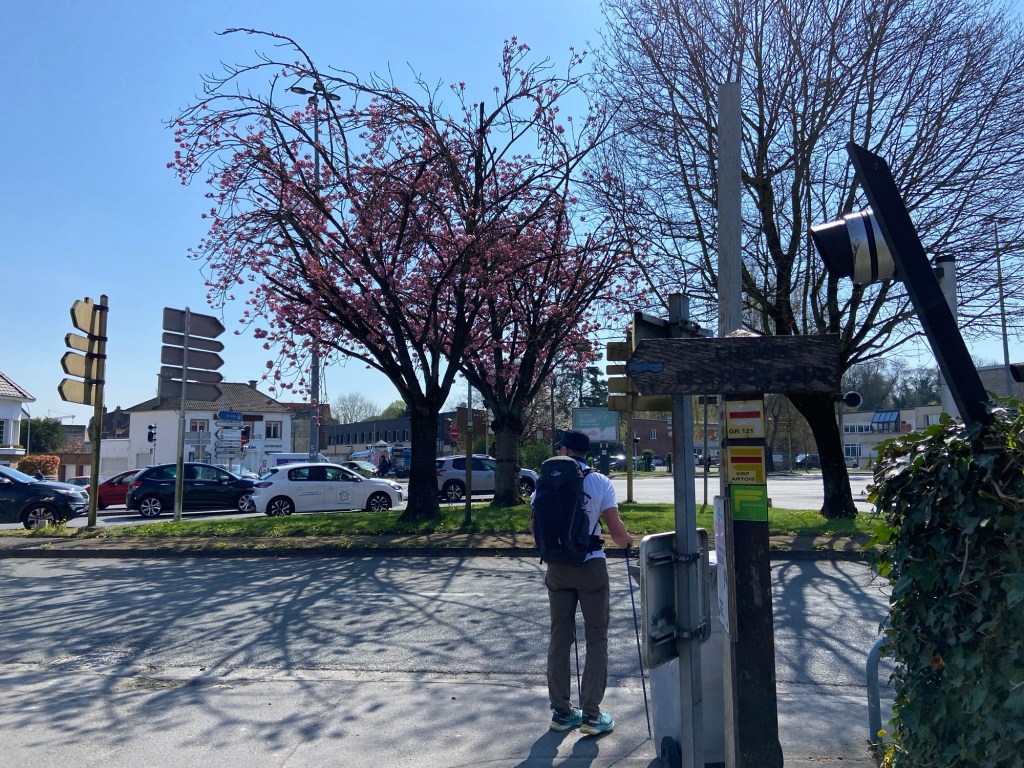
In a search for a pilgrim stamp we made our way towards the cathedral. Like so many of the churches in France we have encountered, it was resolutely closed, although admittedly closed on a more massive scale than most of the places we have passed.

Next door to the cathedral, the Abbeye Vaast was swathed for cleaning and restoration in an unfeasible amount of protective covering and the most sophisticated scaffolding I’ve ever seen. I couldn’t help but think back to those long-ago workmen building the St-Éloi towers.
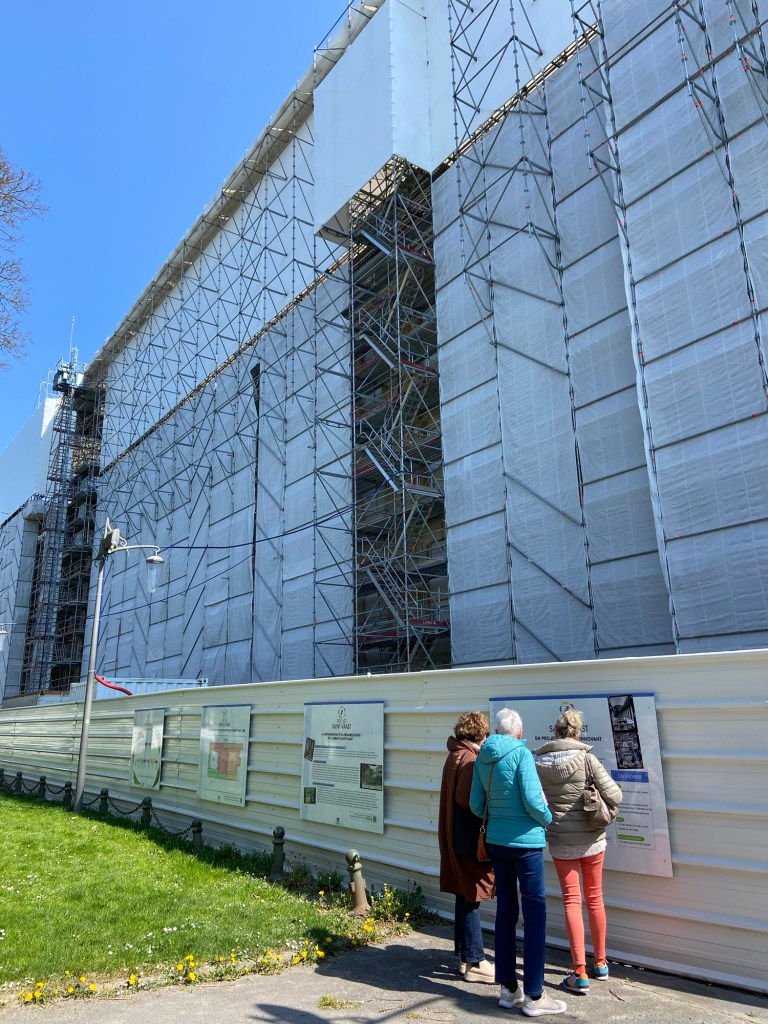
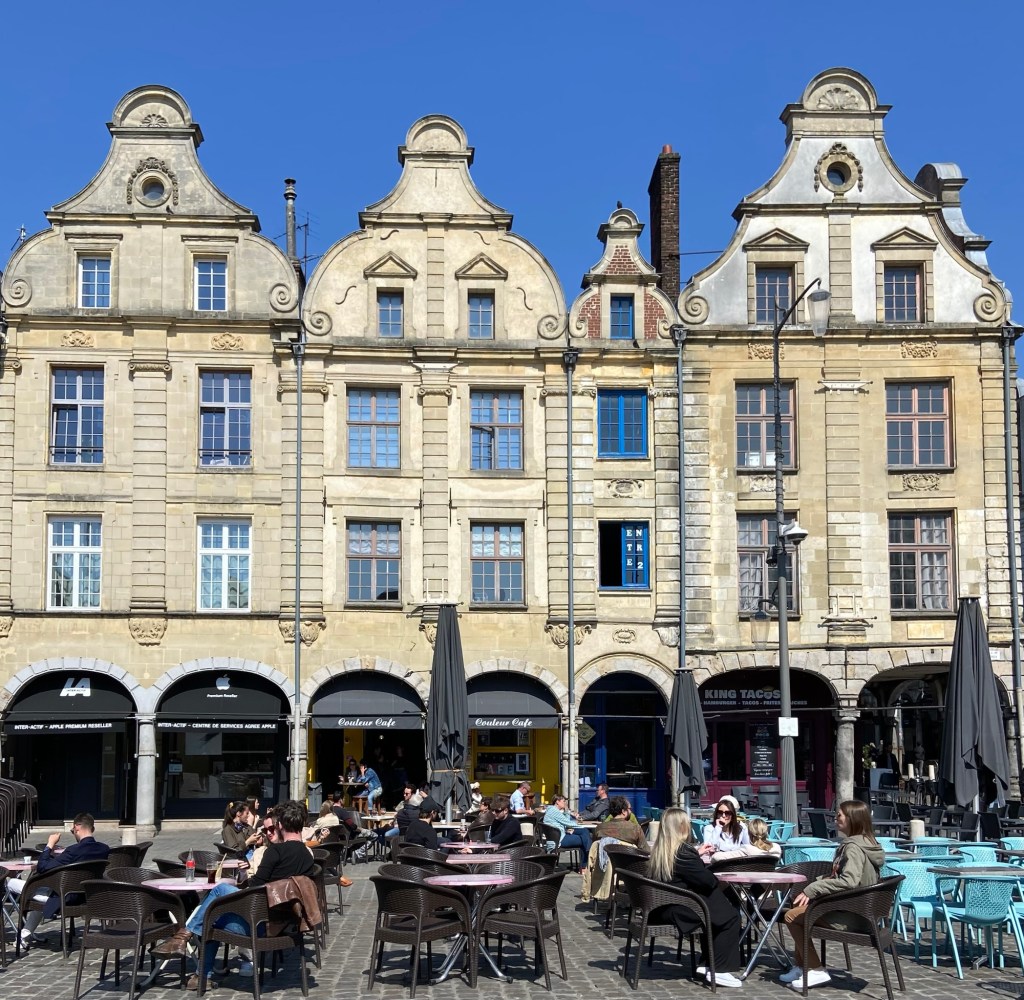
Having drawn a blank at the cathedral, we made our way to the Marie as being a reliable source of the pilgrim stamp. It was more Vaast than the Abbey

and in a heroically proportioned piazza, too, fittingly called Place des Héros.
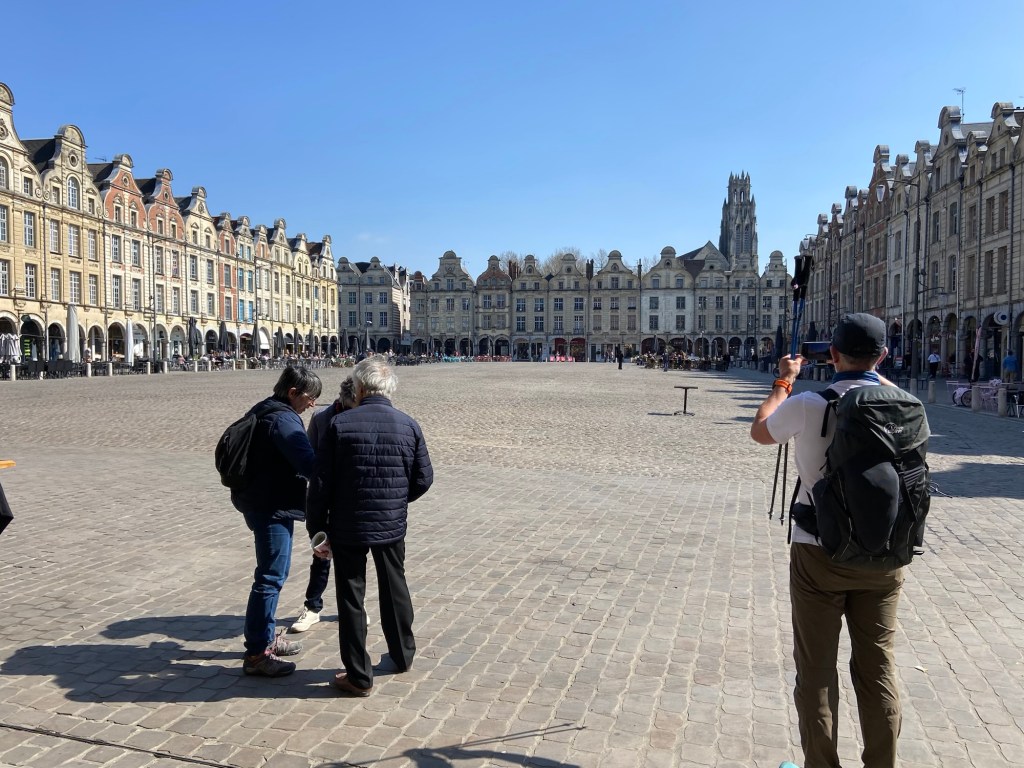
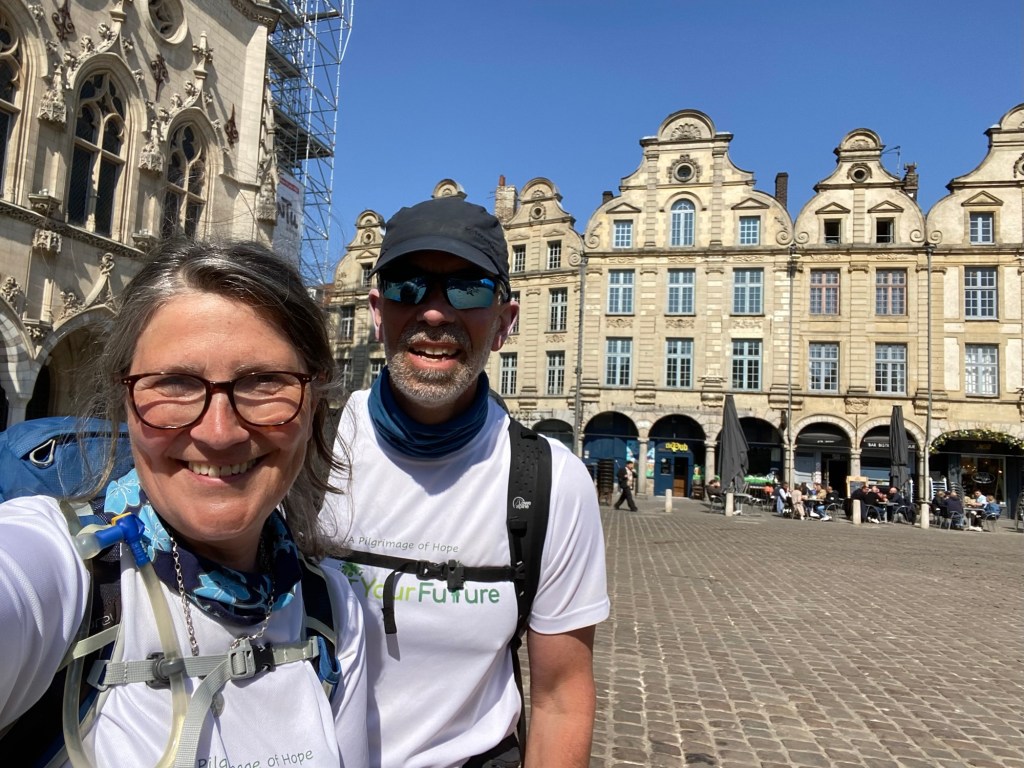
We felt rather heroic too, having walked all the way here from Calais.

We had booked an AirBnB for our last night together before Stephen heads home and I head onwards. It’s a lovely place to rest up and use as a base for repacking, planning and maybe a bit of tourism before Stephen takes his train back to London. Tired today!

Stats for the day:
Distance: 24km
Climb: 231m
Time: 5hrs 27 mins
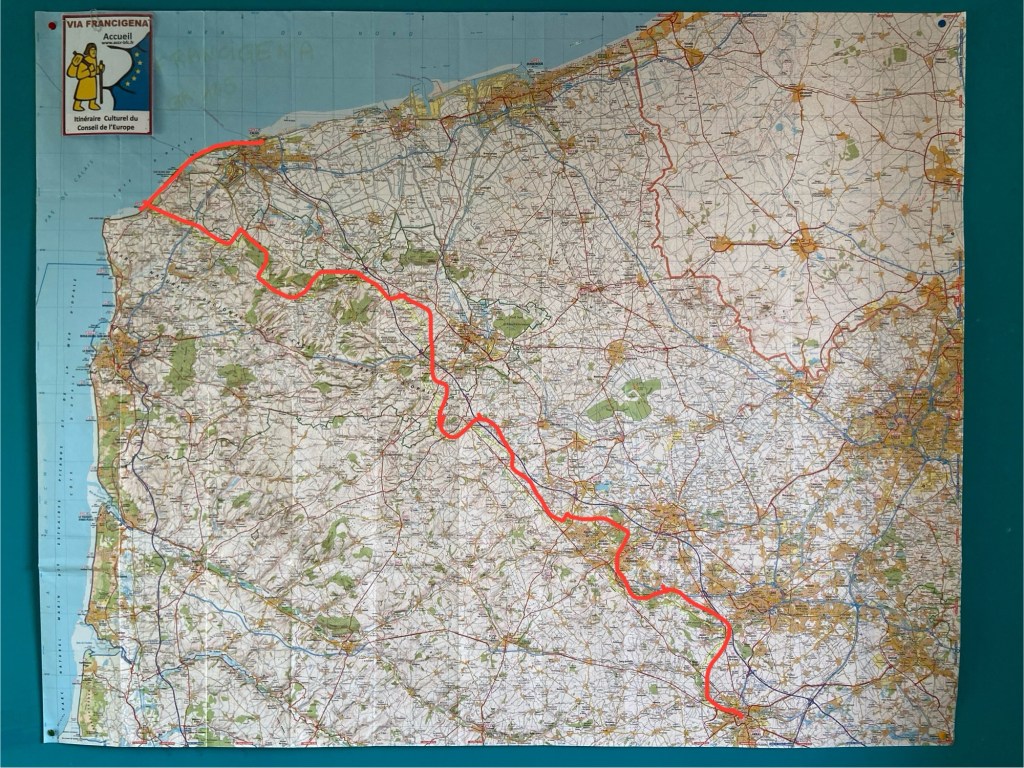
Totaliser: 250.58km
Today’s Harry Potter Moment: No. 12, Grimmauld Place, sliding temporarily into view, unnoticed by the Muggles
 Walking The Landscape