
Bright-eyed freedom stands before ye
From the Welsh folksong ‘Gorhoffedd Gwŷr Harlech—March of the Men of Harlech’ [taken completely out of context]
Despite the generally positive forecast for the day, I woke to thick mist this morning — an inversion which left the tops of the coastal hills clear, and the air above the low-lying marshes blanketed in moisture.
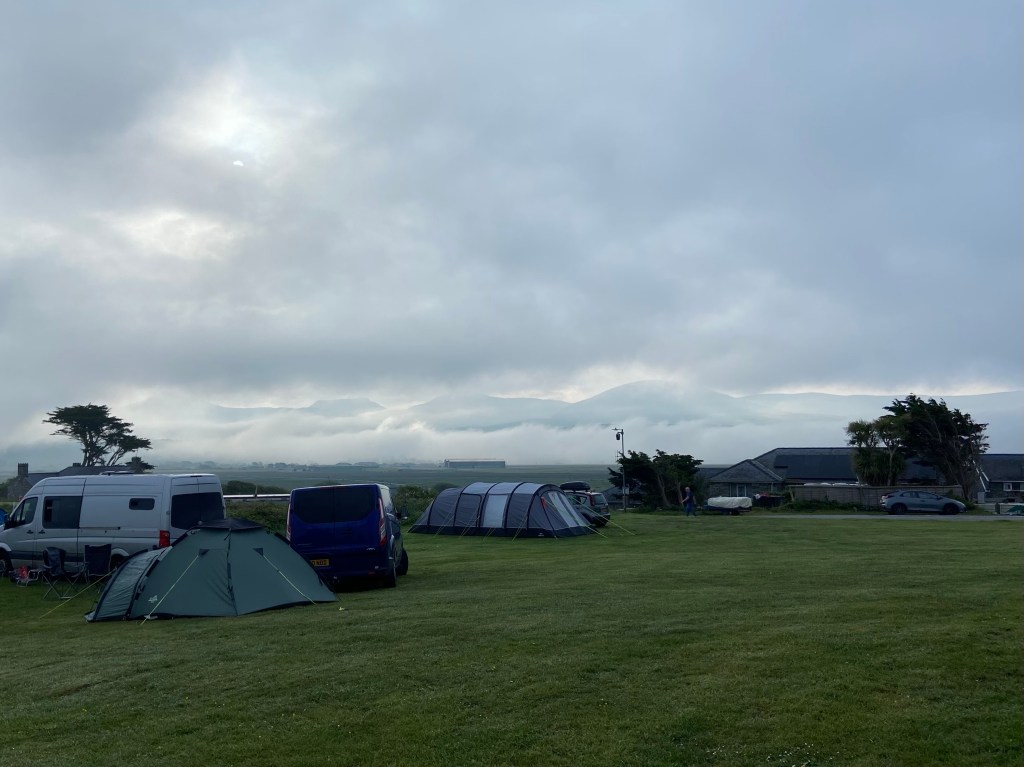
There had been a heavy dew, but despite that I managed to get the tent dry enough at least to pack it, and made an early getaway, I ventured out onto the causeway across the saltmarshes created by the outflows of the rivers Arthro and Cwmnantcol into Harlech Bay. The nature reserve is a typical patchwork of shifting, unmappable channels and mud bars.
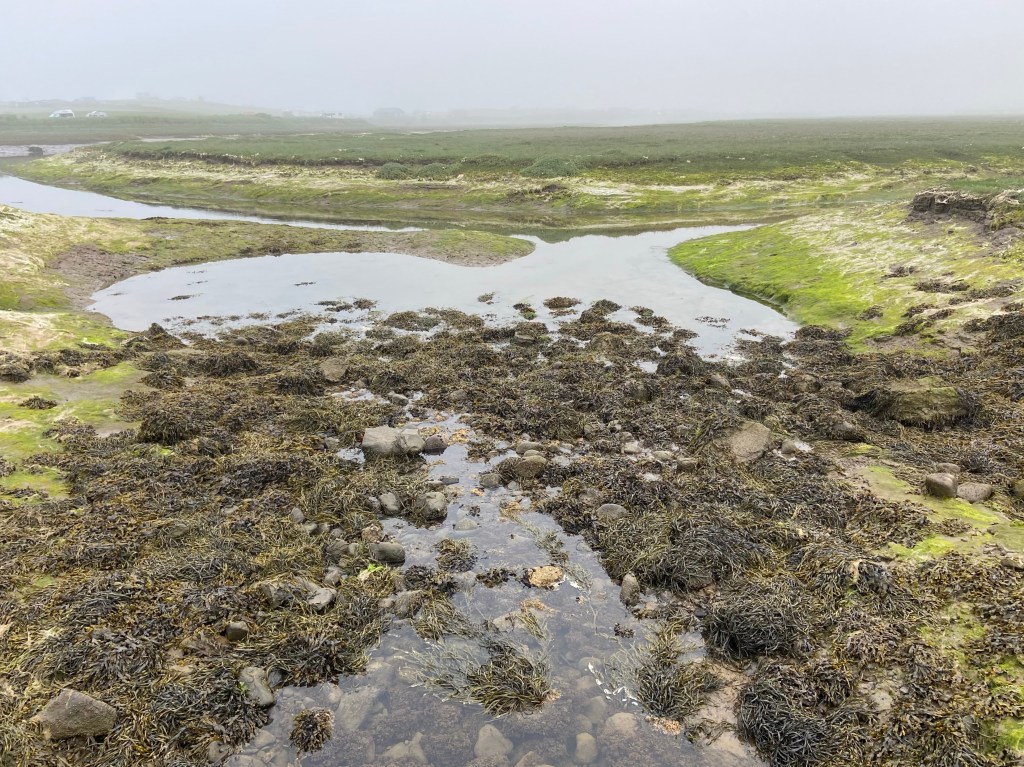
The solider ground is carpeted with the various salt-loving plants which don’t mind spending half their lives inundated. Thrift flowers dotted the ground as far as I could see into the mist, at first sight appearing like pale pink daisies on a lawn, but on closer inspection, the ‘grass’ was in fact sea purslane. As I put more distance between me and the enormous slowly-stirring campsite (I was told it was the largest in Europe!) the birdlife got more interesting: sandpipers, oyster catchers and little ringed plover. In the campsite I had heard a linnet: a bird I have not seen or heard since childhood, and I was to hear more during the day. A redshank flew low over the beds of soft rush, and now in the distance, the cloud was lifting to reveal the river, bright bars of sand and beached weed, and water emerging from the mist to reflect the sky.

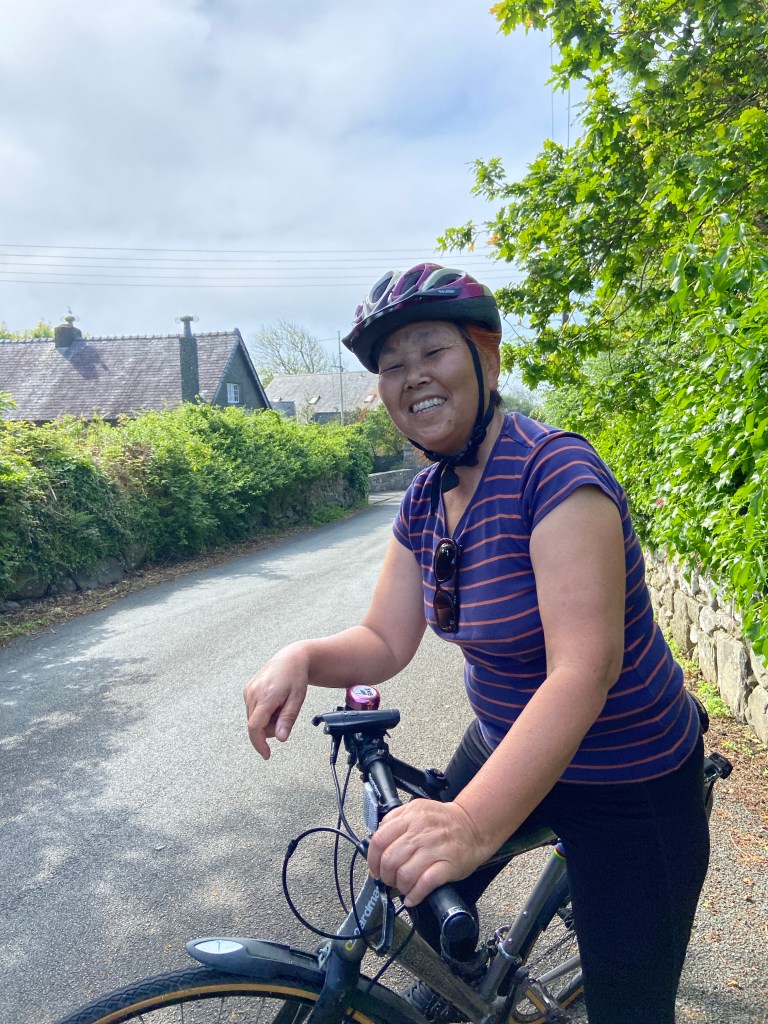
The path did one of those typical reversals, where you track one side of a meandering water course to the end, and then track all the way down the other. I was quite keen on getting a move on, so I decided to take a little bit of a shortcut along the road. I was so glad I did: I met Kamala, a Sherpa from Nepal, who has raised her family in a little hill village high above the beach. She was cycling back from a nightshift — she is a care worker supporting people with mental health difficulties — and she was kind enough to dismount from her bike to keep me company as we puffed our way up the hill.
The hill was more than worth it: the views out over Harlech Bay were nothing short of breathtaking — and it was one of the few times on these walks when I genuinely grieved that I was walking with on my own. It was too beautiful not to share the experience: I t’s the scooped shape of it, and its special dune environment, and the way the mountains of the Eryri Snowdonia National Park provide the cinematic backdrop.
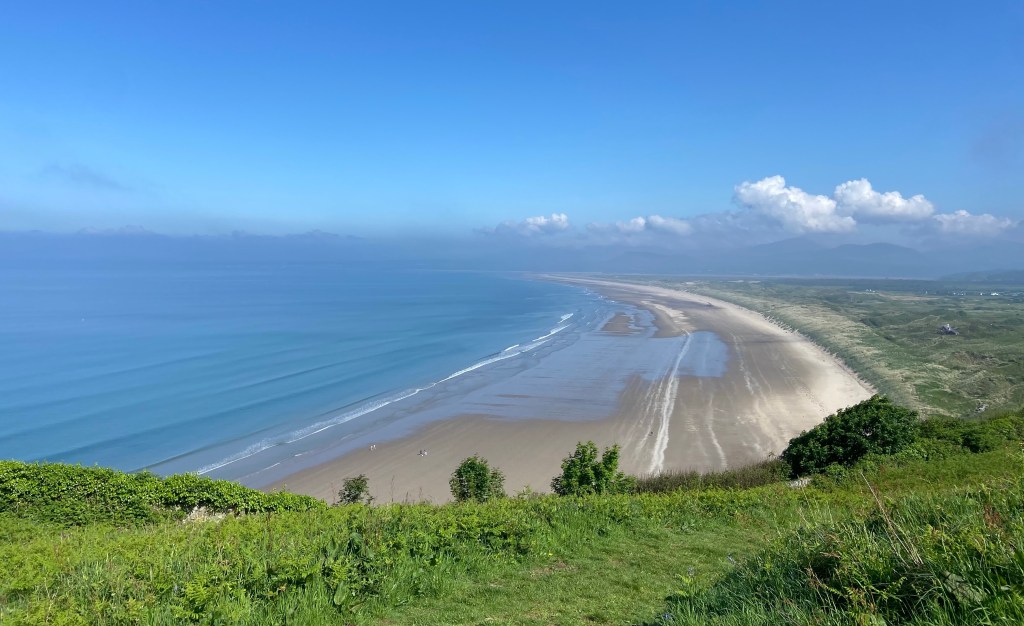
A set of steep steps took me safely down onto the beach, and after resting on a handy boulder to apply sunscreen, I joined the shrieking swimmers and the tattooed men running lengths, and simply enjoyed what must be the one of the most beautiful beaches in North Wales.

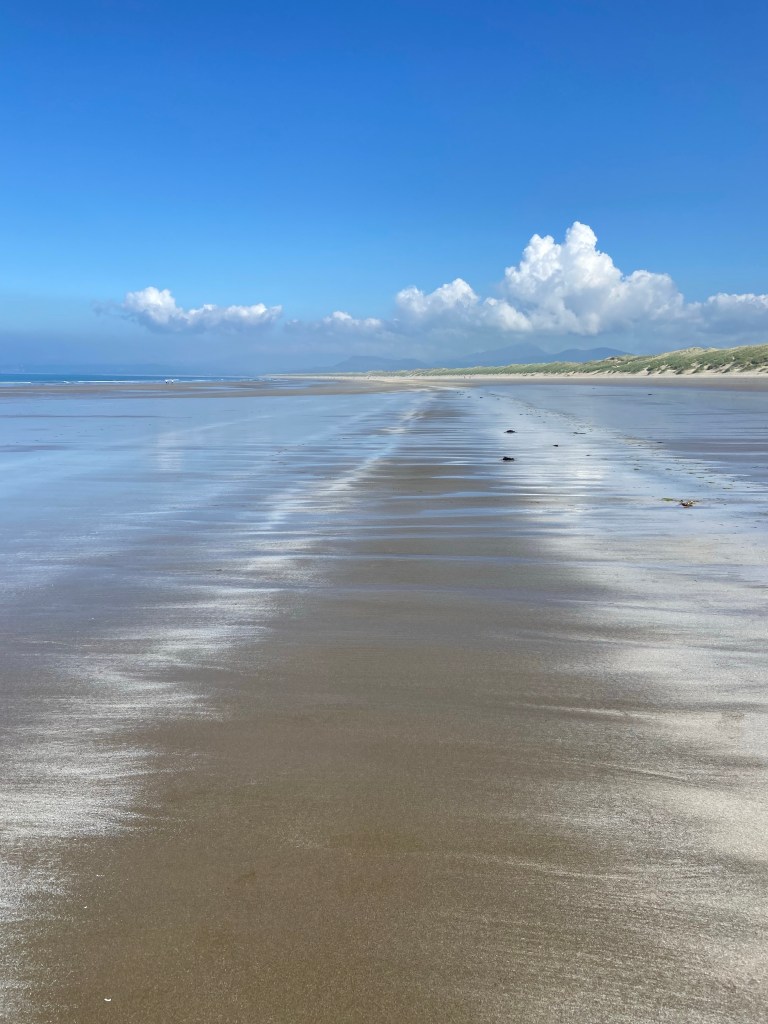
It was a far cry from the atmosphere which must have struck Roman Polanski when he chose this beach to film the opening scene of his iconic production of Macbeth. I walked along the beach, noticing the changing patterns made in the sand by the receding tide, including some unusual lines of double zig-zags,
and the gentle waves breaking in ripple patterns where sandbars create subtle natural breakwaters.
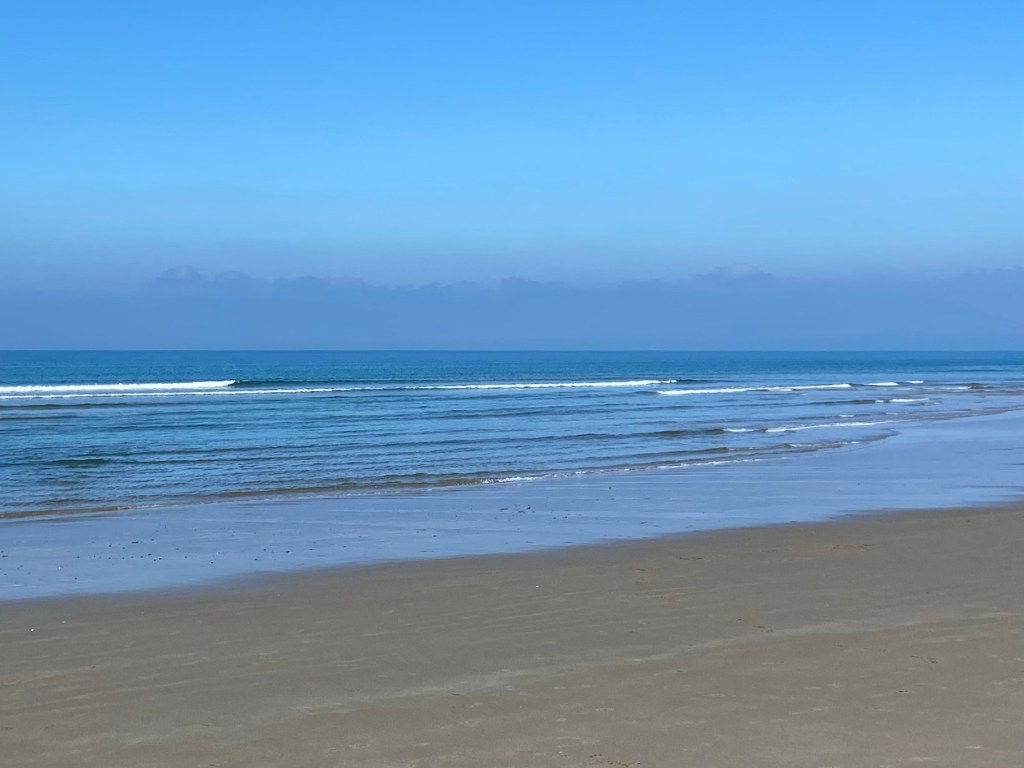
Now I walked wide, empty stretches of sand,
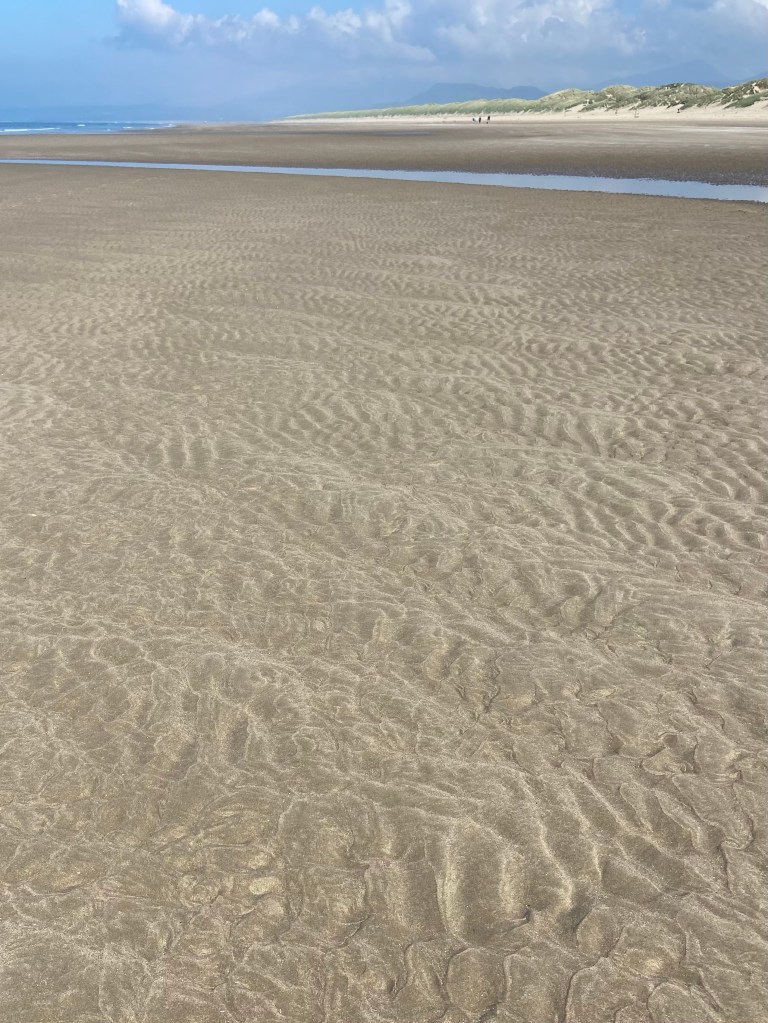
now I examined the shells left in drifts at the various high tide lines.
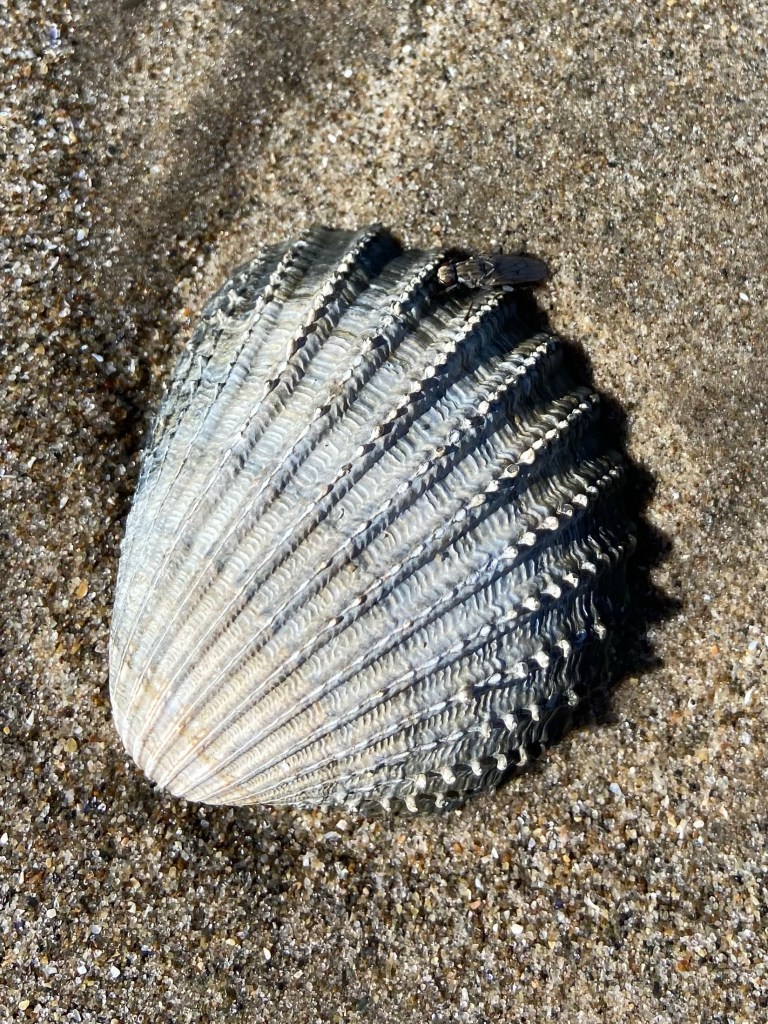


There were enough people on the beach to make me feel in company, but without any necessity of actually sharing the experience with anyone that I didn’t know, so I was alone with my happy memories of a holiday with friends made sweeter because it was in a lockdown window in the summer of 2020.
Coming off the beach through the dunes I took the opportunity to sit on a seat creatively made from driftwood and pieces of broken boat to get the sand out of my shoes.

I had promised myself lunch in Harlech (and I had my eye on an ice cream from the quality parlour we had visited on holiday), but I had forgotten that the town proper developed half way up a set of highly craggy rocks around the tremendous castle, one of four built by Edward I, this one taking just seven years to complete from start to finish. It is obvious at first sight how hard it would have been for anyone to assail the inhabitants of Harlech Castle (I discovered later that there are 108 steps cut into the rock known as the Way of the Sea, which were used to provision besieged defenders).

I didn’t think I could face the climb up into town (dejectedly abandoning my dream of ice cream), but I was now half way through the walk, and, having skipped breakfast, I did need something to eat. A passing inhabitant of one of the holiday parks told me there was a little café not far out of my way, and the cheese and pickle sandwich that I ordered in honour of my walking friend Jane totally revived me.

Having avoided the climb up the hill, I was able simply to continue the walk along the flat. Although the dunes carry on around the corner into Tremadog Bay, the Wales Coast Path leaves the flora and fauna in peace and instead cuts off some of the distance by crossing meadows and sheep fields and an inexplicable long straight concrete path lined with bright yellow broom,

And through a semi-deserted but artistically dilapidated farm, to circle around the lumpy hill which rejoices in the name of ‘Llanfihangel-the-Beach Island’

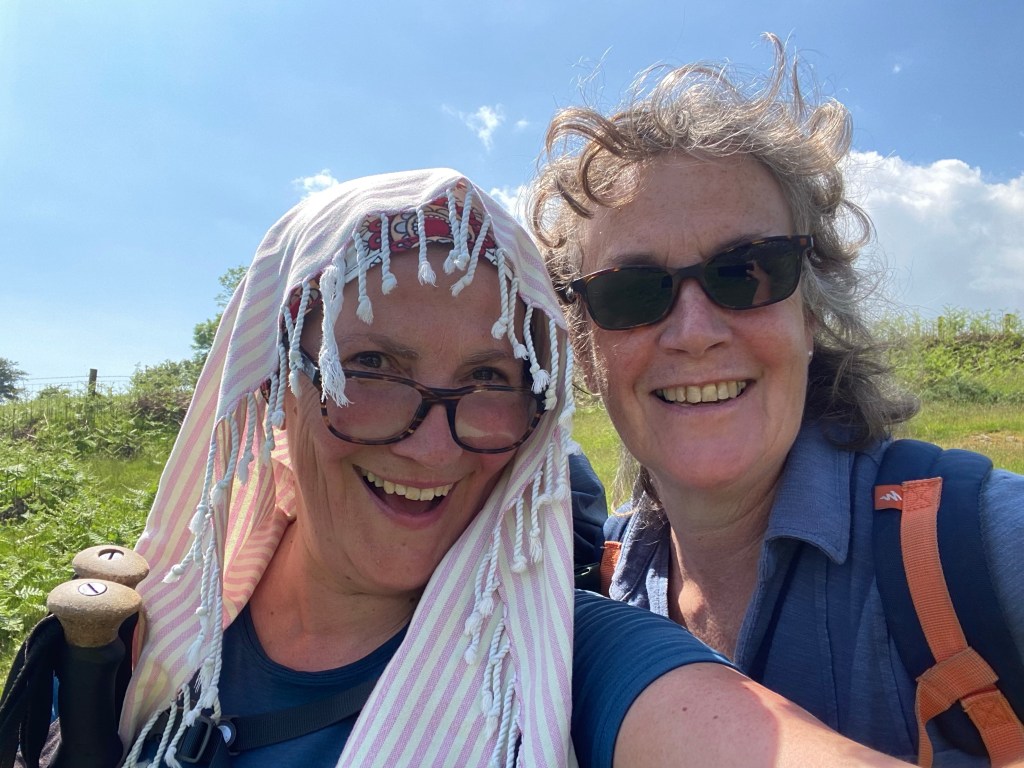
This was a walk that we had done on our 2020 holiday, setting out in brilliant sun, and ending up soaked to the skin in Talsarnau sheltering in the garage while we called a taxi. The conditions could not have been more different today, with sun so hot that I dried out my camping towel from last night by draping it over my head to provide a bit of damp shade.
Back in 2020, the walk seemed interminable, but today I had the mountain views of Y Wyddfa Snowdon and the Glyders to inspire me,

and little lambs and crabapple trees to enchant me.
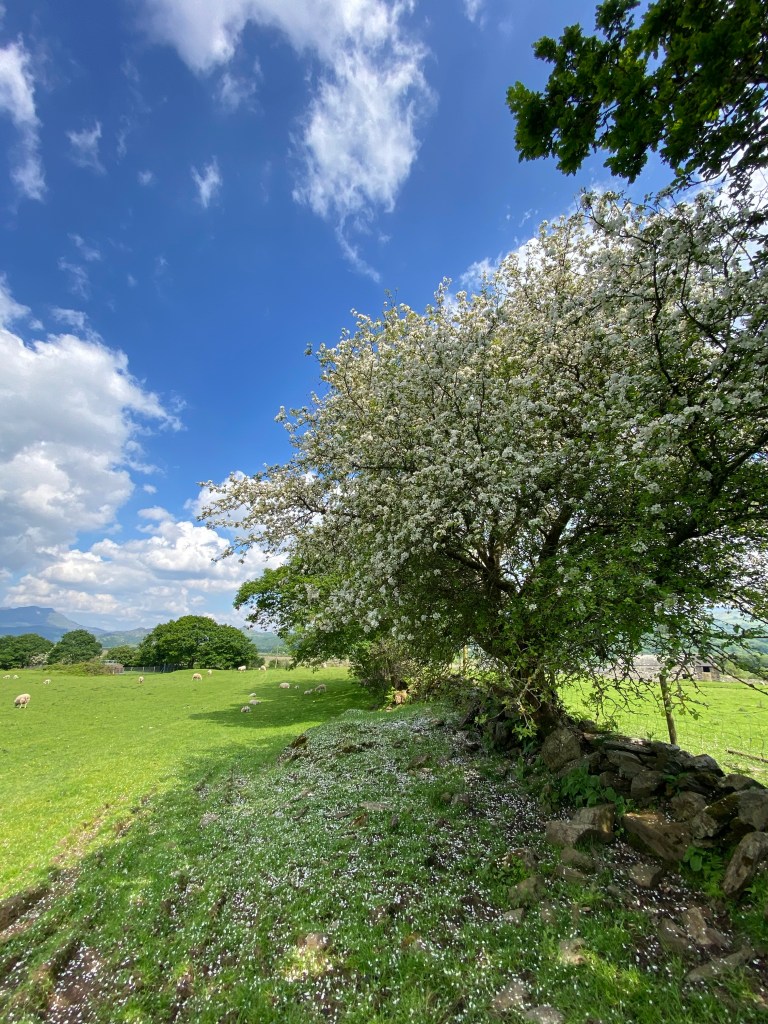
I met Alison, who didn’t turn a hair at my fetching hair covering, and we chatted companionably for ages, both agreeing that we were worried by the idiocy of the picnicking groups miles out on the sandbars in the middle of the estuary, where two rivers meet. It seems inconceivable that they would not be aware how fast a tide can rise. Perhaps they thought they were on a beach?
It would not have been a bad place to have been washed away though, in front of Clough Williams-Ellis’s folly village of Portmeirion, tumbling artistically down the rocky hillside in Italianate style.

I blame the attempted horsefly attack (foiled!) for a lapse in attention, which caused me to leave the coastal path early. It meant that I had to walk along the A-road through Talsarnau, but it did mean that I could tip my hat at the garage, and ascertain the location of the Ship Aground pub where I was to eat that night (where incidentally I got chatting to a part-time Coast Guard and his wife; he said there were frequently problems with people getting stranded and on the standbars by the rising tide).
My campsite was only a little further up the road, and I received… I was going to say the warmest of welcomes from Karen, but it was actually the coolest, with a glass of iced water and the gift of a Magnum ice cream, which I ate gratefully as I waited for the sections of my wet tent to dry out in the sun.
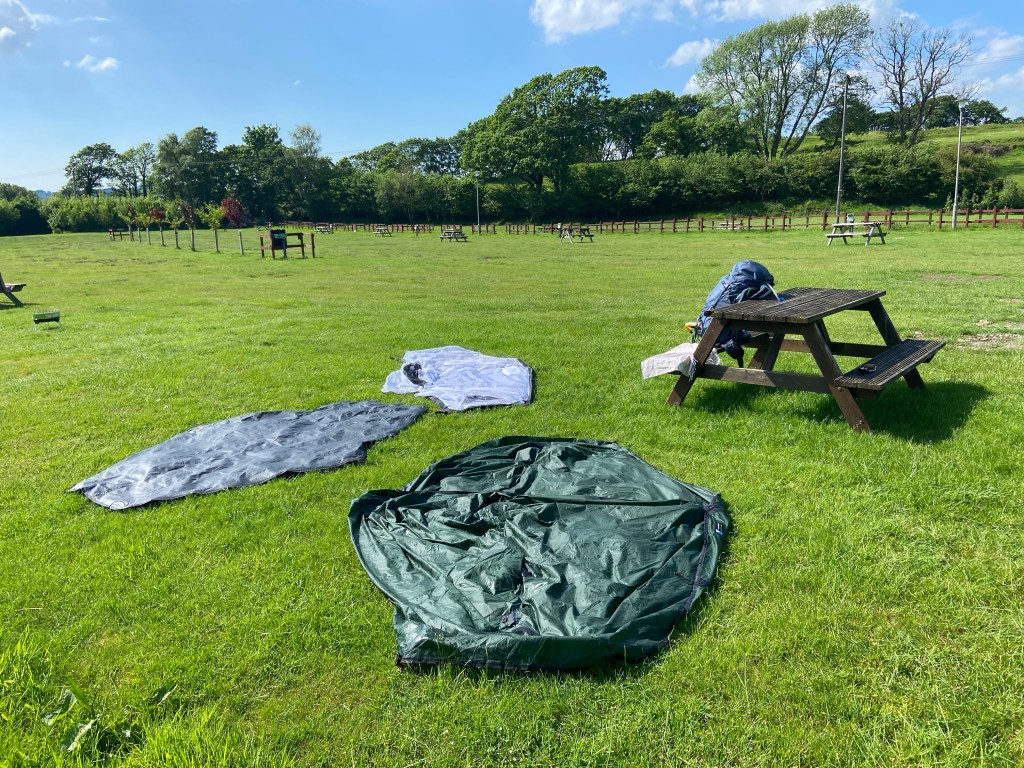
I was feeling pretty good after sitting in the sun and having a reviving shower (taking care not to disturb the blue-tits nesting in the wall-mounted ashtray outside). I didn’t even much mind having to walk back into the village, a 3km round trip, for supper. The macaroni cheese and salad was delicious, the company good, and on the way back, I met this little chap! What a treat to end a lovely day.

 Walking The Landscape