
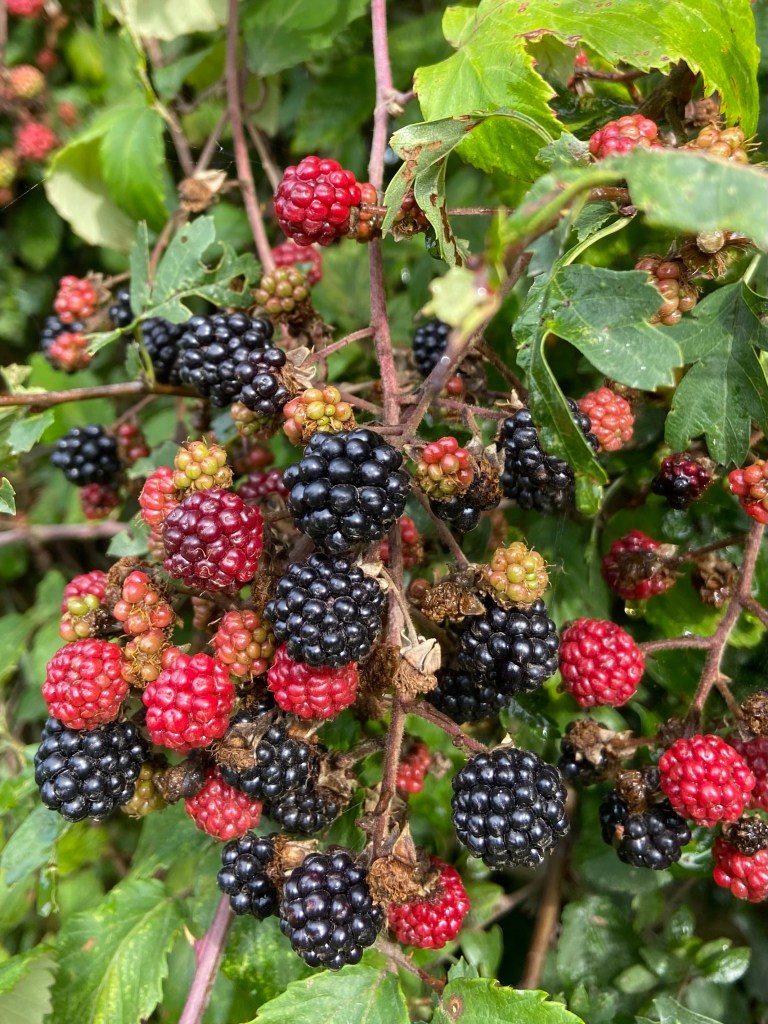
You ate that first one and its flesh was sweet
Ted Hughes, ‘Blackberry-Picking’
Like thickened wine: summer’s blood was in it
Leaving stains upon the tongue and lust for
Picking.
Yesterday morning, when I opened the Vellux in our attic bedroom, the chatter of housemartins flying up to the nests in the eaves in the house next door filled the room. This year’s single successful nest seemed to attract many birds, flying up and away, up and away, returning once more up and away, imprinting the location in their tiny bodies and minds for the long journey back next year. Within five minutes, they had disappeared southwards in a chattering cloud. It was the first of September. I got the largest of my rucksacks out from the box under the bed, and begin to pack.
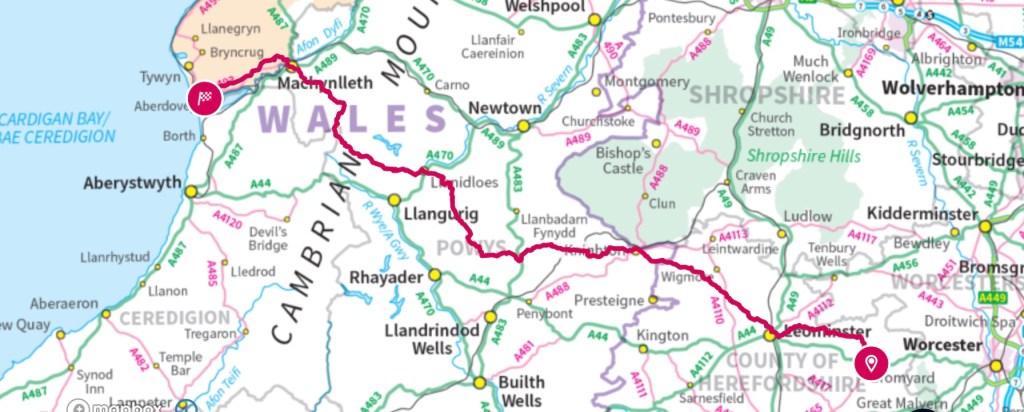
After the ghastly meteorological conditions of July and August, which, together a few other factors put paid to our walking plans this summer, the weather for the next week at least looks rather splendid. September is a lovely month: although there are rather mournful presentiments of autumn in the form of the departing swallows, swifts, and our housemartins, and although the leaves on the horse chestnuts are already turning, there is much joy to be had on the path as well. The hedges are full of blackberries and ropes of the scarlet bryony that I had photographed in full flower back in June. The weather is usually fairly reliable. This time last year I started on the Anglesey coastal path, and today I am starting to walk back up to that island — starting from home. The total distance of the route I have planned is about 300 kilometres, 186 miles, out west to the coast at Aberdovey, and then northwards up the Wales coastal path, walking straight up and over the Lleyn Peninsula, and along the Menai Straits to the bridge. I need to be back home for a while in mid-September, so I am doing the walk in two parts. For the next eight days, I will head west to the sea, training back home from Aberdovey and returning there to pick up the path a week or 10 days later.
Last night I had partially set out what I would need to take with me in my big pack tomorrow morning, and had a critical repair job to do on a tiny tear to the flysheet of my little tent.
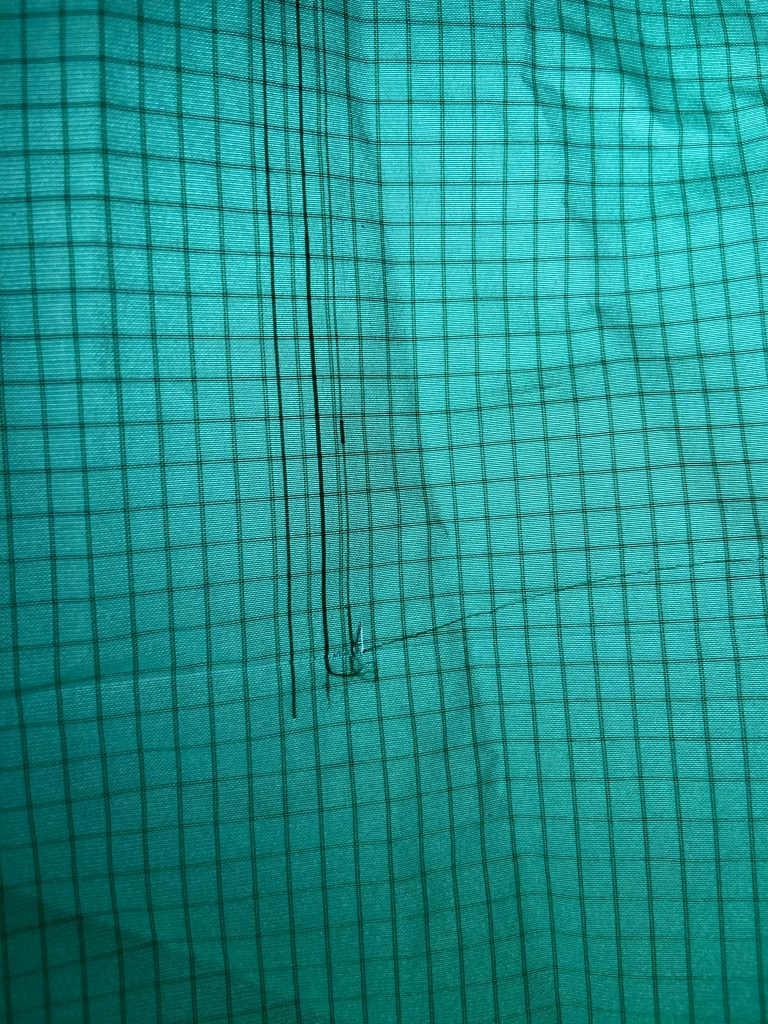
My tent repair expert helped me with that: there is some very sticky tape from which you can cut a patch. Initially, I stuck it on the outside of the tent, but it pretty much peeled straight off. Annoying, but also reassuring to know how generally everything-proof the fabric of the tent is. We flipped the flysheet over and applied another patch to the inside, where it stuck flat and looked encouragingly impenetrable to water.
Then I had some decisions to make. The first three days are going to be predominantly on road and so I would prefer to be doing this walking in trainers, but by Tuesday morning I will need to swap my trainers for my walking boots as I pick up the Severn Way and head into the Cambrian Mountains. I can’t carry my boots – or my trainers for that matter – in the pack, as this time I am carrying not only my tent, sleeping mat, and sleeping bag, but also, for the first time, a minute stove and gas cylinder as well as a dehydrated meal. Because on this walk I will be adding to my portfolio of skills by doing a one-night wild camp up in the Cambrian Mountains near the source of the River Severn. This has been the cause of no little anxiety over the last few days: I feel ambiguous about the idea of wild camping in England and Wales, where it isn’t allowed, I’m a little bit anxious about the idea of being out in the huge expanse of a wild mountainside on my own at night.
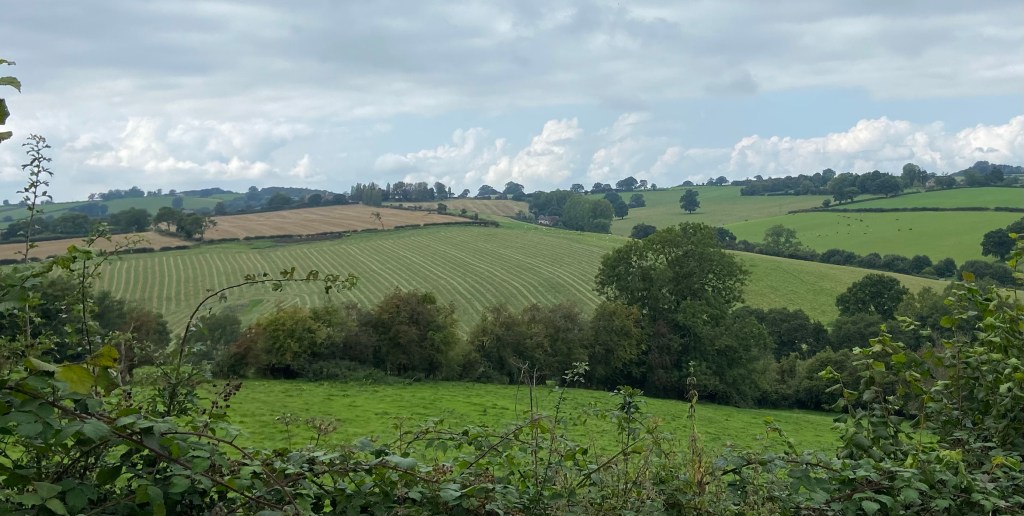
The end of today’s 20km walk was a 20-minute car journey away from home, so I set off this morning knowing that I would be returning this evening. And the path was more than familiar. I had headed east to Cambridge but now of course I was heading 180° in the opposite direction, westward to my pickup at Leominster train station. It’s old stomping ground and I had a choice two routes that I could’ve picked. The Herefordshire Trail connects Bromyard with Leominster, but I am not fond of this route: there are plenty of arable fields to be negotiated, and at least one very poorly maintained stream crossing. I just didn’t want to face those battles on my first day. So I took the alternative route, which I have trodden many times in the opposite direction, but never walking it this way. It feels like a friendly path: there are classics Herefordshire farmland views
and plenty of familiar treats, like the favourite iron knocker on the door to an ancient farmhouse with a tantalising name, down a remote cobbled track.
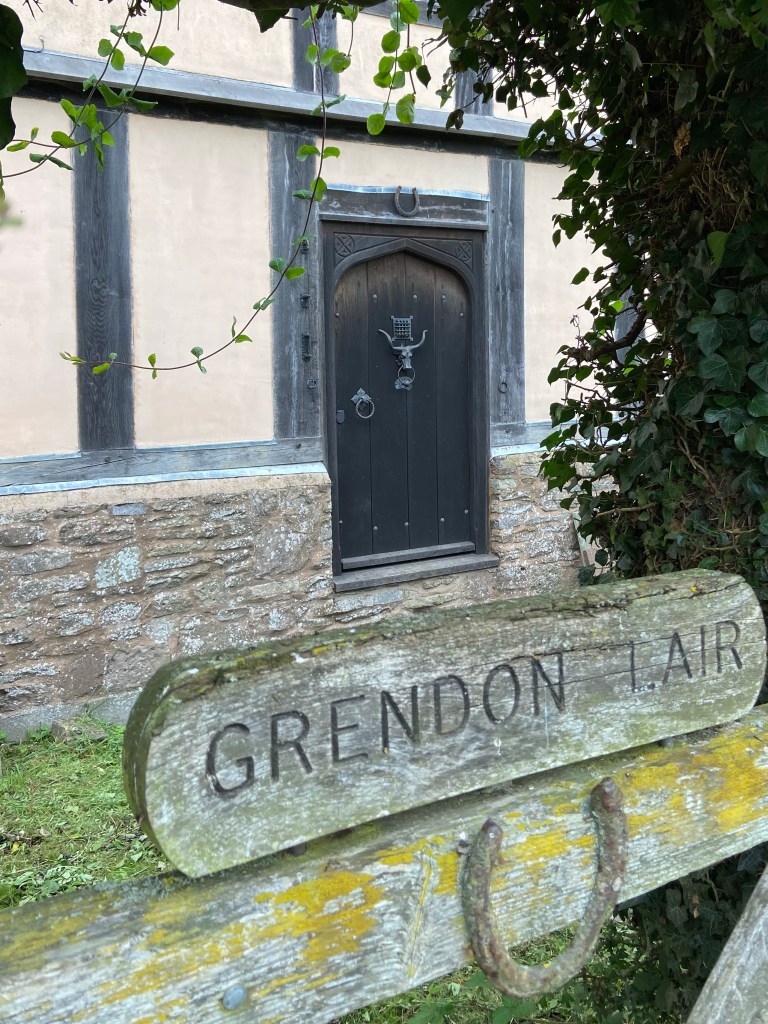
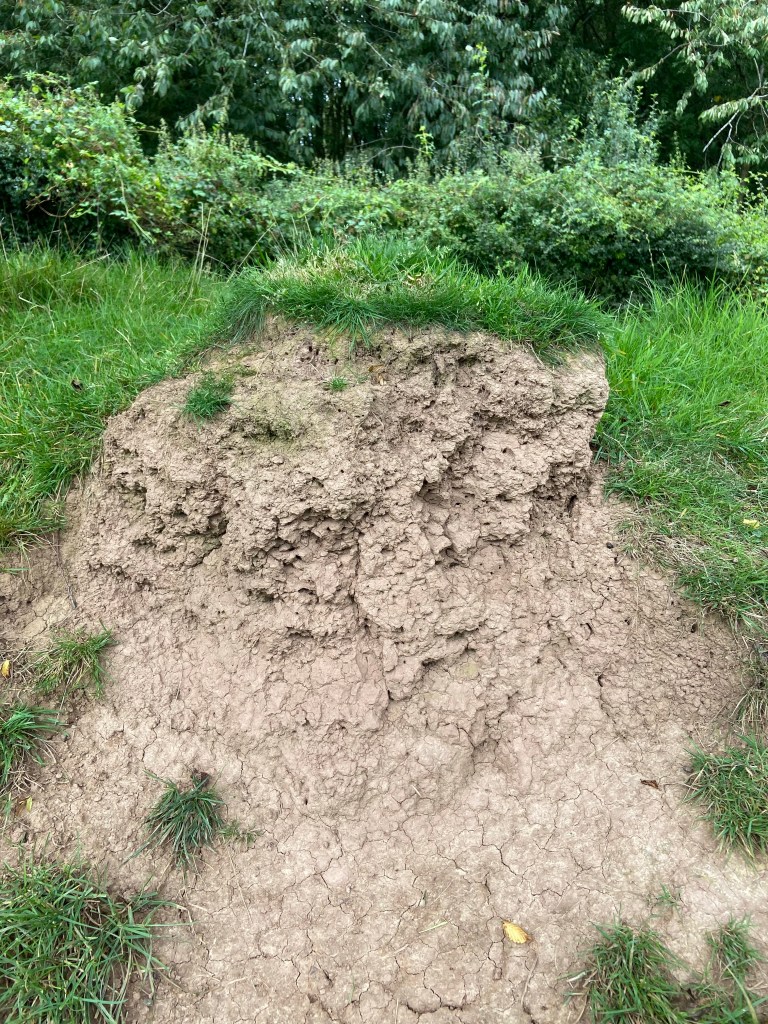
It is such a different prospect, walking a road rather than driving it. There is time to notice the openings to the tunnels excavated by small mammals in the old red sandstone soil of the Herefordshire lanes. There is time to pick blackberries to supplement the (unfortunately rather meagre) box of nuts I put in my rucksack to snack on,
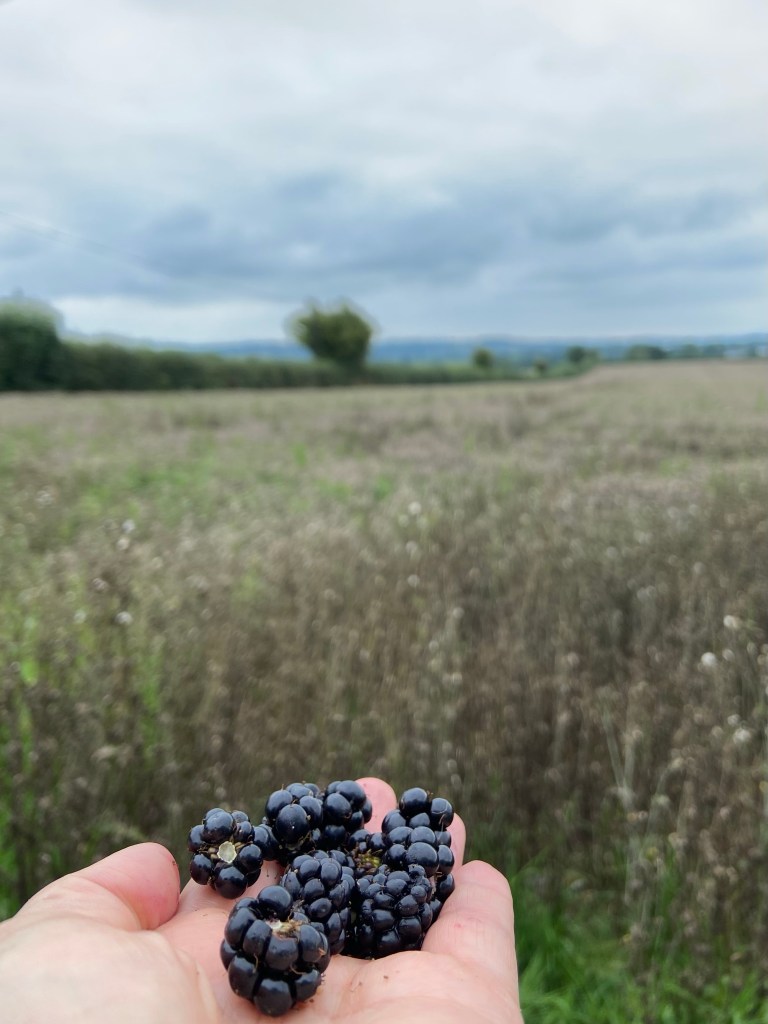
and I made a mental note to consult our foraging handbook to see whether there are other things I can nibble on without having to cook them up: can one eat the thistle seeds that the goldfinches like so much? Do you have to stew elderberries before eating them? There are hazelnuts, but I absolutely don’t want to risk cracking my teeth on them, not after having paid out literally thousands of pounds on dental work (although I might have mentioned that I am very proud of my piratical gold crown – which covers the tooth that I cracked walking down into the Meon Valley back in February.)
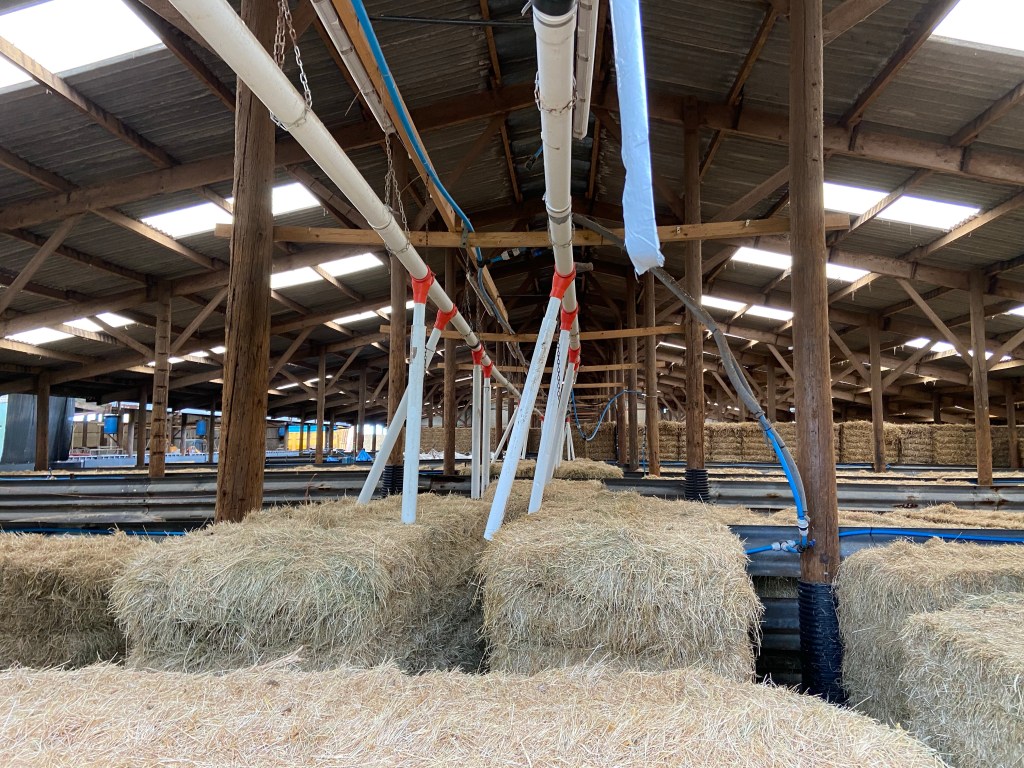
In the early part of the walk closest to home I was most interested in the seasonal and rotational changes. The huge barn en route in which pigs are usually kept in conditions which I find very distressing was now full of bales of straw.
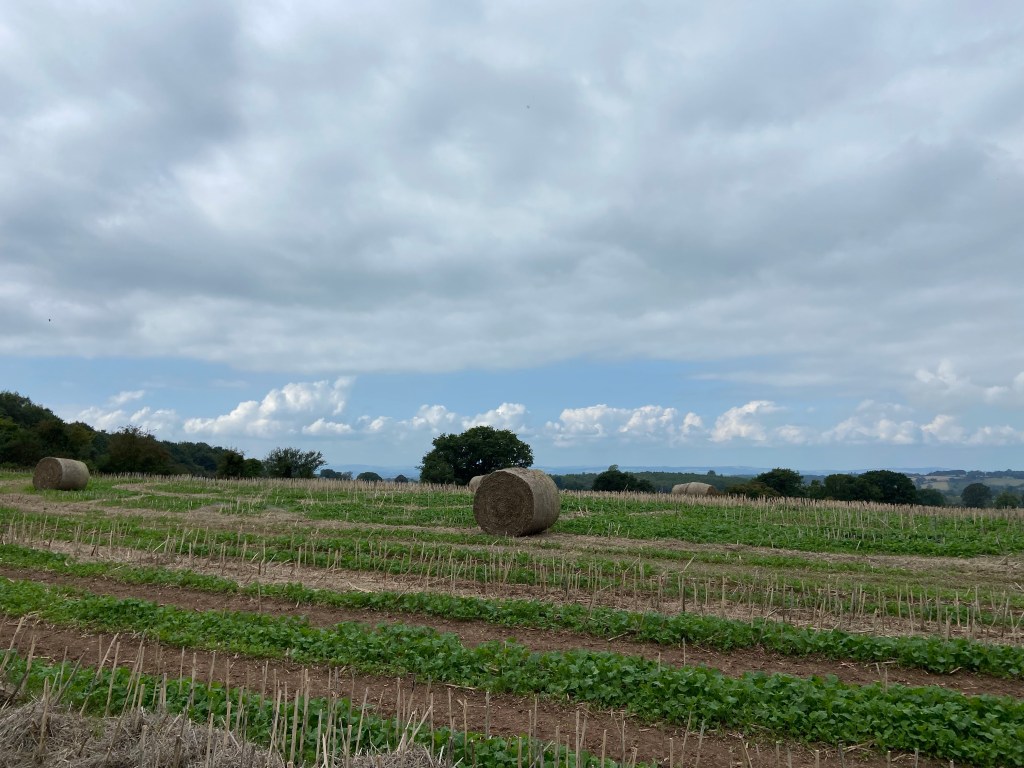
Along the track that lead out of the farm, the sharp smell of grass fermenting in stacks of silage bales was overlaid with the tropical scent of pineapple weed, crushed under my feet. The field that a couple of years ago had been blue with flax when I walked past it during one of my lockdown walks was now baled up with grey-looking straw, and a winter fodder crop of beets.
I had started off under a heavy grey sky, the air close and muggy. A bit of rain was forecast for later in the day, and I had my waterproof in my pack, but by the time I had to come ten or so kilometres (it was hard to tell because I had failed to restart my Strava app after a brief sit-down on a bridge, the thick cloud cover was beginning to lift and a bank of cumulus clouds became visible, stretched across the whole horizon against a background of pale blue. Views opened up all the way to the sparkle of sun on the observatory on the top of Clee Hill away in Shropshire. I stopped to pick some spectacular blackberries next to a tiny field which in the spring is edged with daffodils, and filled with lambs. Now the field is edged with banks of exposed soil where miner bees and beetles have excavated.
Walking slowly through the landscape provided opportunities for a number of animal encounters. I came across a kind of cricket thing upside down on the tarmac.
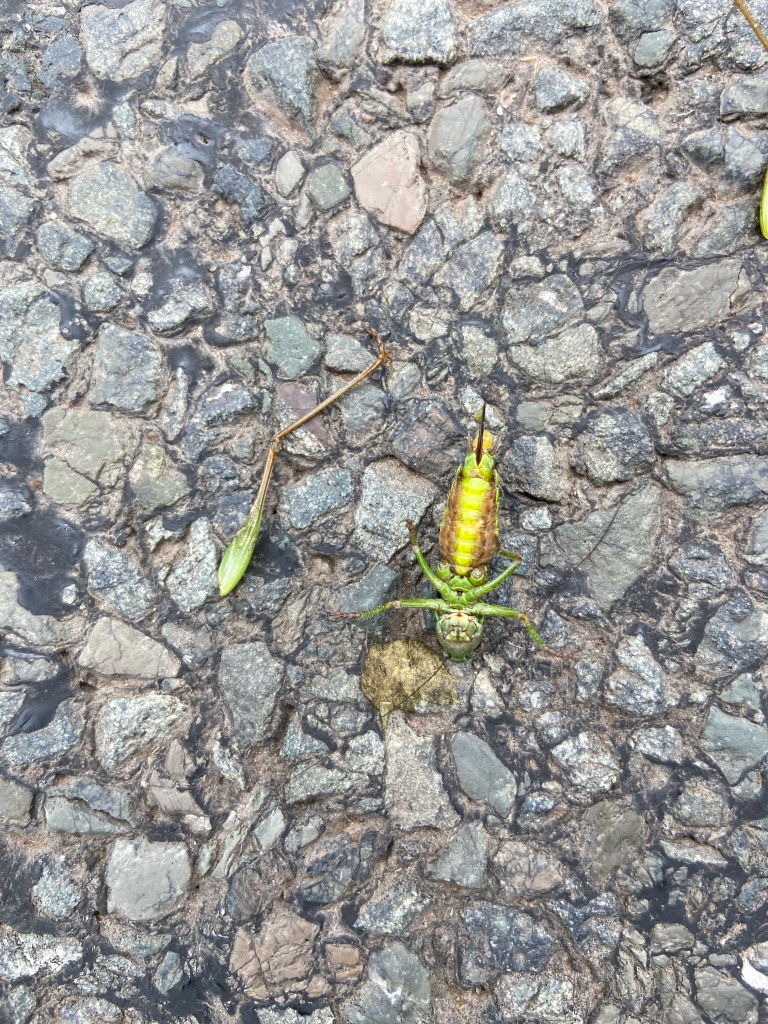
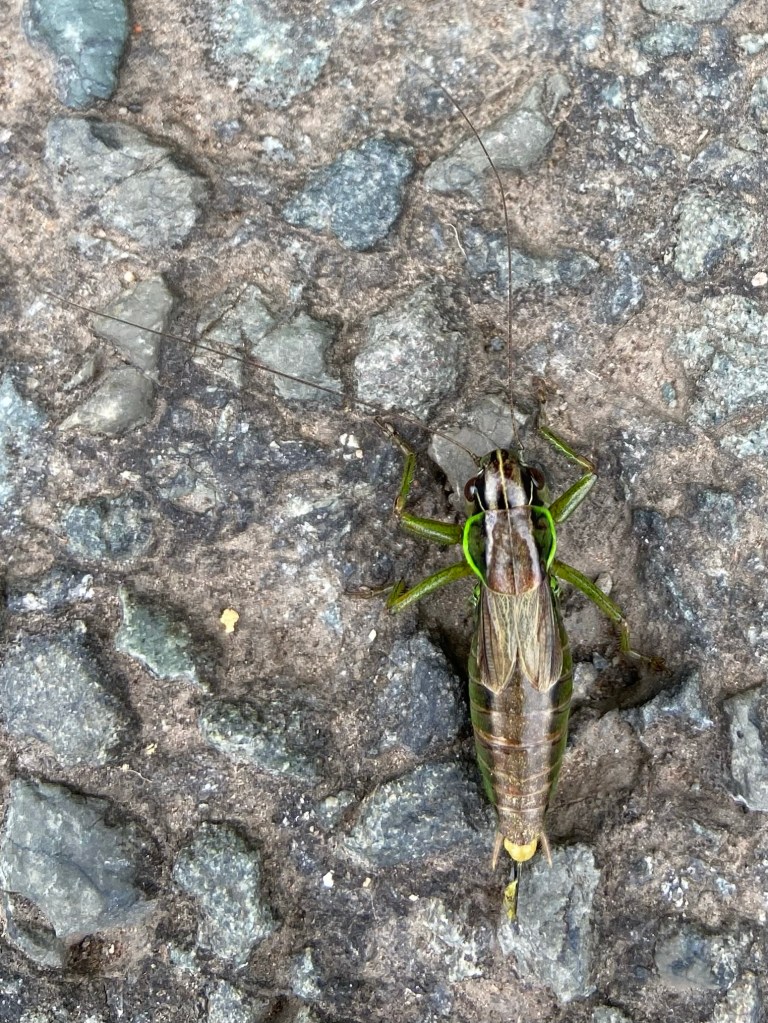
I thought it dead at first, but when I carefully flipped it over, I was startled not only by the extraordinary lime green edge to its thorax, but also that it started to scuttle away to the edge of the road.
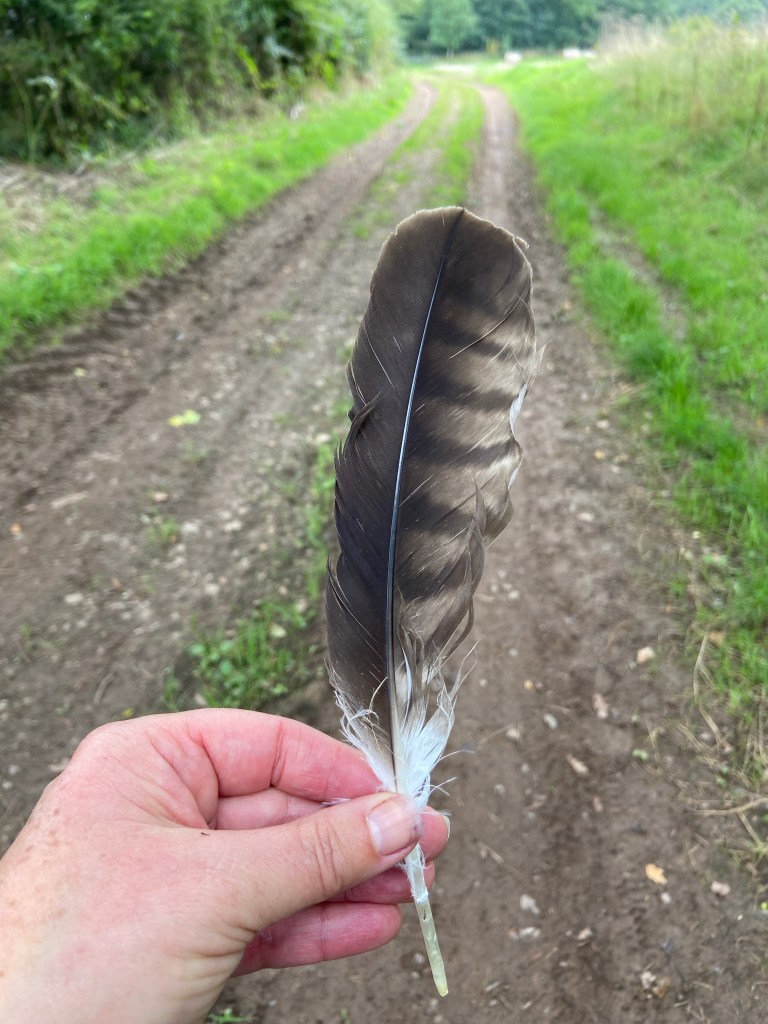
There were several explosions of feathers on the ground, signs of a strike on a pigeon by a sparrow hawk, and a perfect buzzard feather, cast in the middle of the track.
I came across a tiny young rabbit about a metre away, nestled in a hollow of dry grass by the side of the road. We both froze, eyeing each other, but it whisked into a thicket of brambles before I could get my phone camera out. Sometimes wasps fought me for the blackberries. I rather circumspectly ceded ground there.
Another animal encounter that proved too close for comfort was the very first turn off the initial long section on road or track where my path was to strike onto a lovely field section, on a bridleway called The Three Rivers Ride. Waiting for me at the gate in the first field were a couple of extremely suspicious Herefordshire cows with their attendant muscley young bullocks. Without my cow expert to advise, I decided I would feign bravery and let myself into the field. I opened the gate and started to edge warily down the fence line, eyes on the cows and their eyes on me. Initially the cows shied nervously away from me, but then wheeled around in a coordinated group and started towards me. I waved my poles and they stampeded away again (it’s an alarming sound, the thunder of hooves on packed soil!), only almost immediately to turn again and start for me once more, attention sharply fixed on me and my movements. The field was really quite big and the corner I needed to exit from rather too far away. I decided that there was a balance to be struck between bravery and foolhardiness, and turned round to make for the gate I had just come through. I managed to reach it before the cows reached me.
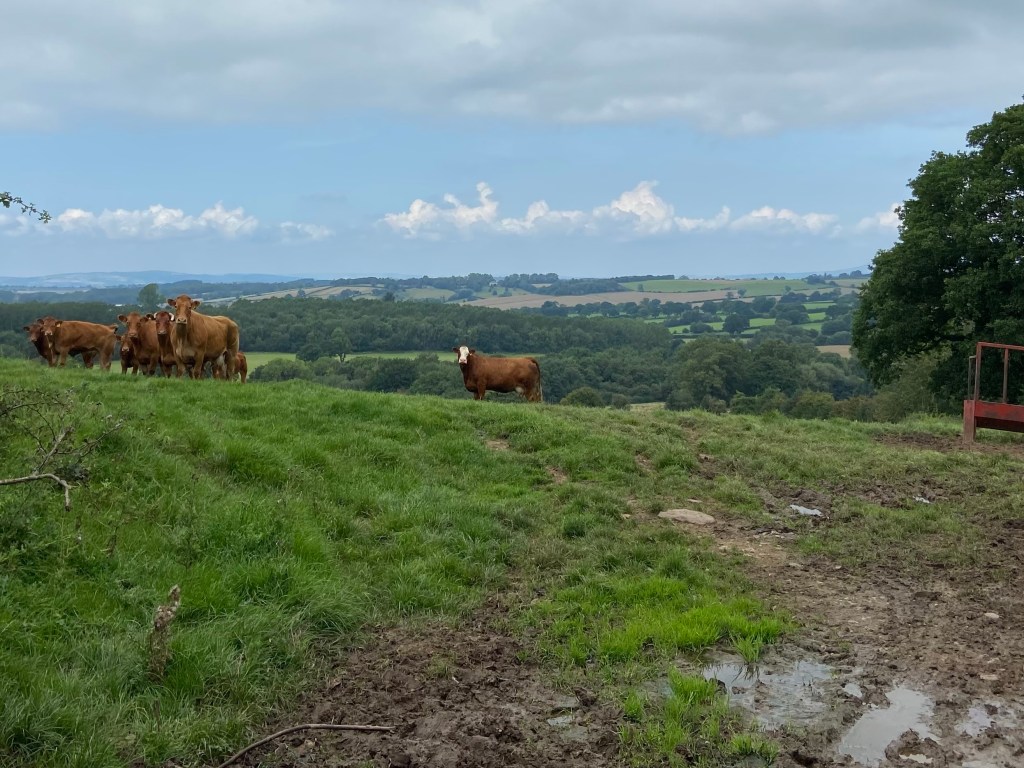
There was no alternative field path to take. Such a shame, as I had been looking forward to photographing the enormous number of old cars buried in undergrowth in the particularly creepy hamlet of Great Marston. Or rather, the hamlet itself isn’t creepy, but you do walk past a couple of scary caravans and a shipping container, and as you try not to look at them too closely in case you attract some unwanted attention you suddenly begin to notice the number of abandoned vehicles festooned with ivy and creepers, in the process of being swallowed up by whips of brambles. I met a chap once out walking his dog and he said that they were up to 40 vehicles buried in the field next to us. Extraordinary! Another marker point is the gate to a lambing shed where I once saw what I look like a peregrine falcon perched, peering intently inside.
The detour I was forced to make took a country road into Risbury, cutting out the entirety of the field section. I was very glad I was wearing my trainers, although for the next two days of road walking I will of necessity, be in boots. The plus side to the detour was that the sun had come out now, and the road gave some terrific views out over the Welsh Marches into which I would be walking tomorrow.
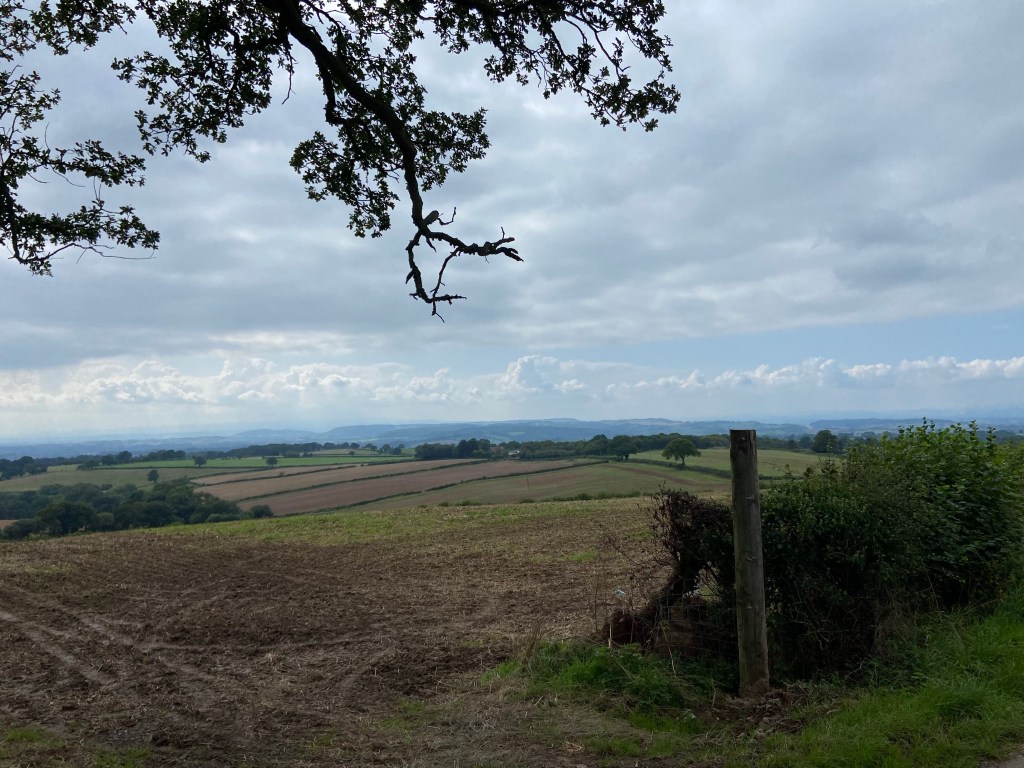
It was a new road to me, and I drank up the sights. Orchards with a heavy crop of bright red apples.
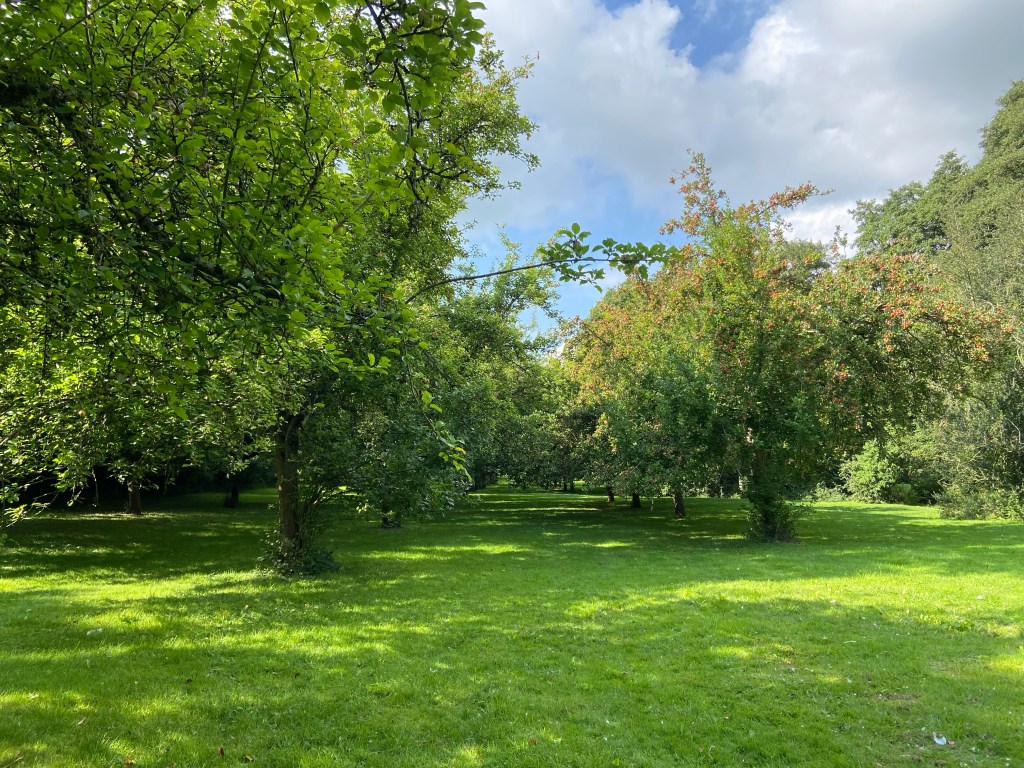
Damson trees, loaded with fruit (another opportunity for wayside foraging, although these wild plums were too high for me to reach. A beautiful Herefordshire pear tree in the middle of a drying hayfield.
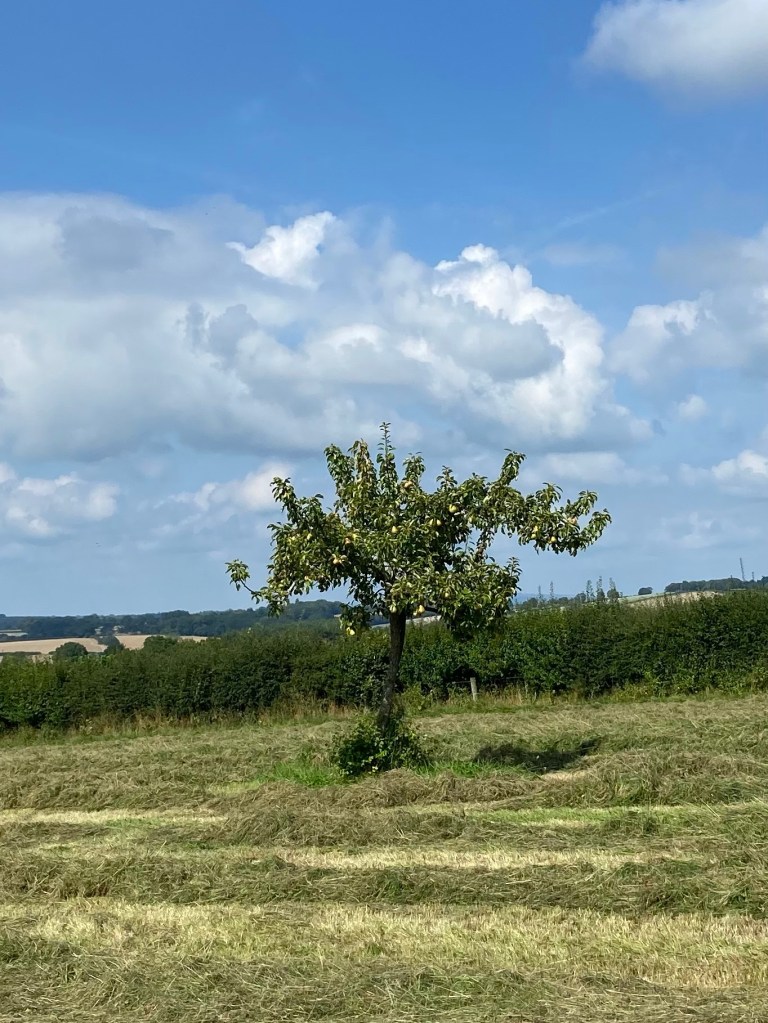
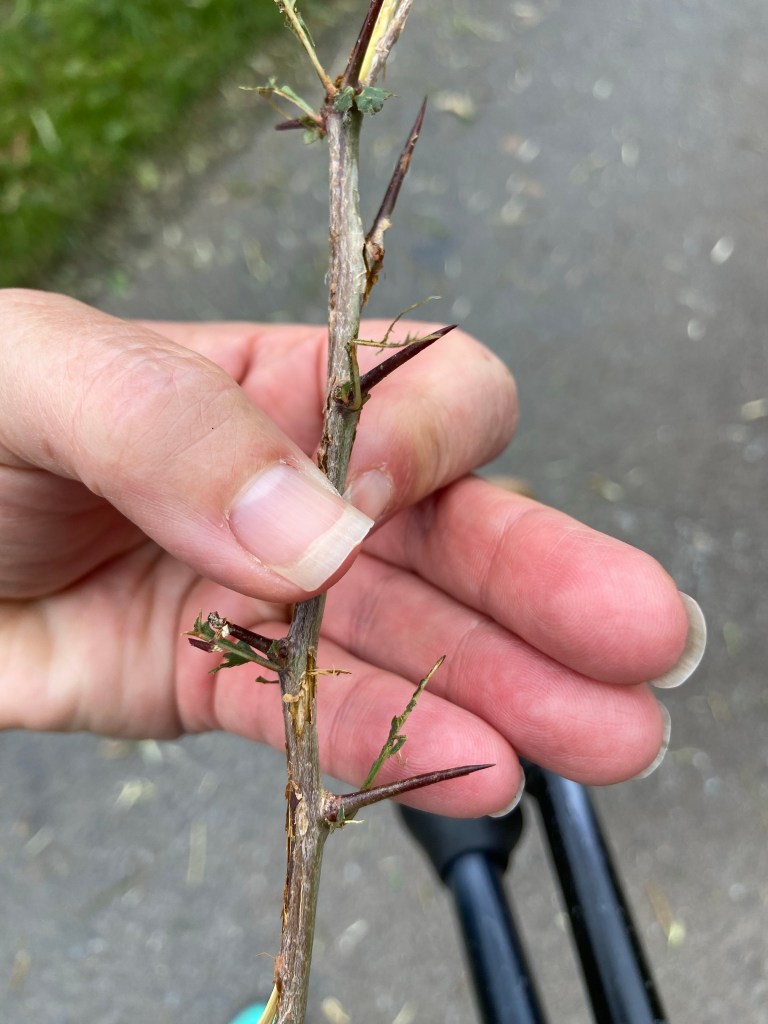
The road was not without its hazards though. I nearly stumbled into a high hedge of ivy in full flower, covered in a thrumming mass of bees and wasps. And the farmers were out with their tractors and flails, reshaping the hedgerows. It is easier to avoid the wild rose trimmings and wicked blackthorn when one is walking, then, when one is driving along (slow punctures are an annual Herefordshire tradition), but I still would not have liked to have stepped on one of these:
By 3.30 it had got rather hot in the sun. I had brought an apple with me and plenty of water, but I was rather fancying a little something else. I walked through the village of Risbury, wishing that the pub and the post office had not been converted into dwellings. I saved the apple until I came to a decent patch of blackberries and ate the two together. Taste sensation! A marriage made in heaven, even without the crumble and custard.
Consulting the map — not something I had had to do thus far — at the point where I was finally going to turn off the tarmac after about fifteen kilometres or nearly ten miles, I noticed a straighter route option. It was the hypotenuse to a right-angled section initially going through fields and ending up at a golf course just off the nasty A49 along which I would have to slog north to Leominster. This new route ran direct along a likely-looking bridleway through the village of Stoke Prior and, instead of the rubbish-strewn and dangerous verge of the A49, I would run along the river bank.
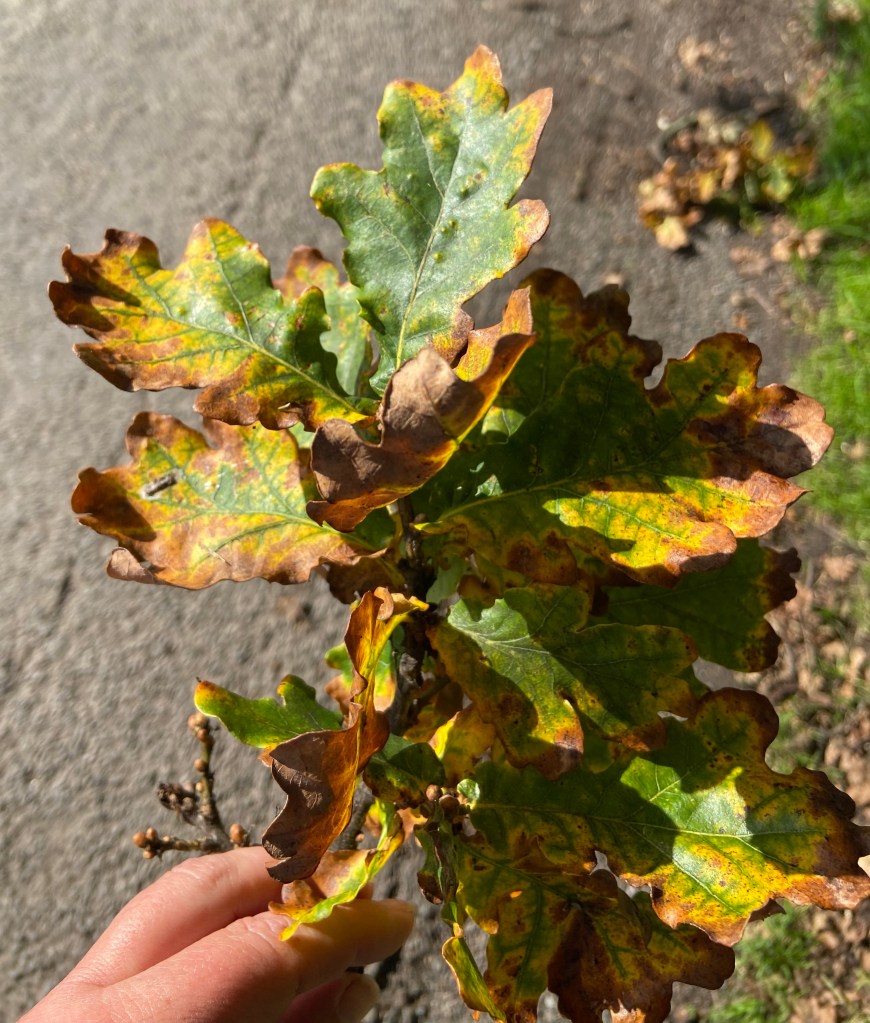
The afternoon light was changing now. There was the promise of a golden autumn ahead in the spray of oak leaves knocked to the ground by wind or a passing farm vehicle.
The bridleway was soft underfoot and a joy to walk along
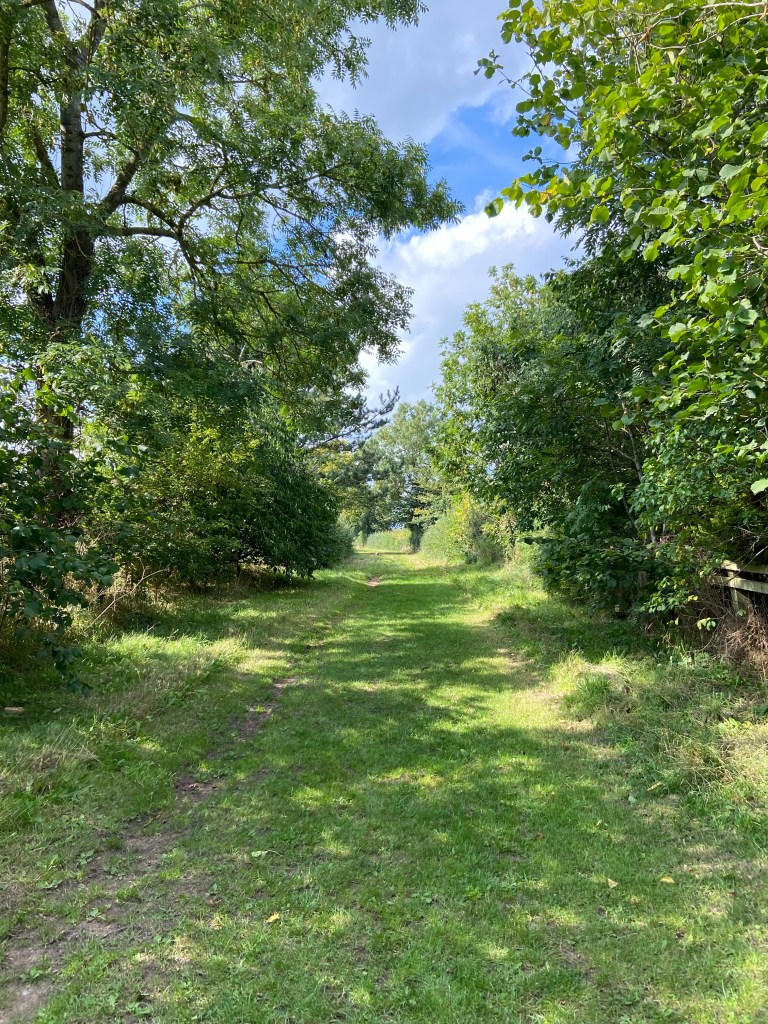
Occasional trees had been allowed to grown out of the hedges, sizeable oaks, and ashes, some dead of the fraxinea virus
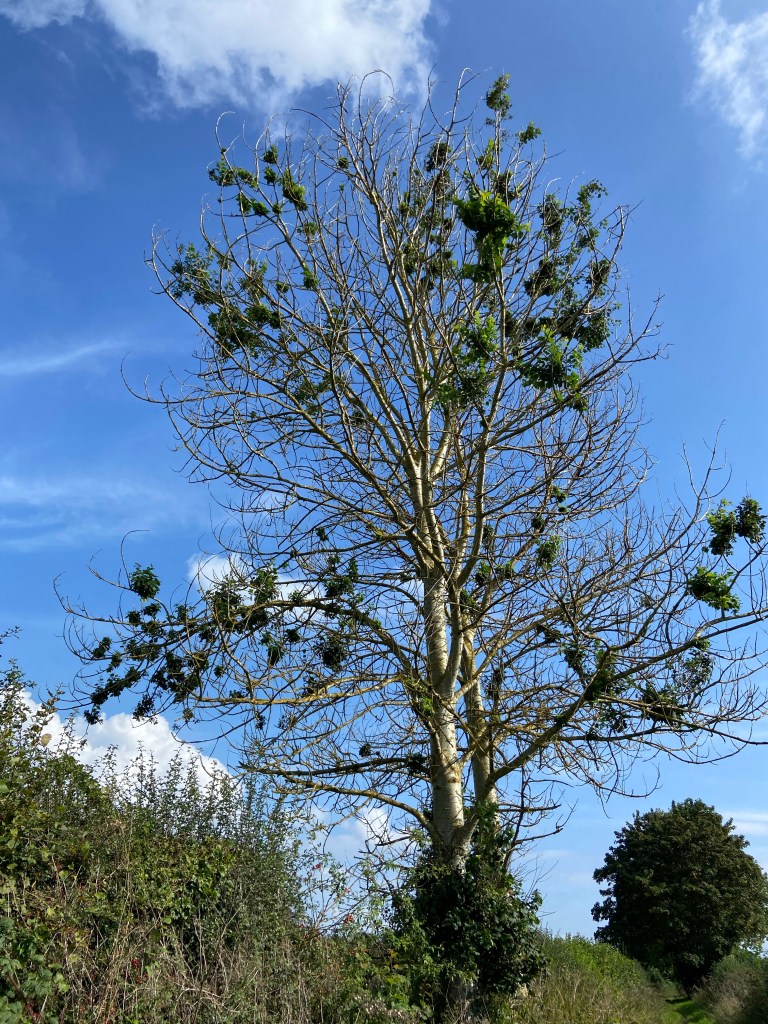
and some in generous, full leaf.
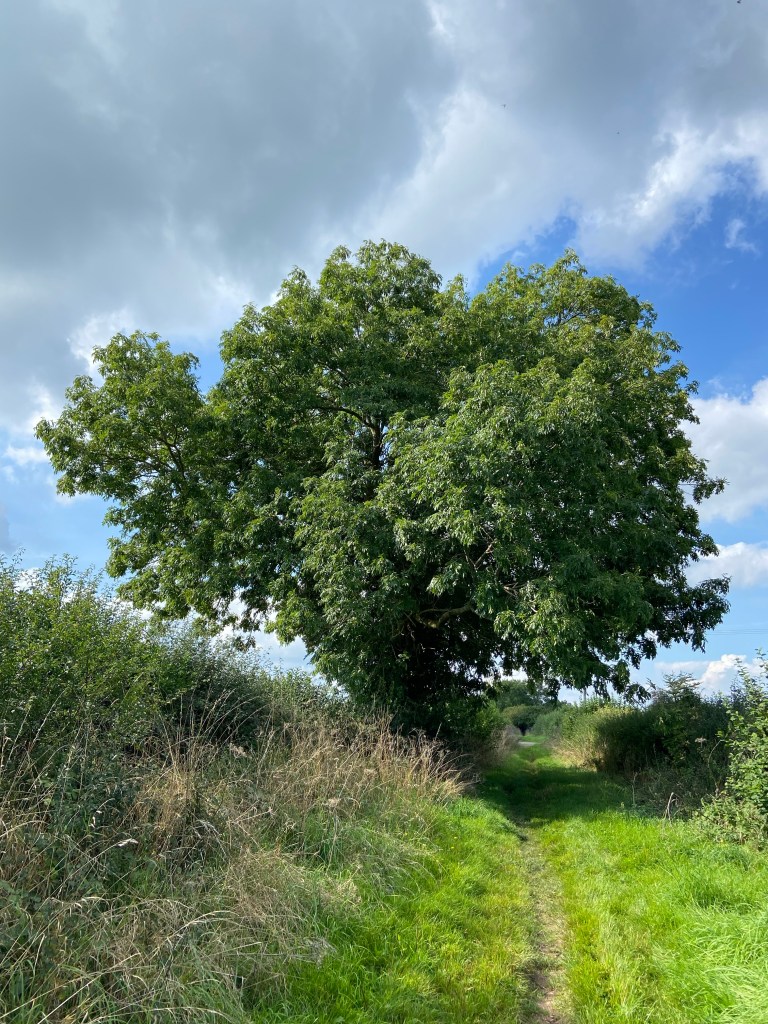
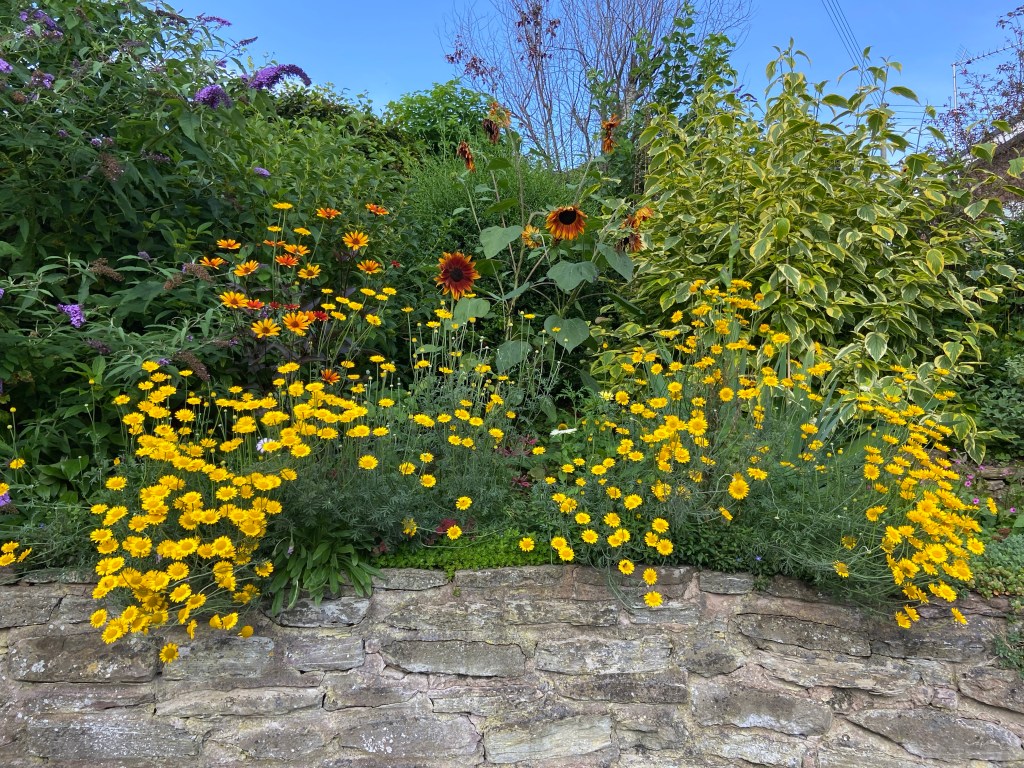
Stoke Prior is a backwater village in the middle of nowhere but full of pretty houses and cottages with glorious autumn colour in the gardens
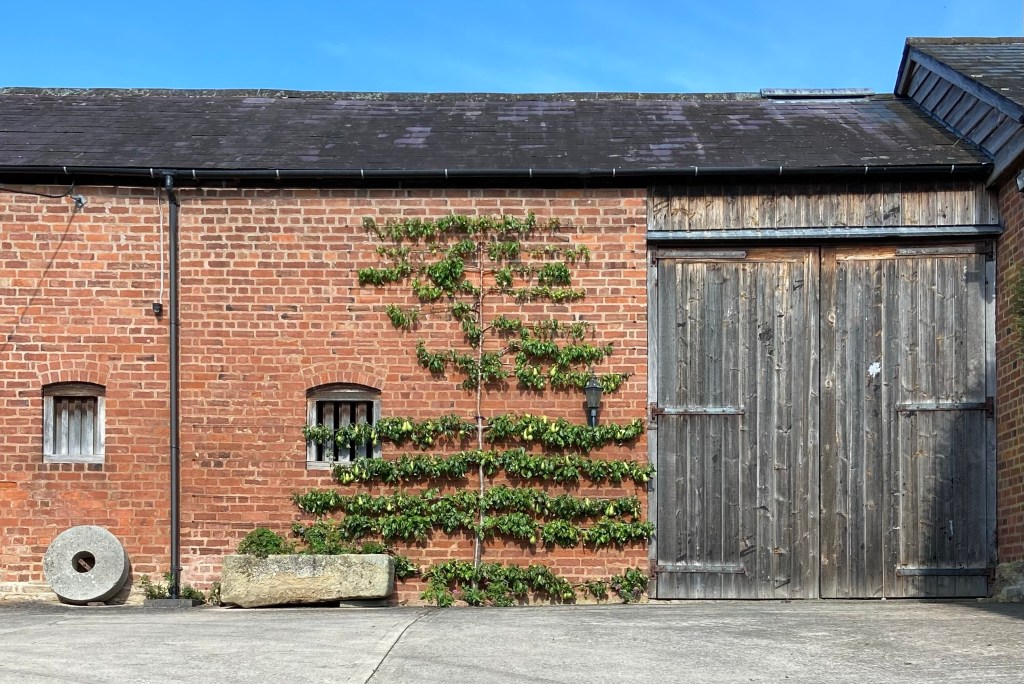
and well-kept farmyards with the millstones and troughs from an earlier agricultural age retained as features to set off, espaliered examples of the pear trees that are the county symbol.
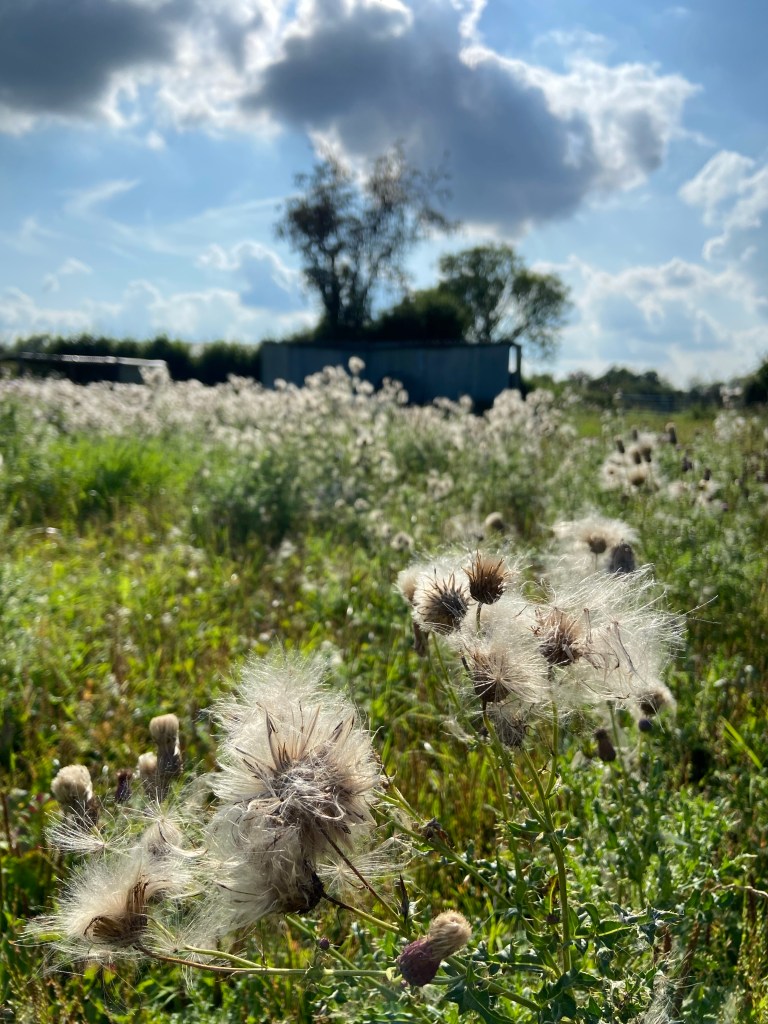
It was only a couple of kilometres an hour to go to the end of the first day’s walk. On the map, the field paths had looked likely enough, and I had been imagining expansive watermeadows. Initially, though, I was rather cast down by the actual conditions: I was going to have to wade through long grass, thistles and nettles (yet again, you might be thinking, if you followed my riverbank route to Cambridge). But the thistle-field turned out to be small, and the sun shining through the soft seedy down rather beautiful.
After my last abortive encounter with cows I was discouraged to see this sign — broken, I thought, perhaps in a violent conflict between man and bovid.
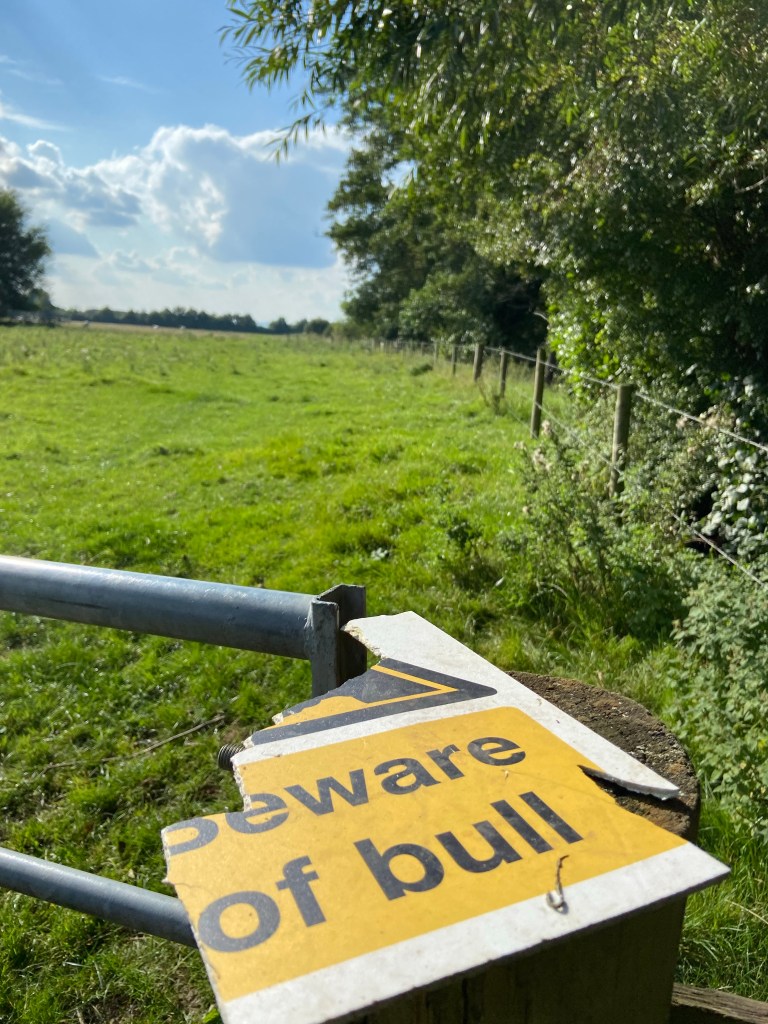
But like for the thistles, the reality turned out to be much milder. The cows coralled the bull on the far side of the field, and showed no interest in me.
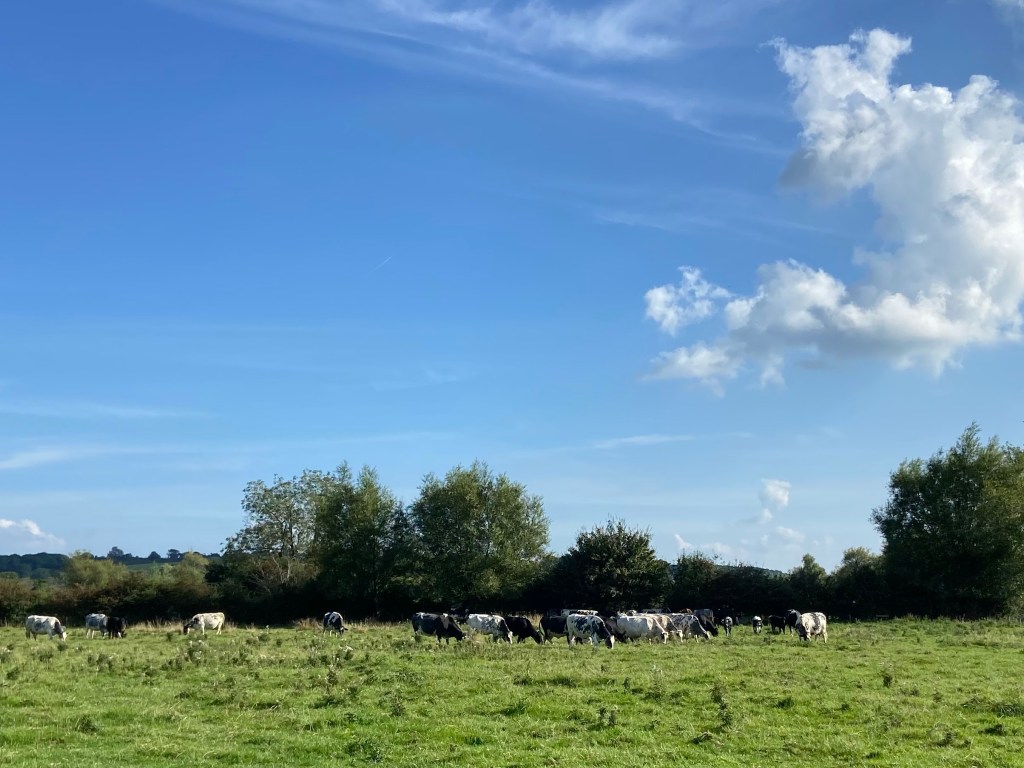
And what a field! This was the peerless Lugg, the jewel of the Marches. I will walk parallel to it tomorrow (though sadly not along it, as there are no paths). The sun illuminated the water and the marginal plants and even at the end of this first long day, absolutely lifted my heart.
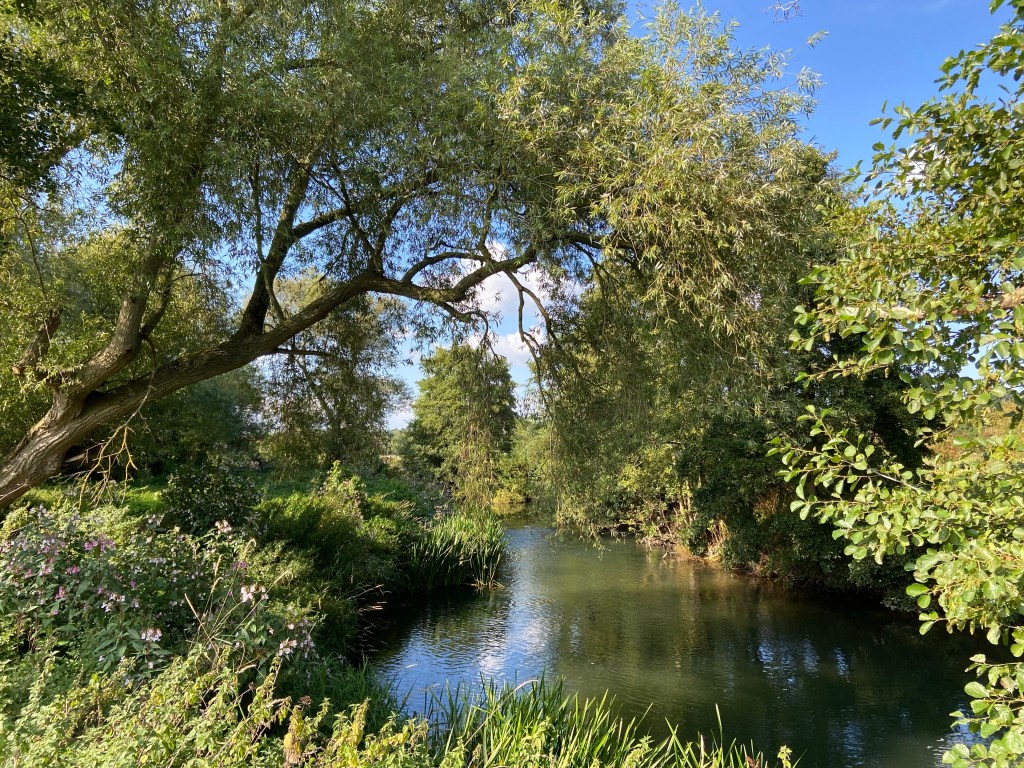
It is absolutely inconceivable how, upriver from here, one wicked, wicked man could have stripped banks like these, and reprofiled the meandering course of the river on the gravel beds of which fish cast their spawn, into a die-straight canal, devoid of life.
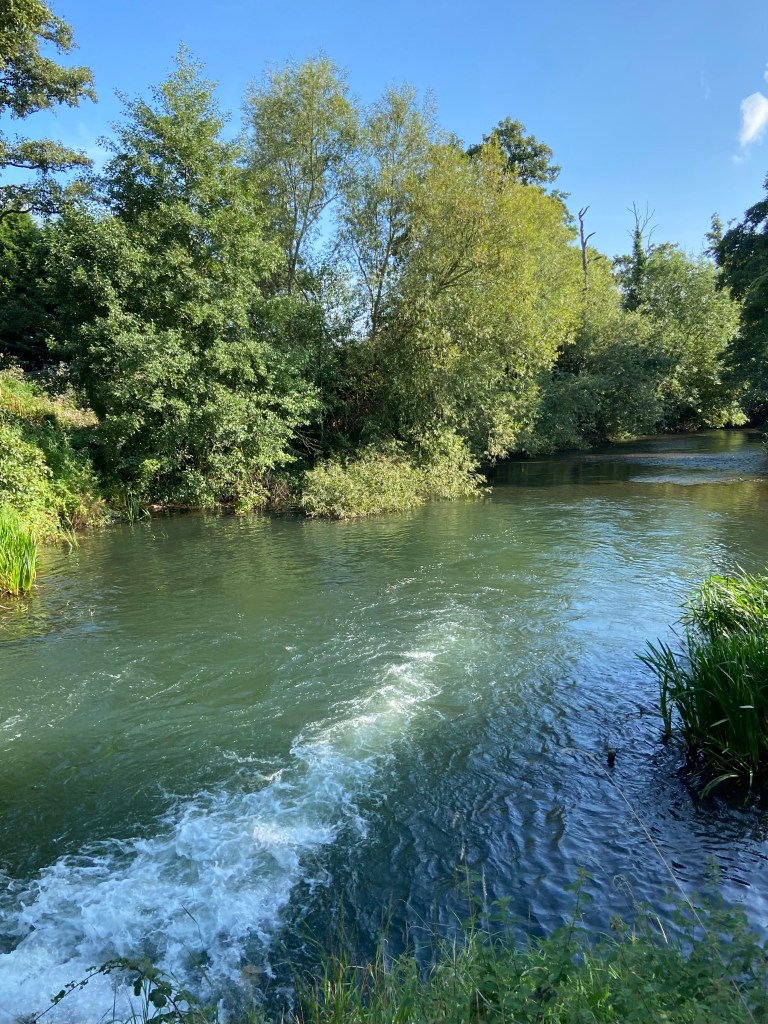
Here instead a pair of swans floated peacefully,
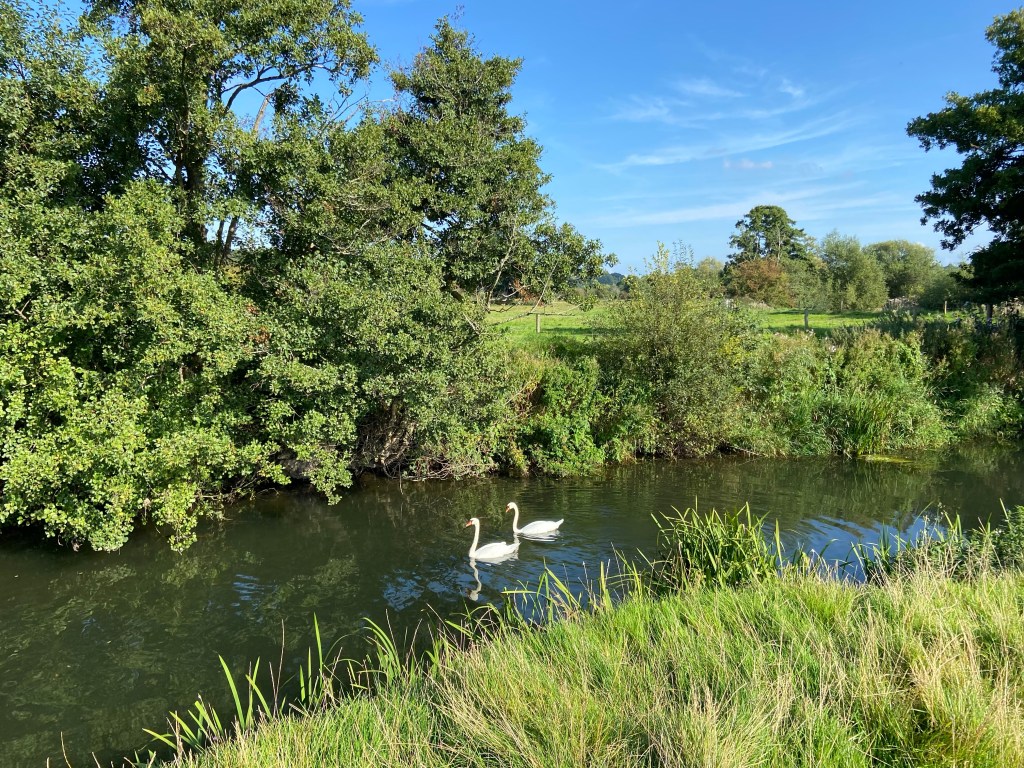
And as I watched them I suddenly noticed a cormorant perched in the very top of the tree behind them.
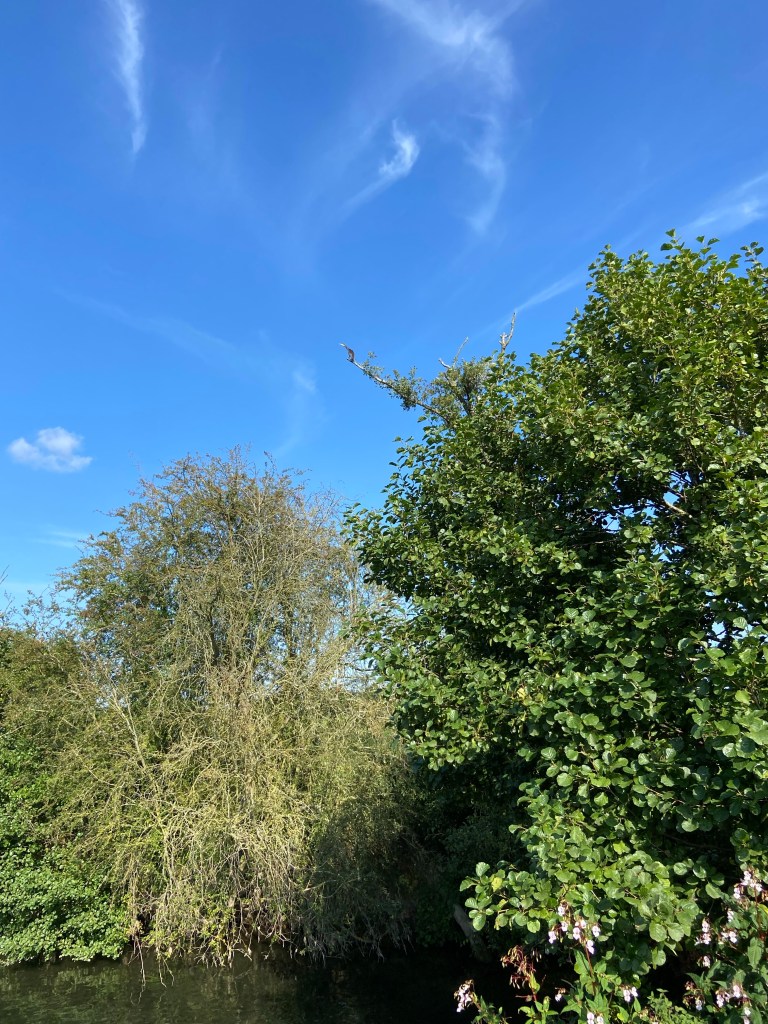
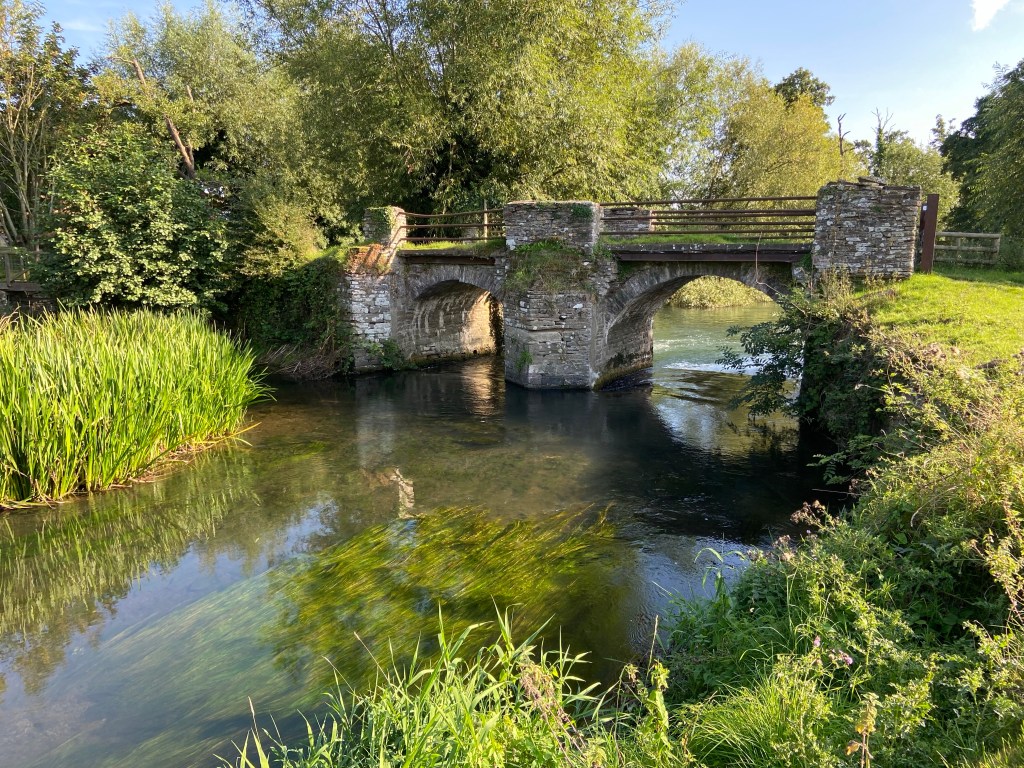
A plaque on the millennium gate to the Eaton Bridge, placed there by the local fishing club to commemorate one of their own, notes that this was his favourite view of the Lugg. I could not but agree, wholeheartedly.
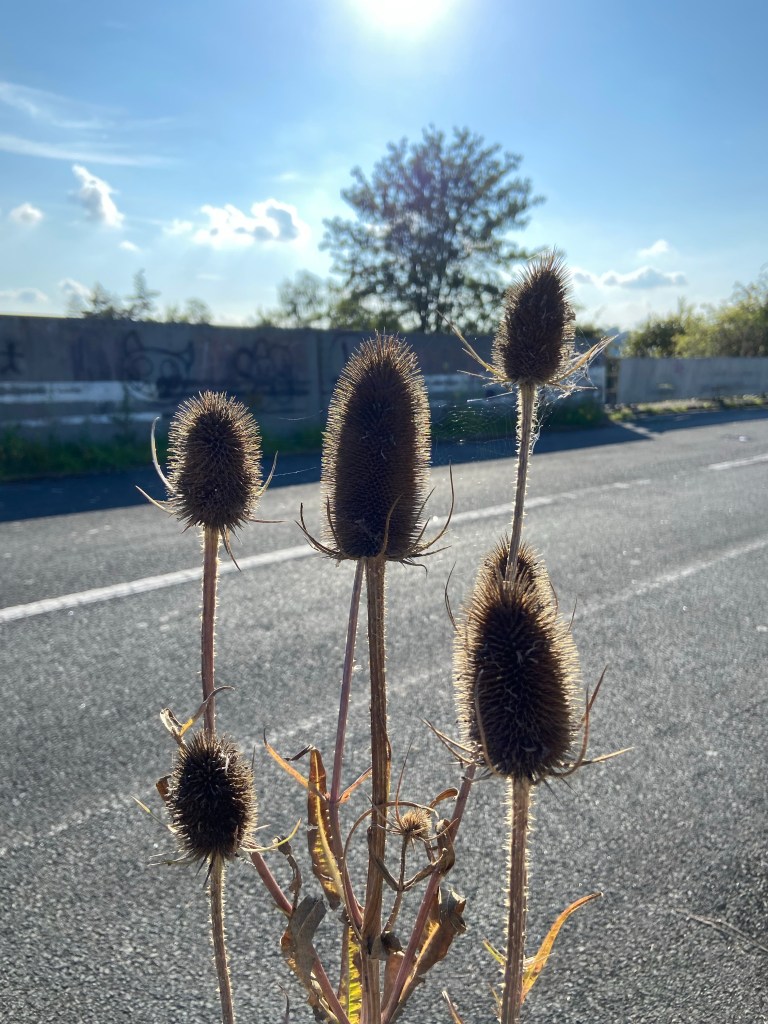
Full of peace I ambled to the end of the watermeadows where the footpath crossed the Bromyard road and a cycle path curved up and over the railway line. The late afternoon sun shone through the weeds, transforming thistles and spiderwebs into things of structural beauty against the backdrop of unimaginative graffiti.
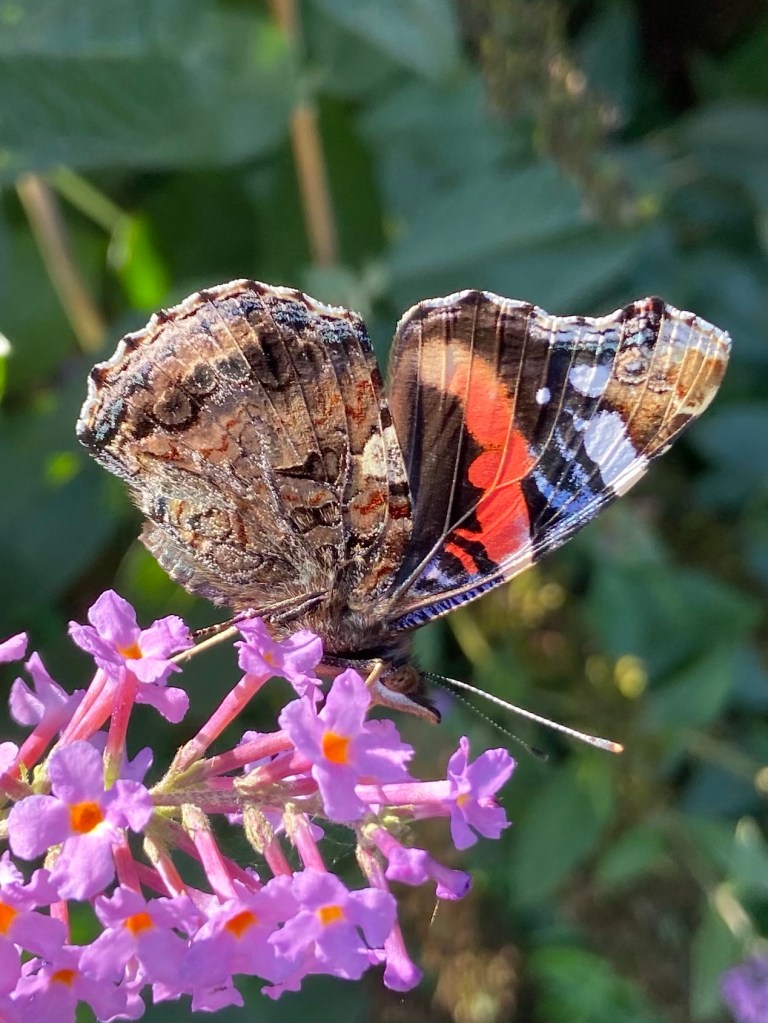
Late summer red admirals rested on the buddleia, the complex patterns of their under wings even more beautiful than their more familiar black, white and red livery.
It was a short couple of hundred metres from there to the train station, where I rested my feet, and rather wished I had made time to stretch out my muscles before starting this walk. I will have to get back into the swing of things for tomorrow when I shoulder my heavy pack! For now it was home to a shower, some family time, and a well-earned meal of Herefordshire pork in a cider cream sauce.
 Walking The Landscape
So happy to read that you are off again! I’m reading your first blog while lying in our caravan, listening to Jess and Hannah gently snoring. I spoke of you on Friday evening to a very kind man who took us on his long boat up the Avon from the lovely village of Bidford. Hannah has been wanting to ride a barge and go through a lock, so there we were, chugging gently upstream where low branches of willow hung out across the the water. I asked our man if he’d seen kingfishers, he casually replied that he had, more than once. So of course, I told him about you! I wonder, did your ears burn a little on Friday evening as the sun was setting? X
LikeLiked by 1 person
If one is not trying to sleep, the sound of gentle snores is rather wonderful! Tonight I have swallows chattering above a lavender field. Oh – and a pack of dogs has just started up! I hope they quieten down soon.
LikeLike
Being inspired, once again, to plan my own walk….. one day! Looking forward to reading this adventure.
LikeLiked by 1 person
Do it!
LikeLike